 how-to
How Often to Pressure Clean Your House Exterior
Table of Contents
- Annual Cleaning as Your Starting Point
- Factors That Affect Your Exterior House Cleaning Frequency
- Visible Growth: Mould, Mildew, Algae, and Organic Buildup
- Cleaning Frequency by Siding Material
- Best Time to Pressure Wash Your House
- Pressure Washing House Siding Safely
- Soft Washing a House: A Gentler Alternative
- Understanding Pressure Washing House PSI Settings
- Frequently Asked Questions
Last Updated: October 12, 2026
Annual Cleaning as Your Starting Point
Once per year is the practical baseline for most Australian homes in moderate climates with average dirt, dust, and environmental buildup.
Annual cleaning keeps your exterior fresh and prevents long-term damage without excessive cost or disruption, preventive maintenance, like servicing your car.
That said, annual cleaning isn't one-size-fits-all. Some properties need it more often; others can stretch to 18 months or longer. At AquaBlast Elite, we start with annual cleaning as your baseline, then adjust for the factors affecting your property.
The key insight most homeowners miss: frequency isn't about a calendar but visible buildup and environmental conditions. Understand what drives buildup on your property and you can make a smarter decision than following a generic timeline.
Factors That Affect Your Exterior House Cleaning Frequency
Climate, location, materials and shade determine whether your home needs pressure cleaning more or less often than annually.
Climate and Local Weather Conditions
Your local climate is the single biggest driver of cleaning frequency. High-rainfall areas accumulate more organic growth, since mould, mildew, and algae thrive in damp conditions. Dry climates see more dust and mineral deposits. Coastal areas face salt spray that accelerates surface deterioration.
Homes in humid regions often need pressure cleaning every 6 to 9 months, since constant moisture creates ideal conditions for biological growth, while drier inland areas usually manage with annual cleaning.
Temperature swings also matter: freeze-thaw cycles cause dirt and grime to bond more tightly to surfaces, while consistent warm temperatures mean less dramatic adhesion.
Coastal Exposure and Salt Buildup
Within a few kilometres of the ocean, salt air is a constant factor: salt spray accelerates corrosion of metal, discolouration of paint, and deterioration of grout and mortar. Coastal homes typically need pressure cleaning every 6 to 12 months, depending on proximity to the water.
Salt buildup is insidious because it's often invisible until it causes damage. Regular pressure cleaning removes salt deposits before they etch into surfaces permanently. The closer you are to the coast, the more aggressive your schedule should be.
Shade, Sunlight, and Moisture
Shaded areas stay damp longer, creating perfect conditions for mould and mildew, while sunny areas dry faster but risk fading and UV damage over time.
Properties with large trees overhead or significant shade need more frequent cleaning, since moisture lingers and organic growth accelerates. South-facing walls in Australia stay damper, especially in winter, while north-facing walls dry faster but show more visible dirt and dust.
Visible Growth: Mould, Mildew, Algae, and Organic Buildup
Mould, mildew, and algae thrive on damp surfaces. They're not just unsightly; they indicate moisture is lingering on your exterior, which can lead to structural damage if left unchecked.
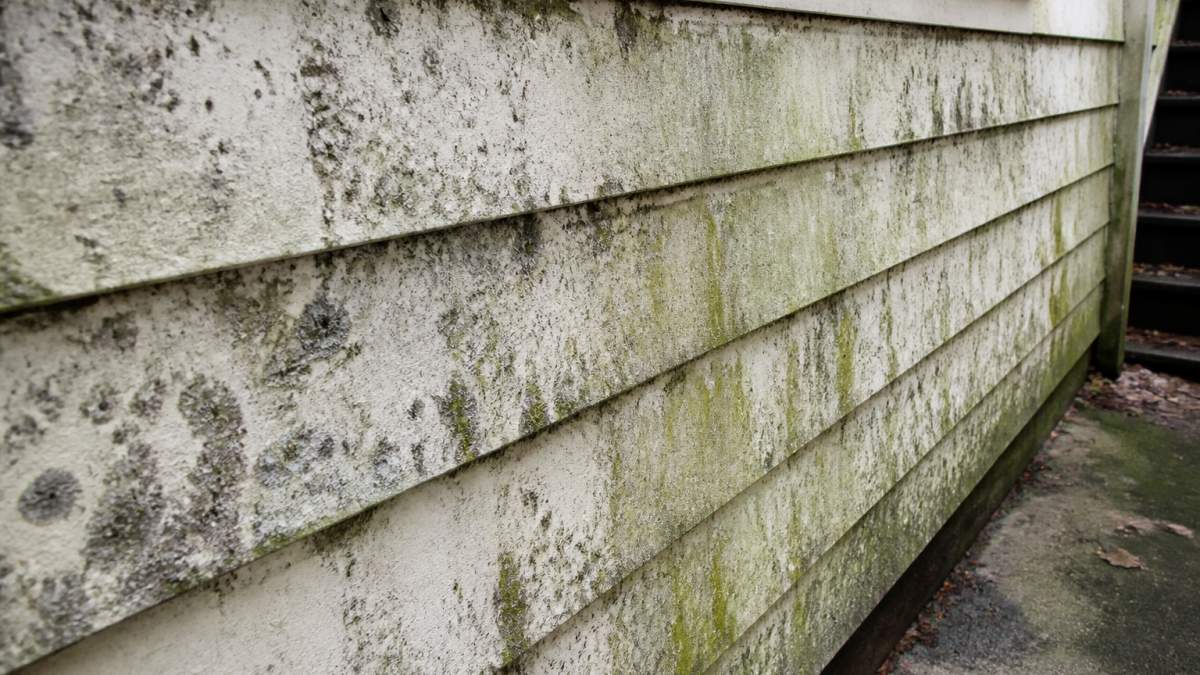
Black spots or streaks on your roof, gutters, or walls are usually mould or algae. Green or brown discolouration on concrete or pavers indicates algae buildup. These growths spread quickly in humid conditions and can damage surfaces over time.
Visible organic growth is your signal to schedule pressure cleaning sooner rather than later. Early intervention prevents growth from embedding into the surface, making future cleaning easier and less aggressive.
Cleaning Frequency by Siding Material
Different siding materials accumulate dirt and organic growth at different rates, and each tolerates pressure differently.
| Material | Typical frequency | Safe cleaning method | Why |
|---|---|---|---|
| Timber weatherboard | 12-18 months | Soft wash, low pressure | Porous; absorbs moisture, swells, splinters and lifts paint under high pressure |
| Fibre cement | 12 months | Low to moderate pressure | Dimensionally stable but joints and edges can be damaged by a concentrated jet |
| Brick and mortar | 12 months (6-9 months coastal) | Moderate pressure, wide fan | Durable but porous; mortar joints erode faster than the brick face |
| Rendered or painted | 12 months | Soft wash or low pressure | Cracks and flaking paint let water behind the coating, causing blistering |
| Metal gutters and downpipes | 6-12 months | Low to moderate pressure | Salt and dust accelerate corrosion; seals and fixings can be forced apart |
| Concrete and pavers | 12-24 months | Higher pressure | Hard and non-porous; mainly collects dirt, algae and tyre marks |
Timber siding is the most moisture-sensitive common cladding. It absorbs water, feeding mould and mildew and causing boards to swell and cup.
Fibre cement is more dimensionally stable than timber and resists moisture better, so annual cleaning is usually enough.
Brick and stone are durable but porous. Dirt lodges in mortar joints and algae develops on damp, shaded faces.
Rendered or painted surfaces depend on the underlying material and the coating's condition. Annual cleaning is a reasonable baseline, but if the render is cracked, drummy or the paint is flaking, switch to soft washing.
Metal surfaces such as gutters, downpipes and flashing collect dust and develop rust stains. Clean every 6 to 12 months, and more often in coastal areas where salt accelerates corrosion.
Concrete and pavers are the most pressure-tolerant surfaces on most properties and can be cleaned every 12 to 24 months, or more often on driveways and paths with heavy traffic.
A practical rule: the softer, more porous or more painted the surface, the lower the pressure and the more often you should inspect rather than wash. Matching method to material prevents the most common and costly exterior cleaning damage.
Best Time to Pressure Wash Your House
Spring and autumn are ideal seasons for exterior house pressure cleaning in Australia: weather is mild, rainfall is moderate, and you have time before the extreme heat of summer or the wet season.
Avoid pressure washing during heavy rain or immediately before it's forecast, since water sitting on freshly cleaned surfaces can reactivate mould spores and undo your work. Likewise, avoid the hottest summer days, when water evaporates too quickly and leaves mineral deposits.
After winter is an excellent time to clean. Winter moisture and lack of sunlight create ideal conditions for mould growth. A spring clean removes this buildup before warmer weather arrives. Autumn cleaning prepares your home for winter and removes summer dust and pollen.
Never pressure wash in freezing conditions, as water can freeze on surfaces and cause damage. In cooler regions, schedule cleaning for milder months.
Pressure Washing House Siding Safely
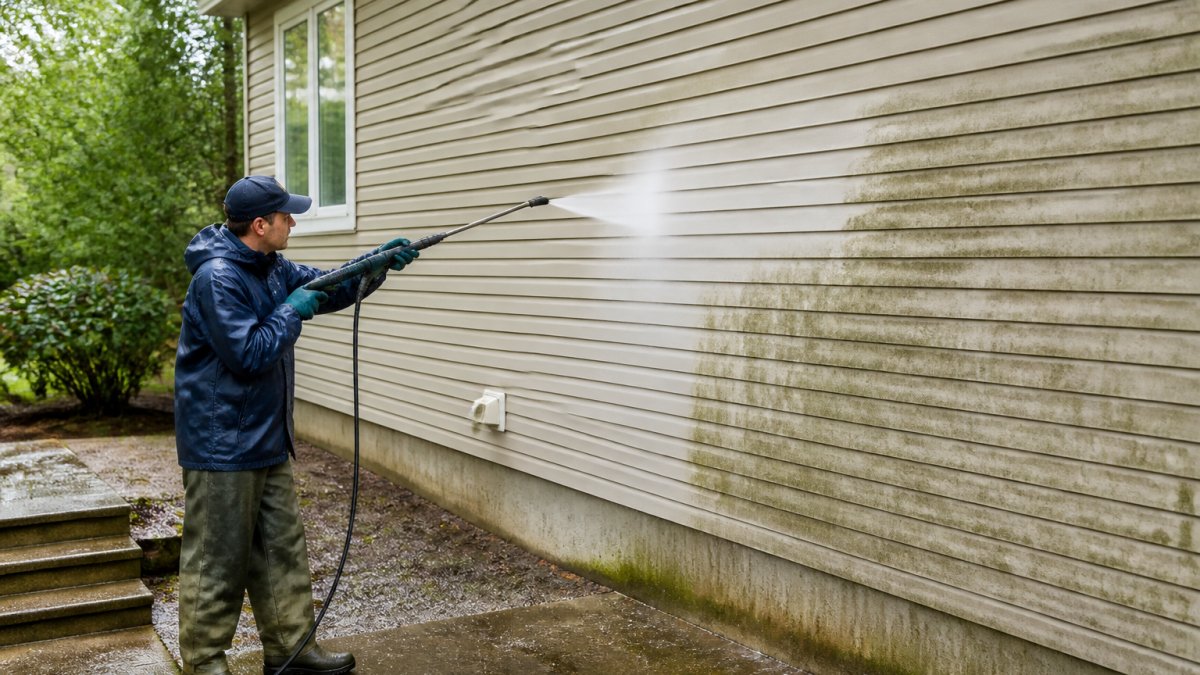
Pressure washing house siding safely requires understanding your equipment and surfaces. Too much pressure damages siding, forces water behind panels, and causes long-term structural problems; too little leaves dirt behind.
Most residential pressure washers operate between 1,500 and 3,000 PSI (pounds per square inch). For most siding, 1,500 to 2,000 PSI is appropriate; delicate surfaces like timber need 1,000 to 1,500 PSI.
Key safety practices:
- Start with lower pressure and increase gradually if needed
- Keep the nozzle at least 2 metres away from siding
- Use a wide spray pattern rather than a concentrated jet
- Never point the spray directly at windows, vents, or gaps where water can enter
- Wear safety glasses and gloves
- Clear the area of people, pets, and outdoor furniture
- Test on an inconspicuous area first
Water forced behind siding causes rot, mould, and structural damage that's expensive to repair. If you're unsure about pressure settings or technique, hire a professional. AquaBlast Elite's skilled professionals use modern equipment and know exactly how much pressure each surface type can handle.
Soft Washing a House: A Gentler Alternative
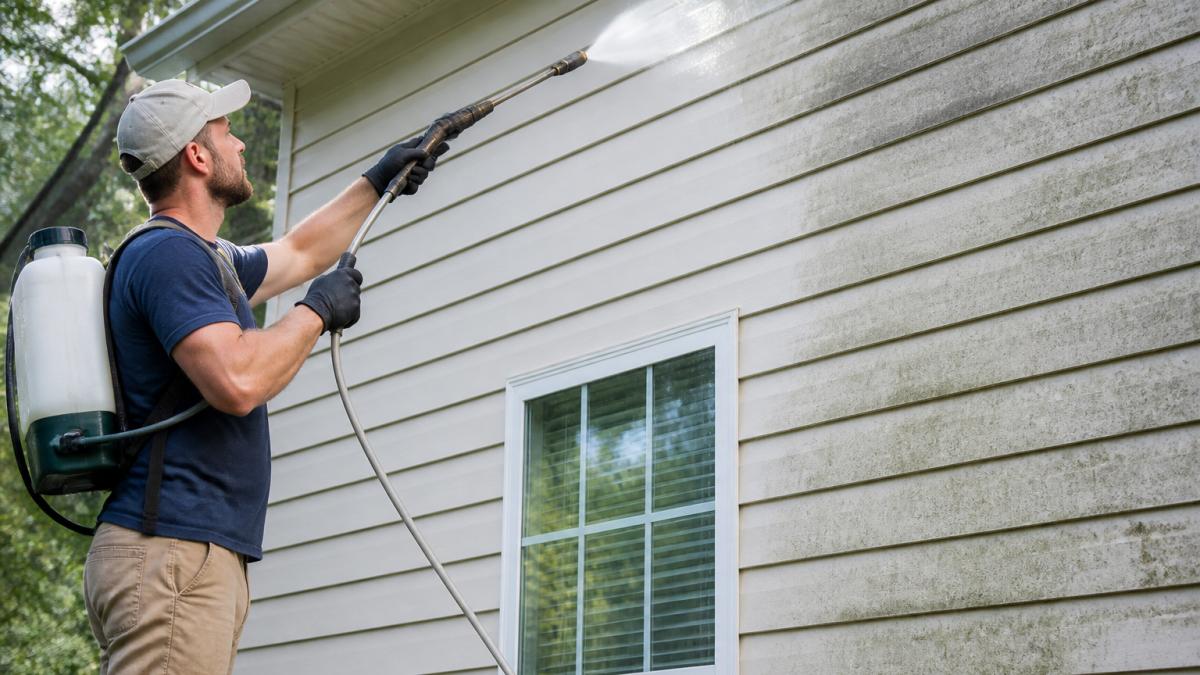
Soft washing is a low-pressure method that uses specialised cleaning solutions to remove organic growth without the force of traditional pressure washing.
Soft washing works by applying a biodegradable cleaning solution, letting it sit, then rinsing gently with low-pressure water. The solution breaks down organic growth and dirt, making them easier to remove.
When to choose soft washing:
- Timber siding or decking
- Old or deteriorating render
- Painted surfaces that are flaking
- Brick homes in poor condition
- Any surface where high pressure could cause damage
Soft washing is also better for the environment: the solutions are biodegradable and don't force water into soil or stormwater systems at high velocity, which matters if you have gardens or environmental concerns.
The trade-off is time: soft washing takes longer and costs more because it requires specialised equipment and solutions. But for delicate surfaces it's the only safe option, while for stubborn dirt on durable surfaces pressure washing is faster and more cost-effective.
Understanding Pressure Washing House PSI Settings
PSI (pounds per square inch) measures the force of water leaving the nozzle. Higher PSI means more cleaning power but also more risk of damage.
Recommended PSI by surface type:
| Surface | Recommended PSI | Nozzle | Method |
|---|---|---|---|
| Timber siding | 1,000-1,500 | 40° white | Soft wash or low pressure |
| Fibre cement | 1,500-2,000 | 25° green | Low to moderate pressure |
| Brick | 1,500-2,500 | 25° green | Moderate pressure, wide fan |
| Concrete | 2,500-3,500 | 25° or 15° | Higher pressure |
| Painted surfaces | 1,200-1,800 | 40° white | Low to moderate pressure |
| Metal gutters | 1,500-2,000 | 40° white | Low to moderate pressure |
Concrete and pavers can handle higher PSI because they are hard and non-porous. Siding materials are more vulnerable.
Nozzle choice. The colour-coded nozzle controls the spray angle. A 0° red nozzle is a pencil jet and should never be used on a house exterior; it etches concrete, strips paint and cuts into timber.
Distance. Pressure drops with distance: a nozzle 300 mm from weatherboard delivers far more impact than one 2 metres away.
GPM. GPM (gallons per minute) is the flow rate. Higher GPM cleans faster because more water carries dirt away, but it uses more water and can overwhelm drainage.
Damage mechanisms to avoid. Water forced behind siding causes rot, mould and structural damage.
Key safety practices:
- Start with lower pressure and increase gradually only if needed
- Use the widest nozzle that still removes the dirt
- Keep the nozzle at least 2 metres from siding
- Use a wide spray pattern rather than a concentrated jet
- Never point the spray directly at windows, vents, weep holes or gaps where water can enter
- Work top to bottom and rinse in sections so dirty water does not streak clean surfaces
- Wear safety glasses, gloves and non-slip footwear
- Clear the area of people, pets and outdoor furniture
- Test on an inconspicuous area first
Most homeowners don't own equipment that adjusts PSI, GPM and nozzle precisely, and rental machines are often set for concrete, not cladding. If you're unsure about settings, distance or technique, hire a professional: a trained operator will match the machine, nozzle and pressure to each surface and use soft washing where pressure is inappropriate.
Frequently Asked Questions
How often should I pressure wash the exterior of my house?
Most homeowners should pressure clean their exterior house once every 10-12 months as a general rule of thumb. However, frequency depends on your local climate, weather exposure, and the amount of visible dirt, mould, and algae buildup. Coastal properties or homes in humid environments may need cleaning every 6-9 months, while drier regions might extend to 18 months between washes. Annual cleaning helps prevent long-term damage and maintains your home's fresh appearance.
What is a good PSI to pressure wash a house?
For most house siding, use appropriate PSI settings to safely remove dirt and grime without causing damage. Delicate surfaces like timber siding or older brick require lower pressure. Concrete driveways and patios can handle higher PSI. Always start at the lowest effective pressure and increase gradually. Soft washing, which uses lower pressure combined with cleaning solutions, is often safer for fragile exterior surfaces.
Is soft washing safer than pressure washing for house siding?
Soft washing a house is typically safer for delicate siding materials, particularly timber, older brick, and painted surfaces. It uses low pressure combined with biodegradable cleaning solutions to remove organic growth, dirt, and stains without risk of surface damage or paint stripping. Pressure washing works better for concrete and heavily soiled surfaces. Choose soft washing if you're concerned about damaging your siding; it's equally effective at removing mould, mildew, and algae.
What signs show that a house exterior needs cleaning?
Look for visible mould, mildew, or algae growth on your siding, roof, or deck. Dark streaks, discolouration, or a dull, grimy appearance indicate surface buildup. Coastal properties may show white salt deposits or staining. If your home hasn't been cleaned in over 12 months, or if rainfall and humidity have increased visible organic growth, it's time to schedule cleaning. Don't wait for heavy staining; regular maintenance prevents long-term damage to your exterior surfaces.