 blog
blog
Is Pressure Cleaning Safe for Painted Surfaces?
Table of Contents
- How Pressure Cleaning Affects Painted Surfaces
- Soft Washing vs Pressure Washing: Which Method Protects Paint?
- Safe PSI for House Washing: A Guide by Surface and Paint Type
- Pre-Cleaning Inspection: What to Check Before You Start
- Common Mistakes That Strip Paint and Cause Peeling
- Preventing Mold Regrowth on Exterior Walls After Cleaning
- When to Call a Professional Pressure Cleaning Service
- Frequently Asked Questions
Last Updated: September 30, 2026
How Pressure Cleaning Affects Painted Surfaces
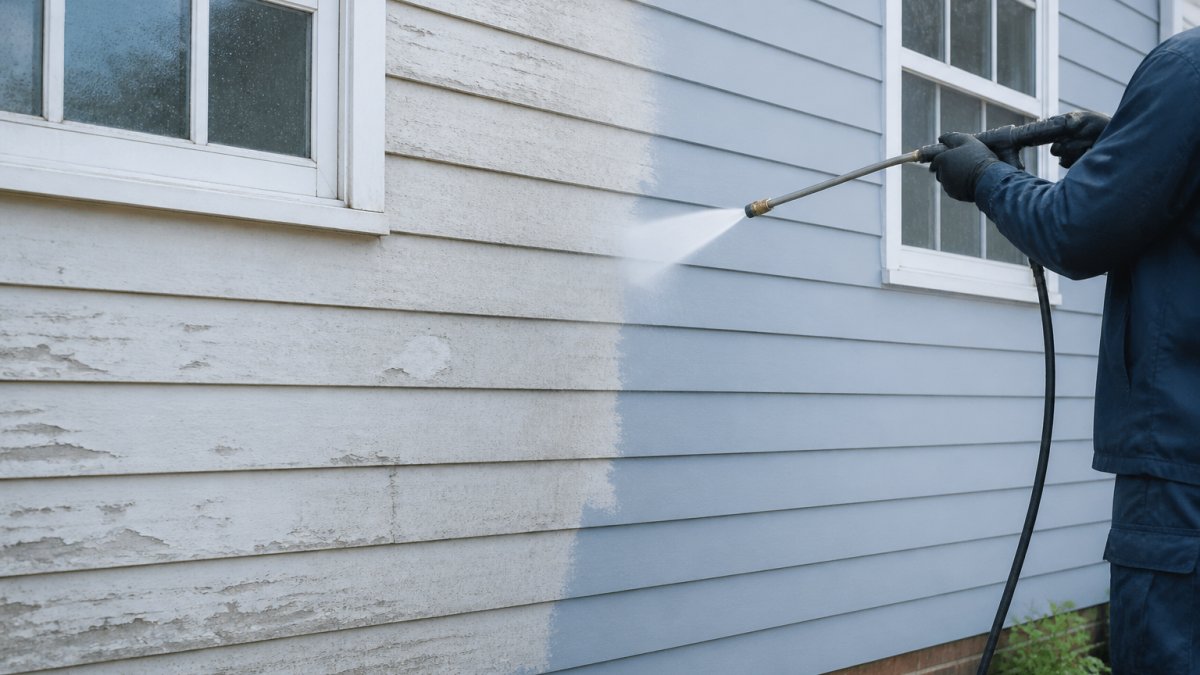
Is pressure cleaning safe for painted surfaces? Only when water pressure, nozzle choice and technique match the coating. Get one wrong and you'll strip paint, force water behind boards, or etch the surface in seconds.
What Water Pressure Actually Does to Paint
High-pressure cleaning removes dirt by force, not chemistry. That works on concrete, but on paint the same force attacks three things at once:
- Paint adhesion - the bond between coating and substrate
- Surface integrity - the film itself, plus any filler or render beneath
- Joints and seals - window frames, corner trim, expansion gaps
Signs Your Paint Is Already Compromised
Check before you clean. Any of these mean the surface is already failing:
- Chalking - a powdery residue that rubs off on your hand
- Alligatoring - a cracked, reptile-skin pattern in the coating
- Peeling or flaking edges, especially near the bottom of walls
- Bubbles or blisters that flex when pressed
Soft Washing vs Pressure Washing: Which Method Protects Paint?
Soft washing is safer for painted surfaces because it cleans with low pressure and a cleaning solution rather than force.
Safe PSI for House Washing: A Guide by Surface and Paint Type
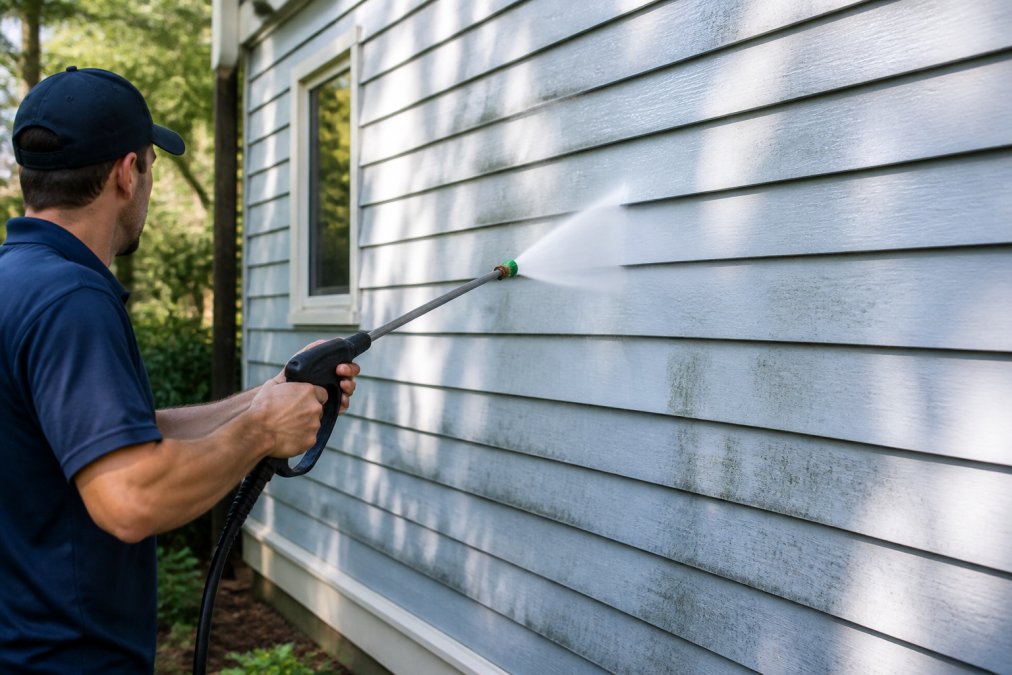
Safe PSI for house washing depends on the surface and coating, but most painted exteriors should be cleaned at 500 to 1,200 PSI. Anything above that risks paint stripping and substrate damage.
| Surface | Safe PSI | Nozzle Tip | Risk If Too High |
|---|---|---|---|
| Painted weatherboard | 500-800 | 40° white | Paint stripping |
| Painted render | 500-1,000 | 40° white | Surface abrasion |
| Timber decking | 500-1,200 | 40° white | Grain raising |
| Brick masonry | 1,000-1,500 | 25° green | Mortar erosion |
| Bare concrete | 2,500-3,000 | 25° green | Surface etching |
| Colorbond roofing | 1,000-1,500 | 40° white | Coating scuffing |
Nozzle Selection: Why the Tip Matters More Than the Machine
The nozzle tip controls the spray angle, which controls how concentrated the force is. A 0° red tip fires a pencil-thin jet that cuts through paint; a 40° white tip spreads the same water across a wide fan, dropping impact to something paint can survive.
Pre-Cleaning Inspection: What to Check Before You Start
A two-minute inspection prevents most paint damage, but its real purpose is deciding whether pressure cleaning is safe at all. Walk the wall and work through these five checks.
- Loose, flaking or blistered paint. Run the back of your hand across the surface. If flakes come away, the bond has failed, pressure cleaning will remove the paint, not clean it. Repaint first.
- Cracked or missing sealant around windows and doors. Sealant stops water entering the wall cavity; if cracked, pressure forces water through. Re-seal before cleaning and never spray directly at a joint.
- Rotted timber or soft spots. Press a screwdriver into the timber; if it sinks easily, the substrate is compromised and water will worsen the rot. Cleaning won't fix it.
- Water stains or mould behind the coating. Stains under the paint film mean moisture is already trapped; pressure cleaning pushes more in and lifts the coating from behind.
- Electrical outlets, light fittings and air conditioner units. Cover or isolate these before applying water, a jet can force water into a fitting that looks sealed.
Diagnosing Paint Failure Before You Clean
The checklist tells you whether to clean. Next, identify how the paint is failing, because different failures respond differently to water pressure. Most painted exteriors can fail in several ways:
- Chalking. A powdery residue that rubs off on your hand, the binder breaking down under UV. The coating is thin and weak, so pressure cleaning strips the chalk and leaves a dull, uneven surface. Soft wash with mild detergent, then recoat.
- Alligatoring. A cracked, reptile-skin pattern from a new coat applied over an old, incompatible or poorly prepared one. Cracks reach the substrate, and pressure cleaning opens them further. Sand and repaint, don't clean.
- Peeling or flaking edges. Usually starts near the bottom of walls or around joints where water gets in. If edges are lifting, pressure finishes the job. Soft washing is the only safe method, and loose paint should still be removed and the edge feathered first.
- Bubbles or blisters. These flex when pressed and indicate moisture trapped under the film. Pressure cleaning bursts them and drives water into the substrate, a moisture problem first, a cleaning problem second.
What to Do With the Results
Once you've identified the failure, the decision is straightforward:
- Sound paint, no failures. Pressure cleaning is safe at low pressure with a wide nozzle, follow the PSI and nozzle guidance below.
- Chalking or light surface dirt. Soft wash only, using a low-pressure pump sprayer or a pressure washer on its lowest setting with a 40° tip. Let the solution do the work.
- Peeling, blistering or alligatoring. Do not pressure clean. Remove loose paint, treat the substrate, and repaint. Cleaning comes after the repair.
- Rotted timber or compromised substrate. Repair or replace the timber first. Cleaning is pointless until the structure is sound.
A common mistake is treating these failures as dirt. They're paint that has lost its grip, and pressure will finish the job. The inspection decides whether you pick up a pressure washer or a paintbrush.
Common Mistakes That Strip Paint and Cause Peeling
The biggest mistake is starting with maximum pressure. It's the fastest way to strip a wall, and it happens in seconds.
Other repeat offenders:
- Holding the wand too close - force multiplies as distance shrinks
- Spraying upward - drives water behind cladding and into the wall
- Using a 0° or 15° tip on paint - cuts straight through the coating
- Cleaning in direct sun - detergent dries before it works, leaving streaks
- Skipping the rinse - leftover chemical cleaning residue damages the coating
Preventing Mold Regrowth on Exterior Walls After Cleaning
Preventing mould regrowth on exterior walls comes down to two things: killing the growth completely and removing the conditions it needs to return. Blasting mould off without treating it guarantees regrowth within months, and on painted surfaces, that pressure also damages the paint protecting the wall.
Why Mould Returns After Pressure Cleaning
Pressure cleaning blasts surface growth away but doesn't kill the spores that have worked into the paint film and substrate. Those remain, and once moisture returns they germinate, regrowth within weeks or months, often in the same pattern.
The Post-Cleaning Regrowth Prevention Plan
After cleaning, the goal is to remove the conditions mould needs. Work through these steps:
- Treat the wall with a residual mould inhibitor once dry. Unlike the cleaning solution, a residual inhibitor stays on the surface and prevents new growth. Apply 24 to 48 hours after cleaning, once the wall has dried completely.
- Fix leaking gutters, downpipes and overflow points. Mould on a wall is often a symptom of a plumbing problem above it; if water runs down the wall every time it rains, cleaning won't stop regrowth.
- Trim vegetation back to improve airflow. Shrubs and trees hold moisture against the surface and block sun; a gap of at least 30 centimetres makes a measurable difference.
- Clear soil or mulch above the damp course. Soil against the base wicks moisture upward; if it bridges the damp course, the damp course can't do its job.
- Recoat with mould-resistant exterior paint when due. Modern exterior paints often contain fungicides that slow mould growth; if the coating is old or chalky, a recoat is the most durable long-term fix.
Shaded Walls Need a Different Schedule
The safest rule for painted surfaces: if in doubt, drop the pressure and widen the nozzle. Soft washing protects the coating and treats the mould at the root; brute force removes the paint and leaves the spores behind.
When to Call a Professional Pressure Cleaning Service
Call a professional when the surface is painted, aged or valuable. Once paint is involved, a DIY mistake on a weatherboard wall can mean a full repaint, a far bigger bill than the cleaning itself.
Signs it's time to hand it over:
- The paint is already chalking, cracking or peeling
- You're dealing with two-storey walls or steep roof lines
- There's mould across a large area, not just a patch
- The surface is heritage timber or a delicate coating
- You need the job done before a sale or inspection
Frequently Asked Questions
Will a pressure washer take paint off?
Yes, if the pressure is too high or the paint is already failing. Pressure cleaning painted surfaces at 3000+ PSI will strip loose or chalky paint in seconds. Even intact paint can be damaged by a narrow, concentrated nozzle tip. The key is matching PSI to the surface: around 1200-1500 PSI with a wide fan tip for most painted timber and weatherboard, and lower again for older or chalky coatings. If paint is already peeling, blistered or alligatored, cleaning will make it worse regardless of pressure.
Can I pressure wash my painted deck?
You can, but it needs care. Timber decking holds a thin coating that pressure cleaning can strip quickly if the wand is held too close or the PSI is too high. Use a wide fan spray at 1000-1200 PSI, keep the wand moving, and never hold it in one spot. Better still, use a soft wash approach with a detergent and low pressure, then rinse. If boards are soft, splitting or the coating is already flaking, cleaning will lift more paint and you may be better off sanding and recoating instead.
What is the difference between soft washing and pressure cleaning?
Soft washing uses low pressure (under 500 PSI) combined with cleaning detergents to break down organic growth like mould, mildew and algae. Pressure cleaning relies on high-pressure water alone to blast dirt away. For painted surfaces, soft washing is almost always the safer choice because it cleans without forcing water behind the coating or stripping it. Pressure cleaning suits hard, unpainted surfaces like concrete, brick and pavers where the surface can handle the force.
How do I clean painted exterior walls without damaging the finish?
Start with a pre-cleaning inspection to check for peeling, chalking or alligatoring. If the paint is sound, use a soft wash method: apply a cleaning solution, let it dwell, then rinse at low pressure with a wide fan nozzle. Keep PSI under 1500 for painted weatherboard, and under 1000 for older coatings. Test a small hidden area first. Always work top to bottom and keep the wand moving to avoid surface abrasion. If the paint is already failing, cleaning will not fix it, so plan to repaint.