 how-to
What Is Soft Washing and How Does It Work?
Table of Contents
- What Is Soft Washing and How Does It Work?
- The Low-Pressure Process, Step by Step
- Soft Washing vs Pressure Washing: Key Differences
- Soft Wash Solution and Equipment: What Gets Used
- How to Soft Wash a House: A Practical Walkthrough
- Which Surfaces Suit Soft Washing (and Which Don't)
- How Often to Soft Wash a House
- DIY vs Hiring a Professional
- Common Mistakes and Troubleshooting
- Frequently Asked Questions
Last Updated: October 8, 2026
What Is Soft Washing and How Does It Work?
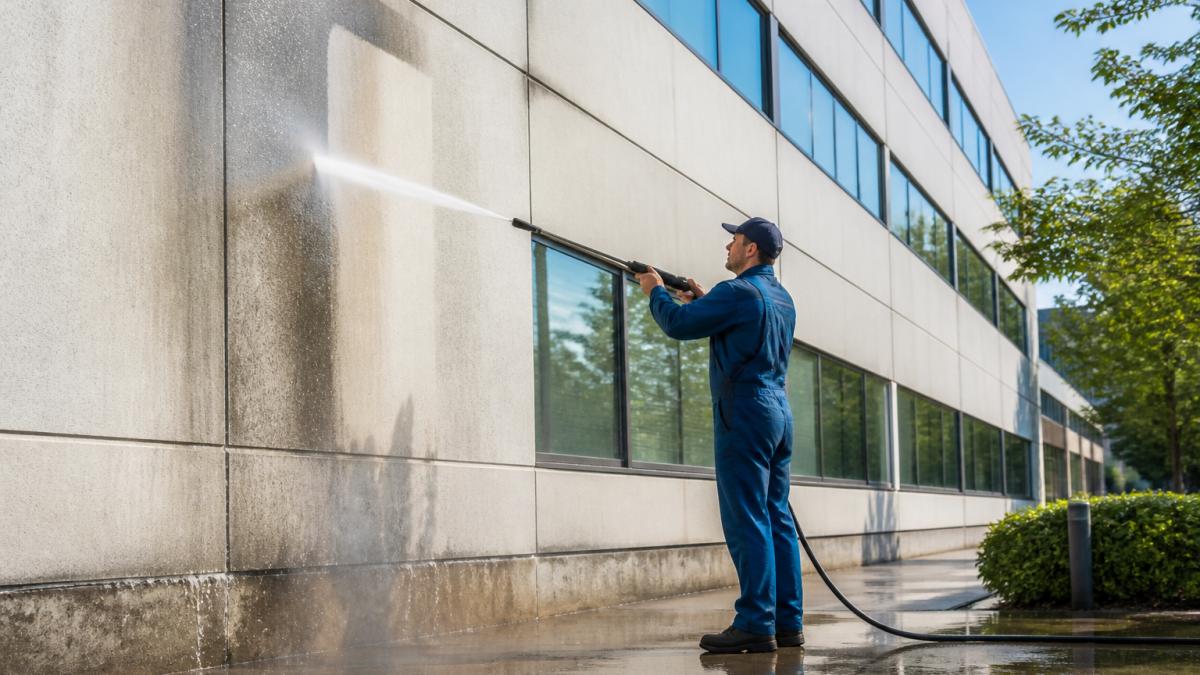
Soft washing is a low-pressure exterior cleaning method that combines specialised cleaning solutions with gentle water pressure, usually below 500 PSI, to remove algae, mould, mildew and grime.
High pressure can scar timber, crack render and strip paint; soft washing cleans the same surfaces without the damage.
The short answer: soft washing is often a safer choice for many exterior surfaces except bare concrete.
The Low-Pressure Process, Step by Step
The soft wash process often has four stages.
- Inspection and preparation. We check the surface, note fragile areas, and cover plants and outdoor furniture.
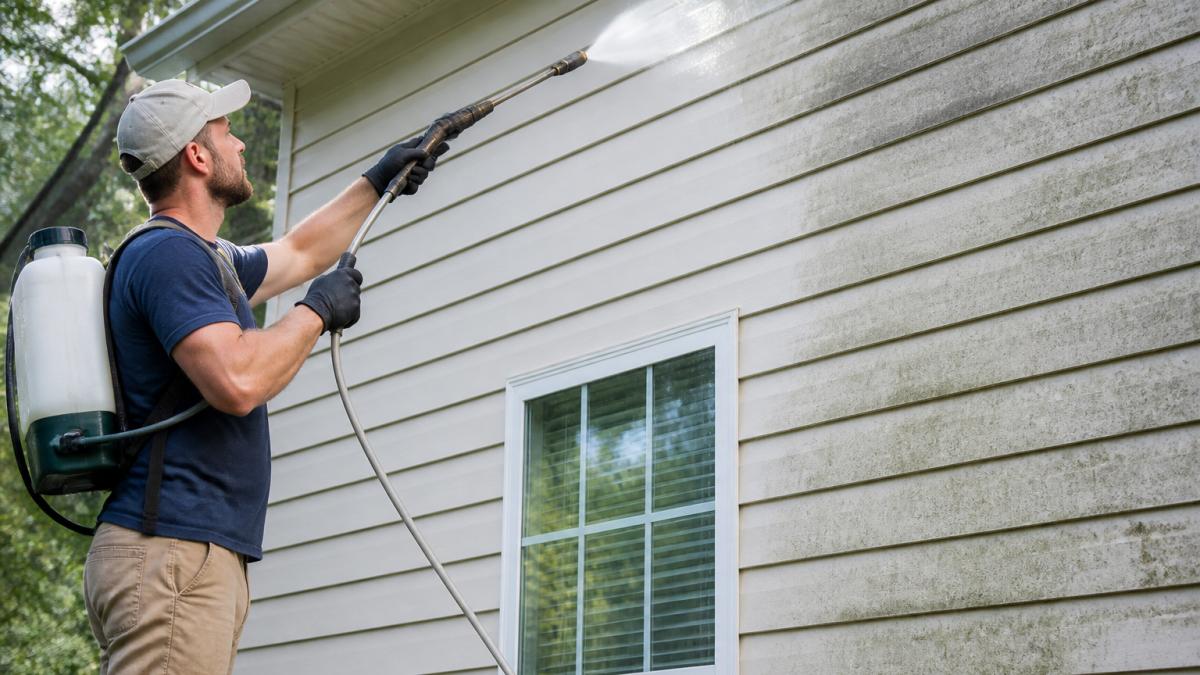
- Solution application. A pump system delivers the cleaning mix at low pressure through a spray nozzle.
- Dwell time. The solution sits on the surface, usually for several minutes, breaking down organic growth.
- Rinse. A gentle wash removes the loosened dirt, algae and residue.
The cleaning solution does the heavy lifting; water pressure only rinses.
How the cleaning solution kills organic growth
Algae, mould and mildew are living organisms that root into porous surfaces like render, timber and roof tiles. Blasting them off with water leaves the roots behind, so growth returns within weeks.
A soft wash solution kills the growth at the root. Sodium hypochlorite is the active ingredient in most professional mixes, and a surfactant helps it cling to vertical surfaces.
Soft Washing vs Pressure Washing: Key Differences
The main difference is pressure. Soft washing uses water pressure below 500 PSI, while pressure washing runs from 1,500 PSI to over 3,000 PSI. Soft washing relies on chemicals; pressure washing relies on force.
| Feature | Soft Washing | Pressure Washing |
|---|---|---|
| Water pressure | Below 500 PSI | 1,500-3,000+ PSI |
| Cleaning method | Cleaning solution | Water force |
| Best for | Render, timber, roofs, painted walls | Concrete, pavers, driveways |
| Risk of damage | Low | High on delicate surfaces |
| Results last | Longer, kills growth at root | Shorter, growth can return |
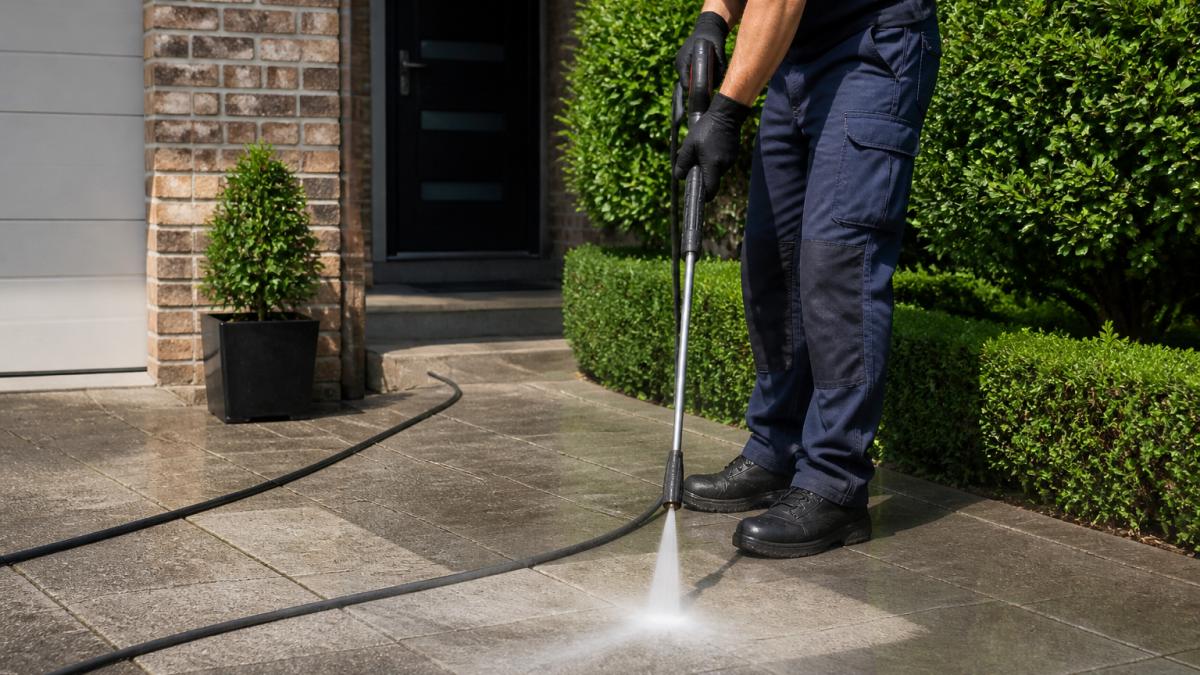
Pressure washing has its place: bare concrete driveways and paths handle high pressure well. But point one at a painted weatherboard wall or older timber deck and you risk stripping paint, gouging wood and forcing water behind the cladding.
Soft Wash Solution and Equipment: What Gets Used
A professional soft wash setup is built around three things: the solution, the pump, and the spray equipment.
The solution. Most mixes use sodium hypochlorite as the active cleaner, plus a surfactant to help it stick to vertical surfaces.
The pump system. Soft wash rigs use an electric or air pump to move solution at low pressure.
The spray nozzle. A dedicated soft wash nozzle spreads the solution evenly.
Choosing and diluting a mix for the surface
There is no single correct mix. The right strength depends on the surface, the level of growth, and how sensitive the surrounding area is:
- Light organic film on a painted wall: a mild mix with a higher proportion of water and a surfactant is usually enough.
- Heavy black or green growth on render or roof tiles: a stronger sodium hypochlorite mix, applied in stages rather than all at once.
- Timber decks and fences: a gentler approach, because strong hypochlorite can bleach and dry out timber over time.
Dilution is normally done by adding the concentrated sodium hypochlorite to water, not the other way around, and by measuring rather than guessing. Most practitioners work in ratios, for example, one part concentrate to several parts water, and adjust based on a test patch. Always follow the product label directions, because safe working concentration and protective equipment vary between products.
Dwell time: how long the solution stays on
Dwell time is the period the solution is left on the surface before rinsing. It is the step most often rushed, and the main reason soft-washed surfaces sometimes regrow within weeks.
Several minutes of contact time is typical for organic growth on porous surfaces, but the correct dwell time depends on:
- The surface. Porous render and roof tiles absorb solution and may need longer than a sealed painted wall.
- The growth. Light algae film breaks down faster than deep black mould or lichen.
- The weather. Solution dries out faster in sun and wind, so apply in cooler conditions or work in sections to keep the surface wet.
A common pattern is to apply, wait, then check a small area before rinsing the whole surface. If the growth has not visibly loosened, give it more time rather than reaching for a stronger mix.
Safe handling and equipment care
Sodium hypochlorite is corrosive, and the equipment used to apply it needs to match:
- Wear eye protection, gloves and suitable clothing, and avoid breathing mist.
- Never mix sodium hypochlorite with acids or ammonia-based cleaners, because the reaction can release dangerous gases.
- Rinse pumps, nozzles and tanks after use, because hypochlorite residue shortens equipment life.
How to Soft Wash a House: A Practical Walkthrough
Here is how a professional house wash runs, start to finish.
- Walk the property. Note the surfaces, check for cracked render or loose paint, and find the outdoor taps.
- Protect the surroundings. Cover garden beds, outdoor furniture and vehicles. Wet down plants before and after.
- Pre-treat tough spots. Apply solution to heavy growth areas first so it gets extra dwell time.
- Apply from the bottom up. Start low and work upward so the solution does not streak down over clean areas.
- Let it dwell. Give the solution time to kill the growth. Rushing this step is the most common mistake.
- Rinse from the top down. Wash everything off at low pressure, working with gravity.
- Do a final check. Look for missed patches and rinse any overspray off paths and plants.
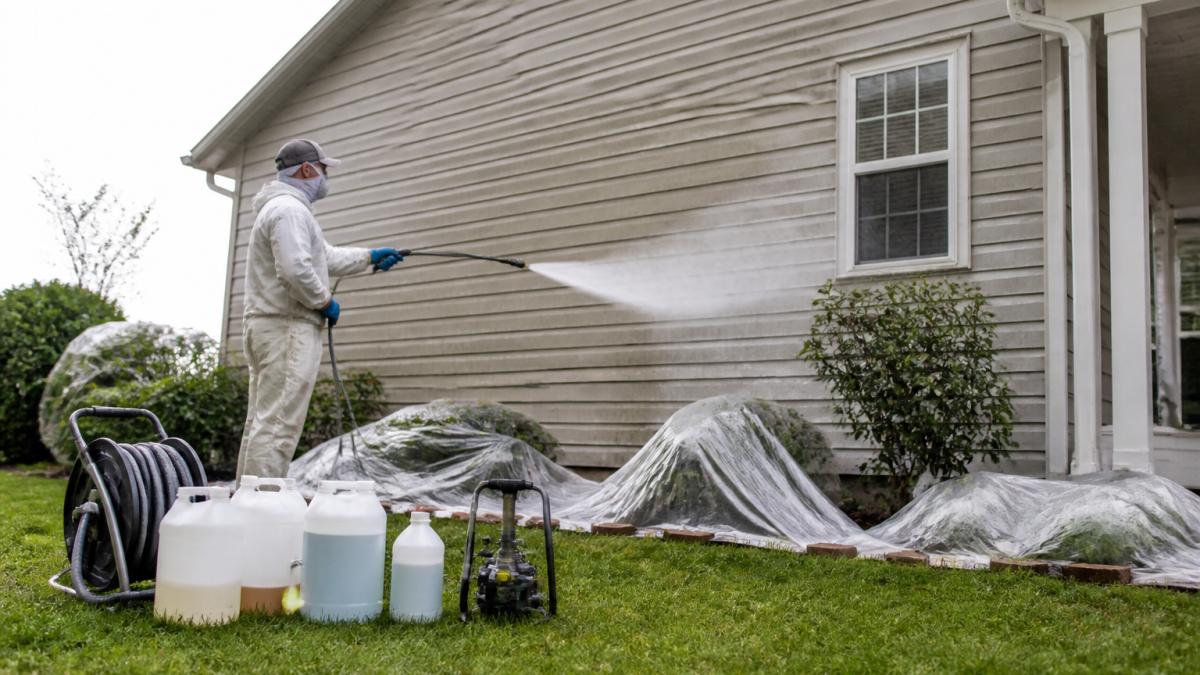
Protecting Plants, Pets and Runoff
Chemical runoff is the number one concern homeowners raise, and a fair one.
- Cover or wet down garden beds before you start
- Rinse plants with fresh water immediately after the job
- Keep pets and children indoors until surfaces are dry
A responsible operator plans for runoff before the first drop leaves the tank. If a provider cannot explain where their wastewater goes, that is a red flag.
Which Surfaces Suit Soft Washing (and Which Don't)
Soft washing suits most exterior surfaces: painted render, weatherboard, brick, roof tiles, timber decks, fences, and facades with delicate finishes. But "most" is not "all", and the difference between a good result and an expensive repair often comes down to knowing which surfaces need a test patch, which need a specialist, and which should not be soft washed at all.
Surfaces that generally suit soft washing
- Painted walls and rendered facades
- Roof tiles and metal roofs
- Timber decks, fences and pergolas
Surfaces that need a test patch first
A test patch is a small, inconspicuous area cleaned first and inspected after it dries, the cheapest insurance in exterior cleaning. Surfaces that warrant one include:
- Older or weathered timber. Strong hypochlorite can bleach grain and raise fibres. Test a board, let it dry, and check the colour and texture before committing.
- Colorbond and painted metal. Some finishes tolerate a mild mix well; others show dulling or chalking. Test near a hidden edge.
- Render with existing cracks or hollow spots. Solution can penetrate and hold moisture, so test and inspect for movement.
Surfaces to avoid, or treat with care
- Bare concrete that needs high-pressure stripping. Soft washing will not remove deep-set grime or old coatings; that is a pressure-washing or mechanical job.
- Very old or rotting timber. Water and chemical exposure can accelerate decay in timber that is already failing.
- Surfaces with flaking paint already failing. Cleaning will not fix a paint problem, and the loose coating may come away during the rinse.
When to call a specialist
Some jobs are not DIY territory, however straightforward the surface looks:
- Steep or fragile roofs. Working at height on tiles or metal carries fall and breakage risks that outweigh the cleaning benefit.
- Two-storey and above. Reach, runoff control and equipment handling all become harder.
- Heritage or period properties. Original render, lime mortar and old timber need methods that differ from modern surfaces.
The general rule: if water force could damage it, soft washing is the safer path, but if the surface is fragile, historic, or unknown, test it or hand it to someone who has seen it before.
How Often to Soft Wash a House
Most homes may benefit from a soft wash every 12 to 18 months. Properties near the coast, under heavy tree cover, or in damp, shaded spots may often need it every 6 to 12 months.
Signs it is time to book a clean:
- Green or black staining on walls or roof
- Chalky, dull-looking render
- Mould appearing on shaded sides of the house
- Decking turning grey or slippery
Regular soft washing can help protect the surface itself: organic growth holds moisture against render and timber, potentially speeding up decay over time.
DIY vs Hiring a Professional
You can soft wash a house yourself, but it requires careful attention to detail.
DIY works if you have the right pump, the right mix, and the patience to do it properly. It can go wrong when people use a pressure washer on a low setting and call it soft washing, as it is not the same thing.
Hiring a professional makes sense when:
- The surface is delicate or expensive to replace
- The job involves a roof or two-storey walls
- You need the result to last before a sale or inspection
- You are unsure how strong the solution should be
For commercial properties, hiring a professional can be highly beneficial. A botched DIY clean on a shopfront or office facade can be costly to rectify.
Common Mistakes and Troubleshooting
Many soft wash failures can be attributed to a handful of avoidable errors.
Mistake 2: Skipping dwell time. Solution needs minutes to work.
Mistake 3: Applying top-down. Solution streaks down over already-clean areas, leaving marks behind.
Mistake 4: Ignoring the plants. Overspray kills garden beds fast. Cover and rinse, every time.
Mistake 5: Using the same mix everywhere. Different surfaces need different strengths.
Frequently Asked Questions
How often should a house be soft washed?
Most homes may benefit from a soft wash every 12 to 24 months. Properties near the coast, surrounded by trees, or in humid areas may often need it more frequently, sometimes every 6 to 12 months. If you notice green algae, black mould streaks or moss on your roof or walls, it can be a good time to consider a clean. Regular soft washing can also help prevent organic growth from returning as quickly.
What is the difference between soft washing and pressure washing?
Soft washing uses low pressure, usually below 500 PSI, combined with cleaning solutions to kill mould, algae and mildew at the source. Pressure washing relies on high-pressure water alone to blast dirt away. Soft washing is safer for delicate surfaces like render, timber, roof tiles and painted walls, while pressure washing suits hard surfaces like concrete driveways and pavers.
What surfaces can be cleaned with soft washing?
Soft washing works on roof tiles, Colorbond and metal roofs, render, brick, weatherboard, timber decks, fences, fibro, painted surfaces, gutters and solar panels. It's the preferred method for anything that could be damaged by high pressure. Concrete driveways and pavers can also be soft washed, though some may need a light pressure rinse afterward for stubborn stains.
Can soft washing help prevent mould from returning?
Yes. Soft washing doesn't just remove surface stains; the cleaning solution kills mould, algae and mildew spores at the root. Because the growth is eliminated rather than just washed away, regrowth can be slower. How long it stays clean depends on your environment, but many homes can remain mould-free for 12 to 24 months with a proper soft wash.
Restoring an exterior takes the right method, the right mix, and the right hands. AquaBlast Elite brings professional-grade equipment, customised solutions for every surface, and a team that treats your property like its own. Get started with AquaBlast Elite and see your home or commercial facade looking its best again.