 how-to
How to Clean Timber Decks Safely: A Step-by-Step Guide
Table of Contents
- Why Safe Timber Deck Cleaning Matters
- Preparation and Clearing the Area
- Best Timber Deck Cleaning Products and Solutions
- Step-by-Step Cleaning Process
- How to Remove Mould from Timber Decking
- Common Mistakes When Cleaning Timber Decks
- Safety Gear and Environmental Considerations
- Post-Cleaning Maintenance and Oiling
- Frequently Asked Questions
Last Updated: September 18, 2026
Why Safe Timber Deck Cleaning Matters
A timber deck exposed to the elements deteriorates quickly without proper care. Weathering, mould, algae buildup, and discolouration transform an attractive outdoor space into an eyesore. But here's what most homeowners get wrong: aggressive cleaning methods damage the wood fibers more than the dirt does.
The goal isn't just to clean timber decks safely. It's to restore the wood's appearance without compromising its structural integrity or protective coatings. AquaBlast Elite has worked with property owners across the region who've learned this lesson the hard way, either through DIY mishaps or poor contractor choices.
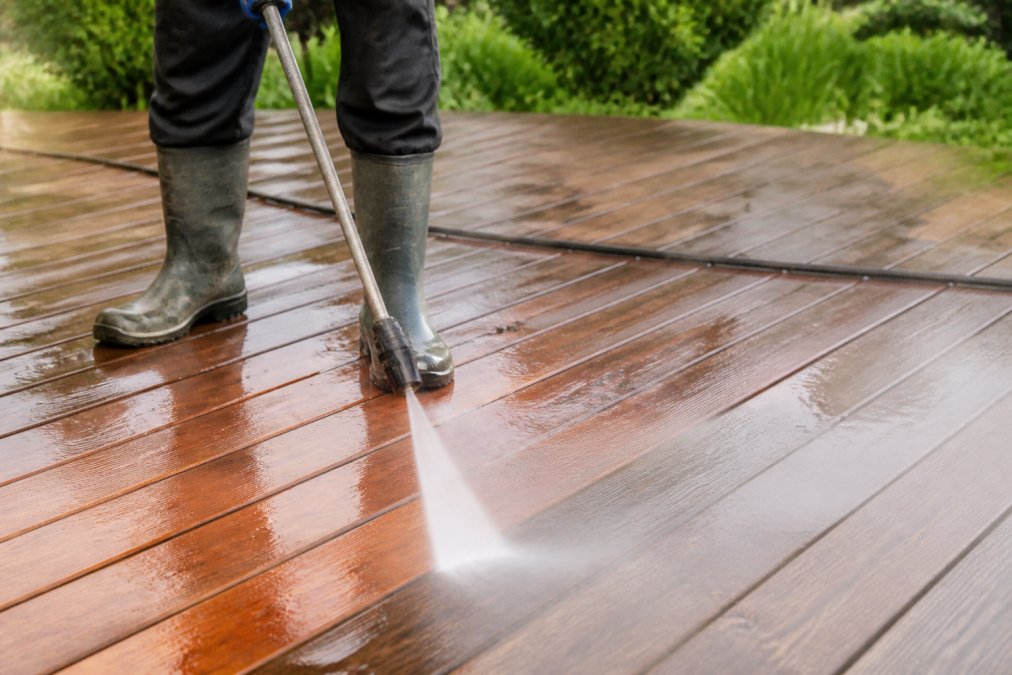
Pressure washing at high intensity strips the wood grain, opens the surface to moisture penetration, and accelerates decay. Chemical damage from harsh detergents and bleach does the same. The right approach combines gentle cleaning techniques with appropriate products that preserve the wood while removing stains and biological growth.
Preparation and Clearing the Area
Before you touch the deck with any tool or solution, prepare the space properly. This step determines whether your cleaning goes smoothly or creates new problems.
Remove all loose items: furniture, planters, grills, and doormats. Sweep away leaves, twigs, and debris with a broom. These particles trap moisture against the wood and can scratch the surface during scrubbing.
Next, inspect the deck for hazards. Check for loose boards, protruding nails, and rotted sections. Mark any damaged areas, you'll avoid putting pressure on weak spots. If wood is soft or crumbling, that section needs professional repair before cleaning.
Protect adjacent surfaces. Drape plastic sheeting over nearby garden beds, outdoor electrical outlets, and any plants you want to shield from cleaning solution runoff. Wet these areas first so they can absorb water without damage.
Best Timber Deck Cleaning Products and Solutions
The cleaning product you choose determines whether your deck emerges restored or damaged. This is where most mistakes happen.
pH-Neutral Cleaners for Timber
pH-neutral deck cleaners are formulated specifically for timber surfaces. These products lift dirt and biological growth without harming wood fibers or stripping protective oils.
Look for cleaners labelled "pH-neutral" or "deck-safe." They typically contain mild surfactants that break down grime without the corrosive action of strong acids or alkalines. These solutions work effectively on algae, mildew, and light discolouration.
The application is straightforward: dilute according to manufacturer instructions, apply with a soft-bristled brush or low-pressure spray, let it sit briefly (usually 10-15 minutes), then rinse thoroughly. The wood absorbs the cleaning action rather than being blasted by force.
Many homeowners find that a quality pH-neutral cleaner removes 80-90% of visible staining without additional scrubbing. This means less labour and less wear on the wood.
What to Avoid: Chemicals That Damage Wood
Certain products cause permanent harm to timber decking. Understanding what not to use prevents costly damage.
Bleach is the most common culprit. Undiluted or even diluted bleach kills mould and mildew but also damages wood fibers, lightens the grain permanently, and leaves the surface vulnerable to moisture. Bleach runoff harms garden plants and aquatic life in storm drains.
Harsh acids (like muriatic acid) etch the wood surface and can cause tannin stains, dark discolourations that are difficult to reverse. These products are designed for concrete, not timber.
Alkaline degreasers strip natural oils from the wood and leave a residue that attracts dirt faster. The wood becomes dull and chalky.
Undiluted detergents leave a film on the surface that traps moisture, leading to rot and mould regrowth within weeks.
The safest approach: stick to products labelled for timber decks. If you're uncertain, test any cleaner on a hidden corner first.
Step-by-Step Cleaning Process
Follow this sequence to clean timber decks safely and effectively. Each step builds on the last.
Step 1: Sweep and Remove Debris
Start with a dry deck. Use a stiff-bristled decking brush or broom to remove all loose material, leaves, dirt, twigs, and dust.
Sweep in the direction of the wood grain. This prevents bristles from catching and splintering the surface. Pay attention to gaps between boards where debris collects and traps moisture.
This simple step removes 30-40% of visible dirt and prevents debris from being ground into the wood during wet cleaning.
Step 2: Apply Cleaning Solution
Mix your pH-neutral cleaner according to product instructions. Never use it undiluted, this increases the risk of surface damage.
Pour the solution into a pump sprayer or apply it with a soft-bristled brush. Work in small sections, about 1-2 square metres at a time. Ensure even coverage without oversaturating the wood.
Let the solution sit for 10-15 minutes. This dwell time allows the cleaner to break down stains and biological growth. Don't let it dry, reapply if needed.
Step 3: Scrub Using Proper Techniques
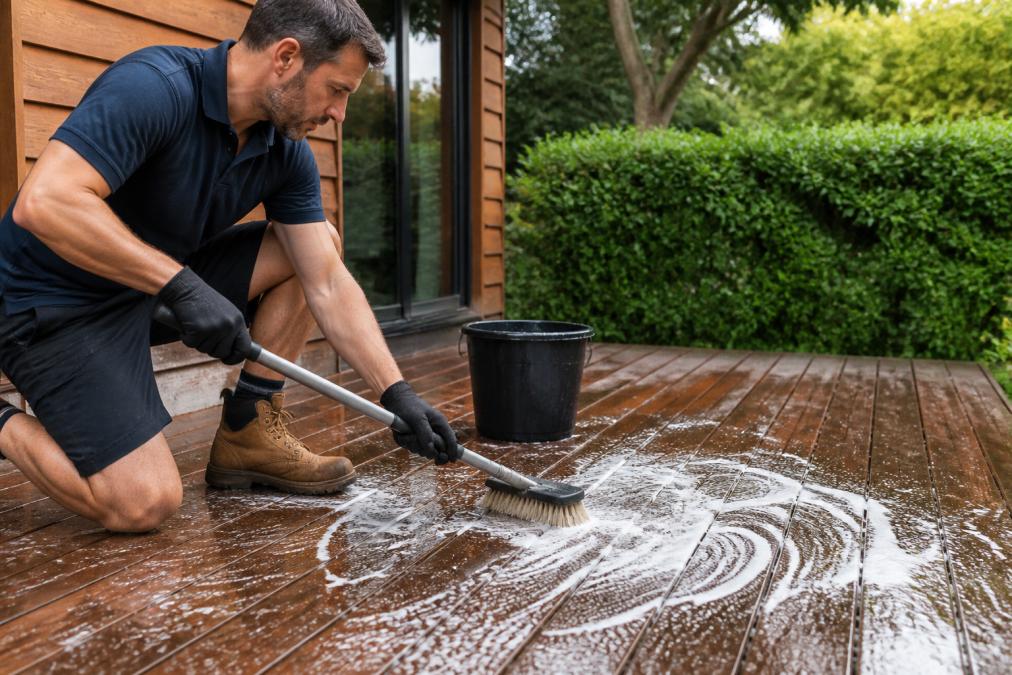
Use a soft-bristled brush for general cleaning. Apply moderate pressure, enough to work the solution into the wood grain, not so much that you're forcing bristles into the surface.
Scrub in the direction of the wood grain. This follows the natural structure and prevents damage to the fibers. Use a sweeping motion rather than circular scrubbing, which can splinter the wood.
For stubborn stains like tannin discolouration or mildew patches, increase dwell time rather than pressure. Let the cleaner work longer and scrub gently multiple times rather than scrubbing hard once.
For textured timber surfaces, a soft-bristled decking brush works better than a stiff one. The bristles conform to the surface without gouging.
Step 4: Rinse Thoroughly
Rinse completely with clean water. This step removes all cleaning residue, which otherwise attracts dirt and promotes mould regrowth.
Use a garden hose with moderate pressure, enough to flush the surface but not so forceful that you damage the wood. If you have access to low-pressure equipment, that's ideal.
Rinse in the direction of the wood grain. Pay special attention to gaps between boards where cleaner can pool. Ensure water runs off freely and doesn't collect in depressions.
Rinse twice if the deck was heavily soiled. Residual cleaner left on the surface accelerates weathering.
Step 5: Dry and Inspect
Allow the deck to dry completely before walking on it or applying any protective coating. This typically takes 24-48 hours depending on weather and wood moisture content.
Once dry, inspect the results. Check for remaining stains, missed patches, or areas needing additional attention. Light staining may require a second application of cleaner and gentle scrubbing.
Assess the wood's overall condition. Look for soft spots, rot, or damage that needs professional repair before sealing or oiling.
How to Remove Mould from Timber Decking
Mould and mildew thrive on damp timber surfaces, especially in shaded areas with poor air circulation.
Early-stage mould (light surface growth) responds well to pH-neutral deck cleaners.
Common Mistakes When Cleaning Timber Decks
Most damage occurs because homeowners skip steps or use the wrong approach.
| Stain Type | Cause | Treatment | Duration |
|---|---|---|---|
| Mould/Mildew | Moisture, shade | pH-neutral cleaner, extended dwell | 20-30 minutes |
| Tannin discolouration | Natural wood tannins, weathering | pH-neutral cleaner, gentle scrubbing | 15-20 minutes |
| Algae buildup | Damp, shaded areas | pH-neutral cleaner, soft brush | 15 minutes |
| General dirt | Dust, debris, weathering | pH-neutral cleaner, light scrubbing | 10-15 minutes |
Safety Gear and Environmental Considerations
Protecting yourself and the environment during deck cleaning is non-negotiable.
- Containing runoff where possible using temporary barriers
- Allowing water to drain into garden beds rather than directly into storm drains
- Using biodegradable, pH-neutral cleaners that break down naturally
- Avoiding bleach and harsh chemicals that persist in the environment
Post-Cleaning Maintenance and Oiling
Cleaning is only half the job. What you do after determines how long the results last.
- Restore the wood's natural colour and grain appearance
- Create a protective barrier against moisture penetration
- Reduce the rate of algae and mould regrowth
- Extend the interval between cleanings from 6-12 months to 12-24 months
Frequently Asked Questions
What's the best cleaner for outdoor timber decks?
pH-neutral deck cleaners specifically formulated for timber are safest. These protect wood fibres while removing algae buildup, mildew, and tannin stains without chemical damage. Avoid bleach and harsh acids, which degrade the protective coating and wood grain. For stubborn discolouration, a mild detergent solution works well. Always check the product label to confirm it's suitable for hardwood surfaces before application.
Can you use dishwashing liquid to clean a timber deck?
Dishwashing liquid can work in diluted form for light cleaning, but it's not ideal for timber decking. Commercial deck wash products are specifically pH-balanced to protect wood integrity, whereas washing up liquid may leave residue or affect the wood's moisture content. If you use dishwashing liquid, dilute it heavily and rinse thoroughly to prevent surface damage and ensure the wood dries properly.
How do I know if pressure washing is safe for my timber deck?
Not all timber types tolerate high-pressure cleaning equally. Softer timber is more vulnerable to damage than hardwood surfaces. Low-pressure rinsing (below 1500 PSI) is generally safe; high-pressure washing risks gouging wood fibres and compromising the surface integrity. Test a small, inconspicuous area first. For valuable or aged decking, consider professional cleaning to avoid costly mistakes. When in doubt, contact a specialist to assess your specific deck.
How often should I deep clean a timber deck?
Deep clean timber decking once or twice yearly, depending on weather exposure and debris accumulation. Areas with high moisture or shade develop mildew faster and may need more frequent attention. Seasonal maintenance schedules help prevent algae and weathering damage. Regular sweeping between deep cleans extends the life of your protective coating and reduces the intensity of cleaning required, keeping your deck in better condition year-round.