 how-to
How to Remove Rust Stains From Concrete
Table of Contents
- Understanding Rust Stains on Concrete
- Choosing the Right Cleaner by Stain Severity
- Vinegar for Rust Stains on Concrete
- Best Rust Remover for Concrete: Acidic Cleaners
- How to Remove Fertiliser Rust Stains From Concrete
- Pressure Washing Rust Stains From Concrete
- Safety Precautions and Concrete Protection
- Preventing Rust Stains From Returning
- Frequently Asked Questions
Last Updated: October 10, 2026
Understanding Rust Stains on Concrete
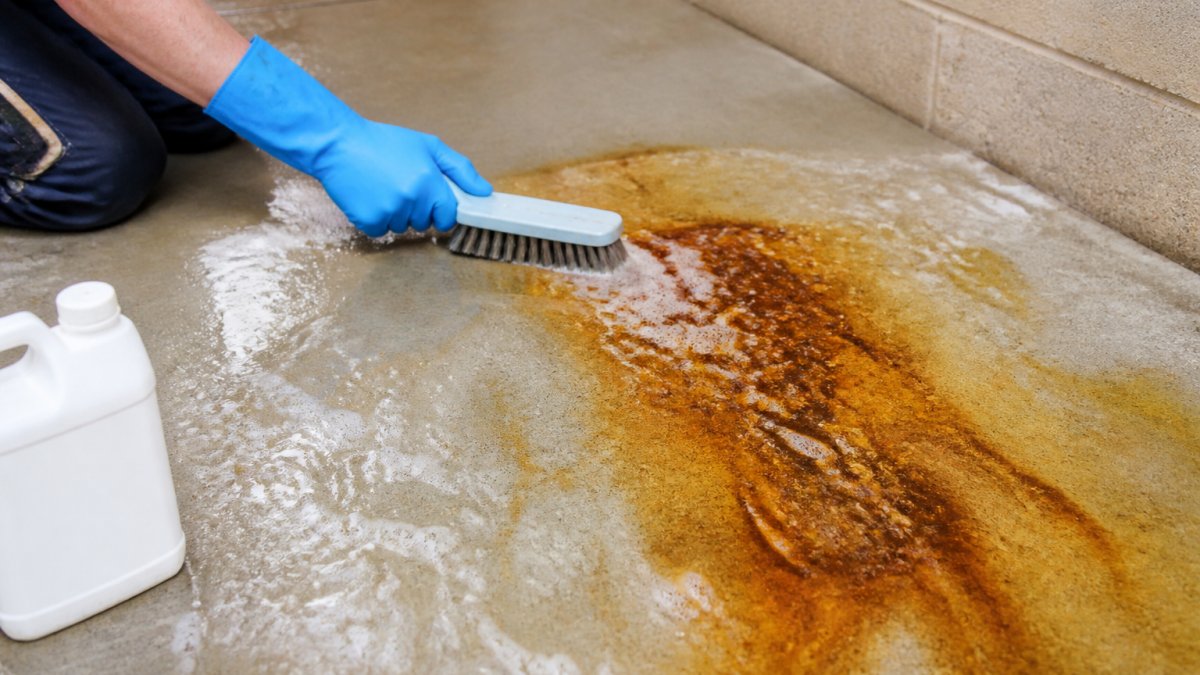
Rust stains appear as orange, reddish, or brown discolouration on driveways, patios, and sidewalks. Learning how to remove rust stains from concrete starts with understanding what causes them and their severity.
What causes rust stains
Rust stains form when iron deposits or iron-rich materials come into contact with concrete and oxidise. Common sources include:
- Metal furniture, tools, or fixtures left on the surface
- Fertiliser containing iron compounds
- Rusty nails or metal debris embedded in the concrete
- Water runoff from corroded metal gutters or downpipes
- Iron-rich soil or mulch adjacent to the concrete
Once iron oxidises, it creates stubborn discolouration that penetrates deeper the longer it sits.
Light, medium, and heavy stain severity
Understanding stain severity helps you choose the right removal method. Stains fall into three categories:
Light stains are fresh, faint marks under 2 weeks old that respond to mild acids. Medium stains are darker, weeks to months old, requiring stronger acidic cleaners. Heavy stains are old, deeply embedded, dark brown or black marks needing professional-grade solutions or pressure washing combined with chemicals.
Choosing the Right Cleaner by Stain Severity
Matching your cleaner to stain severity is essential for successful removal.
Light stains: vinegar and mild acids
White vinegar is your first choice for light rust stains. It contains acetic acid, which breaks down iron oxide bonds without damaging concrete, harming plants, or affecting finishes.
Use vinegar for stains under 2 weeks old, faint discolouration, small areas, or sensitive finishes.
Citric acid cleaners offer a middle option between vinegar and oxalic acid for stains that didn't respond to vinegar.
Medium to heavy stains: stronger acidic cleaners
Oxalic acid cleaners are purpose-built rust removers stronger than vinegar but safer than muriatic acid. They work on medium to heavy stains and tackle rust sitting for months.
Muriatic acid is the strongest option for deeply embedded stains. It's corrosive and produces fumes, requiring full protective equipment and ventilation. Reserve it for stains resistant to milder solutions.
Vinegar for Rust Stains on Concrete
White vinegar is the safest starting point for how to remove rust stains from concrete, especially for fresh stains.
How white vinegar works on rust
Vinegar's acetic acid breaks down iron oxide and dissolves rust particles. The process requires dwell time, contact time allows the acid to penetrate and break down rust bonds.
Application steps and dwell time
Follow these steps for best results with vinegar:
-
Sweep or rinse the area. Remove loose dirt and debris from the concrete surface.
-
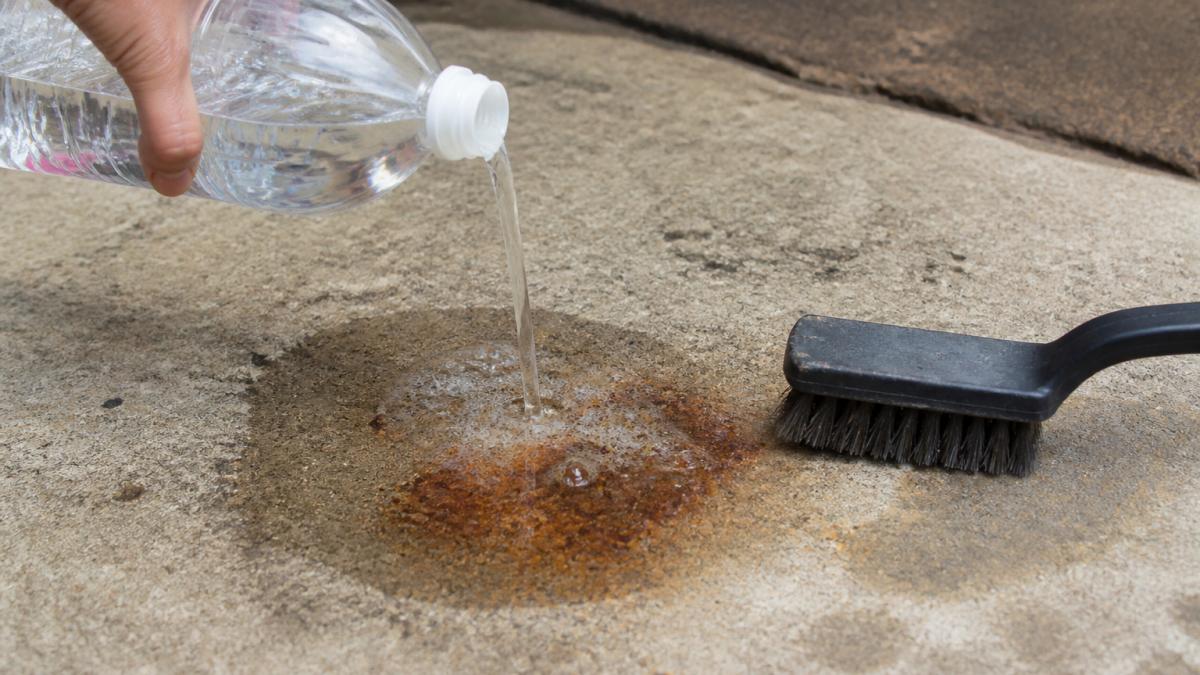
Pour white vinegar directly onto the stain. Use undiluted vinegar for maximum effectiveness. Soak the entire stained area generously.
-
Let it dwell for 15 minutes. This contact time is crucial. Don't rush the process. The vinegar needs time to break down the rust.
-
Scrub with a stiff brush. Use firm, circular motions to work the vinegar into the concrete. A deck brush or wire brush works well.
-
Rinse thoroughly with clean water. Use a hose to rinse away the vinegar and loosened rust particles. Repeat if needed.
-
Allow to dry completely. Let the concrete air-dry before assessing results.
For stubborn stains, repeat 2-3 times; each application penetrates deeper.
Best Rust Remover for Concrete: Acidic Cleaners
Commercial acidic cleaners deliver stronger results and work faster than vinegar.
Citric acid and oxalic acid cleaners
Oxalic acid is the most common active ingredient in commercial rust removers, stronger than vinegar but safer than muriatic acid.
Oxalic acid works on medium and heavy stains with 10-15 minute dwell time, available in powder or liquid form, and safe for most finishes when used as directed.
When to use muriatic acid for stubborn stains
Muriatic acid is hydrochloric acid diluted for cleaning. Use it only for old, heavily embedded stains that resist vinegar and oxalic acid, with serious safety precautions and concrete compatibility confirmed.
How to Remove Fertiliser Rust Stains From Concrete
Fertiliser stains form when iron compounds in fertiliser contact concrete and oxidise. They behave like regular rust stains but often appear in clusters or streaks.
Use the same methods as regular rust stains: vinegar for light discolouration, oxalic acid for heavier stains. Treat promptly, fresh stains respond faster. For large areas, consider professional pressure washing combined with chemical treatment.
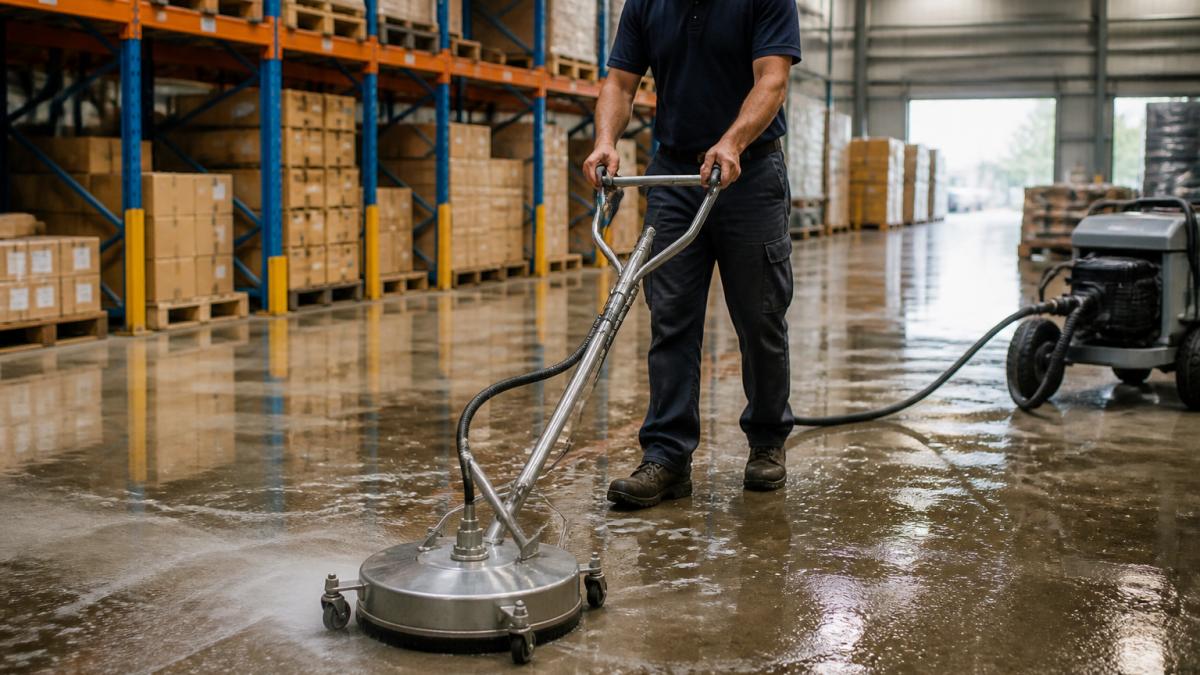
Pressure Washing Rust Stains From Concrete
Pressure washing can remove rust stains, but it works best when combined with chemical cleaners rather than as a standalone method.
When pressure washing works best
Pressure washing works best for light surface stains and large areas. Pure water pressure alone rarely removes rust completely; combine it with acidic cleaners for better results.
Pressure settings and concrete safety
Use 1,500-2,000 PSI for sealed or newer concrete, 2,000-3,000 PSI for standard concrete, and 3,000-4,000 PSI for heavy-duty concrete. Test on a hidden area first, starting at low pressure and increasing gradually.
Safety Precautions and Concrete Protection
Removing rust stains involves handling acidic solutions that can cause injury if mishandled. Protecting yourself and your concrete is essential.
Protective equipment and handling acidic cleaners
Wear chemical-resistant gloves, safety goggles, long sleeves and trousers, closed-toe shoes, and a respirator mask when using muriatic acid or in poorly ventilated areas.
Never mix cleaners, work outdoors in well-ventilated areas, keep children and pets away until fully rinsed, read instructions completely, and have water nearby for emergency rinsing.
Testing on hidden areas and avoiding concrete damage
Test your cleaner on a hidden area first. Apply it, wait the recommended dwell time, scrub and rinse, then examine for damage and check again after 24 hours.
Some concrete finishes are sensitive to strong acids. Sealed concrete, polished finishes, and decorative concrete may be damaged by muriatic acid. Test patches reveal these issues before you damage your main surface.
Concrete sealers protect the underlying stone but can be stripped by strong acids. If your concrete is sealed, stick with vinegar or oxalic acid cleaners. Avoid muriatic acid unless you're willing to reseal the concrete afterward.
Environmental runoff and safe disposal
Acidic cleaners don't stay on your concrete. They rinse away with water and flow toward storm drains, gardens, and soil. Consider the environmental impact before you begin.
Runoff considerations:
- Acidic water can harm plants and soil microorganisms
- Storm drains lead directly to waterways without treatment
- Acidic runoff affects aquatic life downstream
- Neutralising runoff before it leaves your property is responsible practice
Safe disposal approach:
- Direct runoff away from garden beds and storm drains if possible
- Allow acidic water to flow onto gravel or soil away from sensitive areas
- For large-scale cleaning, consider capturing runoff and neutralising it with baking soda before disposal
- Never pour concentrated cleaners directly into storm drains
If you're handling large-scale rust stain removal, professional treatment ensures environmental safety.
Preventing Rust Stains From Returning
The best approach to rust stains is preventing them in the first place. Once you've removed a stain, take steps to stop it from returning.
Identifying and removing the rust source
Find what caused the original stain and eliminate it. Common sources include:
- Metal furniture or decorative items left on concrete
- Rusty tools or equipment stored nearby
- Corroded metal gutters or downpipes dripping onto the surface
- Iron-rich fertiliser stored or applied near the concrete
- Soil or mulch containing high iron content
Move metal items off the concrete. Repair or replace corroded metal fixtures. Store fertiliser in covered areas away from concrete surfaces. Address the source, and you prevent new stains from forming.
Sealing concrete and maintenance routines
Concrete sealers create a protective barrier that prevents water and iron from penetrating the surface. Sealed concrete resists rust stains far better than bare concrete.
Sealing benefits:
- Reduces water absorption
- Makes stain removal easier if stains do form
- Extends concrete lifespan
- Improves appearance and colour depth
Reapply concrete sealer every 2-3 years, depending on traffic and weather exposure. High-traffic areas may need more frequent sealing.
Regular maintenance prevents stain buildup:
- Sweep the concrete weekly to remove debris
- Rinse with water monthly to remove dust and iron particles
- Address new stains immediately before they set
- Keep metal items and potential rust sources off the surface
A simple maintenance routine keeps your concrete looking fresh and prevents minor stains from becoming major problems.
When rust stains do appear on your concrete, you now have a clear path to remove them.
The real challenge isn't removal, it's knowing when to call in professionals.
| Stain Severity | Best Cleaner | Dwell Time | When to Use |
|---|---|---|---|
| Light (fresh, faint) | White vinegar | 15 minutes | Stains under 2 weeks old |
| Medium (visible, weeks old) | Oxalic acid cleaner | 10-15 minutes | Stains 1-3 months old |
| Heavy (dark, embedded) | Muriatic acid | 5-10 minutes | Stains over 3 months old |
| Large areas | Pressure wash + chemical | Varies | Any severity, when speed matters |
Frequently Asked Questions
How long does it take to remove a rust stain from concrete?
Light stains can be removed in 30 minutes with vinegar. Medium stains require 1-2 hours and may need repeat treatments.
Will vinegar damage my concrete?
No. White vinegar is safe for all concrete types. It won't pit, discolour, or weaken the surface.
Can I pressure wash rust stains without chemicals?
Water pressure alone removes surface rust but rarely eliminates stains completely. Combine pressure washing with acidic cleaners for best results.
Is muriatic acid safe for residential use?
Muriatic acid is effective but hazardous. Wear full protective equipment, work outdoors, and use only as a last resort. Many homeowners choose professional services instead.
How do I prevent rust stains from coming back?
Remove the rust source (metal furniture, corroded fixtures, iron-rich fertiliser). Seal your concrete every 2-3 years. Rinse the surface monthly to remove iron particles before they oxidise.
Frequently Asked Questions
What will remove rust off of concrete?
White vinegar works well for light rust stains on concrete. For stubborn stains, acidic cleaners containing citric acid, oxalic acid, or muriatic acid are more effective. The best rust remover for concrete depends on stain severity: vinegar for light marks, citric acid for medium stains, and oxalic or muriatic acid for heavy, deeply set rust. Always test on a hidden area first to ensure the cleaner won't damage your concrete surface.
Can vinegar be used on concrete?
Yes, vinegar for rust stains on concrete is safe and effective for light to moderate rust marks. White vinegar's mild acidity breaks down iron oxide deposits without damaging most concrete surfaces. Apply undiluted vinegar directly to the stain, allow it to dwell for 15-20 minutes, then scrub with a stiff brush and rinse thoroughly with water. For older or more stubborn stains, you may need a stronger acidic cleaner.
How do you remove fertiliser rust stains from concrete?
Fertiliser stains often contain iron deposits that leave rust-coloured marks on concrete. Treat them the same way as rust stains: apply a vinegar solution or acidic cleaner directly to the affected area, allow adequate dwell time (10-20 minutes), scrub with a brush, and rinse thoroughly. If the stain persists after one treatment, repeat the process or move to a stronger cleaner. Always identify where the fertiliser is stored to prevent future spills.
Can a pressure washer remove rust stains from concrete?
Pressure washing rust stains from concrete works best when combined with chemical treatment. High-pressure water alone rarely removes set-in rust stains. Instead, apply an acidic cleaner first, let it dwell, then use pressure washing at moderate settings (1500-2500 PSI) to rinse and finish the job. Avoid excessive pressure on delicate concrete surfaces. For heavy stains, chemical treatment followed by gentle pressure rinsing delivers the best results.