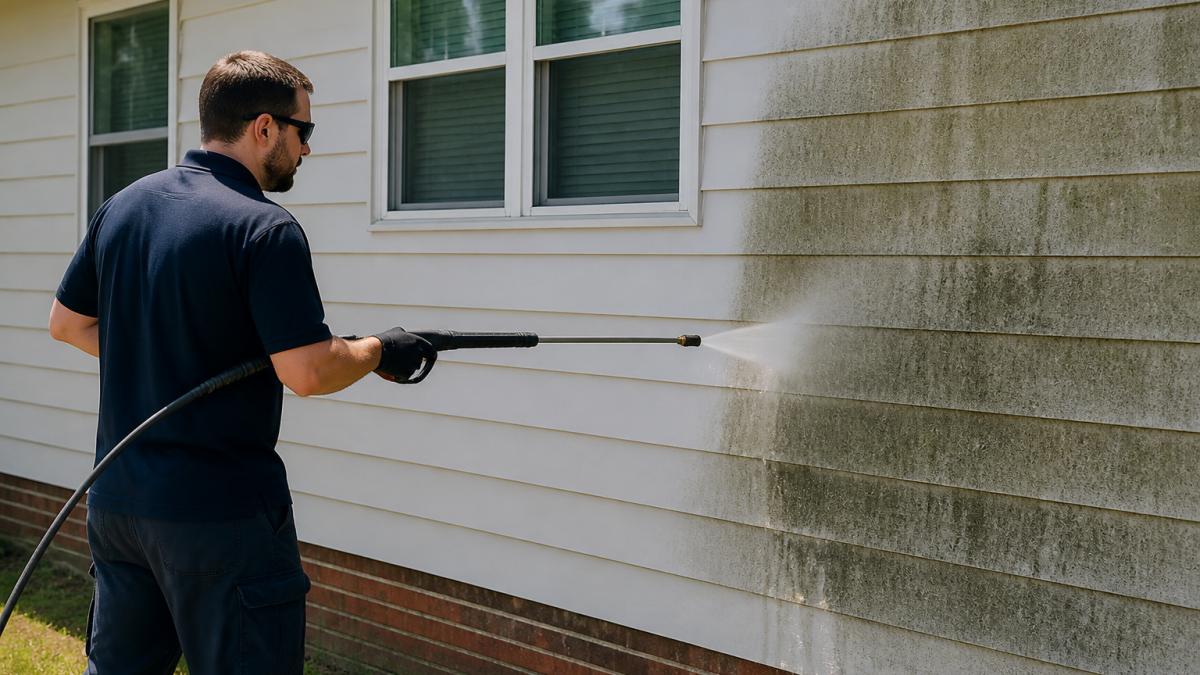
 ultimate-guide
Why You Should Pressure Wash Your House Annually
Table of Contents
- Why Annual Pressure Washing Protects Your Biggest Asset
- Signs Your Home Needs a Pressure Wash
- Benefits of Soft Washing vs Pressure Washing
- Safe Pressure Washing for Residential Siding
- Surface-Specific Pressure Settings: PSI and GPM Explained
- Seasonal Timing and the Long-Term Cost of Skipping It
- DIY vs Professional Pressure Washing: What Actually Works
- Frequently Asked Questions
Last Updated: October 2, 2026
Why Annual Pressure Washing Protects Your Biggest Asset
Your home's exterior is under constant attack. Organic growth, pollution, and moisture all work against it every single day. This is why you should pressure wash your house annually: it is the most effective form of preventative maintenance you can perform to protect your largest financial investment. At AquaBlast Elite, we see the difference a consistent cleaning schedule makes.
Exterior maintenance is not just about aesthetics; it is about structural longevity. A clean home resists decay, while a dirty one invites it. The cost of neglect is far higher than the cost of a professional clean.
Signs Your Home Needs a Pressure Wash
Your home will tell you when it needs attention, but the signals are not all equal. Some indicate a surface that simply looks tired; others indicate active biological growth or moisture ingress that will worsen every wet season. Knowing which is which helps you decide whether to book a clean now or schedule one before the next change of season.
Cosmetic signals (act within the season)
- Chalky white residue on brick, render, or stone. This is efflorescence, a salt deposit drawn to the surface by moisture moving through masonry. It is not structural damage on its own, but it is a reliable indicator that water is migrating through the wall.
- A dull, grey film on timber decking or painted cladding, often the first stage of UV breakdown and surface soiling.
- Black spots on concrete paths and patios, typically a mix of tyre rubber, organic matter, and early mould colonisation.
Biological signals (act within weeks)
- Green algae on render, north-facing walls, and shaded fences. Algae holds moisture against the surface, which accelerates paint failure and, on timber, creates the conditions for rot.
- Dark streaking on roofs and gutters, usually a mix of algae, lichen, and airborne pollution. Left alone, lichen roots into tile and can lift coatings.
- Musty smells near exterior walls or persistent damp patches that do not dry after rain. These point to moisture retention and warrant investigation before cleaning.
Structural warning signs (act immediately)
- Soft or spongy timber when pressed with a screwdriver.
- Paint that blisters, peels, or flakes in sheets rather than wearing thin.
- Render that sounds hollow when tapped, or visible cracks wider than a hairline.
- Mould inside the home near exterior walls, which can indicate water tracking behind cladding.
A useful rule of thumb: if the growth is green or black and returns within a season of cleaning, the surface needs a soft wash with a residual detergent rather than a simple rinse. If the surface is merely dusty or stained, a standard clean will restore it. If any structural warning sign is present, arrange an inspection before pressure washing, because water can worsen an existing moisture problem.
If you notice any of these signs, it is time to act. Delaying a clean allows biological growth to penetrate deeper into the surface, making it harder and more expensive to remove, and allowing moisture to do damage that no amount of cleaning will reverse.
Benefits of Soft Washing vs Pressure Washing
The method matters as much as the cleaning itself. Soft washing is a low-pressure cleaning technique that uses specialised detergents to kill and remove organic growth like mould, mildew, and algae. It is the safest method for delicate surfaces. Pressure washing, by contrast, uses high-pressure water to blast away dirt and grime from hard, durable surfaces like concrete.
The benefits of soft washing vs pressure washing come down to surface suitability. Soft washing prioritises preservation, while pressure washing prioritises raw cleaning power. Using the wrong method can cause irreversible damage.
| Method | Best For | Key Benefit |
|---|---|---|
| Soft Washing | Rendered walls, painted timber, roofs | Kills organic growth without surface damage |
| Pressure Washing | Concrete, pavers, exposed aggregate | Removes deep-set grime and stains |
Safe Pressure Washing for Residential Siding
Safe pressure washing for residential siding depends entirely on the material. Vinyl siding, rendered walls, and timber cladding all have different tolerances. Using a high-pressure nozzle on the wrong surface can strip paint, crack render, or gouge timber.
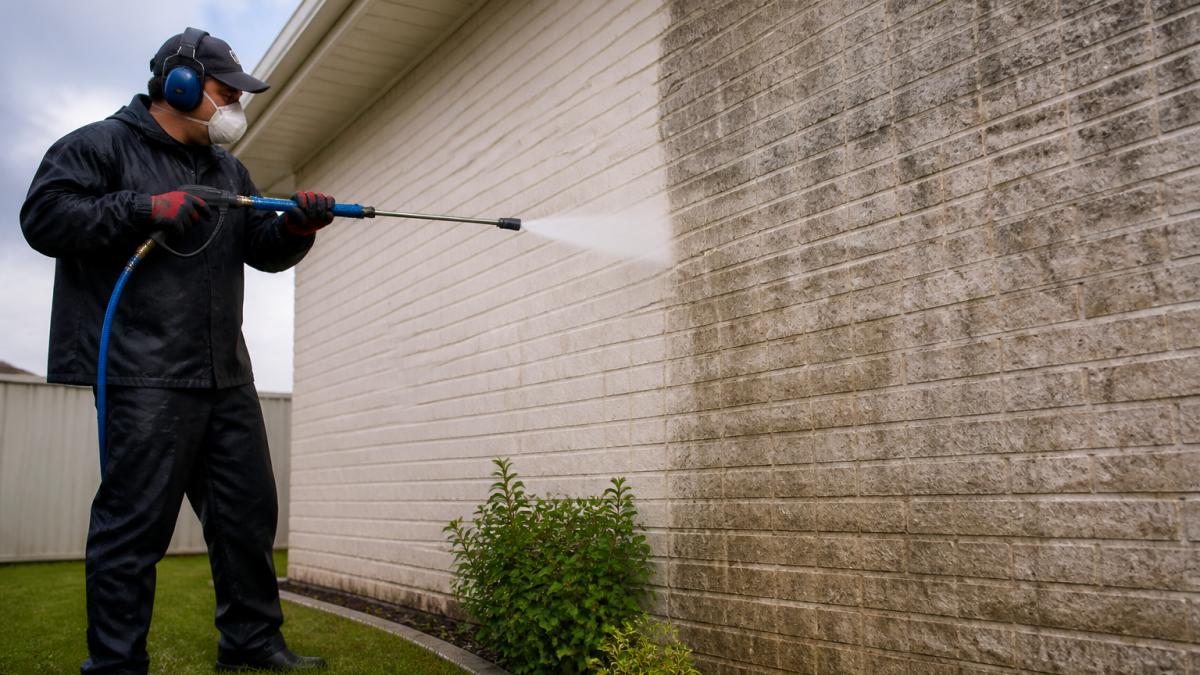
A common mistake is assuming more pressure equals a better clean. In practice, the opposite is often true. For most residential siding, a lower pressure with the correct detergent is the professional standard.
Surface-Specific Pressure Settings: PSI and GPM Explained
Understanding your equipment is critical. PSI (pounds per square inch) measures the force of the water. GPM (gallons per minute) measures the volume of water flow. Both determine the cleaning power and the risk of damage.
For residential surfaces, a general guide is:
- Concrete: 3000-4000 PSI
- Brick: 1500-2500 PSI
- Vinyl Siding: 1300-2000 PSI
- Timber Decking: 500-1200 PSI
Higher GPM allows you to clean faster at a lower PSI, which is safer for the surface. A surface cleaner attachment is essential for concrete to ensure an even finish and prevent zebra striping.
Seasonal Timing and the Long-Term Cost of Skipping It
The best time for an annual clean is late spring or early autumn. This removes the buildup from winter and prepares your home for the harsh summer sun, or clears the growth from a wet summer before winter sets in. Seasonal timing strategy is about prevention, not reaction.
The long-term cost-benefit analysis is stark. A small annual investment prevents major expenses like timber rot, render replacement, and paint preparation. Skipping a year allows grime and moisture to absorb into the surface, leading to structural decay and a lower sale price. Preventative maintenance is always cheaper than restoration.
DIY vs Professional Pressure Washing: What Actually Works
Most guides frame this as a simple cost comparison: hire a machine for a weekend versus pay a professional.
The real cost of a DIY clean
A DIY pressure wash is rarely just the machine hire. The realistic cost stack includes:
- Equipment hire or purchase, plus fuel or electricity.
- Detergents and surface-specific cleaning agents.
- Personal protective equipment, including eye protection, gloves, and non-slip footwear.
- Water consumption, which rises sharply with lower-pressure, higher-volume DIY units.
- Your time, typically a full weekend for an average single-storey home.
- The risk of damage: stripped paint, gouged timber, cracked render, or water forced behind cladding.
When you add those together, the gap between DIY and professional narrows considerably. The difference is that a professional carries the risk, the insurance, and the knowledge of which surface tolerates which method.
The environmental angle most guides ignore
Runoff is the hidden cost of any exterior clean. Water running off a roof or driveway carries detergents, biological matter, and whatever was on the surface into your garden beds and, via stormwater, into local waterways.
Professional services manage this in three ways:
- Using biodegradable detergents that break down rather than persisting in soil and water.
- Controlling runoff with containment or diversion where the site allows, so wash water is directed away from garden beds and drains.
- Choosing soft washing over high pressure where possible, which uses significantly less water for the same result on biological growth.
Where DIY genuinely works
DIY is a reasonable option for small, hard, durable surfaces: a concrete path, a paved courtyard, or a single driveway section. It is a poor option for roofs, rendered walls, painted timber, and anything two storeys or higher.
For a result that enhances your home without risking damage or environmental harm, professional cleaning is the superior choice. AquaBlast Elite delivers this precise, dedicated service.
Frequently Asked Questions
Is it safe to pressure wash your house every year?
Yes, when the method matches the surface. Rendered walls, painted timber, and vinyl siding need soft washing at low pressure, while concrete paths and driveways handle higher PSI. Annual cleaning at correct settings removes mould and grime before it bonds to the surface. The risk comes from using a high-pressure nozzle on the wrong material, not from the frequency itself.
What are the risks of not pressure washing your home regularly?
Mould, mildew, and algae growth feed on moisture trapped in exterior surfaces. Left unchecked, they stain render, break down paint films, and work into timber grain. Gutter maintenance also suffers when debris and organic growth build up. Over several years, that grime buildup accelerates surface damage and shortens the lifespan of your exterior finish, costing more to repair than a yearly clean would.
Does annual pressure washing increase property value?
A clean exterior directly lifts curb appeal, which is one of the first things buyers and agents notice. For anyone selling in the next few months, a professional clean restores the property's presentation and helps it photograph well for listings. It also supports preventative maintenance by revealing early signs of surface damage, cracked render, or failing paint before they become expensive repairs.
What time of year is best for exterior house cleaning?
Late spring or early autumn works best in most climates. Spring removes mould and pollen built up over wet months, while autumn clears leaf debris and grime before winter rain. Avoid cleaning in extreme heat, as detergent dries too fast, and skip days with strong wind. Booking ahead of the wet season means surfaces stay cleaner for longer and any damage is spotted before it worsens.
Your home's exterior is constantly under attack from the elements. Don't let neglect lead to costly repairs and lost curb appeal. AquaBlast Elite provides customised, professional pressure washing solutions that restore and rejuvenate your property's surfaces safely and effectively. With our cutting-edge equipment and skilled professionals, we deliver superior results that protect your biggest asset. Get started with AquaBlast Elite and secure your home's beauty and value for years to come.