 how-to
Best Frequency for Warehouse Floor Cleaning
Table of Contents
- Why Warehouse Floor Cleaning Frequency Matters
- How to Build a Warehouse Cleaning Schedule by Traffic Level
- Factors That Change Warehouse Floor Scrubbing Frequency
- A Step-by-Step Warehouse Floor Cleaning Procedure
- Cleaning Warehouse Floors Without Disruption to Operations
- Choosing Warehouse Cleaning Equipment and Managing Costs
- Conclusion: Set, Test and Adjust Your Cleaning Frequency
- Frequently Asked Questions
Last Updated: October 9, 2026
Why Warehouse Floor Cleaning Frequency Matters
Warehouse floor cleaning is the scheduled removal of dust, debris, spills and grime from industrial flooring to protect safety, stock and equipment. The best frequency for warehouse floor cleaning is not one fixed number; it depends on traffic, floor type and the work done in each zone. This guide breaks down exactly how to set that schedule.
Get the frequency wrong and the costs stack up fast. Dust builds on racking ledges and walkways. Grit grinds into sealed concrete. Spills sit and turn into slip hazards.
Too little cleaning also slows your operation. A build-up of dirt on a busy walkway forces slower forklift travel and more spot fixes. Too much cleaning wastes labour on quiet aisles that don't need it.
The answer sits in the middle. Match your schedule to real traffic and real risk, zone by zone.
How to Build a Warehouse Cleaning Schedule by Traffic Level
A warehouse cleaning schedule works best when it is split by traffic level and by zone, rather than applied as one blanket rule. High-traffic walkways need daily attention, while low-use bulk storage aisles may only need a weekly pass. The mistake most sites make is setting the schedule once and never revisiting it.
Start by mapping your site into three traffic bands, then overlay the zones that sit inside them:
- High traffic: main walkways, pick faces, dispatch, loading docks, and the routes forklifts use all shift
- Medium traffic: secondary aisles, packing benches, returns areas, and staff thoroughfares
- Low traffic: bulk storage, rarely used racking rows, and overflow areas
Then assign tasks to each band. The table below is a starting point you can adjust once you have a month of real data.
| Zone | Sweep | Scrub | Deep clean |
|---|---|---|---|
| High traffic | Daily | Weekly | Quarterly |
| Medium traffic | Every 2-3 days | Fortnightly | Twice yearly |
| Low traffic | Weekly | Monthly | Yearly |
This is a framework, not a fixed rule. Test it for a month, then adjust based on how the floors actually look and perform.
Measurable triggers for changing frequency
Rather than relying only on daily or weekly intervals, set triggers that tell you when to increase or decrease frequency. These are the indicators most site managers find useful:
- Visible soil: if walkways show a dull film or tracked grit by mid-shift, your sweep frequency is too low
- Spill counts: log every spill and its location; three or more in the same zone in a week means that zone needs a daily spot-clean routine
- Dust accumulation: check racking ledges and pallet tops, if dust is visible at eye level, your sweep and scrub cycle is behind
- Complaints: staff or visitor reports of slippery or dirty floors are a direct signal to shorten the interval
- Inspection results: internal safety walks or external audits that flag floor condition should trigger a schedule review, not just a one-off clean
A common pattern is to review these triggers monthly and adjust the schedule quarterly. That keeps the plan responsive without constant change.
Daily cleaning tasks
Daily cleaning keeps the busiest areas safe and presentable. It targets the surfaces people and equipment touch most.
- Sweep or machine-sweep all main walkways
- Spot clean spills as they happen
- Empty bins and clear rubbish from work areas
- Check loading docks for debris tracked in from outside
- Clear walkway edges where pallets and cages sit
Daily work is mostly about safety. A clean walkway means fewer slips and faster, safer forklift movement.
Weekly cleaning tasks
Weekly cleaning handles the build-up that daily sweeping misses. It goes a level deeper without disrupting operations.
- Machine-scrub medium-traffic aisles
- Mop and degrease packing and break areas
- Clean under and around racking in active zones
- Wipe down high-touch surfaces and safety signage
- Inspect floor condition for cracks, lifting seals or stains
Catching floor damage early saves money. A small crack fixed now won't become a full resurfacing job later.
Periodic deep cleaning tasks
Periodic deep cleaning restores the whole floor and resets your baseline. Schedule it around quiet periods so it doesn't clash with peak work.
- Full-facility scrub of all aisles and open floor
- Strip and reseal sealed concrete where needed
- Deep clean loading docks and waste areas
- Pressure-clean stubborn stains and built-up grime
- Review the whole schedule against actual results
This is where professional high-pressure cleaning earns its place. Heavy grime, oil stains and graffiti often need more than a standard scrubber can deliver.
Factors That Change Warehouse Floor Scrubbing Frequency
Warehouse floor scrubbing frequency should shift as conditions change. A schedule set in January may be wrong by July. But the factors that matter most are not just traffic and weather, they are the ones that affect safety, compliance and contamination risk.
Watch these factors:
- Traffic patterns and foot traffic: more movement means more dirt, and more dirt means more slip risk
- Occupancy and usage levels: busier sites need more frequent passes, especially around pick faces and dispatch
- Floor type and material: sealed concrete, epoxy and vinyl behave differently, epoxy can become slippery when wet, while unsealed concrete absorbs oils and stains
- Seasonality and weather: rain and dust tracked in from outside increase grit and mud across every walkway
- Peak periods: seasonal spikes in dispatch and receiving bring more pallet movement and more debris
- Spills and debris: oil, powder and food waste need faster response, not just a longer scrub cycle
Safety, compliance and contamination risks
Floor cleaning frequency is not only a presentation issue. It directly affects workplace safety and your obligations under work health and safety duties. Under the model Work Health and Safety Regulations, a person conducting a business or undertaking must manage risks to health and safety, including slips, trips and falls on floors. In practice, that means:
- Slip risk: wet or contaminated floors are a leading cause of workplace injuries. If a spill is not cleaned promptly, the risk remains until the floor is dry.
- Dust and airborne contamination: accumulated dust on racking and floors can become airborne, affecting air quality and, in some facilities, creating a combustible dust hazard.
- Residue build-up: oils, greases and cleaning chemical residue can make sealed floors slippery even when they look clean.
- Wet floor management: after scrubbing, areas should be signed and closed until dry. Reopening too early defeats the purpose of the clean.
Most sites find that a written cleaning schedule, with signed records, is the simplest way to show that floor risks are being managed. It also gives you evidence if an incident occurs.
Floor type and surface considerations
Different surfaces need different cadences and methods:
- Sealed concrete: regular sweeping and periodic scrubbing; reseal when the surface dulls or water no longer beads
- Epoxy coatings: sweep daily in high-traffic areas; scrub weekly; avoid aggressive abrasives that dull the finish
- Unsealed concrete: dusts easily and absorbs spills; needs more frequent sweeping and prompt spill response
- Vinyl or specialist surfaces: follow the manufacturer's cleaning guidance to avoid damage
If you are unsure what your floor is, a simple water-bead test, a few drops of water on the surface, will tell you whether it is sealed or porous.
A Step-by-Step Warehouse Floor Cleaning Procedure
Follow this procedure for a consistent, repeatable clean. It works for a single zone or a full facility.
- Plan the zone and timing. Pick the area and clean it during low-activity windows.
- Clear the floor. Move pallets, cages and equipment so the surface is open.
- Sweep first. Remove loose dust, debris and grit before any wet work.
- Spot clean spills. Treat oil and chemical spills before they spread.
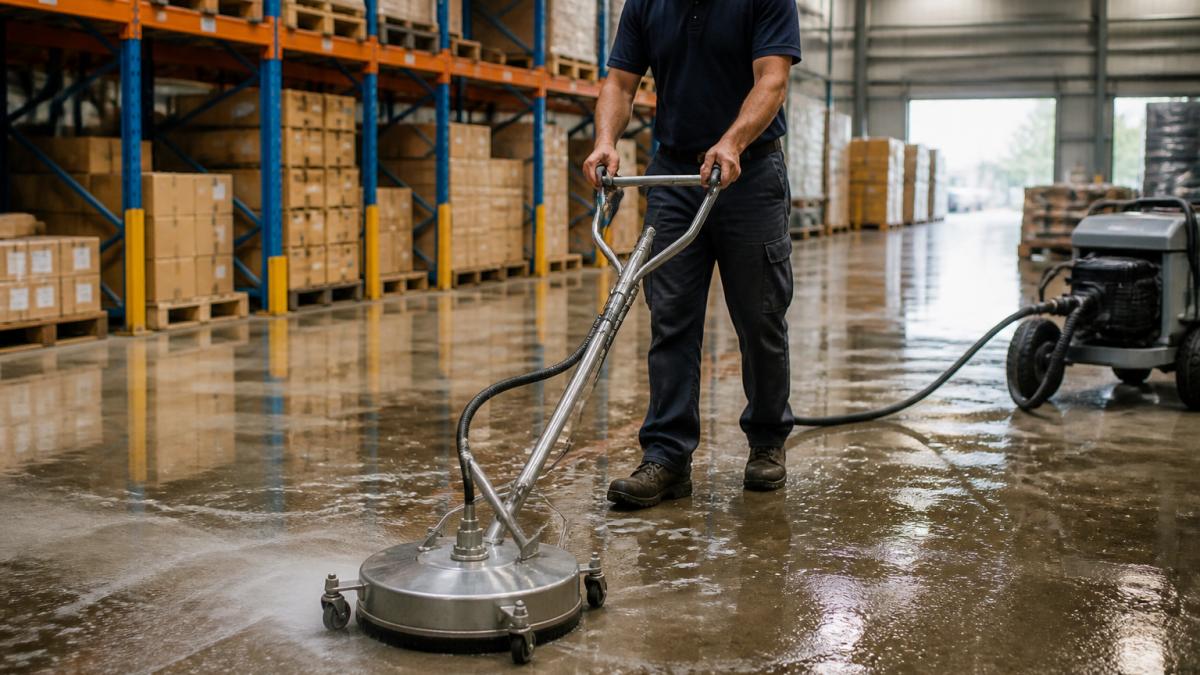
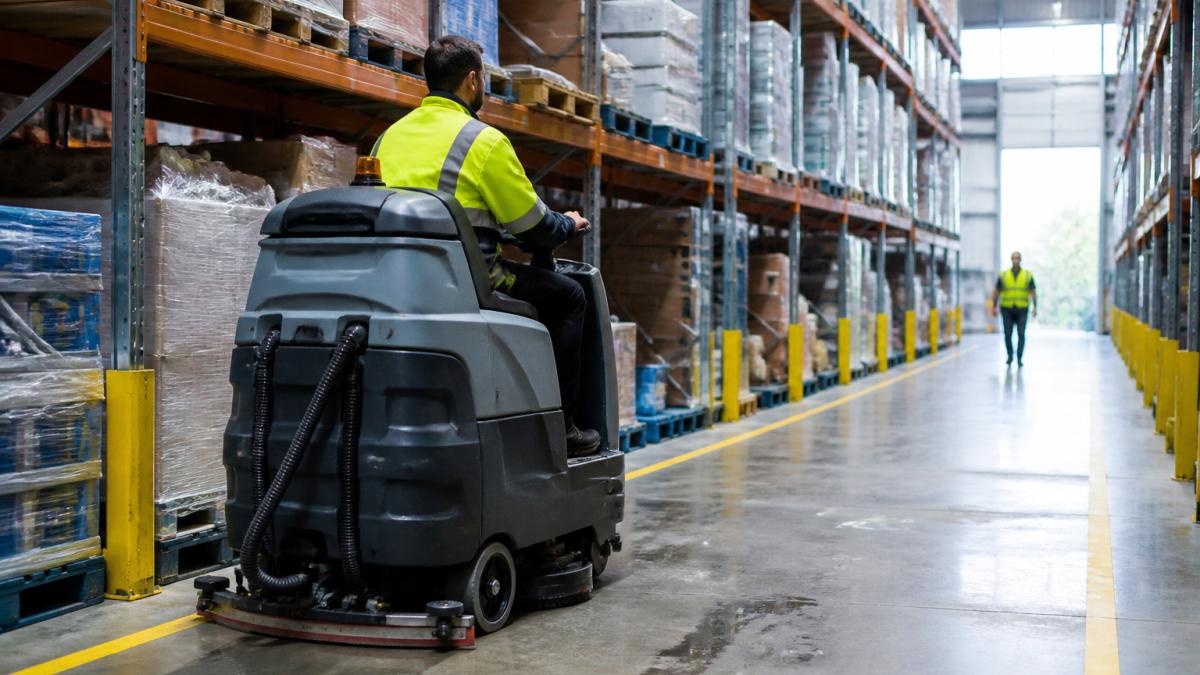
- Scrub the surface. Run an industrial floor scrubber over the full area.
- Deep clean as needed. Pressure-clean stubborn stains and built-up grime.
- Check and dry. Inspect the result and let the floor dry before traffic returns.
- Log the clean. Record the date, zone and condition for the next cycle.
Step 8 matters more than most teams think. Your log is the data you use to fine-tune the whole schedule.
Cleaning Warehouse Floors Without Disruption to Operations
Cleaning warehouse floors without disruption comes down to timing and zoning. You clean around the work, not through it.
- Clean in shifts, one zone at a time
- Work overnight or before opening where possible
- Use ride-on scrubbers to cover large areas quickly
- Schedule deep cleans around peak periods, not during them
- Keep clear signage so staff and equipment route around wet floors
The goal is simple. Keep the operation moving while the floor gets clean. A well-planned schedule means cleaning time never becomes a bottleneck.
Choosing Warehouse Cleaning Equipment and Managing Costs
Warehouse cleaning equipment should match the job, the floor type and the size of the space. The wrong machine wastes money and time.
- Sweepers: best for daily dust and debris on large floors
- Walk-behind scrubbers: good for medium areas and tighter aisles
- Ride-on scrubbers: fastest for large open floors and long walkways
- High-pressure cleaners: best for heavy grime, oil stains and graffiti
- Automatic scrubbers: combine sweeping and scrubbing in one pass
Costs depend on your mix of in-house labour and outside help. For heavy or specialist work, professional high-pressure cleaning is often cheaper than buying equipment you'll rarely use. We provide customized solutions for industrial and commercial sites, so the right method is matched to each surface.
Conclusion: Set, Test and Adjust Your Cleaning Frequency
The best frequency for warehouse floor cleaning is the one you keep testing and refining. Start with the traffic-based schedule above, then adjust it as your site changes.
When floors need more than a standard scrub, that's where we come in. We offer high-pressure cleaning with modern equipment and skilled professionals. Our customized solutions restore concrete, remove graffiti and lift heavy grime across industrial and commercial sites.
Get started and keep your floors safe, clean and professional year-round. Book a call to set up a cleaning plan built around your operation.
Frequently Asked Questions
Do warehouse floors need to be cleaned every day?
Not always. High-traffic zones such as loading docks, walkways and packing areas usually need daily sweeping and spot cleaning, while low-traffic storage aisles can be cleaned weekly or fortnightly. The right frequency depends on foot traffic, forklift movement, floor material and the type of goods handled. Build a warehouse cleaning schedule that splits tasks into daily, weekly and periodic deep cleaning, then adjust it when you see dirt building up between cleans.
What factors affect how often a warehouse floor needs cleaning?
Traffic volume and patterns, floor type and material, the goods you store, occupancy levels, seasonality and local weather all shift how quickly floors get dirty. A concrete floor in a busy distribution centre may need daily attention, while a sealed epoxy floor in a low-traffic storage area can go longer between deep cleans. Track dirt, dust, debris and spills, then use those observations as measurable triggers to change your warehouse floor scrubbing frequency.
How can you clean warehouse floors without disrupting operations?
Schedule cleaning around peak periods and shift changes, and break the floor into zones so you clean one area while the rest of the warehouse keeps working. Use ride-on scrubbers for large open aisles and walk-behind units for tighter spots, and mark off wet areas clearly. Cleaning warehouse floors without disruption comes down to planning: match equipment to aisle width, stagger start times, and keep cleaning time inside planned downtime rather than peak picking hours.
How do you create a warehouse floor cleaning schedule?
Start by mapping your warehouse into zones by traffic level: high-traffic walkways and docks, medium-traffic packing areas, and low-traffic storage aisles. Assign daily tasks (sweeping, spot cleaning, rubbish removal) to high-traffic zones, weekly tasks (mopping, machine scrubbing) to medium zones, and periodic deep cleaning to the full floor. Write it down, assign owners, and review the schedule monthly against actual floor condition so it stays realistic.