 how-to
How Often Should You Pressure Clean Your Driveway in Sydney?
Last Updated: October 25, 2026
Quick Summary
Most Sydney driveways need a professional pressure clean every 12 months, so how often should you pressure clean your driveway in Sydney depends on local conditions. Homes under heavy gum-tree cover, near the coast, or on busy roads should be cleaned every six months.
- Exposed aggregate, pavers and timber decks typically need cleaning every 6 to 12 months.
- Asphalt should be cleaned annually at reduced pressure with a wide fan tip.
- Inspect your driveway at the change of each season and bring the next clean forward if staining appears.
- A standard residential driveway takes about one to three hours for a professional clean.
- Most concrete is safe to walk on within a few hours and fully dry within a day.
Table of Contents
- The Short Answer: How Often to Pressure Clean Your Driveway in Sydney
- How Often to Pressure Wash a Concrete Driveway vs Other Surfaces
- Signs Your Driveway Needs Pressure Cleaning
- Local Conditions That Change the Schedule
- Safe Pressure Settings and Technique
- How Long Does Driveway Pressure Washing Take?
- Driveway Pressure Cleaning Cost and What Affects It
- Book Your Driveway Clean With AquaBlast Elite
- Frequently Asked Questions
The Short Answer: How Often to Pressure Clean Your Driveway in Sydney
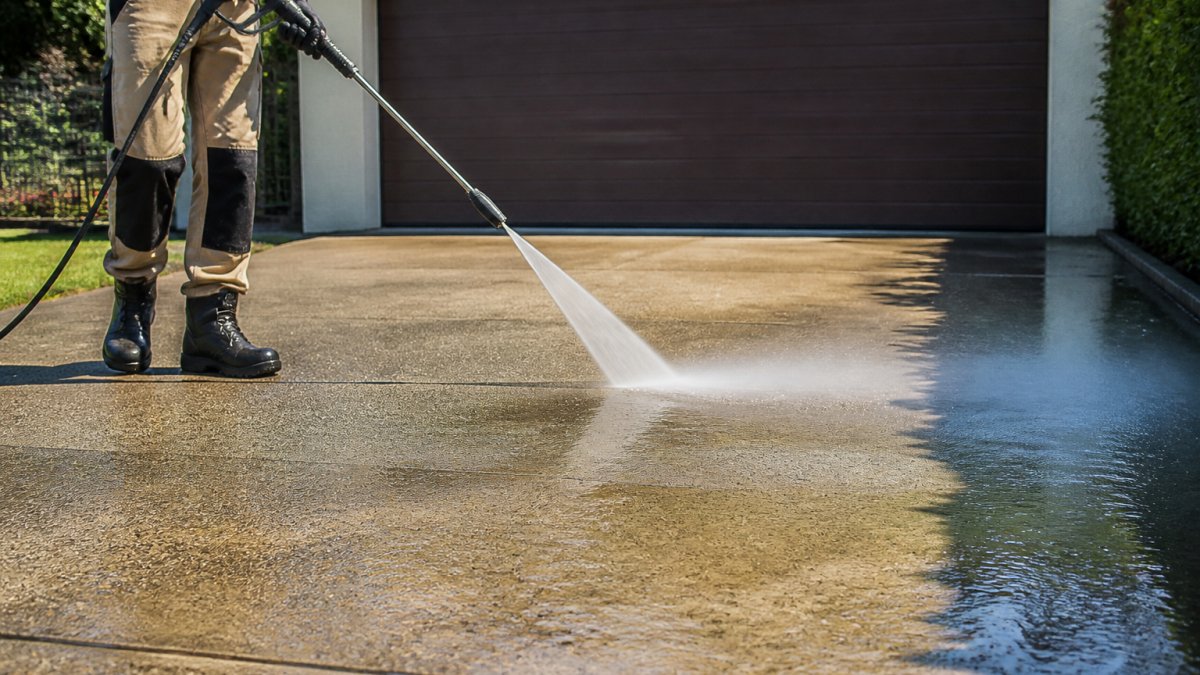
Most Sydney driveways need a professional pressure clean every 12 months. Homes under heavy gum-tree cover, near the coast, or on busy roads should be cleaned every six months. If you want a single rule to work from, here it is: clean annually as a baseline, inspect every season, and book sooner the moment staining or slipperiness appears.
That answer matters because a driveway is the first thing buyers, guests and clients see. The homes that look sharp year-round are not the ones cleaned hardest. They are the ones cleaned on a sensible schedule.
Below, we break down how often should you pressure clean your driveway in Sydney by surface type, local conditions and budget, so you can set a schedule that actually holds up.
How Often to Pressure Wash a Concrete Driveway vs Other Surfaces
Surface type is the single biggest factor in cleaning frequency, and it also sets the pressure ceiling. The table below gives a starting schedule; adjust upward for shade, coastal exposure or heavy staining.
| Surface | Typical frequency | Pressure approach | Main risk if overdone |
|---|---|---|---|
| Standard concrete | Every 12 months | Medium to high, fan tip or rotary surface cleaner | Etching and cream loss from a held jet |
| Exposed aggregate | Every 6-12 months | Medium, slower overlapping passes | Dislodging exposed stones and loosening the matrix |
| Asphalt | Every 12 months | Low to medium, wide fan tip | Pitting, stripping of binder, loosened aggregate |
| Pavers | Every 6-12 months | Medium, with joint sand checked after | Joint sand loss, shifted pavers, damaged sealant |
| Sealed surfaces | Every 12 months, or per sealer warranty | Low to medium | Blistering or stripping the sealer coat |
| Timber decks | Every 6-12 months | Low, fan tip only | Raised grain, splintering, finish removal |
Concrete and exposed aggregate
Concrete is the most forgiving common surface and holds up to an annual deep clean. Exposed aggregate is concrete with the top layer removed to reveal stone, so it traps fine dirt in the pebbled finish and benefits from a slower, more thorough pass. In shaded or leafy spots, plan on twice a year. Keep the nozzle moving and avoid dwelling on one spot, because a stationary jet can etch the surface and leave a permanent mark.
Asphalt
Asphalt is softer than concrete and relies on a bitumen binder to hold aggregate together. Too much pressure pits the surface and strips the binder, which shortens its life. Keep asphalt to an annual clean at reduced pressure with a wide fan tip, and treat oil stains with a suitable degreaser rather than blasting them.
Pavers
Pavers need joint sand checked and topped up after each clean, because lost sand destabilises the paving and lets weeds and ants in. Clean every six to twelve months at medium pressure, and avoid a pinpoint jet along joints. If the pavers are sealed, use lower pressure and check the sealer manufacturer's guidance before cleaning.
Sealed surfaces
A sealer protects the surface and makes cleaning easier, but it has its own pressure limit. Excessive pressure can blister or strip the coating, which then needs redoing. Clean annually or as the sealer warranty advises, and use low to medium pressure with a fan tip.
Timber decks and boardwalks
Timber should be cleaned every six to twelve months with low pressure and a fan tip, never a pinpoint jet. High pressure raises the grain, splinters the surface and strips finishes. For a closer look at safe concrete cleaning, see our guide on how to clean concrete without damage.
Signs Your Driveway Needs Pressure Cleaning
Waiting for a calendar date is a mistake. Your driveway tells you when it needs attention. Watch for these signals:
- Dark, uneven patches that do not fade after rain
- Slippery sections when wet, especially in shade
- Green or black film on the surface, a sign of algae or moss
- Weeds pushing through joints and cracks
- Oil stains and tyre marks that resist a hose-down
- A dull, grey look that makes the whole property seem tired
If you spot stains first, our guide on cleaning driveway stains without harsh chemicals covers what to try before booking a full clean.
Local Conditions That Change the Schedule
Generic advice says clean once a year. Local conditions decide whether that is too little or too much. The following factors are the ones that most often shift a driveway from an annual clean to a six-monthly or quarterly one.
Coastal exposure
Properties within a few streets of the coastline collect salt spray, which bonds with dust and holds moisture against the surface. That damp film feeds algae and mould faster than inland grime, and it can leave a chalky haze on concrete and pavers. Homes in exposed coastal positions commonly need a clean every six to nine months rather than annually, with a light rinse of high-traffic edges in between.
Humidity, rainfall and shade
Warm, humid summers and prolonged wet spells are ideal for algae, moss and lichen. The critical variable is not total rainfall but how long the surface stays damp. North-facing driveways that dry quickly may hold a yearly schedule, while south-facing or heavily shaded driveways stay wet for hours after rain and often need cleaning every six months. Watch the shaded strip beside the house and under eaves first, that is where the green film starts.
Leaf litter, sap and pollen
Gum trees and other natives drop leaves, bark and sap year-round, with heavier falls after wind and storms. Sap and tannin stain concrete and pavers, and leaf litter in joints and drains traps moisture that feeds weeds and moss. Properties under heavy canopy should plan an autumn clean after leaf fall and a spring check after winter rain, which in practice means twice a year.
Busy roads and construction
Homes on arterial roads collect brake dust, tyre rubber and oily road film, which darkens the surface and resists a simple hose-down. Nearby construction adds cement dust and clay runoff that can set hard. In these situations, spot-cleaning the road-facing edge every few months and a full clean every six to twelve months keeps the surface from staining permanently.
A practical seasonal check
Rather than guessing, inspect the driveway at the change of each season:
- Early spring: after winter rain, check for algae, moss and joint weeds in shaded areas.
- Autumn: after leaf fall, clear litter from joints, drains and edges before it stains.
- Summer: check for sap, pollen and salt haze, especially on coastal properties.
- Winter: watch for slippery patches and standing water that signal drainage or organic growth problems.
If any check reveals staining, slipperiness or green growth that does not fade after rain, bring the next clean forward. Our list of exterior cleaning red flags for Sydney homes helps you decide whether the whole exterior needs attention, not just the driveway.
Safe Pressure Settings and Technique
Pressure cleaning done badly causes irreversible damage. The right approach is simple: match pressure to the surface, keep the nozzle moving, and never hold the jet in one spot.
A safe routine looks like this:
- Sweep off loose debris and pre-soak organic growth.
- Start at the lowest effective pressure and test a small, hidden patch.
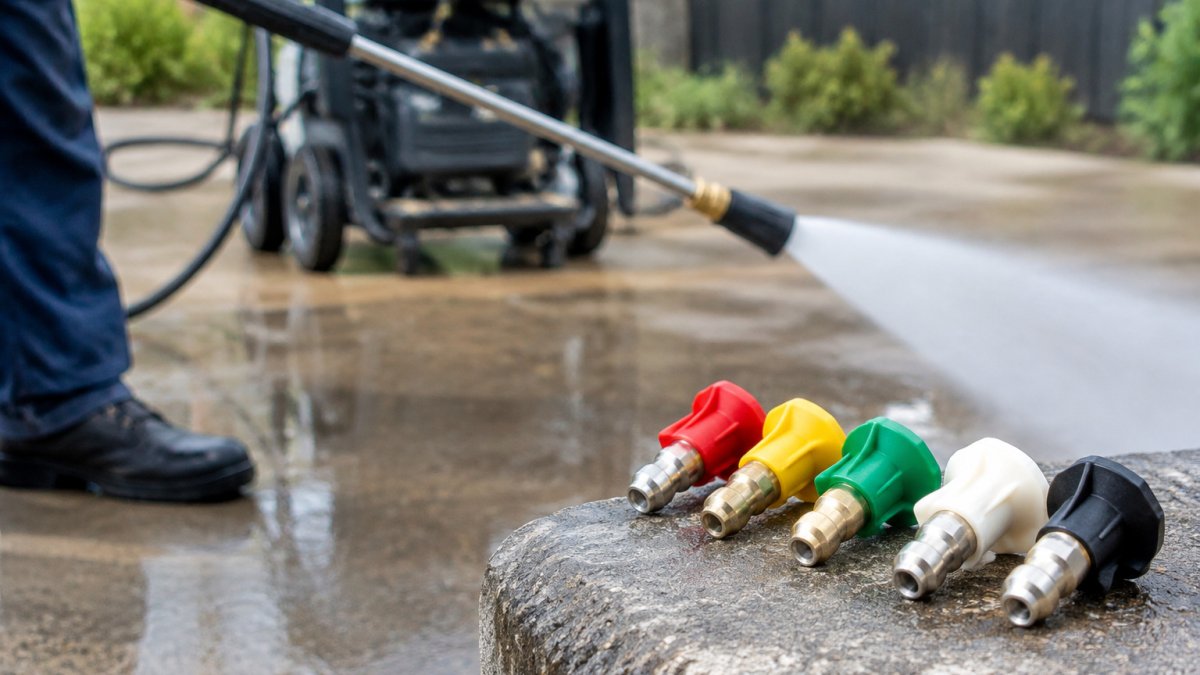
- Use a fan tip at a steady distance, not a pinpoint jet.
- Work in overlapping passes and keep the wand moving.
- Rinse runoff away from gardens and storm drains.
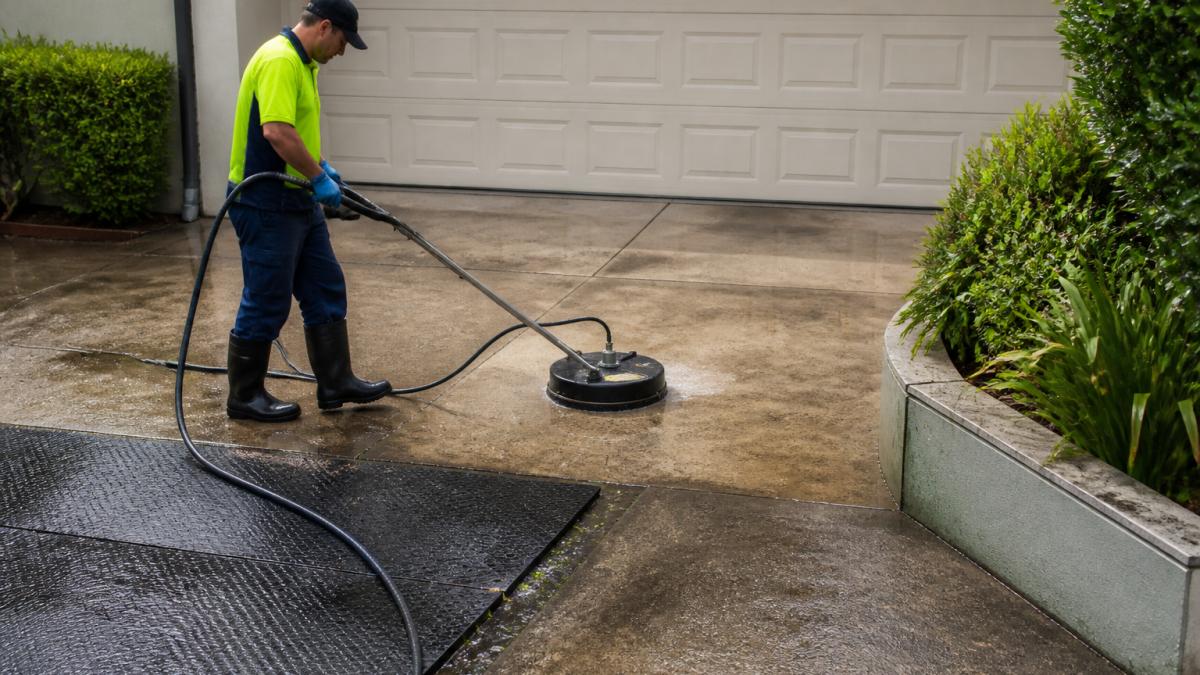
Watch out: too much pressure on asphalt, pavers or timber strips the surface and leaves permanent marks. When in doubt, call in a professional rather than risk it.
How Long Does Driveway Pressure Washing Take?
A standard residential driveway takes about one to three hours for a professional clean. Small, simple driveways sit at the lower end. Large, stained or heavily soiled surfaces take longer, and extra time goes into pre-treatment and stain work.
Drying time matters too. Most concrete is safe to walk on within a few hours and fully dry within a day. Plan the clean for a dry, mild day so the surface dries evenly.
Driveway Pressure Cleaning Cost and What Affects It
Pricing depends on size, surface type, how much staining and organic growth there is, and access. Heavier buildup, oil stains and multiple surfaces push the job cost up. Quotes vary widely, so ask what is included before you compare.
For a detailed breakdown of what drives the price, read our guide to professional driveway pressure cleaning costs. It explains the pricing factors so you can judge a quote on more than the headline number.
Book Your Driveway Clean With AquaBlast Elite
Set the right schedule, protect your surface, and your driveway stays sharp with far less effort. If you would rather hand it to a team that matches pressure and technique to each surface, we can help. Our skilled professionals use high-pressure equipment and tailored solutions for concrete, pavers, asphalt, decks and more, across residential and commercial properties.
Before we arrive, a little prep makes the visit smoother. Our guide on how to prepare your driveway for pressure cleaning covers parking, access and clearing the surface. Our guide on how to prepare your driveway for pressure cleaning covers parking, access and clearing the surface.
Get started with AquaBlast Elite and restore your driveway's clean, professional look. Book a call today and we will build a cleaning schedule around your property.
Frequently Asked Questions
How often should you pressure clean a driveway?
Most driveways benefit from a pressure clean every 12 months, with high-traffic or shaded surfaces needing attention every six months. In Sydney's humid climate, organic growth such as moss and algae can return within months, so a seasonal check helps you decide. Surfaces with oil stains or tyre marks may need spot cleaning between full washes. Regular pressure cleaning also protects the surface lifespan by removing abrasive grit before it works into cracks.
Can pressure washing damage concrete or pavers?
Yes, if the pressure is too high or the nozzle is held too close. Concrete can be etched and pavers can lose their joint sand or protective seal. Use a fan tip and keep the wand moving, or switch to a rotary surface cleaner for even coverage. For older or sealed surfaces, a lower setting is safer. If you are unsure, a professional clean avoids irreversible damage and keeps the finish intact.
Is it better to pressure clean a driveway yourself or hire a professional?
DIY suits light surface dirt on small, sound driveways. Hire a professional for oil stains, moss, large areas, or delicate finishes such as timber and sealed pavers. Professionals have the right pressure settings, surface cleaners and runoff controls to protect your garden and stormwater drains. They also spot damage early. For most homeowners, a yearly professional clean plus quick spot cleaning gives the best result for the money.
What should you do before pressure cleaning a driveway?
Clear cars, bins and furniture, sweep loose debris, and cover or move plants near the edges. Check for cracks, loose pavers or failing sealant, and repair these first. Pre-treat oil stains with a suitable degreaser so the pressure clean lifts them fully. Confirm where runoff will flow and protect stormwater drains. If you book a service, these steps are handled for you, but clearing access helps the job run faster.