 how-to
Water Saving Techniques for Professional Exterior Cleaning
Last Updated: November 4, 2026
Quick Summary
Water saving techniques for professional exterior cleaning include matching the nozzle and pressure to each surface, choosing soft washing over pressure washing where suitable, and recycling rinse water on larger jobs. Shutoff valves and aerated nozzles also cut flow without losing cleaning power.
- Close a shutoff valve or trigger lock between passes so water stops flowing while you move.
- Soft washing usually uses less water than pressure washing on roofs, painted walls and render.
- Recycling systems capture rinse water and filter it for reuse on larger jobs.
- Check local water restrictions and discharge rules with the site owner before quoting.
- Track litres used per square metre on each job to spot equipment wear or method problems.
Table of Contents
- Why Water Use Matters on Commercial and Residential Exterior Jobs
- Step 1: Choose Equipment That Limits Flow Without Losing Pressure
- Step 2: Compare Soft Washing vs Pressure Washing Water Usage
- Step 3: Set Up Water Recycling Systems for Exterior Cleaning
- Step 4: Plan Around Commercial Exterior Cleaning Water Restrictions
- Step 5: Use Biodegradable Solutions and Manage Runoff
- Step 6: Maintain Water-Saving Hardware and Track the Return
- Booking a Water-Efficient Exterior Clean With AquaBlast Elite
- Frequently Asked Questions
Why Water Use Matters on Commercial and Residential Exterior Jobs
Water saving techniques for professional exterior cleaning can cut the volume of water a job uses without weakening the clean.
Water matters for three practical reasons. It is a running cost on every job. It affects what runs off into gutters, storm drains and gardens. And on some sites, local rules limit how much water can be used or where it can go.
Water-efficient cleaning does not have to mean weaker cleaning. It means matching pressure, flow and chemistry to the surface in front of you. A concrete driveway, a timber deck and a painted facade each need different treatment.
Step 1: Choose Equipment That Limits Flow Without Losing Pressure
The first saving happens at the nozzle, not the pump. Pressure is what removes dirt, while flow is simply how much water passes through each minute. A well-chosen setup gives you the pressure you need and keeps the flow low.
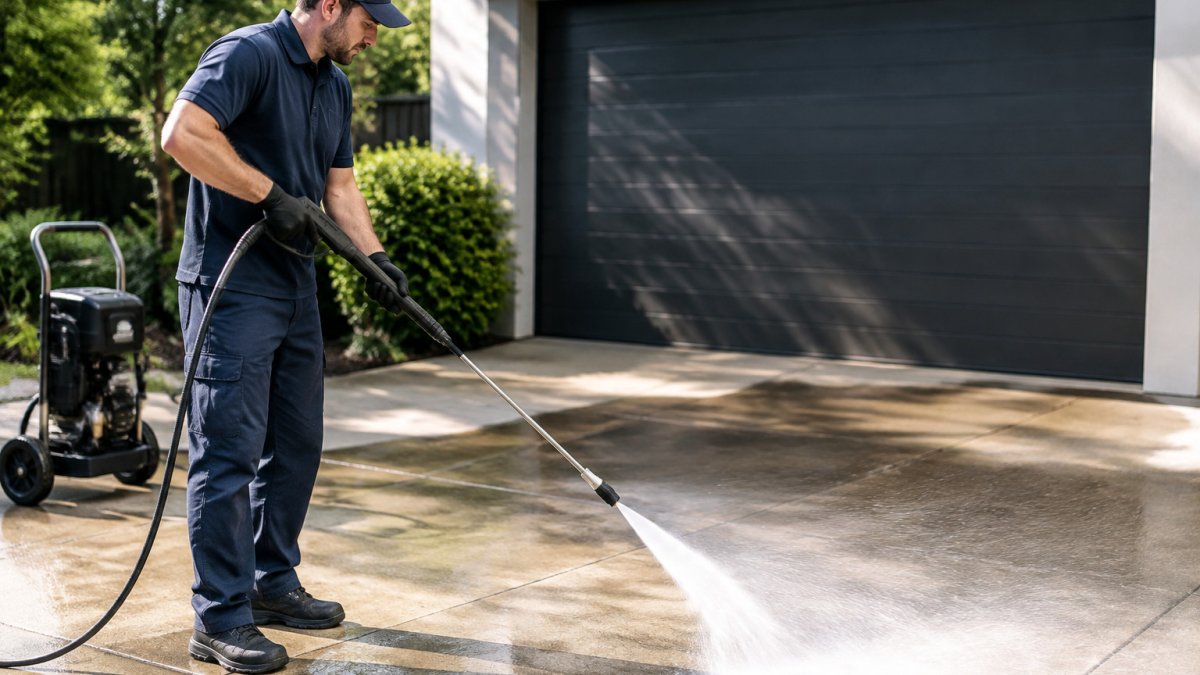
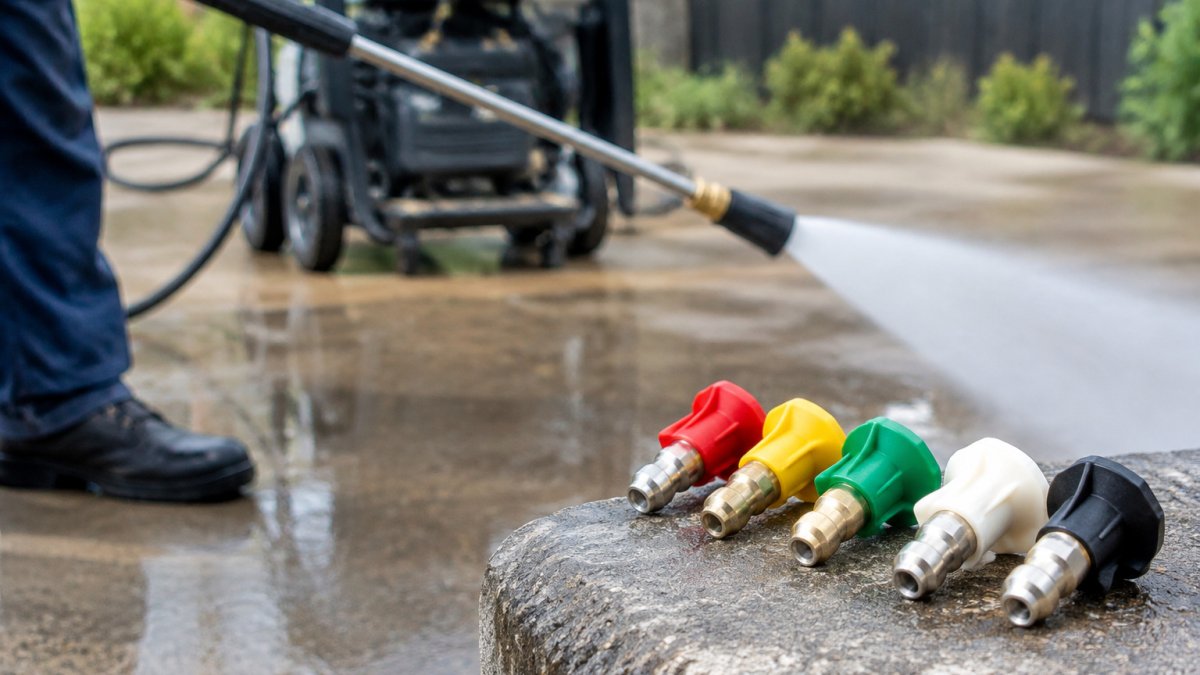
Aerated spray nozzles and shutoff valves
Aerated spray nozzles mix air into the water stream, which is a general property of this type of nozzle. Shutoff valves are just as useful. Close the trigger between passes, and the water stops flowing while you move to the next section.
Here is what to check before you start a job:
- Confirm the nozzle size suits the machine's rated flow
- Use a shutoff valve or trigger lock at the wand
Watch out: swapping to a much smaller nozzle to save water can raise pressure too far. On soft surfaces like timber or painted render, that can gouge the material. Match the nozzle to the surface, not to the water bill alone.
Step 2: Compare Soft Washing vs Pressure Washing Water Usage
Soft washing and pressure washing use water in very different ways. Pressure washing relies on force. Soft washing relies on low-pressure application of a cleaning solution that works over time.
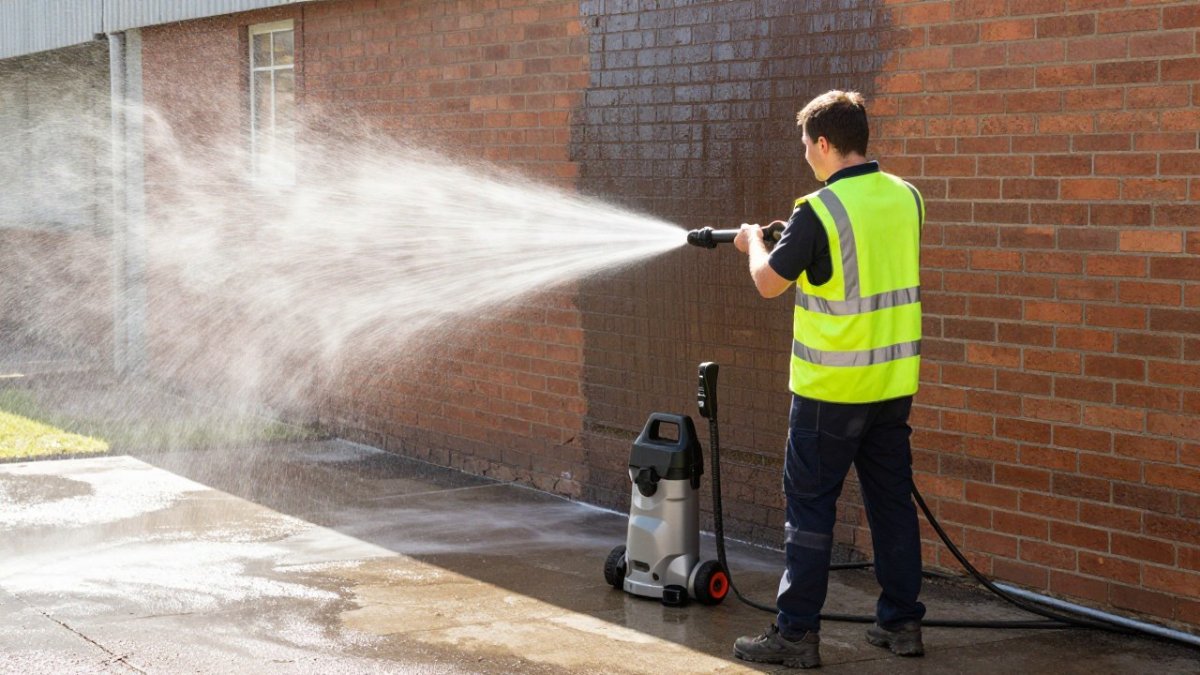
Pressure washing is generally suited to hard, flat surfaces like concrete paths and driveways. It removes heavy grime quickly, but it uses more water per square metre.
When comparing the two for a property, ask:
- What is the surface made of, and can it take high pressure?
- How heavy is the soiling, such as algae, mould or oil?
- How much rinse water will the job produce?
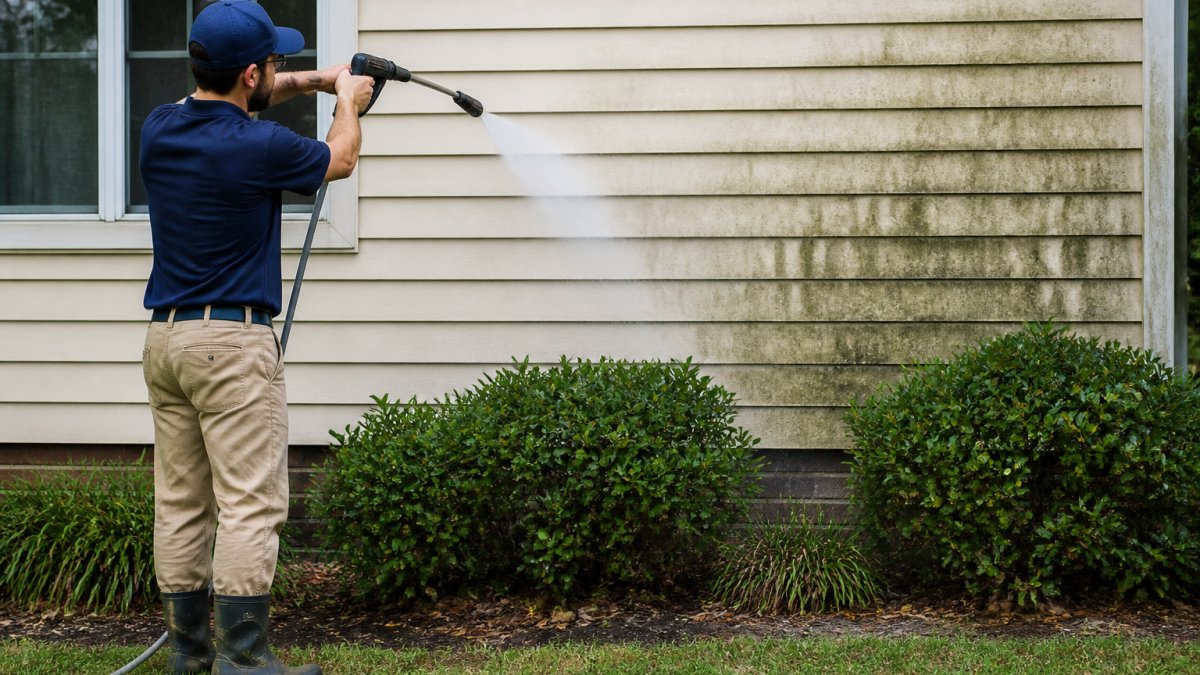
Soft washing is often a suitable choice for roofs and painted surfaces, and it can reduce both water use and surface damage. Pressure washing still has its place on heavy concrete grime.
The two methods use water in different ways, and the surface usually decides which one suits the job.
| Method | Best for | Key difference |
|---|---|---|
| Pressure washing | Hard, flat surfaces like concrete paths and driveways | Relies on force; uses more water per square metre |
| Soft washing | Roofs, painted walls, render | Low-pressure solution does the work; usually uses less water |
Step 3: Set Up Water Recycling Systems for Exterior Cleaning
Recycling systems capture rinse water, filter it and send it back into the cleaning cycle. On larger jobs, this can reduce fresh water use. These systems are most useful on sites where water supply is limited or where the cost of hauling water is high.
Filtration stages and pure water options
Most recycling setups work in stages. Coarse filters remove dirt and debris first. Finer filters catch smaller particles. Some systems add a pure water stage, which removes dissolved minerals so the rinse leaves no spots on glass or painted surfaces.
Pure water systems are generally useful for window cleaning and for finishing work on facades. Their main limitation is upkeep: filters need changing on schedule, and a clogged filter slows flow and wastes time.
The business case: water reclamation ROI for contractors
Most guides stop at describing recycling hardware. The harder question for a professional operator is whether the system pays for itself.
Build the case in four lines:
- Water and disposal costs avoided. Metered water, trade waste charges and the cost of hauling water to remote sites all fall when you recycle. Add up what a typical job currently spends on supply and disposal.
- Jobs you can now quote. Sites with limited water supply, or with rules that cap discharge, become workable once you can reclaim and reuse. That is new revenue, not just a saving.
- Consumables and upkeep. Filters, membranes and replacement parts are a running cost. A reclamation system is only cheap if it is maintained; a neglected unit clogs and stops earning.
- Payback period. Divide the installed cost by the net monthly saving plus the margin on newly won work. Most practitioners find a well-utilised system pays back within a few years on commercial contracts, while a lightly used unit may never do so.
A common pattern is that reclamation makes sense for contractors running regular commercial and industrial work, and makes little sense for a sole operator doing occasional residential jobs. The deciding factor is utilisation, not the sticker price.
Watch out: a recycling system that is undersized for your typical job will overflow or bypass, and you will pay for hardware that saves nothing. Size the collection and storage to your largest common job, not your smallest.
Matching the system to the job
- High-rise facade and window work: prioritise pure water finishing and closed-loop rinse capture.
- Fleet washing and industrial sites: prioritise high-volume capture and coarse filtration, because the soiling load is heavy.
- Residential driveways and roofs: a simple capture-and-settle setup with a coarse filter is often enough; full pure water stages add cost without much benefit.
- Remote or water-restricted sites: weight the hauling cost avoided heavily in the payback calculation, because it is often the largest single saving.
Step 4: Plan Around Commercial Exterior Cleaning Water Restrictions
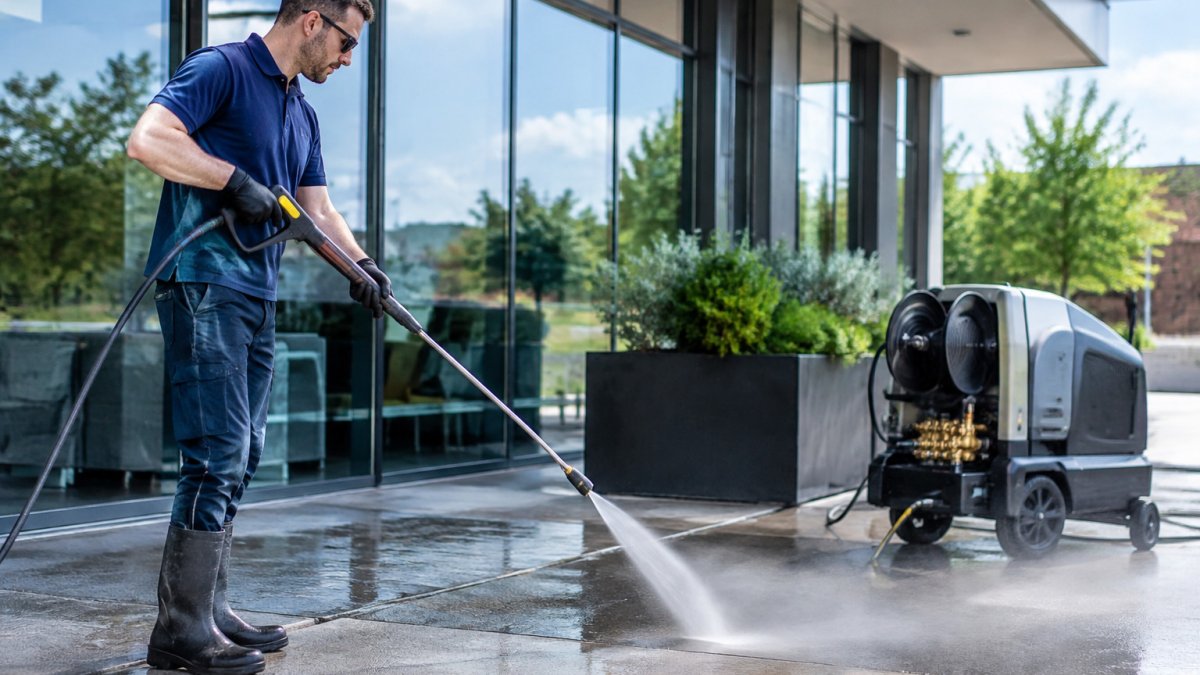
Commercial sites can face water rules that residential jobs do not. Councils and water authorities can set limits on use during dry periods, and some areas restrict what can go into stormwater drains. Check any applicable rules before quoting.
Start by asking the property manager or site owner whether any restrictions apply. Then confirm the rules with the relevant local authority. Restrictions can change, so treat last year's rules as a starting point only.
Plan your job around the rules:
- Confirm any current water restrictions for the site
- Agree on where rinse water can and cannot go
- Schedule work for periods when restrictions are lightest
- Keep a record of water use in case it is asked for
Step 5: Use Biodegradable Solutions and Manage Runoff
Chemistry and water go together. A cleaning solution that breaks down quickly reduces the impact of runoff on gardens, lawns and drains. Biodegradable solutions are a practical choice on most residential and many commercial jobs.
Dilute solutions according to the manufacturer's directions. Stronger is not always better. Over-concentrated chemicals waste product, leave residue and increase runoff impact.
Protect the areas around the job:
- Cover or wet down nearby plants before you start
- Keep chemical runoff away from storm drains
- Rinse from the top of a surface downwards
- Collect rinse water where practical
If you are unsure what a property's drains connect to, check before you start.
Step 6: Maintain Water-Saving Hardware and Track the Return
Water-saving equipment only works well when it is kept in good order. Worn nozzles spray unevenly and waste water. Blocked filters slow flow. Leaking hoses and valves lose water before it reaches the surface. A short maintenance routine protects both your savings and your results.
A technical maintenance checklist for water-saving hardware
Most guides say 'check your equipment'. A professional needs intervals and failure signs. Use this as a starting schedule and adjust to your workload and water quality.
Before every job (2 minutes)
- Inspect the nozzle orifice for wear, nicks or partial blockage; a worn nozzle sprays a fan instead of a jet and quietly wastes water.
- Check the trigger and shutoff valve for drip or failure to seal.
- Confirm the inlet filter screen is clear.
- Glance at hose couplings and O-rings for weeping.
Weekly
- Backflush or clean coarse filters; sediment load varies with source water.
- Check pump inlet pressure against the machine's rated figure; a drop usually means a clogged filter or a failing supply.
- Inspect the wand, gun and swivel for leaks under pressure.
Monthly
- Replace or clean fine filters and any carbon stage.
- Test the pure water stage with a TDS (total dissolved solids) meter; rising readings mean the resin or membrane is spent and spotting will return.
- Check all quick-connects and replace worn O-rings before they fail on site.
- Verify the recycling system's bypass and overflow behaviour.
Quarterly or by hour-meter
- Replace nozzles on a schedule rather than waiting for visible wear; orifice erosion is gradual and easy to miss.
- Service the pump per the manufacturer's interval.
- Inspect tanks, hoses and fittings for UV degradation and abrasion.
- Recalibrate any flow meter used for record-keeping.
Watch out: a nozzle that has been dropped or run dry can look fine but spray unevenly, so replace rather than ream it out, a reamed orifice is no longer the size the machine was set up for.
Track the return
Record the water used on each job, the time taken and any repeat work. Over several months, these notes show whether your methods are saving water and money. They also give you evidence to share with clients who ask how your process works.
Track three figures per job: litres used, litres per square metre, and minutes on site. If litres per square metre creeps up while minutes stay flat, suspect hardware wear before you suspect the method. If both rise, the surface or the chemistry is the likely cause. Good records are the easiest way to prove that water-saving methods are paying off, and they turn maintenance from a cost into a measurable input.
Booking a Water-Efficient Exterior Clean With AquaBlast Elite
Water-efficient exterior cleaning takes planning, the right equipment and the right method for each surface. AquaBlast Elite provides high-pressure cleaning services for residential, commercial and industrial clients across Sydney and surrounds. Pricing depends on the size of the site, the surface type, the level of soiling and the timing, so we give a tailored quote rather than a set figure.
If you would like a clean for your property, book a call with AquaBlast Elite. We will look at your surfaces and discuss the options that suit them.
Frequently Asked Questions
How can professional cleaners reduce water usage during pressure washing?
Start by matching nozzle type and pressure to the surface, since a lower flow rate often cleans just as well when chemicals are given time to dwell. Use a trigger shutoff valve so water only flows while cleaning, and avoid running the unit idle between passes. Logging litres used per job also shows where the waste is, so you can tighten the process over time.
What are the benefits of soft washing for water conservation?
Soft washing uses low pressure combined with cleaning solution applied to the surface, which means less water is pushed through the job overall. It suits roofs, render, cladding and painted surfaces where high pressure can cause damage and force rework. Because the solution does much of the work, the rinse is generally shorter.
Are there specific Australian standards for water usage in commercial cleaning?
Water use on commercial exterior cleaning is shaped more by local water utility rules, council conditions and any restrictions in force at the time than by a single national standard. Check with the relevant water authority in your area before starting, particularly during declared restrictions. Keep records of water used and where runoff goes, and confirm drainage and discharge requirements with the site owner or local council before any job.
What is the most water-efficient way to clean exterior walls and driveways?
For walls, low-pressure soft washing with a pre-applied solution generally uses less water than high-pressure methods. Sweeping loose debris before rinsing can reduce rinse time.