 how-to
How to Clean Driveway Stains Without Harsh Chemicals
Table of Contents
- What You'll Need Before You Start
- How to Remove Oil Stains from Concrete
- Using Vinegar on a Concrete Driveway Safely
- Baking Soda for Concrete Stains and Grease
- How to Clean a Driveway Without a Pressure Washer
- Protecting Runoff, Storm Drains and Your Garden
- When to Escalate: Realistic Results and Professional Cleaning
- Frequently Asked Questions
Last Updated: October 21, 2026
What You'll Need Before You Start
Most people can clean driveway stains with a few basic items, patience, and the right order of steps. At AquaBlast Elite, we see plenty of driveways where the stain survived because someone scrubbed too hard too early, not because the cleaner was too weak.
Here is what to gather before you begin:
- A stiff-bristled brush or hard broom
- Dish soap or a mild washing powder
- White vinegar
- Baking soda
- An old towel or absorbent cloth
- A bucket, watering can, or hose
- Gloves and eye protection
- A tarp or sandbags to protect drains
Check the forecast first. A dry, mild day works best. Rain will wash your cleaner away before it has time to work.
How to Remove Oil Stains from Concrete
Removing oil stains from concrete starts with absorption, not scrubbing. Fresh oil sits on top of the surface, and pushing it around with a brush only spreads it wider.
Follow this order:
- Blot up as much fresh oil as you can with an old towel.
- Cover the stain with baking soda or cat litter.
- Leave it for at least 30 minutes, then sweep it up.
- Repeat until no more oil lifts.
- Only then apply a mild soap solution.
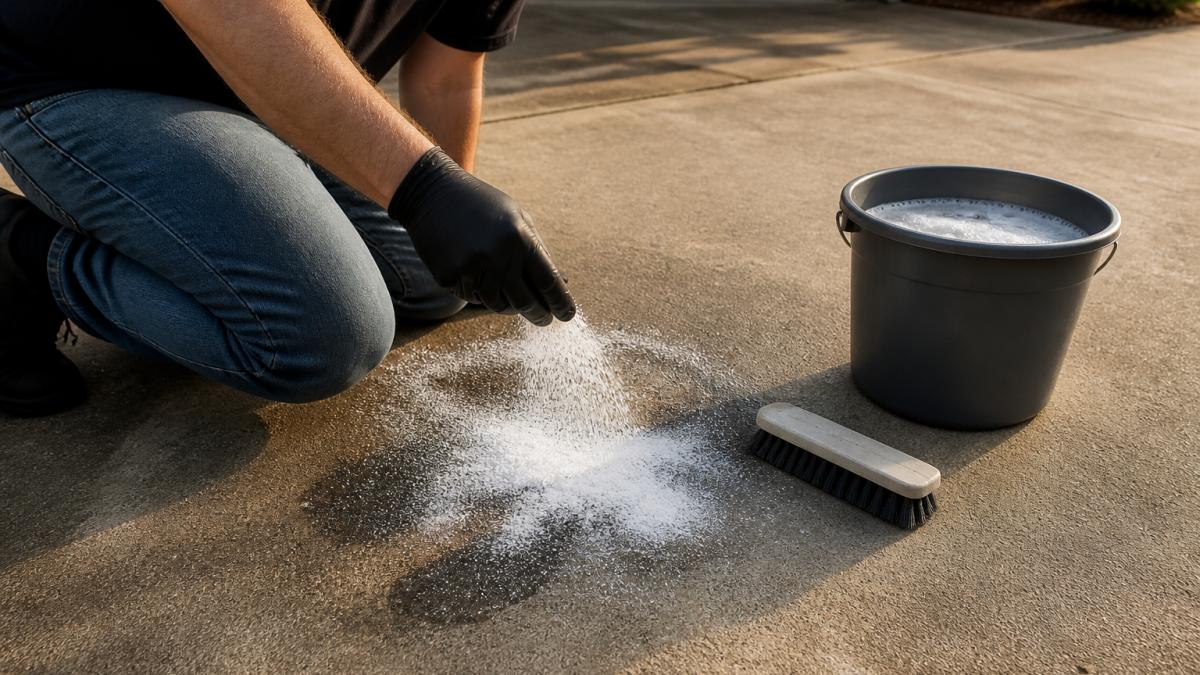
The Absorbent-First Method for Fresh Oil
For fresh spills, absorption does most of the work. Spread a thick layer of baking soda over the stain and press it in gently with your foot. Leave it for an hour if you can. For older, set-in oil, make a paste from baking soda and water and let it sit longer before scrubbing.
Dwell Times and Rinse Guidance
Dwell time means how long a cleaner sits on the surface before you rinse it. For mild soap, allow 10 to 15 minutes. For vinegar, keep it to 10 minutes on plain concrete. Rinse with clean water from a watering can or hose, working from the top of the slope down so dirty water runs away from your clean areas.
Using Vinegar on a Concrete Driveway Safely
Vinegar on a concrete driveway works well on light stains and general grime, but it is not a miracle cure. White vinegar is a mild acid, typically around 4-5% acetic acid in the household bottle, and that matters on some surfaces. The acid dissolves mineral deposits and some organic staining, but it can also dull a sealer and, with repeated use, loosen the surface of exposed aggregate.
How to Apply It
Use it like this:
- Mix equal parts white vinegar and water (a 1:1 dilution).
- Spray or pour it onto the stain.
- Let it sit for no more than 10 minutes.
- Scrub with a stiff brush.
- Rinse thoroughly with clean water.
Keep vinegar away from exposed aggregate with soft or loose stones, and off any sealed concrete. Acid can dull a sealer over time. If your driveway has a shiny finish, skip vinegar and use mild soap instead.
What Vinegar Is Good For, and What It Isn't
Vinegar is best on organic staining (leaf litter, moss, bird droppings) and light mineral film. It is a poor choice for fresh oil, where absorption and detergent do more work, and it will not lift deep tyre rubber or years of built-up grease. Reaching for vinegar first on an oil stain usually just spreads it.
If Something Goes Wrong
If a test patch dulls or whitens after vinegar, rinse immediately with plenty of clean water and stop using it on that surface. Dulling from a single short dwell is usually cosmetic and fades with weathering; repeated acid exposure is what causes lasting damage. When in doubt, plain water and a soft brush are always the safest fallback.
Baking Soda for Concrete Stains and Grease
Baking soda for concrete stains is the safest option for most homeowners. It is a mild abrasive, so it lifts grease and grime without scratching the surface.
For grease stains, mix baking soda with a little water to form a thick paste. Spread it over the stain, leave it for 20 to 30 minutes, then scrub gently and rinse. For tyre marks, sprinkle dry baking soda, add a splash of water, and work it in with a hard broom.
A common mistake is using too much water too soon. The paste needs to sit and draw the grease out. Patience beats pressure here.
How to Clean a Driveway Without a Pressure Washer
You can clean driveway stains without a pressure washer using hot water, detergent, and a good brush. It takes longer, but it is gentle and safe for most surfaces, and it is often the better choice on sealed concrete, exposed aggregate, and older surfaces where a pressure washer can etch or strip.
A Repeatable Workflow with Dwell Times
Most practitioners find that a consistent sequence beats a one-off aggressive scrub. Work in this order, and repeat the cycle rather than escalating the chemical:
- Sweep and pre-wet. Clear dirt, leaves, and loose grit. Dampen the surface with clean water so the cleaner does not soak straight into porous concrete.
- Apply the mildest suitable cleaner. Match the cleaner to the stain (see the decision guide below).
- Dwell. Let the cleaner sit for the recommended time, typically 10 to 15 minutes for mild dish soap or washing powder, and no more than 10 minutes for diluted white vinegar on plain concrete.
- Scrub with a stiff-bristled brush. Work in small circles, keeping the surface wet. Do not let the cleaner dry.
- Rinse from the top of the slope down. Use a watering can or hose on a low setting so dirty water runs away from cleaned areas.
- Repeat once before escalating. A second gentle cycle usually lifts more than a single harsh one.
Stain-Specific Decision Guide
Competitors list ingredients but rarely tell you which one to reach for first. Use this order of least-harsh options:
| Stain type | First choice | Dwell time | Escalate to |
|---|---|---|---|
| Fresh oil or grease | Baking soda or cat litter to absorb, then mild dish soap | 30 min absorb; 10-15 min soap | Baking soda paste |
| Set-in oil | Baking soda paste | 20-30 min | Repeat paste, then professional |
| Tyre marks | Dry baking soda worked in with a hard broom | 10 min | Mild dish soap |
| Organic stains (leaf, moss, bird droppings) | Diluted white vinegar (1:1) | 10 min max | Mild dish soap |
| General grime | Hot water plus dish soap | 10-15 min | Vinegar on plain concrete only |
Surface Compatibility Check
Before you commit to a method, test a small hidden patch, behind a wheelie bin, near the garage door, or under a parked car. Apply the cleaner, wait the full dwell time, rinse, and let it dry. Look for dulling, whitening, or loosened aggregate. If the patch changes colour or texture, stop and use plain water and a soft brush instead.
- Plain concrete: tolerant of diluted vinegar and mild soap.
- Sealed concrete: avoid vinegar; acid dulls sealers over time. Use mild soap only.
- Exposed aggregate: avoid stiff wire brushes and strong acid; use a soft-to-medium brush and short dwell times.
- Pavers: test first; some pavers are acid-sensitive.
Protecting Runoff, Storm Drains and Your Garden
Protecting runoff matters as much as the clean itself. Soapy water, oil residue, and vinegar all end up somewhere, and that somewhere is usually your garden or the storm drain.
Take these steps before you start:
- Block storm drains with a tarp or sandbags.
- Divert rinse water onto grass or garden beds, not into drains.
- Keep vinegar and soap away from plant roots.
- Sweep up absorbed oil and bin it, never hose it away.
- Check your local council's rules on what can enter stormwater.
According to guidance from the Environment Protection Authority Victoria, stormwater flows untreated to waterways, so anything you wash off the driveway can end up in rivers and bays. A few minutes of prep keeps your garden and local waterways safe.
When to Escalate: Realistic Results and Professional Cleaning
Some stains will not shift with gentle methods, and that is normal. Deep oil that has soaked into porous concrete, old rust marks, or years of built-up grime often need more than soap and vinegar.
Escalate when:
- The stain has been there for months and sits deep in the surface.
- Gentle methods have been tried two or three times with no change.
- The concrete is exposed aggregate and you are worried about damage.
- You need a fast, even result before a sale or inspection.
This is where professional cleaning helps. Our team uses high-pressure equipment and surface-safe methods to lift stubborn stains without harming the concrete. We match the approach to the surface, protect your garden and drains, and deliver a finish that looks even across the whole driveway.
Frequently Asked Questions
Will vinegar damage a concrete driveway?
White vinegar is mildly acidic and safe on standard concrete when diluted and rinsed off within about 15 to 20 minutes. The risk comes from leaving strong vinegar to pool on the surface for hours, or using it on exposed aggregate or freshly sealed concrete where it can dull the finish. Always dilute one part vinegar to three parts water, test a small hidden patch first, and rinse thoroughly afterwards. Avoid combining vinegar with bleach, as the mixture releases harmful fumes.
How do I remove oil stains from a driveway without harsh chemicals?
Start by blotting fresh oil with an absorbent powder such as baking soda or cat litter and leave it for at least 30 minutes. Then make a paste of baking soda and dish soap, work it into the stain with a stiff-bristled brush, and let it dwell for 15 to 20 minutes. Rinse with hot water and repeat over several days for older stains. For set-in marks, a water-based degreaser labelled acid-free and caustic-free gives extra lifting power without the harshness of solvent cleaners.
Can baking soda remove stains from concrete?
Baking soda works well on grease, oil and organic stains because it absorbs liquid and acts as a mild abrasive without scratching the concrete surface. It is less effective on rust, tannin or deep-set tyre marks, which usually need a different approach. For best results, apply a thick paste, let it sit for 15 to 30 minutes, scrub with a hard broom, and rinse. Repeat the treatment over a few days rather than scrubbing harder in one session.
How long should a homemade driveway cleaner sit before rinsing?
Most homemade mixes need 15 to 20 minutes of dwell time to break down grease and lift stains. Baking soda pastes can stay on for up to 30 minutes, and absorbent powders for fresh oil should sit for at least 30 minutes before sweeping up. Never let any solution dry on the concrete, because dried residue can leave a haze and is harder to rinse away. Work in sections and rinse before the surface dries out.
Cleaning a driveway without harsh chemicals comes down to method, not muscle. Absorb oil first, use mild soap and vinegar with care, and rinse well every time. When a stain will not budge, or you want a whole-driveway result that lasts, our team at AquaBlast Elite can help. We bring specialised equipment, surface-safe techniques, and years of experience to every job. Get started with AquaBlast Elite and restore your driveway's curb appeal without the guesswork.