 listicle
7 Signs Your Sydney Home Needs Exterior Cleaning
Table of Contents
- Why Exterior Cleaning Matters More Than Most Homeowners Realise
- 7 Signs Your Home Is Overdue for Exterior Cleaning
- 1. Green and Black Streaks on Walls, Roofs and Paths
- 2. Chalky Paint, Faded Cladding and Crumbling Mortar
- 3. Slippery Paths, Stained Driveways and Overflowing Gutters
- 4. Dull, Dirty Windows and Screens
- 5. Faded or Chalky Timber Decking
- 6. Rust Stains and Paint Blistering on Metal
- 7. Musty Smells or Damp Patches Near the Base of Walls
- Quick Diagnostic Checklist
- How Often to Clean House Exterior Surfaces in Sydney
- Mould and Algae Removal From Exterior Walls: What Works Safely
- Pressure Washing House Exterior: Which Surfaces Can Handle It
- Driveway Pressure Cleaning: Restoring Concrete, Pavers and Paths
- Cosmetic Buildup or Real Damage? How to Tell the Difference
- DIY or Professional? Choosing the Right Approach
- Frequently Asked Questions
Last Updated: October 17, 2026
Why Exterior Cleaning Matters More Than Most Homeowners Realise
Your home's exterior takes more punishment than any other part of the property, and in Sydney it takes it year-round: salt air, summer humidity, and baking sun.
Exterior cleaning is the routine removal of dirt, grime, mould, algae and pollution from a building's outside surfaces before that buildup causes permanent damage.
Most guides get this wrong: they treat exterior cleaning as cosmetic work you do before selling. Below: the seven signs worth acting on, how often to clean each surface, and how to tell staining from real damage.
7 Signs Your Home Is Overdue for Exterior Cleaning
The quickest test is a five-minute walk around the property at arm's length: look up at the roofline, along the walls under eaves, and down at paths and driveways.
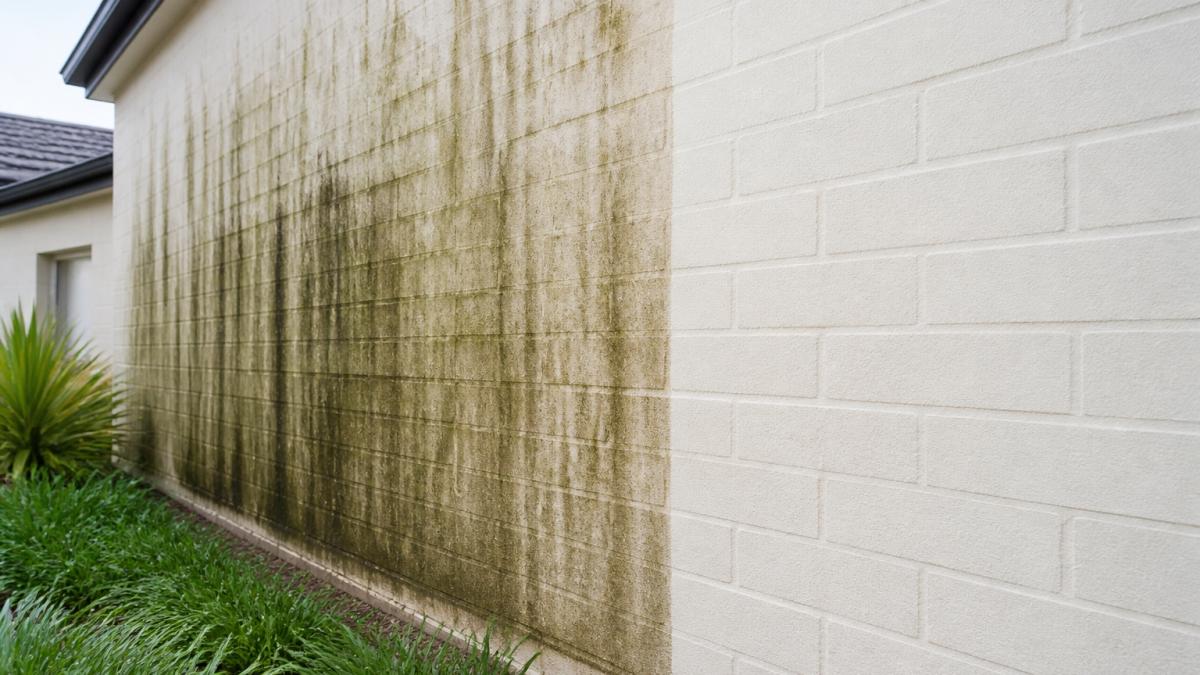
1. Green and Black Streaks on Walls, Roofs and Paths
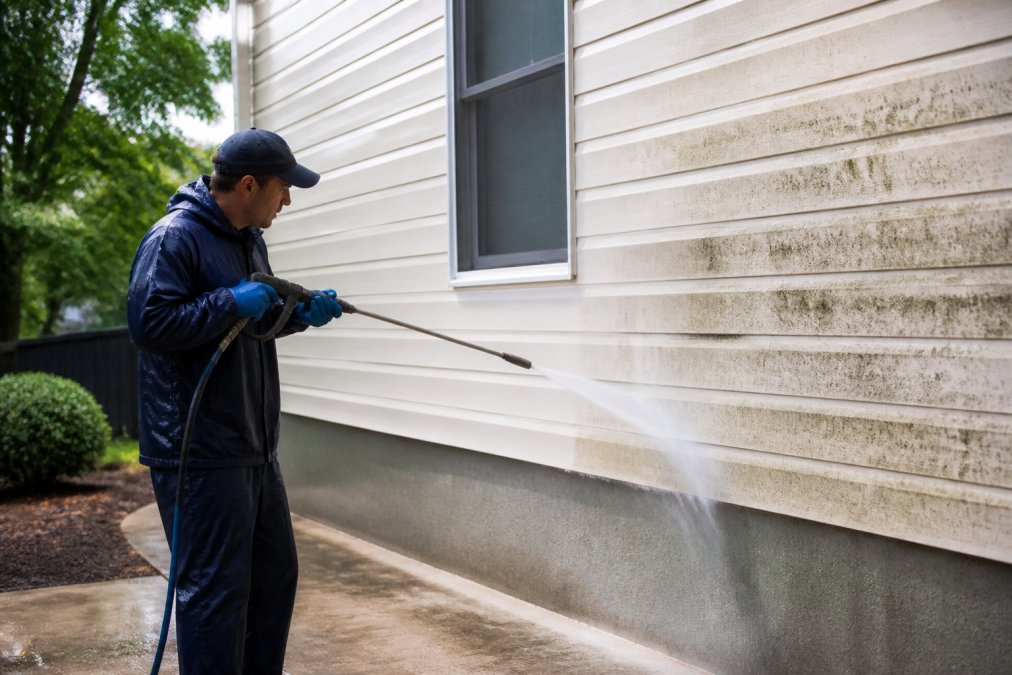
What it is: Green streaks are algae; black patches are usually mould or mildew.
Why it matters: On a roof, algae holds moisture against tiles or sheeting and shortens their life.
Urgency: Moderate to high. Path and driveway streaking is a safety issue, treat it before the next wet season.
Next step: Low-pressure wash with a suitable treatment. Do not hard-blast render or painted surfaces.
2. Chalky Paint, Faded Cladding and Crumbling Mortar
What it is: A powdery residue on painted weatherboards or render means the paint film is breaking down and dirt is bonding to it.
Why it matters: Once the paint film fails, moisture gets behind it and the substrate deteriorates.
Urgency: High. This is your cue to get a professional opinion before repainting, not to book a wash.
Next step: Ask a painter or building inspector to assess. Cleaning should wait until repairs are done.
3. Slippery Paths, Stained Driveways and Overflowing Gutters
What it is: Paths that feel slick after rain have an algae film. Driveways collect tyre marks, oil and rust stains.
Why it matters: Slippery paths are a liability, stained driveways worsen with time, and overflowing gutters push water into eaves, fascia and foundations.
Urgency: High for gutters before storm season; moderate for paths and driveways.
Next step: Clear gutters and downpipes first, then treat paths and driveways with a surface-appropriate clean.
4. Dull, Dirty Windows and Screens
What it is: A film of dust, pollen and pollution builds on glass and flyscreens, especially on the weather-exposed side of the house.
Why it matters: Mostly cosmetic, but dirty glass and screens reduce light and can hide early signs of frame or seal damage.
Urgency: Low. Include with a routine exterior clean.
Next step: Wash glass with a mild detergent and rinse screens; check seals while you are there.
5. Faded or Chalky Timber Decking
What it is: Grey, dry timber with raised grain and a chalky feel has lost its protective coating.
Why it matters: Bare timber absorbs water, swells, and then cracks as it dries.
Urgency: Moderate. Clean and re-seal before the next wet season.
Next step: Low-pressure wash with a timber-safe cleaner, then re-oil or re-seal once dry.
6. Rust Stains and Paint Blistering on Metal
What it is: Orange-brown staining on Colorbond, gutters or downpipes, or paint blistering and peeling on metal.
Why it matters: Rust means the protective coating has failed. Cleaning will not stop it; the source needs repair.
Urgency: High. Treat as a repair issue, not a cleaning issue.
Next step: Have the affected metal assessed and repaired, then clean surrounding surfaces.
7. Musty Smells or Damp Patches Near the Base of Walls
What it is: A persistent musty smell, or damp patches and efflorescence (white salt deposits) at the base of walls.
Why it matters: This often points to poor drainage, a leaking pipe, or water pooling against the slab.
Urgency: High. Investigate the cause before cleaning.
Next step: Check drainage, downpipes and garden beds against the wall; engage a plumber or drainage specialist if the source is unclear.
Quick Diagnostic Checklist
Use this as a five-minute walk-around:
- Green or black streaks on walls, roof or paths
- Powdery residue on painted surfaces
- Crumbling mortar or soft timber
Cosmetic items (windows, light driveway staining) mean a routine clean will do. Structural or moisture-related items (crumbling mortar, rust, damp patches, overflowing gutters) should be assessed before booking a clean.
How Often to Clean House Exterior Surfaces in Sydney
Most Sydney homes need a full exterior clean every 12 months, with gutters cleared twice a year. Surfaces under trees or in constant shade need attention more often, because algae regrows faster there.
Here is a practical schedule to work from:
| Surface | Frequency | Why |
|---|---|---|
| Roof | Every 12-18 months | Algae holds moisture and shortens roof life |
| Walls and render | Every 12 months | Prevents mould staining and paint breakdown |
| Gutters and drains | Twice yearly, before storm season | Stops overflow and water damage |
| Driveways and paths | Every 6-12 months | Removes slip hazard and deep staining |
| Decks and patios | Every 6-12 months | Protects timber and sealant |
The right answer depends on tree cover, proximity to the coast and shade: a north-facing wall in full sun may need a yearly wash; a south-facing wall under a gum tree may need two.
Mould and Algae Removal From Exterior Walls: What Works Safely
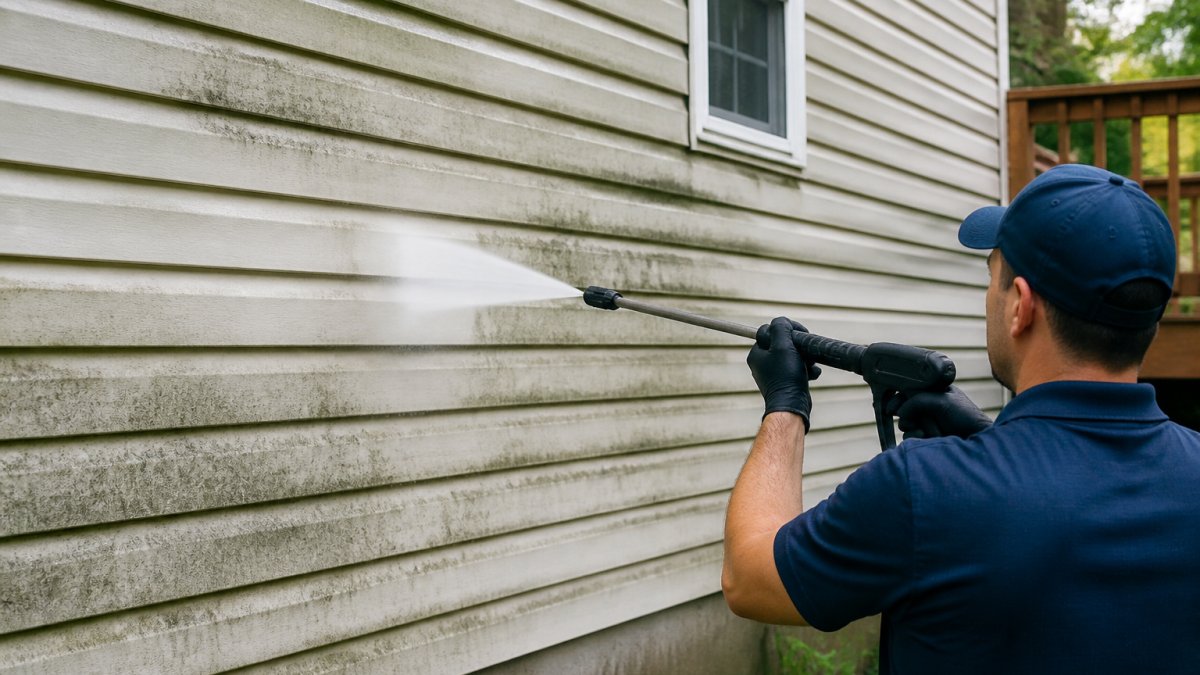
Mould and algae removal from exterior walls works best with low-pressure water and a suitable cleaning agent, not a hard blast.
A safe sequence looks like this:
- Wet the wall and surrounding garden beds first to protect plants.
- Apply a mould treatment suited to the surface, following the label.
- Let it dwell long enough to kill the growth.
- Rinse with low-pressure water, working top to bottom.
- Treat the garden and drains afterwards, and check runoff is contained.
Two things matter here. Never let chemical runoff flow into stormwater drains untreated, and never mix cleaning products. The SafeWork Australia guidance on hazardous chemicals sets out why mixing products is dangerous, and it is worth reading before you start.
Pressure Washing House Exterior: Which Surfaces Can Handle It
Pressure washing house exterior surfaces works well on hard, sealed materials and badly on soft or porous ones. Getting this match right is the difference between a clean finish and a ruined surface.
- Safe for high pressure: concrete driveways, exposed aggregate, hard paving, brickwork in good condition.
- Use low pressure only: rendered walls, painted weatherboards, timber decks, Colorbond roofing, sandstone.
- Keep water away entirely: open windows, vents, air-conditioning units, and older electrical fittings.
A common mistake is turning the pressure up to save time. On soft surfaces that strips paint, gouges timber and drives water behind cladding.
Driveway Pressure Cleaning: Restoring Concrete, Pavers and Paths
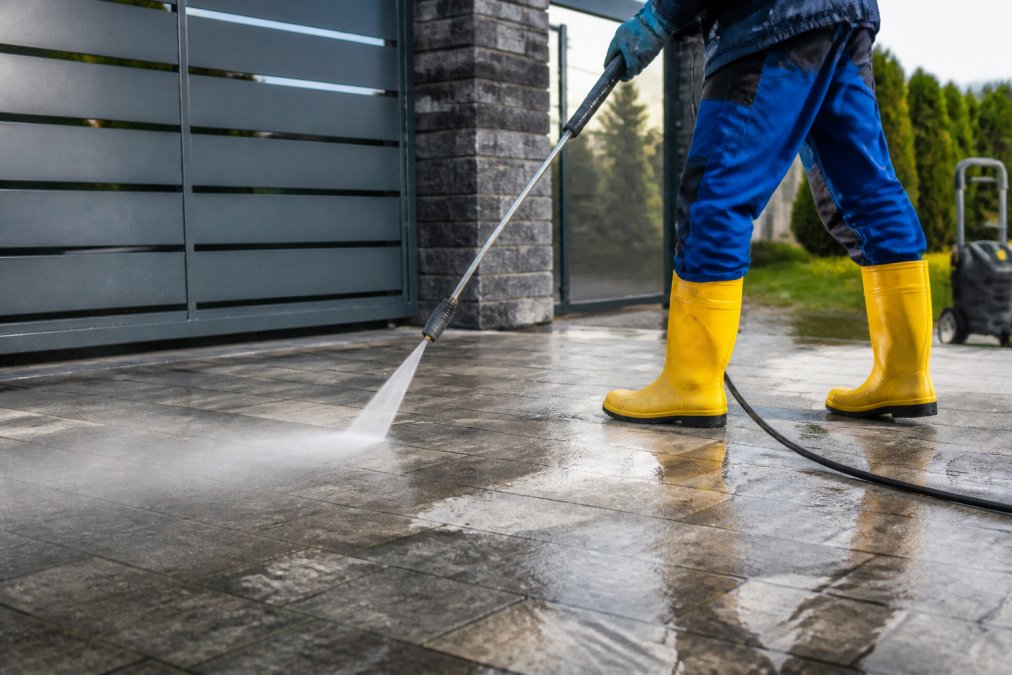
Driveway pressure cleaning lifts the ground-in layer sweeping never touches: tyre marks, oil, rust and the black film of pollution along the edges.
Pavers need more care: old mortar joints and loose bedding can give way under a hard blast, so dial the pressure back and keep the angle consistent. Sealing afterwards slows future staining and makes the next clean easier.
Cosmetic Buildup or Real Damage? How to Tell the Difference
Buildup is cosmetic when it sits on the surface and lifts away with cleaning. Damage is structural when the material itself has changed: paint flaked to bare timber, drummy render, washed-out mortar joints, or timber soft underfoot.
Use this test before you book anything:
- Does the stain lift when you scrub a small test patch?
- Does the paint flake off in sheets, or just look dull?
- Does mortar crumble when pressed, or hold firm?
If the stain lifts, you need a clean. If the material fails these tests, you need a repair, and cleaning should wait until it is done.
DIY or Professional? Choosing the Right Approach
DIY makes sense for a single-storey home, a concrete path and a machine you already own. Call a professional when the job involves height, soft materials or a surface you cannot afford to damage. The decision comes down to four things: height and access, material risk, runoff and chemicals, and time.
Height and Access
If the job requires a ladder above single-storey height, or working on a roof, treat it as professional work.
DIY if: single-storey walls, ground-level paths and driveways, and you can reach everything safely from the ground.
Professional if: two-storey walls, roofs, gutters above single storey, or anything requiring ladder work on uneven ground.
Material Risk
Some surfaces are forgiving; others are ruined by the wrong pressure or chemical.
DIY if: the surface is hard, sealed and in good condition, and you have practised with the equipment on a small test patch.
Professional if: the surface is soft, porous, painted, timber, or you are unsure what it is.
Runoff and Chemicals
Cleaning products, mould treatments and wastewater need to be managed. Runoff should not flow untreated into stormwater drains, and products should never be mixed.
DIY if: you can contain runoff, protect garden beds, and follow product labels exactly.
Professional if: the job involves large volumes of water, strong treatments, or runoff that cannot be contained on your property.
Time and Equipment
A full exterior clean done properly is a long day for one person, and the equipment matters.
DIY if: you already own suitable equipment, have the time, and the job is small and low-risk.
Professional if: you would need to hire equipment, the job is large, or your time is better spent elsewhere.
A Simple Decision Rule
- DIY: single storey, hard sealed surfaces, ground-level access, equipment on hand, runoff contained.
- Professional: any height, soft or painted surfaces, uncertain materials, large areas, or runoff that cannot be contained.
We match the method to the surface rather than blasting everything the same way: high-pressure equipment for concrete and paving, low-pressure techniques for render, timber and roofing. We service homes, strata, commercial and industrial sites, tailoring each job to what the surface can handle. Before-and-after proof matters when choosing a provider, so ask to see it.
Frequently Asked Questions
What are the clearest signs that a house exterior needs cleaning?
The most reliable signs are green or black streaks on walls and roofs, chalky or faded paint, slippery paths, stained driveways and gutters that overflow in heavy rain. These point to mould, algae, dirt and debris building up on exterior surfaces. If you can see a visible difference between a sheltered patch and the rest of the wall, surface buildup is already well established and exterior cleaning is overdue.
How often should you clean the outside of a house?
For most homes, a full exterior clean every 12 to 18 months keeps surfaces in good condition. Homes near the coast, under dense trees or in shaded, damp areas often need attention every 6 to 12 months because mould and algae return faster. Gutters should be checked twice a year, and driveways benefit from driveway pressure cleaning roughly once a year to stop stains setting into the surface.
Can pressure washing damage house paint or cladding?
Yes, if the pressure is too high or the nozzle is held too close. Timber, painted render, weatherboards and older mortar joints can be gouged or stripped by a high-pressure jet. Pressure washing house exterior surfaces should use low pressure on walls and higher pressure only on hard surfaces like concrete. Soft washing with low-pressure water and a suitable cleaning solution is the safer choice for cladding, roofs and painted finishes.
Are slippery outdoor paths a sign they need pressure cleaning?
Often, yes. A slick or slippery feel underfoot usually means a film of algae, mould or grime has built up on the pavers or concrete. This is common in shaded areas and damp spots that stay wet after rain. Driveway pressure cleaning and path cleaning remove that film and reduce the slip risk, though badly damaged or drummy pavers should be inspected and repaired rather than just cleaned.