 ultimate-guide
7 Best Cleaning Chemicals for Building Facades
Last Updated: October 26, 2026
Quick Summary
The best cleaning chemicals for building facades are those matched to both the substrate and the stain: alkaline cleaners for organic soils like algae and grime, and acidic cleaners for mineral stains like efflorescence and scale. Use pH-neutral or mild alkaline products only on calcium-based stone and coated surfaces, and always run a spot test first.
- Acidic products dissolve mineral deposits, while alkaline products cut through oils, fats and organic film.
- Strong acid cleaners eat into calcium-rich mortar and cement joints, leaving them crumbly and discoloured.
- A strong acid can visibly etch a limestone face within minutes, and the damage is permanent.
- Strong alkaline mixes soften painted and coated facades, causing chalking, gloss loss and delamination.
- A drop of dilute acid fizzes on calcium-based stone and stays quiet on silicate-based stone.
Table of Contents
- How to Match Facade Cleaning Chemicals to Substrate and Stain
- Brick, Concrete, Mortar and Cement: What Works and What Etches
- Stone, Coating and Paint: The Surfaces That Punish the Wrong Chemical
- Graffiti, Adhesive Residue and Glass: Solvents, Alcohol and Glass Cleaners
- Safe Chemical Handling for Building Facades
- Environmental Regulations for Exterior Cleaning and Runoff Control
- Commercial Exterior Maintenance Plans That Keep Facades Cleaner for Longer
- Book a Facade Cleaning Assessment
- Frequently Asked Questions
How to Match Facade Cleaning Chemicals to Substrate and Stain
The best cleaning chemicals for building facades are the ones matched to both the material underneath and the stain on top.
Get the pairing wrong and you etch concrete, strip paint, or leave a chalky bloom that never washes out. Get it right and most facades come up clean with a mild alkaline product and a proper rinse.
Two variables decide almost every job: the pH of the chemical and whether the soil is organic or mineral.
The pH Rule That Decides Most Cleaning Jobs
pH is the measure of how acidic or alkaline a cleaner is, and it determines which soils a chemical can break down without attacking the substrate. Acidic products dissolve mineral deposits. Alkaline products cut through oils, fats, and organic film. Neutral products sit in the middle and suit delicate surfaces.
The rule is simple: match the pH to the soil, then check it against the material. For readers weighing chemical options, this guide to eco-friendly pressure washing chemicals covers alternatives that still work on facade soils. A mild alkaline cleaner handles most general grime on brick and concrete. Acid cleaners lift scale and cement film but will attack anything calcium-based, including mortar joints and some stone.
Organic Versus Mineral Stains
Organic staining comes from algae, mould, moss, lichen, bird droppings, and general grime. Mineral staining comes from rust, efflorescence, scale, and cement splatter. They need different chemistry.
Organic soils respond to alkaline cleaners and often to a sodium hypochlorite mix at low dilution. Mineral soils respond to acidic cleaners. Using an acid on an organic stain wastes product and can bleach the surface unevenly. Using an alkaline cleaner on efflorescence simply moves the salt around. Identify the stain first, then pick the product.
Brick, Concrete, Mortar and Cement: What Works and What Etches
Brick and concrete tolerate mild alkaline cleaners and moderate acid washes, provided dilution is respected. Mortar and cement are the weak points. Both are calcium-rich, so strong acid cleaners eat into the joints and leave them crumbly and discoloured.
For general dirt, grime, and buildup on masonry, a mild alkaline cleaner at the manufacturer's dilution, applied with a low-pressure sprayer and left to dwell, does most of the work. For a deeper how-to on pressure cleaning brick facades safely, see the full guide. Cement and mortar splatter need a dedicated acid cleaner, but keep it off the joints and rinse thoroughly.
Stone, Coating and Paint: The Surfaces That Punish the Wrong Chemical
Natural stone and coated surfaces are where facade cleaning goes wrong most expensively, because the damage is often irreversible. A brick wall that is over-acid-washed looks bad; a limestone or marble facade that is over-acid-washed is permanently etched. The chemistry matters more here than anywhere else on the building.
Why calcium-based stone reacts to acid
Limestone, sandstone, marble and travertine are calcium carbonate or calcium-cemented materials. Acid cleaners react with the calcium carbonate and dissolve the surface binder, which shows up as a dull, pitted or chalky face and, on polished stone, a loss of sheen that no amount of rinsing restores. The reaction is fast, a strong acid can visibly etch a limestone face within minutes of contact, and it does not stop at the surface. Acid that soaks into porous stone keeps reacting after the visible wash is done.
For these substrates, use pH-neutral or very mild alkaline cleaners only. A pH-neutral stone cleaner with a surfactant package lifts dirt without attacking the binder. Where a mineral stain such as efflorescence or light scale must be removed, use a purpose-formulated, buffered acid replacement or a poultice designed for calcium-based stone rather than a general masonry acid, and always run a spot test on an inconspicuous area first.
Coated, painted and rendered surfaces
Painted and coated facades, including powder-coated aluminium, render with a painted finish, and factory-coated cladding, are the second trap. Strong alkaline mixes soften and saponify the film, causing chalking, gloss loss and, eventually, delamination. Harsh solvents can swell or lift the coating outright. Once the protective film is compromised, the facade takes on water and the coating failure spreads.
A pH-neutral cleaner with gentle agitation protects the paint while lifting dirt. Readers worried about painted surfaces can follow this step-by-step guide to protecting exterior paint during cleaning. Keep dwell times short on coatings, rinse before the product dries, and never let a strong alkaline or solvent cleaner sit on a coated panel in direct sun.
A quick compatibility reference
| Substrate | Safe chemistry | Chemistry to avoid | Failure mode if mismatched |
|---|---|---|---|
| Limestone, sandstone, marble, travertine | pH-neutral stone cleaner; mild alkaline | Strong acid, unbuffered acid | Etching, pitting, loss of polish |
| Granite, bluestone (silicate-based) | Mild alkaline; diluted acid with care | Strong acid on honed finishes | Dulling, surface roughening |
| Painted render, coated cladding | pH-neutral cleaner | Strong alkaline, solvents | Chalking, gloss loss, delamination |
| Powder-coated aluminium | pH-neutral; mild detergent | Abrasive or solvent cleaners | Coating swell, colour fade |
| Unglazed brick and concrete | Mild alkaline; controlled acid | Strong acid on mortar joints | Joint erosion, efflorescence bloom |
If you are unsure which category a facade falls into, a simple field test helps: a drop of dilute acid on an inconspicuous spot will fizz on calcium-based stone and stay quiet on silicate-based stone. That single test tells you whether an acid cleaner is off the table before you mix a single drum.
Graffiti, Adhesive Residue and Glass: Solvents, Alcohol and Glass Cleaners
Graffiti and adhesive residue need solvents, not general-purpose cleaners. Before choosing a chemical, see what works best for graffiti removal. The right product depends on the paint type and the substrate beneath it. A common mistake is reaching for the strongest solvent available; on porous brick, that drives pigment deeper into the surface.
For glazed elements and glass, use a dedicated glass cleaner or isopropyl alcohol. Mineral spirits suit adhesive residue on hard surfaces but must be kept off coatings and painted panels.
Safe Chemical Handling for Building Facades
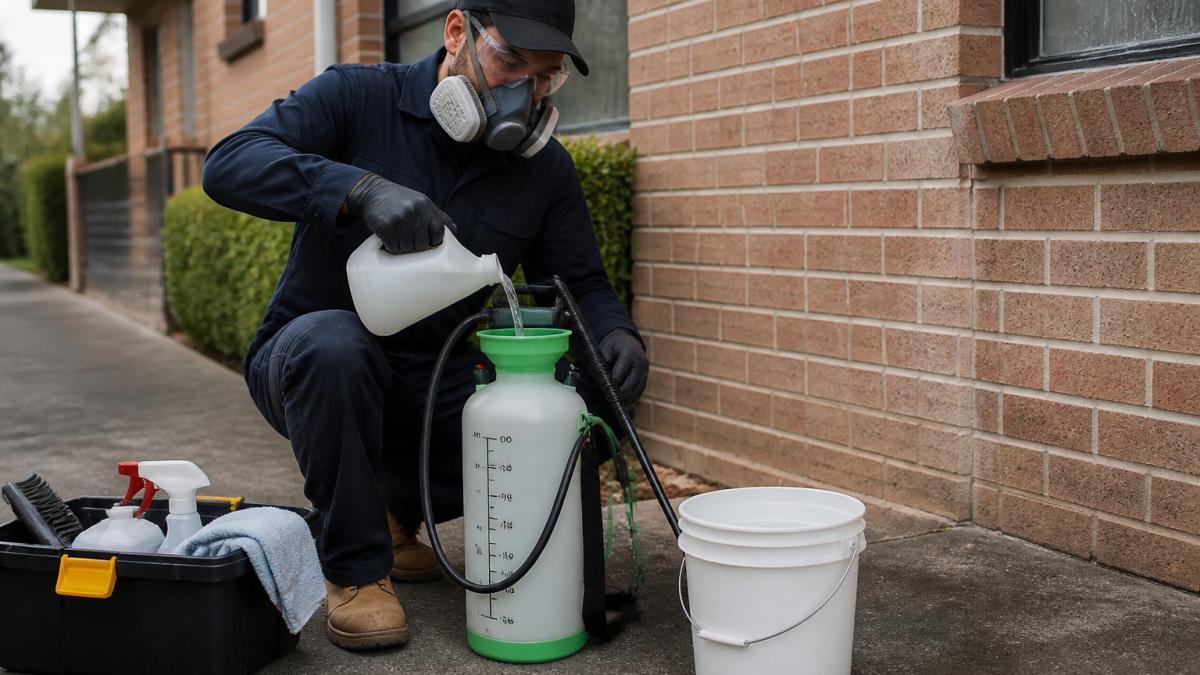
Safety is not a footnote on exterior cleaning jobs. Mix chemicals in a marked container, never in an unlabelled sprayer, and always add chemical to water rather than the reverse.
Environmental Regulations for Exterior Cleaning and Runoff Control
Runoff is the part most operators underestimate, and it is where a facade cleaning job can move from routine maintenance to a regulatory problem. Wash water carrying chemicals, paint residue, suspended solids and heavy metals must not enter stormwater drains, which in most council areas flow to waterways without treatment. Containing and collecting runoff, or directing it to a trade waste connection, is the baseline expectation on commercial exterior cleaning work.
What the rules actually require
- Keep records. Note which chemicals were used, at what dilution, and how runoff was managed. This is the evidence trail if a complaint or inspection occurs.
Containment methods that work on facades
- Runoff recycling, on large jobs, capturing and filtering wash water for reuse reduces both discharge volume and water cost.
Dilution economics and lower-impact alternatives
For large exterior cleaning projects, the cost of containment, disposal and trade waste compliance is a real line item. Factoring it into the quote, rather than discovering it on site, is what separates a compliant job from an expensive one. Proper containment protects the environment, keeps the job compliant, and protects the building owner from liability for a discharge they did not authorise.
Commercial Exterior Maintenance Plans That Keep Facades Cleaner for Longer
| Stain or Soil | Recommended Chemical | Surfaces to Avoid | Risk if Mismatched |
|---|---|---|---|
| Algae, mould, grime | Mild alkaline cleaner | None common | Uneven bleaching |
| Efflorescence, scale | Acid cleaner, diluted | Mortar, limestone, marble | Etching, joint damage |
| Cement, mortar splatter | Dedicated acid cleaner | Painted, coated surfaces | Paint stripping |
| Rust | Oxalic acid blend | Natural stone | Discolouration |
| Graffiti, adhesive | Solvent or gel | Porous brick, coatings | Pigment driven deeper |
| Glass, glazing | Glass cleaner, isopropyl alcohol | None common | Streaking, film |
Book a Facade Cleaning Assessment
Choosing the best cleaning chemicals for building facades comes down to matching pH and product to the substrate and the stain, then handling everything safely and disposing of runoff properly. The margin for error is small on stone, mortar, and painted surfaces.
If you would rather not take that risk on your own property, AquaBlast Elite offers high-pressure cleaning services. Our team brings cutting-edge high-pressure cleaning equipment, customised solutions for every project, and skilled professionals. Get started with AquaBlast Elite and book a call to restore and protect your building's exterior.
Frequently Asked Questions
What is the difference between acidic and alkaline cleaners for exterior surfaces?
Alkaline cleaners break down oils, greases, soot and organic grime, which makes them the default for brick, concrete and general dirt buildup. Acid cleaners dissolve mineral deposits such as cement smear, mortar haze, efflorescence and scale, but they attack calcium-based stone and can etch glazed surfaces. Match the cleaner to the stain: organic soil calls for mild alkaline, mineral staining calls for acid used sparingly after a spot test in an inconspicuous area.
How do I choose facade cleaning chemicals without damaging the substrate?
Start with the material, not the stain. Identify whether the surface is mineral (brick, concrete, stone), organic (timber, some coatings) or glazed (glass, tiles), then check the product label for compatibility. Always run a spot test on an inconspicuous area, keep dwell time short, and rinse thoroughly. A mild alkaline cleaner with a pH around 9 to 10 handles most exterior grime, while acids, solvents and strong degreasers should be reserved for specific stains.
What safety equipment is required when handling facade cleaning chemicals?
At minimum, wear chemical-resistant gloves, safety glasses or goggles, and protective clothing. For concentrates, acids or solvent-based products, add a respirator rated for the chemical and ensure adequate ventilation. Read the safety data sheet before mixing, never decant into unlabelled containers, and keep a spill kit and clean water on site. Working at height adds harness and fall-arrest requirements on top of chemical protection.
How do environmental regulations for exterior cleaning affect runoff and wastewater?
Wash water carrying detergents, solvents or paint residue must not enter stormwater drains, which typically discharge to waterways. Contain runoff with bunding or vacuum recovery, dispose of it through a licensed trade waste arrangement, and use biodegradable, low-phosphate products where suitable. Check local council and state environmental authority requirements before starting, especially on commercial sites where volumes are larger.