 ultimate-guide
Eco-Friendly Pressure Washing Chemicals: Safe & Effective
Table of Contents
- What Makes Pressure Washing Chemicals Eco-Friendly
- Biodegradable Soft Washing Solutions for Exterior Surfaces
- Preventing Mould Regrowth on Exterior Walls Safely
- Environmental Regulations for Pressure Washing Runoff
- Chemical-Free and Low-Impact Cleaning Methods
- Choosing the Right Eco-Friendly Chemicals for Your Surface
- Professional vs. DIY Chemical Handling
- Frequently Asked Questions
Last Updated: September 23, 2026
What Makes Pressure Washing Chemicals Eco-Friendly
Eco-friendly pressure washing chemicals are formulations designed to clean effectively while minimising environmental harm and protecting human health. The key difference lies in their composition: these products use biodegradable surfactants, avoid persistent toxic compounds, and break down naturally in soil and water systems rather than accumulating as contaminants.
The distinction matters more than many homeowners realise. Traditional pressure washing chemicals often contain harsh industrial solvents and surfactants that don't degrade quickly. When they run off into storm drains or seep into soil, they persist in the environment for months or years. Eco-friendly alternatives work differently, they're formulated to be effective at lower concentrations, break down within days, and won't harm aquatic ecosystems or leave toxic residues on surfaces your family touches.
The most effective eco-friendly pressure washing chemicals share three characteristics: they deliver genuine cleaning power (not just marketing hype), they're safe for the person applying them, and they won't damage the surface being cleaned or the environment around it. This balance is harder to achieve than it sounds, which is why understanding what actually makes a chemical eco-friendly is essential before choosing one.
The most common eco-friendly options include bio-based surfactants derived from plant oils, sodium hypochlorite solutions formulated at lower concentrations, and pH-neutral cleaners that won't etch or discolour surfaces. Each works best for specific situations, understanding those differences prevents wasted money and poor results.
Biodegradable Soft Washing Solutions for Exterior Surfaces
Soft washing is a low-pressure cleaning method that relies on biodegradable chemical solutions rather than high-pressure force to remove dirt, algae, mould, and grime. Instead of blasting surfaces at 3000+ PSI, soft washing typically operates at 500 PSI or less, making it safer for delicate materials like timber, render, and composite cladding.
The appeal is straightforward: soft washing solutions do most of the work, so the pressure can stay gentle. A properly formulated biodegradable soft wash solution will kill mould spores and algae at the root, preventing rapid regrowth. Common active ingredients include sodium hypochlorite (a biodegradable disinfectant), surfactants derived from plant oils, and sometimes d-Limonene (a natural solvent extracted from citrus peels). These break down within days of application, leaving no harmful residue.
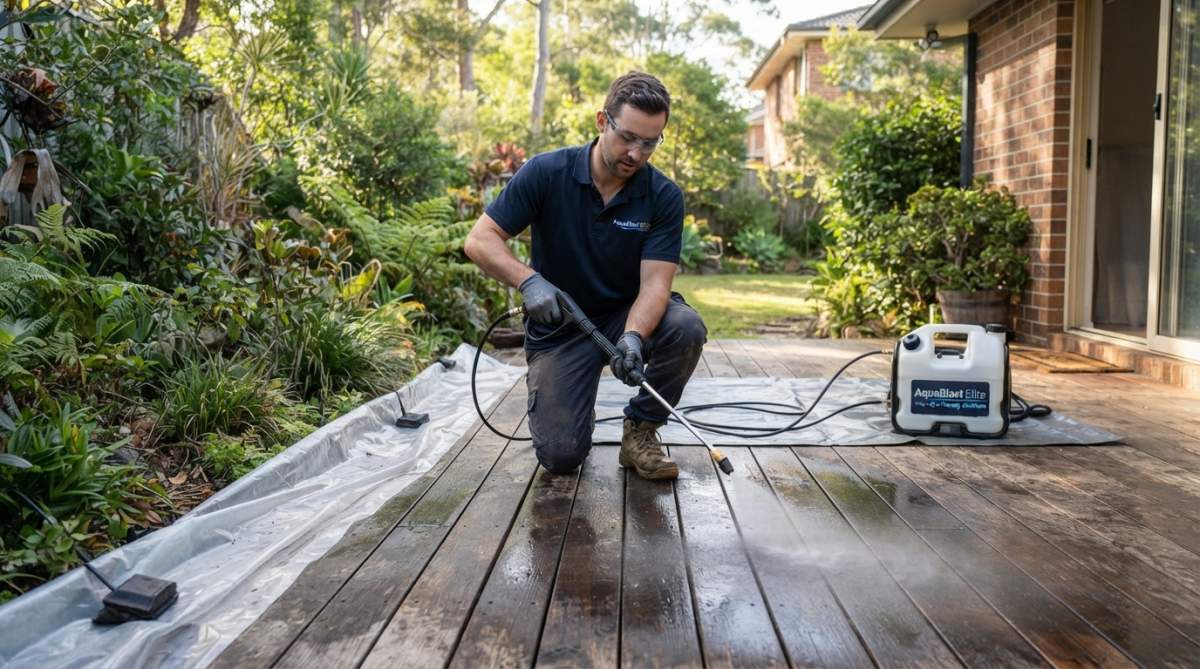
For timber decks, soft washing is often the only sensible choice. High-pressure cleaning can splinter wood, open grain, and accelerate rot. A biodegradable soft wash solution cleans the timber thoroughly without structural damage, and because the chemicals break down naturally, you're not leaving persistent toxins in the wood fibres. The same logic applies to composite decking, weathered render, and delicate stone surfaces.
The timing matters. Soft washing solutions work best when left on the surface for 15-30 minutes before rinsing. This contact time allows the active ingredients to penetrate biofilm and kill the organisms causing discolouration. Rushing the rinse defeats the purpose and wastes the chemical. Professional teams understand this; DIY attempts often fail because homeowners rinse too quickly or use insufficient chemical concentration.
Preventing Mould Regrowth on Exterior Walls Safely
Mould and algae regrow quickly after cleaning if you only remove the visible surface layer. The biological organisms live within biofilm, a sticky matrix of cells, spores, and organic matter embedded in the substrate. A high-pressure blast washes away the visible growth but leaves the biofilm intact, so regrowth begins within weeks.
Preventing mould regrowth on exterior walls safely requires two steps: kill the biofilm with a chemical that actually penetrates it, then maintain conditions that discourage new growth. Biodegradable soft washing solutions designed for mould prevention contain surfactants that break through biofilm and biocides that kill spores at the root. Once applied and rinsed, they don't leave a persistent chemical barrier, instead, they interrupt the biological cycle long enough to give the surface a genuine reset.
The best eco-friendly approach combines an initial soft wash with preventative measures. After cleaning, improve drainage and airflow around the affected area. Mould thrives in damp, shaded spots with poor ventilation. Trimming overhanging branches, fixing gutters, or repositioning downpipes to direct water away from walls can dramatically reduce regrowth rates. These changes cost nothing and work indefinitely.
Some surfaces benefit from a follow-up treatment 2-4 weeks after the initial clean. A lighter application of mould-preventative solution can suppress regrowth before it becomes visible again. This approach, initial deep clean plus strategic follow-ups, is more sustainable than waiting for heavy regrowth and then repeating the process.
Environmental Regulations for Pressure Washing Runoff
Chemical runoff from pressure washing is regulated in Australia to protect waterways, soil quality, and public health. The specific rules vary by state, but all jurisdictions have environmental protection legislation that governs how cleaning chemicals can be disposed of and what substances are permitted in stormwater systems.
Most Australian states follow guidelines that require pressure washing runoff to be managed responsibly. Chemicals containing heavy metals, persistent organic pollutants (POPs), or PFAS compounds are heavily restricted. Storm drains typically lead directly to waterways without treatment, so anything going down a drain should be biodegradable and non-toxic to aquatic life. According to Australian environmental protection standards, cleaning agents must not contain substances that persist in the environment or accumulate in living organisms.
Practical compliance means containing or directing runoff appropriately. For residential jobs, this might mean ensuring runoff flows to a garden bed where it can be absorbed and naturally filtered, rather than straight into a storm drain. For commercial or industrial sites, more formal containment measures may be required. Professional teams understand these requirements and plan jobs accordingly, selecting chemicals that comply with local regulations and managing runoff to prevent environmental harm.
The safest approach is to choose biodegradable chemicals from the start. They break down naturally in soil and water, so even if some runoff reaches a storm drain, it won't accumulate or harm aquatic ecosystems. This eliminates the compliance headache and is genuinely better for the environment.
Chemical-Free and Low-Impact Cleaning Methods
Not every surface requires chemicals. For some jobs, mechanical cleaning methods, using pressure, abrasion, or other physical force, can achieve excellent results without any chemical input. Understanding when chemical-free methods work saves money and eliminates environmental concerns entirely.
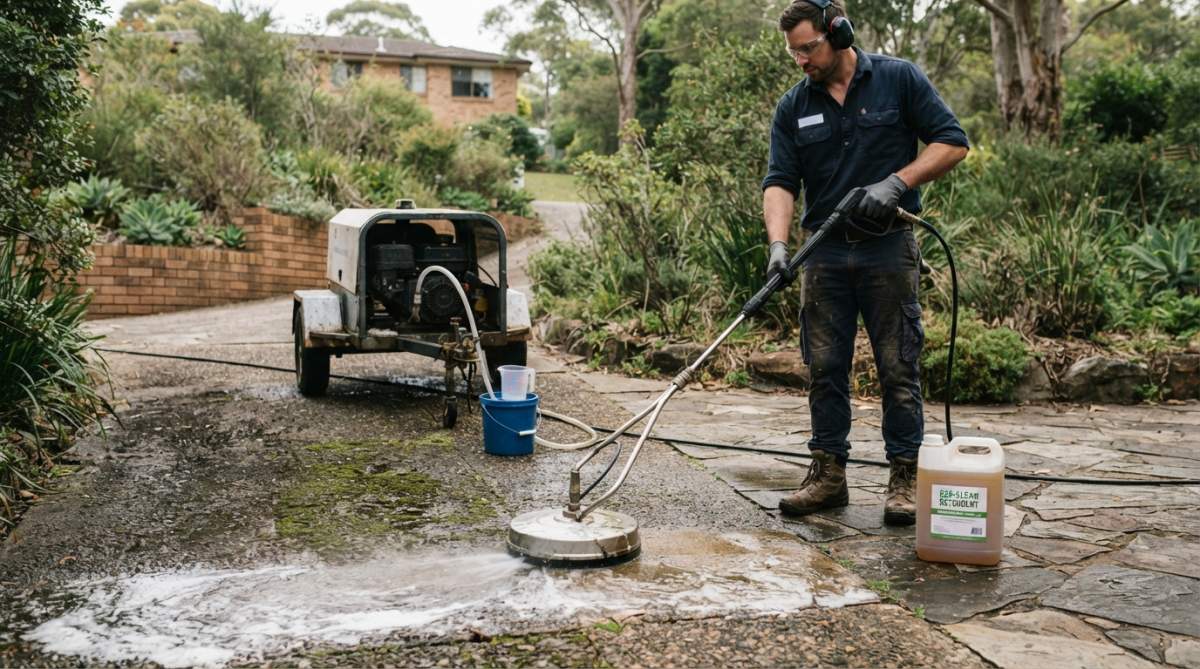
High-pressure cleaning alone (without chemical additives) works well for hard, non-porous surfaces like concrete, sealed stone, and metal. The force of the water removes dirt, algae, and grime mechanically. This approach is ideal for surfaces that don't have deep biofilm or where mould isn't the primary problem. The limitation is that it doesn't kill biological organisms, it only removes visible growth, so regrowth can happen quickly on damp surfaces.
Abrasive methods like sand blasting or soda blasting are chemical-free alternatives for removing stubborn coatings, graffiti, or heavy contamination. These methods use physical abrasion rather than chemicals, though they generate dust and require proper containment. They're overkill for routine cleaning but invaluable for restoration jobs where chemical methods would be ineffective.
Water conservation is another consideration. Some eco-friendly approaches use less water than traditional high-pressure cleaning.
Choosing the Right Eco-Friendly Chemicals for Your Surface
Selecting the right eco-friendly pressure washing chemical depends on three factors: the surface material, the type of contamination, and the environmental conditions around the job.
| Factor | Consideration | Best Choice |
|---|---|---|
| Timber/composite surfaces | Gentle pressure, no damage | Soft wash with plant-based surfactants |
| Concrete/sealed stone | Can handle stronger products | pH-neutral or mild alkaline cleaners |
| Mould/algae-prone areas | Biofilm penetration needed | Surfactants + biodegradable biocides |
| Near gardens or waterways | Minimal environmental impact | 100% biodegradable, non-toxic formulations |
| Grease/oil contamination | Solvent action required | d-Limonene or plant-based degreasers |
Professional vs. DIY Chemical Handling
The difference between professional and DIY pressure washing often comes down to chemical knowledge and equipment precision. Professionals understand dilution ratios, contact times, surface-specific risks, and how to manage runoff responsibly. DIY attempts frequently fail because these details are overlooked.
Frequently Asked Questions
What makes a pressure washing chemical truly eco-friendly?
Eco-friendly pressure washing chemicals are biodegradable, non-toxic, and free from harmful substances like PFAS and heavy metals. They break down naturally in the environment without contaminating soil or waterways. pH-neutral formulations protect surface integrity while reducing environmental impact. Look for products certified as safe for plants, pets, and aquatic life. The best options use bio-based solvents like d-Limonene rather than industrial solvents.
Are biodegradable soft washing solutions as effective as harsh chemicals?
Yes, when applied correctly. Biodegradable soft washing solutions work through gentler mechanical action combined with lower chemical concentration, making them ideal for delicate surfaces like timber and render. They excel at mold and grime removal without damaging substrate integrity. Professional application ensures proper dilution and contact time, delivering results comparable to harsh chemicals while preserving your property and the environment.
How do I dispose of pressure washing runoff safely?
Capture runoff in designated collection areas away from storm drains and garden beds. Allow sediment to settle before disposing of water according to local drainage guidelines. Use eco-friendly chemicals specifically formulated to minimise environmental impact. Professional services handle chemical disposal responsibly, ensuring compliance with local regulations. Never allow concentrated cleaning solutions to enter waterways or soil systems.
Is soft washing better for the environment than high-pressure cleaning?
Soft washing is generally more environmentally friendly because it uses lower pressure, reducing water waste and surface runoff. Combined with biodegradable chemicals, soft washing minimises contaminant removal into drainage systems. However, the best choice depends on your surface type and cleaning needs. Hard surfaces like concrete may require higher pressure, whilst timber and render benefit from soft washing's gentler approach.