 ultimate-guide
Maintaining Industrial Concrete Floors for Safety Guide
Quick Summary
Industrial concrete floors stay safe only through continuing maintenance, including regular inspection, prompt repair and careful cleaning. Floors that were slip-resistant when poured can become hazardous within months of heavy traffic, spills and neglected upkeep.
- Inspect high-risk zones such as forklift lanes and wet areas weekly, and the full floor monthly.
- Remove dry grit and debris by sweeping before applying any liquid cleaner.
- Dilute cleaners to the label rate, since over-concentrated chemical leaves slippery residue.
- Test slip resistance in both dry and wet conditions, and keep records of the results.
- Prioritise repairs in pedestrian routes, forklift lanes and wet zones before cosmetic defects.
Table of Contents
- Why Industrial Concrete Floor Safety Depends on Maintenance
- Inspecting Your Warehouse Floor Safety Inspection Checklist
- Industrial Floor Cleaning Methods That Protect Safety
- Maintaining Concrete Floor Slip Resistance
- Repairing Concrete Floor Cracks, Spalling and Joints
- Spill Response and Protective Coating Upkeep
- Booking Your Industrial Floor Assessment With AquaBlast Elite
- Frequently Asked Questions
Why Industrial Concrete Floor Safety Depends on Maintenance
Industrial concrete floors are safe only as long as they are maintained.
Oil film can build up near machinery, cracks can widen at joints, and coatings can lose their grip. Each of these changes the risk of slips, trips and falls.
Treat maintenance as part of the safety system. Routine cleaning, regular inspection, prompt repair and spill response work together.
Inspecting Your Warehouse Floor Safety Inspection Checklist
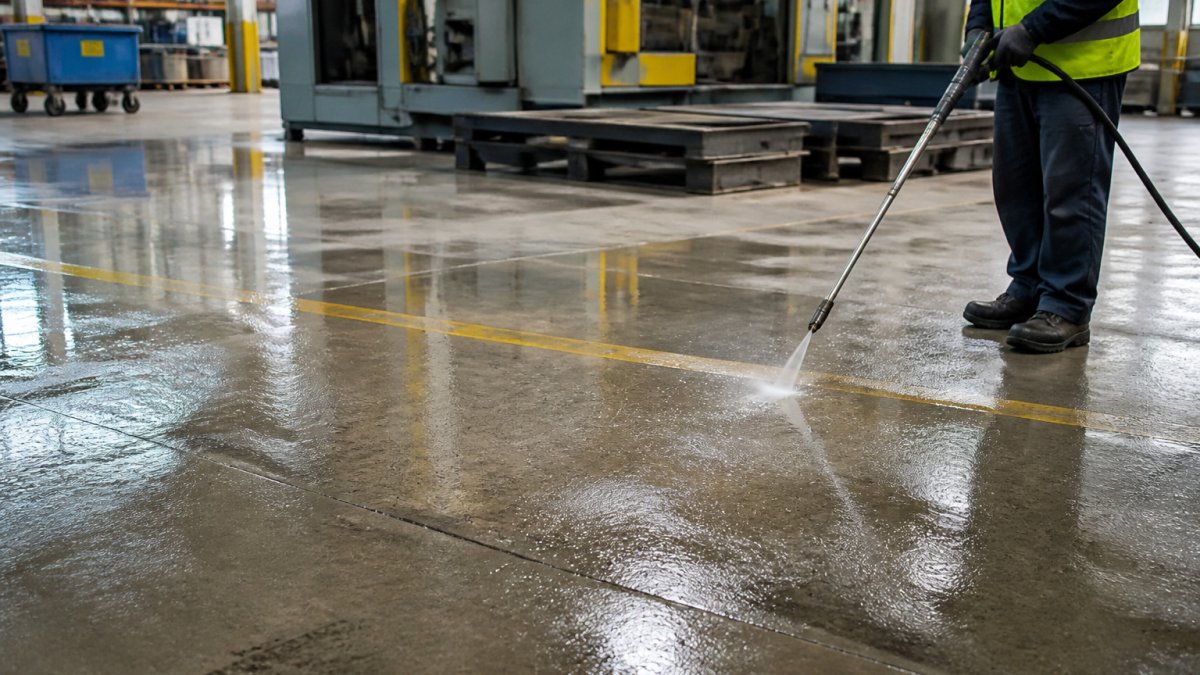
A structured inspection is the most reliable way to catch floor hazards before someone is hurt. Walk the full floor at a set frequency, using a checklist so that the same areas are assessed every time.
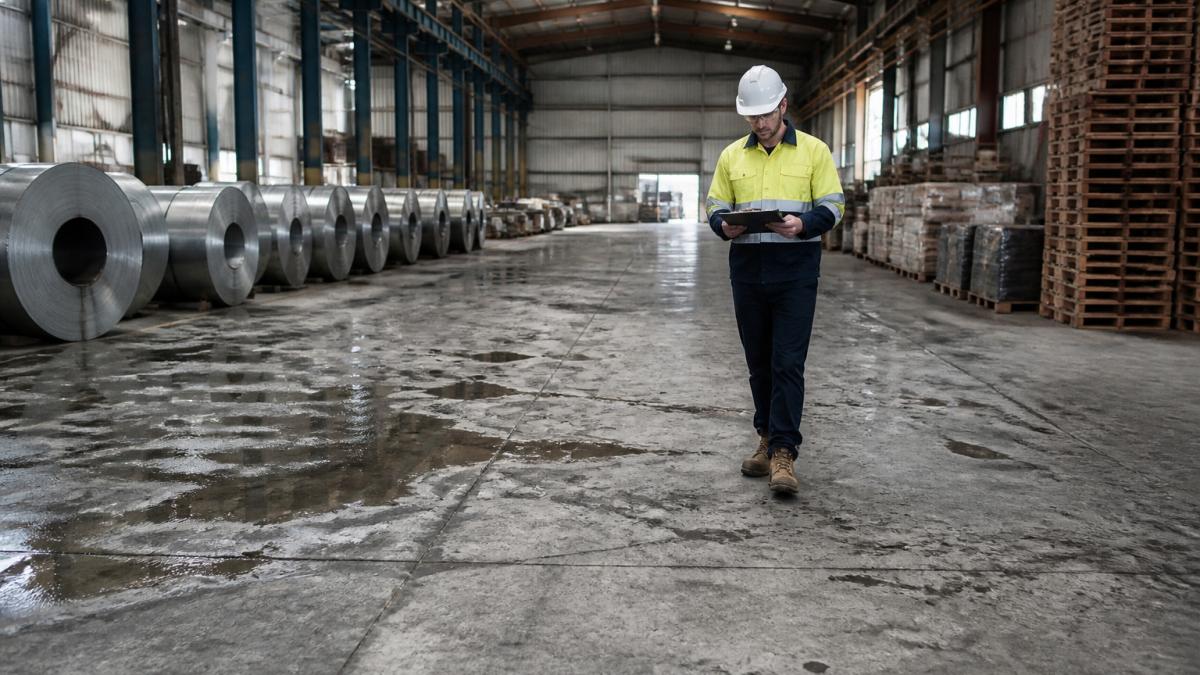
A practical warehouse floor safety inspection checklist should cover:
- Surface condition, including cracks, spalling, potholes and uneven patches
- Joints and edges, checking for chipped or lifting sections
- Wet areas, leaks and standing water near drains and loading bays
- Coating condition, looking for worn, peeling or glossy high-traffic zones
- Floor markings and visibility, which should be clear and not faded
- Contamination from oil, grease, chemicals or food products
- Drainage paths and whether they are blocked
Record the location, the condition and the date of each finding. Photographs help, because they show whether a defect is getting worse between inspections.
Setting a Practical Inspection and Preventive Maintenance Schedule
Match the inspection frequency to how hard the floor is used, and write the schedule down so it can be audited.
- Daily (pre-shift walk-through, 5-10 minutes): visual check of pedestrian routes, loading docks and wash-down areas for spills, standing water, loose debris and obvious new damage. This is a look-and-log task, not a full inspection.
- Weekly: detailed walk of high-risk zones, forklift lanes, machinery perimeters, wet processes and entry points, using the full checklist. Record findings and assign a priority.
- Monthly: full-floor inspection covering all areas, including low-traffic storage. Review the repair log to confirm previous findings have been closed out.
- Quarterly: review of coating condition and slip-resistance performance in high-wear areas, plus a check that drainage and containment systems are functioning.
- Annually: full condition assessment, review of the inspection schedule against any operational changes (new production line, changed forklift routes, altered cleaning chemicals), and update of the maintenance plan.
Assign a named person to each inspection and a deadline for each repair. Keep records so that trends are visible, a crack that appears on three consecutive monthly inspections is telling you something different from a one-off chip.
Inspection Triggers: When to Inspect Outside the Schedule
The schedule is the baseline, not the whole system. Bring an inspection forward when any of the following occurs:
- A spill of oil, coolant, chemical or food product that cannot be fully cleaned and dried within the shift
- A near-miss or incident involving a slip, trip or fall
- A change in cleaning chemicals, dilution rates or cleaning equipment
- New machinery, a changed forklift route or a change in pedestrian traffic flow
- Visible ponding after rain or wash-down, or a drain that is slow to clear
- Coating damage noticed during routine cleaning
Watch out: Inspections done only after an incident tell you what has already gone wrong. Build the routine so that defects are found and logged before anyone is injured, and review the schedule whenever operations change.
The article sets out a practical inspection schedule, from daily walk-throughs to an annual full assessment.
| Frequency | Scope | Key action |
|---|---|---|
| Daily | Pre-shift walk-through, 5-10 minutes | Look and log spills, standing water, debris |
| Weekly | High-risk zones with full checklist | Record findings and assign priority |
| Monthly | Full floor, including low-traffic storage | Review repair log and close out findings |
| Quarterly | High-wear coating and slip resistance | Check drainage and containment systems |
| Annually | Full condition assessment | Review schedule against operational changes |
Industrial Floor Cleaning Methods That Protect Safety
Cleaning removes the contamination that makes floors slippery and hides defects. To avoid harm to the surface during cleaning, see how to clean concrete without damage. The right method depends on the floor finish, the contaminant and the traffic the area receives.
Industrial floors are cleaned with a range of methods, from sweeping and mopping to scrubber-dryer machines. For a deeper guide on effective technique, read how to clean industrial concrete floors effectively.
Dry and Damp Mopping for Routine Care
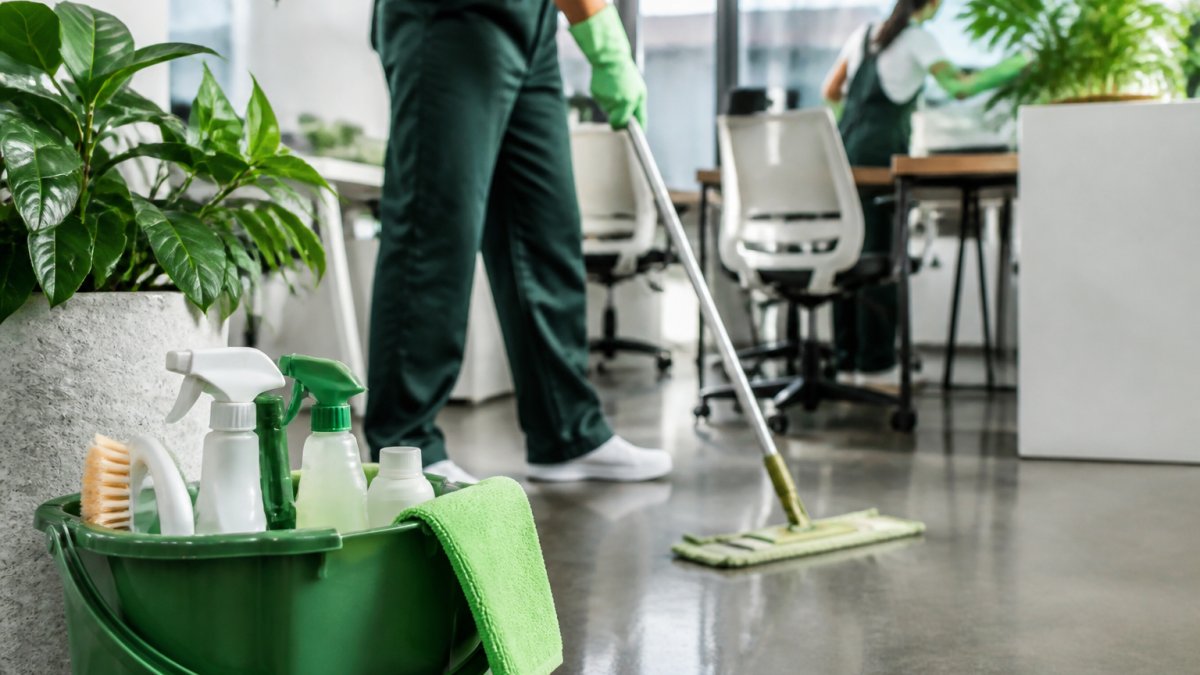
Routine care usually starts with dry mopping or sweeping to remove loose dust and grit. Grit left on a concrete surface acts like small ball bearings under foot and wheels, increasing slip risk and wear.
Damp mopping follows where a light film of dirt has built up. Use clean water with a neutral cleaner, wring the mop well, and avoid leaving standing water.
A Step-by-Step Safe Cleaning Procedure
- Isolate and sign. Cordon the work area and place wet-floor signage at every approach. Confirm that no forklift or pedestrian traffic can enter the wet zone.
- Remove dry contamination first. Sweep or dry-mop grit, dust and debris before any liquid is applied. Wetting grit first turns it into a slurry that is harder to remove and more slippery.
- Select the product for the contaminant and the coating. Neutral cleaners suit routine soil; alkaline degreasers suit oil and grease; acidic products are generally avoided on concrete and on many coatings because they can etch or dull the surface. Check the product label and the coating supplier's guidance, and test on a small inconspicuous area first.
- Dilute to the label rate. Over-concentrated chemical leaves residue that attracts dirt and can be more slippery than the original contamination. Measure dilution rather than estimating.
- Apply and allow the correct dwell time. Give the product the dwell time stated on the label, typically a few minutes for routine soil and longer for heavy grease, but do not let it dry on the surface. Dried chemical is difficult to rinse and can leave a film.
- Agitate and recover. Use a scrubber-dryer or mop to lift the soil, then recover the dirty liquid. On scrubber-dryers, check that the squeegee is leaving the floor visibly dry behind the machine.
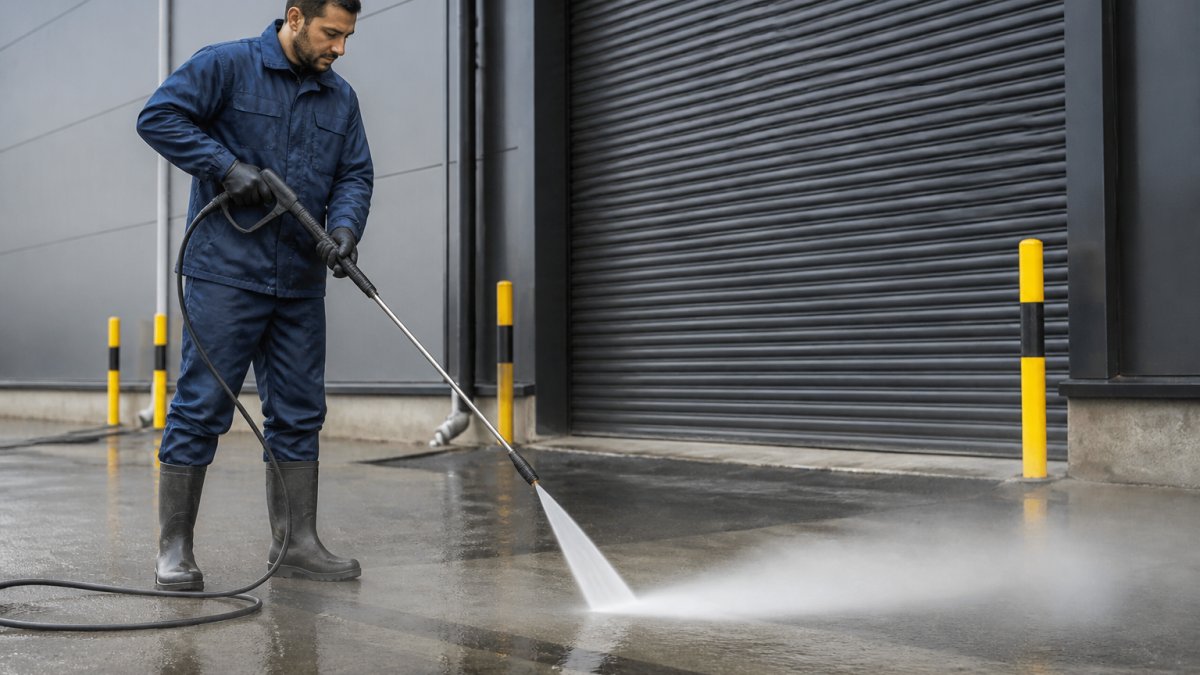
- Rinse thoroughly. Rinse with clean water to remove chemical residue. A sticky or slick film left behind is a slip hazard in its own right and can also attract fresh dirt.
- Dry and verify before reopening. Allow the floor to dry completely, then check by walking the area and, where practical, testing grip in both dry and damp conditions. Remove signage only when the surface is dry and safe.
- Record the clean. Log the date, area, product, dilution and any observations (for example, coating wear or a new crack noticed during cleaning). These records feed directly into the inspection schedule.
Chemical Compatibility and Safe Handling
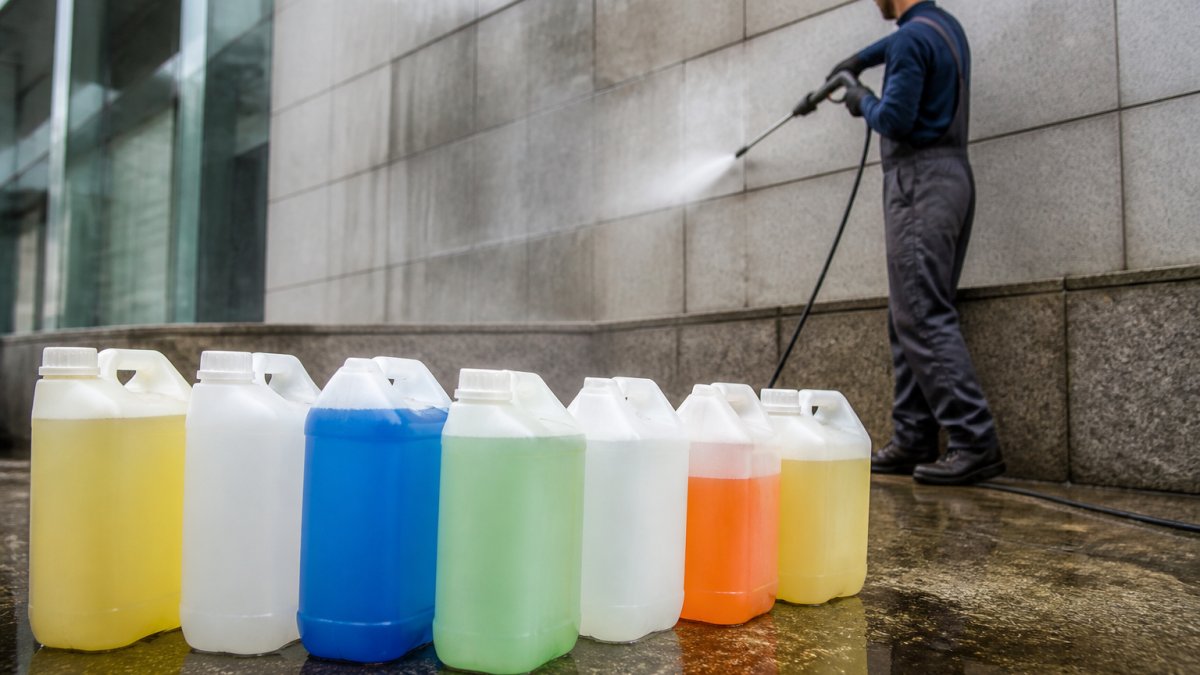
Safe procedures include ventilating the area, keeping the product away from drains that discharge to stormwater, and storing chemicals according to their safety data sheets. Staff should wear the personal protective equipment listed on those sheets. Rinse residues thoroughly, because a sticky film left behind can be more hazardous than the original dirt.
Maintaining Concrete Floor Slip Resistance
Slip resistance is not permanent. It changes as the surface wears, as coatings age and as contamination builds up. Maintaining it means monitoring the surface and treating it before it becomes a hazard.
Unsealed or lightly polished concrete can become smooth in high-traffic lanes. Sealers and protective coatings can gain a glossy finish that reduces grip, particularly when wet.
Wet and Dry Floor Conditions
A floor that feels safe when dry can be dangerous when wet. Test your floors in both conditions. Assess areas near wash-down points, drains and entry doors, since these are where wet conditions occur most often.
Objective Slip-Resistance Testing and Records
These records support both safety management and any incident investigation. They also show a regulator that the business is monitoring a known hazard.
Repairing Concrete Floor Cracks, Spalling and Joints
Cracks, spalling and damaged joints are more than cosmetic problems. They trap contamination, create trip hazards and allow water to reach the concrete, which speeds up further deterioration. Repairs should be planned, not left until a defect causes an incident.
Repair Triage: What to Fix First
Prioritise repairs by risk. Defects in pedestrian routes, forklift lanes and wet zones come first. Trip hazards such as lipped joints or sharp edges should be dealt with promptly, even if they seem minor.
Keep a simple repair log that records the defect, the priority, the planned action and the completion date. Reviewing this log at each inspection shows whether repairs are keeping pace with new defects.
Spill Response and Protective Coating Upkeep
Spills are one of the fastest ways a safe floor becomes hazardous. For specific guidance on removing oil stains from warehouse floors, follow the steps in our dedicated guide. Oil, coolant, chemicals and food products can make a surface slippery within seconds.
Booking Your Industrial Floor Assessment With AquaBlast Elite
Maintaining industrial concrete floors for safety is easier when someone has already mapped the hazards. At AquaBlast Elite, we offer high-pressure cleaning services across Sydney and surrounds, using high-pressure cleaning equipment and customized solutions for industrial clients.
If you are planning high-pressure cleaning, book a call with AquaBlast Elite to discuss your facility. Pricing depends on the project, so contact us for a quote.
Last Updated: October 27, 2026
Frequently Asked Questions
How often should industrial concrete floors be inspected?
Most industrial concrete floors benefit from a visual inspection at least weekly in high-traffic areas, with a more detailed documented check each month. Floors that carry forklifts, heavy machinery or wet processes may need daily walk-throughs. Record every defect, its location and the date it was found, so trends such as spreading cracks or worn coatings are visible before they become trip hazards. Pair inspections with a preventive maintenance schedule that sets out who checks what and when.
What is the safest way to clean an industrial concrete floor?
Start with dry sweeping or vacuuming to remove grit, which can scratch coatings and reduce grip. Use damp mopping or a low-pressure scrubber with a cleaner suited to your floor finish, and check the product's chemical compatibility with the sealer or coating. Rinse thoroughly, avoid pooling water, and allow the floor to dry before reopening the area. Mark wet floors with signage while cleaning is in progress, and keep records of the methods and products used.
How can you prevent slips on concrete floors?
Slip risk rises when floors are wet, oily or polished smooth by traffic. Clean spills promptly, use absorbent materials, and keep entry points dry with matting. Where the surface has lost grip, an anti-slip treatment or a slip-resistant coating can help, but it should be selected for the expected conditions. Test slip resistance objectively where possible and document the results so changes over time can be tracked.
When should cracks and spalling in a concrete floor be repaired?
Repair should be prioritised by risk. Cracks with raised edges, spalling that creates loose debris, uneven joints of more than a few millimetres, and defects in forklift or pedestrian routes should be fixed first. Hairline cracks that are stable and away from traffic can be monitored and scheduled for later work. Any repair should be matched to the floor's load, moisture conditions and expected use, and recorded in the maintenance log.
Can floor cleaning products damage concrete or its protective coating?
Yes. Strong acids, alkaline degreasers and solvents can etch bare concrete, dull or soften sealers, and weaken coatings over time. Always check the manufacturer's compatibility guidance before use, test on a small area, and avoid mixing chemicals. Use the lowest effective concentration, rinse fully, and keep safety data sheets available for workers handling the products.
What should an industrial floor maintenance checklist include?
A useful checklist covers surface condition (cracks, spalling, joints, uneven areas), slip resistance and visible wet or contaminated patches, coating wear and staining, drainage and water pooling, floor markings and visibility, and any hazards from machinery traffic. It should also list cleaning frequency, approved products, inspection dates, the person responsible, and corrective actions taken. Review the checklist after incidents or changes to equipment and traffic patterns.