 ultimate-guide
Eco-Friendly Commercial Cleaning: Why It Matters
Table of Contents
- Why Eco-Friendly Commercial Cleaning Solutions Matter
- The Benefits of Eco-Friendly Cleaning Products for Your Business
- How to Choose Eco-Friendly Cleaning Products That Actually Work
- Commercial Green Cleaning Practices That Hold Up on Site
- Eco-Friendly Cleaning Product Cost: What Drives the Numbers
- How to Roll Out Eco-Friendly Commercial Cleaning Without Disruption
- Frequently Asked Questions
Last Updated: October 18, 2026
Why Eco-Friendly Commercial Cleaning Solutions Matter
Eco-friendly commercial cleaning is the practice of maintaining commercial premises using products and methods that reduce chemical exposure, waste and environmental harm without compromising hygiene standards. The shift away from harsh solvent-heavy mixes toward plant-based, biodegradable formulations that still lift grime from concrete, glass and cladding is a clear example of this. This guide covers why that shift matters, how to choose products that genuinely perform, what drives cost, and how to roll the change out without disrupting operations.
Healthier workplaces and indoor air quality
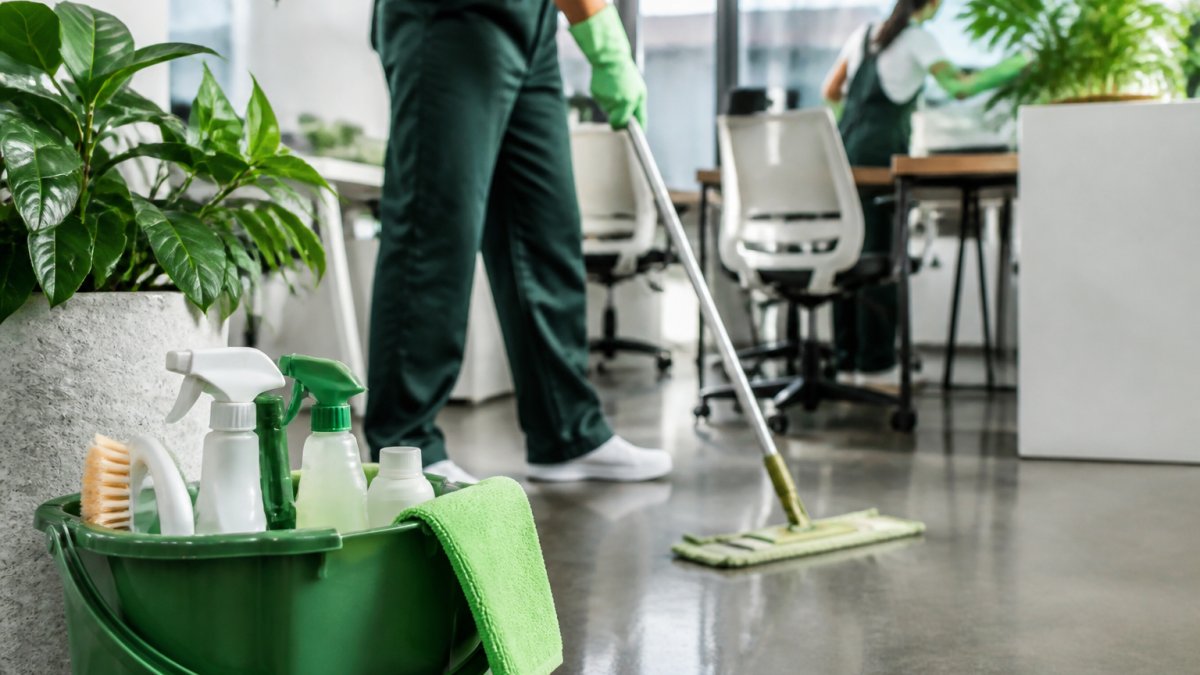
Indoor air quality is where eco-friendly cleaning earns its keep first. Conventional products can leave chemical residues on desks, handrails and kitchen benches, and volatile compounds linger in enclosed spaces long after the cloth is put away. Staff with asthma or sensitivities feel that before anyone else does. Choosing low-fume, plant-based formulations and switching to microfibre, which lifts soil with less liquid, reduces both residue and airborne mist. The result is a healthier work environment, fewer complaints about headaches or irritation, and a cleaning team exposed to gentler chemistry day after day.
Environmental impact, waste and resource use
Every cleaning operation consumes resources, and the environmental impact adds up across a portfolio of sites. Concentrated products cut packaging and transport weight, refill systems reduce plastic waste, and dosing control stops the over-pouring that sends surplus chemical straight to drain. Water conservation matters too: microfibre and low-volume methods clean effectively with far less liquid than a hose-and-bucket approach. On exterior work, runoff control is the priority, because what washes off a facade or car park drains somewhere.
The Benefits of Eco-Friendly Cleaning Products for Your Business
The benefits of eco-friendly cleaning products split into two buckets: the ones you can measure and the ones you can feel. Measurable gains come from waste reduction, lower chemical spend through concentration and dosing, and fewer complaints or incidents. The felt ones are just as real: staff who are not breathing solvent fumes all shift, tenants who notice the building smells clean rather than chemical, and visitors who form an impression in the first thirty seconds.
Cleaning performance does not have to suffer. In practice, the products that underperform are usually the ones applied wrongly, not the ones formulated gently.
How to Choose Eco-Friendly Cleaning Products That Actually Work
Choosing well comes down to verification, not label reading. A "green" claim on the front of a bottle is marketing until it is backed by a recognised certification, a full ingredient list and evidence of cleaning performance on the surfaces you actually maintain. The practical test is simple: can the supplier show you, in writing, what is in the product, what it does in wastewater, and how it performs on your surface? If the answer is a brochure, keep looking.
What credible verification looks like
Third-party certification is the fastest filter. In this market, the marks buyers most often ask for are:
- Good Environmental Choice Australia (GECA), an Australian ecolabel with published standards covering cleaning products, including limits on ingredients of concern and requirements for ingredient disclosure.
- Global GreenTag, an Australian certification scheme with product-level assessments and health and environmental ratings.
- EU Ecolabel and Nordic Swan, internationally recognised ecolabels that set ingredient and performance criteria; useful when a supplier imports formulations.
- Green Seal and UL EcoLogo, North American schemes sometimes cited by multinational suppliers; treat them as supporting evidence, not a substitute for Australian compliance.
Certification is not a guarantee of performance on every surface, but it does mean an independent body has checked the formulation against published criteria. A self-declared "eco" or "green" logo designed in-house carries no such assurance.
The ingredient disclosure you should request
Ask for three documents, not one:
- The safety data sheet (SDS), required under the Work Health and Safety Regulations, and the baseline for assessing hazards, first aid and storage.
- A full ingredient disclosure, not just "plant-based surfactants", but the actual surfactant classes and any preservatives, fragrances or dyes. Fragrance is a common hidden irritant even in products marketed as gentle.
- A statement of biodegradability, ideally referencing a recognised test method (for example OECD 301 series ready biodegradability) rather than the word "biodegradable" alone.
If a supplier cannot or will not disclose ingredients on commercial-in-confidence grounds, ask for a summary reviewed by an independent toxicologist. Refusal to disclose anything is a red flag.
Greenwashing red flags
Watch for these patterns:
- Vague claims, "eco-friendly", "natural", "chemical-free". Everything is a chemical; water is a chemical. The claim means nothing without specifics.
- A single green attribute used to imply overall safety, a recycled bottle does not make the contents safer.
- Hidden trade-offs, a product may be low in volatile organic compounds but high in aquatic toxicity, or vice versa.
- Irrelevant claims, "CFC-free" on a product that never contained CFCs.
- No dose rate or dilution data, if you cannot calculate cost per litre of ready-to-use solution, you cannot compare products fairly.
Test on your real surfaces, then check the trade-offs
Run a trial on the actual concrete, glass, timber, vinyl or cladding in your building before committing to a contract.
Be honest about the trade-offs. Some certified products are less aggressive on heavy grease or mineral scale than solvent-heavy alternatives, and some disinfectants with lower environmental profiles are still the right choice in high-risk areas such as bathrooms, food preparation areas and healthcare settings.
Cleaning performance does not have to suffer. In practice, the products that underperform are usually the ones applied wrongly, not the ones formulated gently.
Commercial Green Cleaning Practices That Hold Up on Site
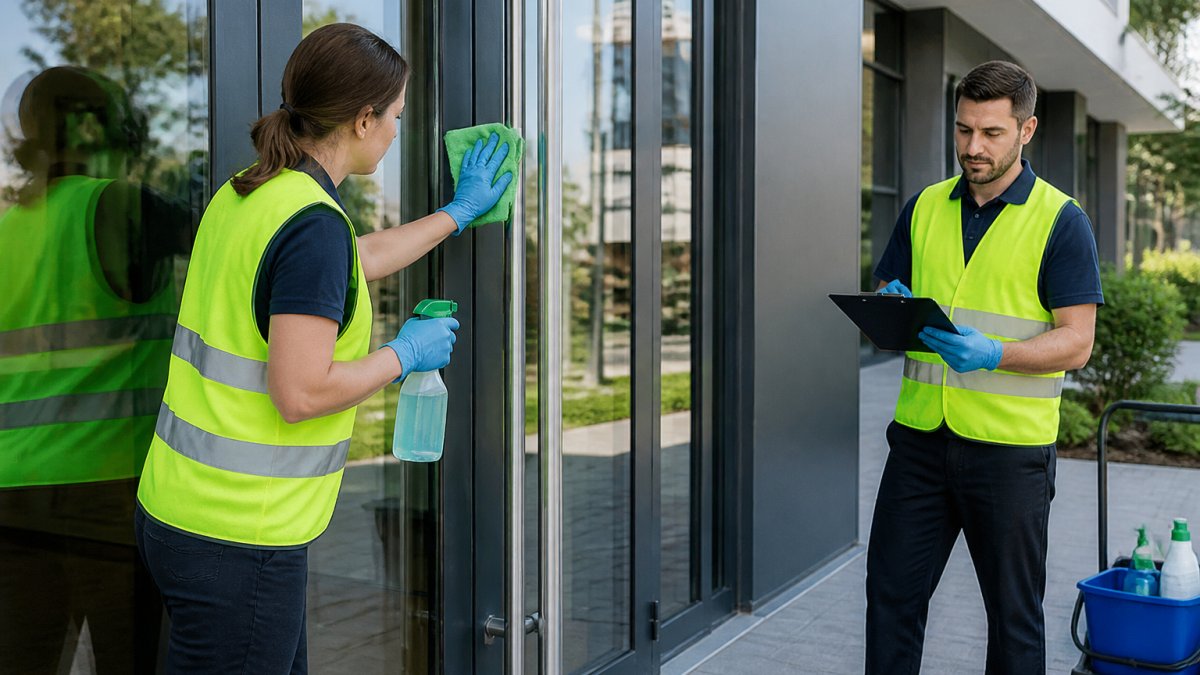
Commercial green cleaning practices only hold up when the method matches the surface and the schedule. On site, that means colour-coded microfibre, controlled dosing stations, and a clear separation between interior and exterior work so runoff never reaches garden beds or stormwater drains.
Eco-Friendly Cleaning Product Cost: What Drives the Numbers
Eco-friendly cleaning product cost is rarely higher once you look past the sticker price, but the only way to know is to compare cost per litre of ready-to-use solution, not cost per bottle. That single calculation exposes most of the confusion in this category.
The dilution maths that changes the comparison
A ready-to-use product at $6 per 750 mL costs roughly $8 per litre of solution. A concentrate at $40 per 5 L, dosed at 1:40, yields 200 L of ready-to-use solution, about $0.20 per litre. The concentrate looks more expensive on the shelf and is dramatically cheaper in use.
Run the same calculation for every product in your current inventory. If a supplier cannot give you a dose rate and a yield figure, you cannot compare them, and the comparison is where the savings live.
Total cost of ownership, not purchase price
The honest caveat is that some certified products carry a higher upfront unit price. The cost-benefit analysis only works when the whole operation is considered:
| Cost factor | What pushes it up | What brings it down |
|---|---|---|
| Product unit price | Certified formulations, small pack sizes | Concentrates, bulk refills |
| Dose and usage | Untrained application, over-pouring | Dosing stations, staff training |
| Waste and disposal | Single-use packaging, surplus chemical to drain | Refill systems, recycled containers |
| Labour | Longer dwell times, rework, complaints | Correct method and surface matching |
| Equipment | Incompatible tools, premature replacement | Microfibre systems, low-volume methods |
| Health and absence | Respiratory irritation, sick days | Low-fume formulations, better air quality |
| Compliance and reporting | Undocumented claims, audit findings | Supplier evidence and data sheets |
Two lines in that table are routinely ignored. The first is labour: if a gentler product needs longer dwell time and the schedule does not allow for it, the team either reworks the surface or cuts corners, and both cost more than the product saved. The second is health and absence: respiratory irritation and headaches from solvent-heavy products show up as sick days and turnover, which are real costs even when they never appear on a cleaning invoice.
What a transparent quote should contain
We would not quote a figure without seeing a site, because pricing depends on surface area, frequency, product mix and access. But a credible provider should be able to break a quote down into:
- product cost per litre of ready-to-use solution, by product;
- estimated consumption per clean, by area;
- labour hours and the method assumed;
- equipment and consumables;
- waste and disposal;
- any compliance or reporting deliverables.
Ask for that breakdown rather than a single number. A single number cannot be compared, and it hides where the cost actually sits.
The reporting value is part of the return
Documented product choices feed directly into sustainability and ESG reporting, and increasingly into procurement questionnaires and tender responses. That reporting value is not a soft benefit: it reduces the internal effort of answering client and auditor questions, and it supports claims that would otherwise be unsupported. When you compare options, put a value on the evidence pack, SDS, ingredient disclosures, certification certificates and dose records, because assembling it after the fact is far more expensive than buying it with the product.
Ask any provider for a breakdown, not a single number.
How to Roll Out Eco-Friendly Commercial Cleaning Without Disruption
A staged rollout beats a sudden switch every time. Start with a baseline audit of what you currently use, where, and at what dose. Then trial certified products on a single floor or a single exterior zone, measure cleaning performance against your existing standard, and gather feedback from the people doing the work.
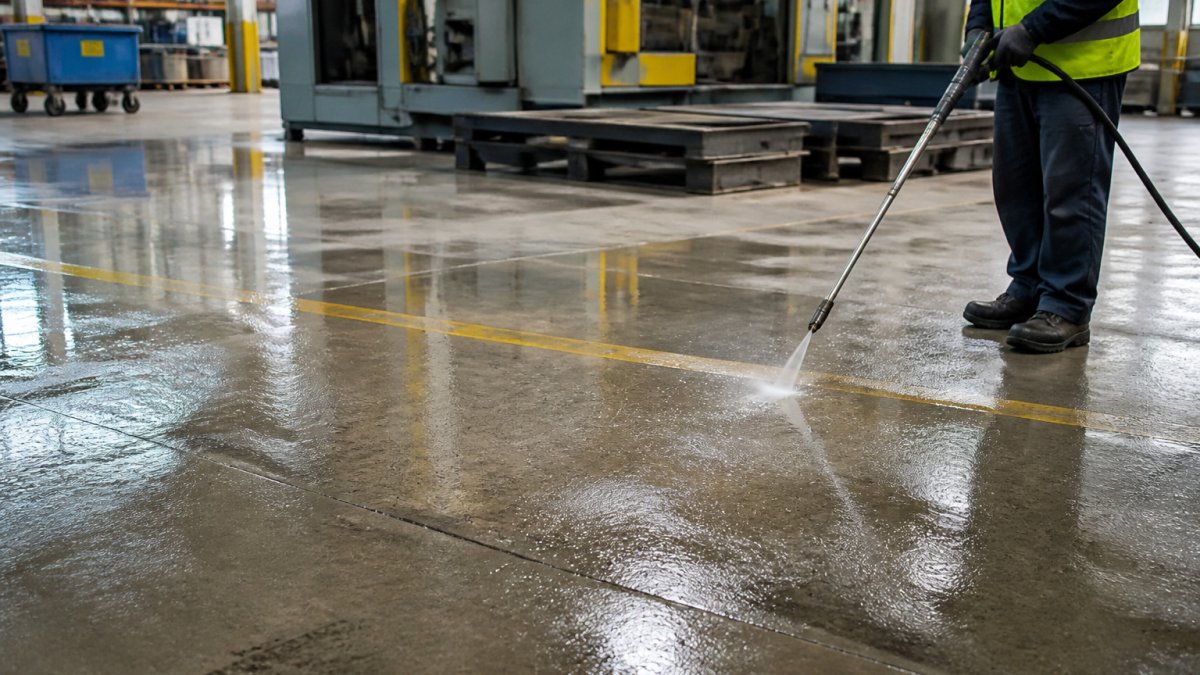
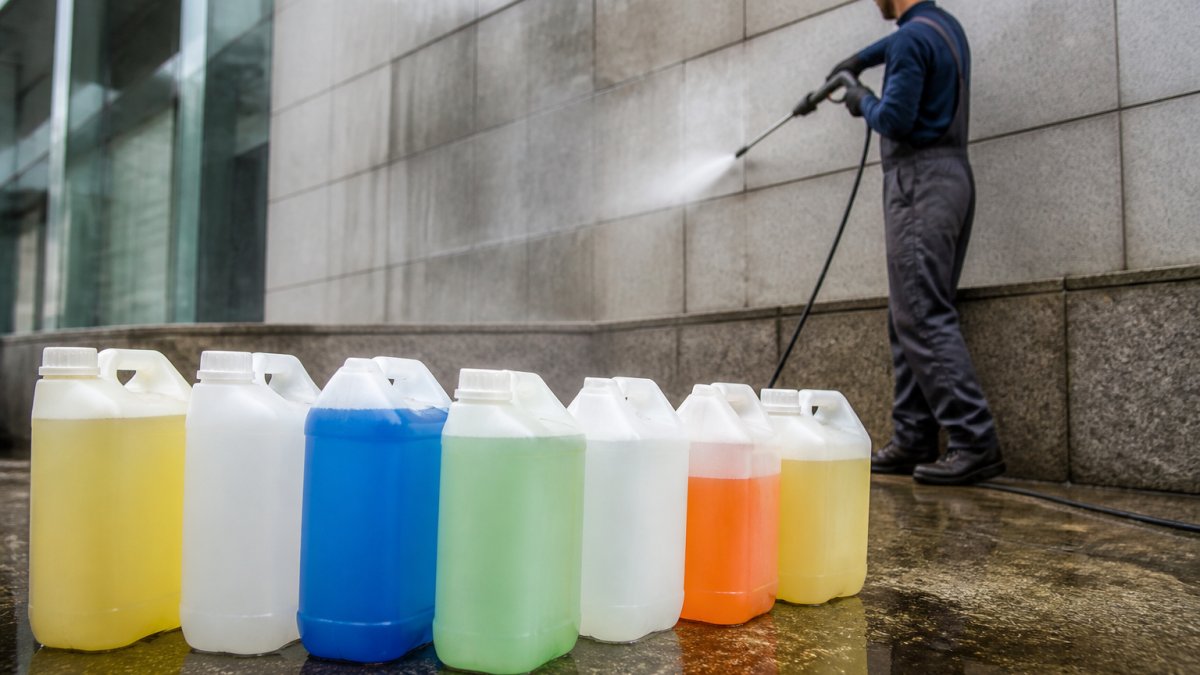
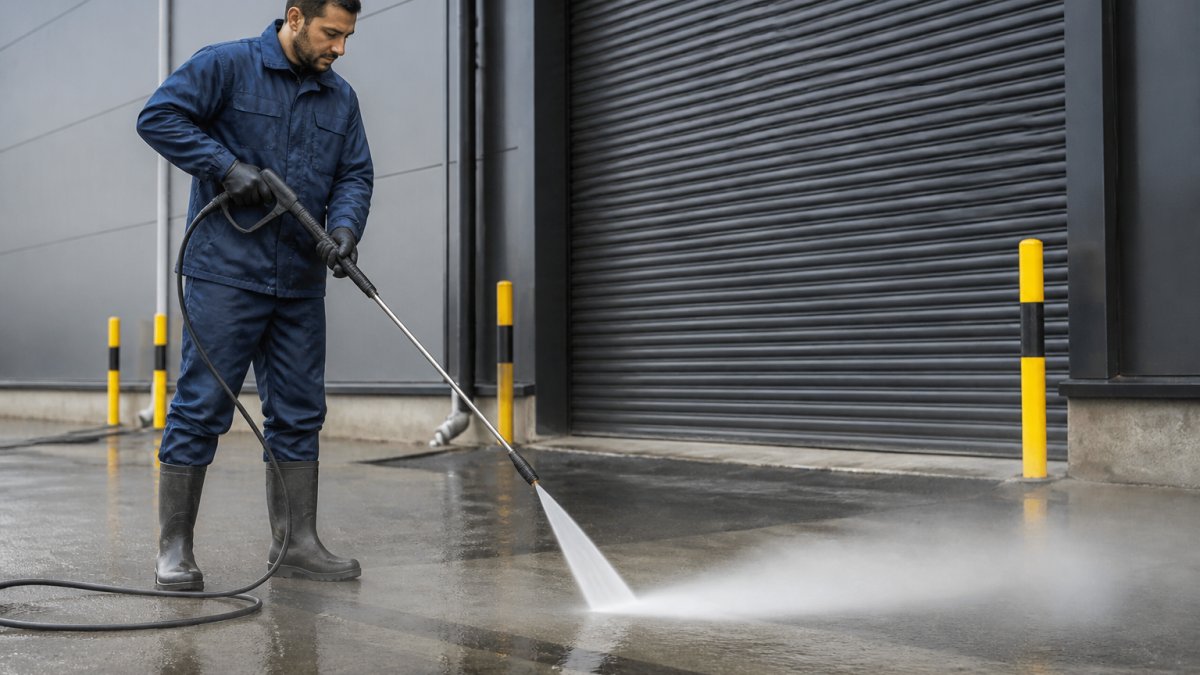
For exterior surfaces, the method matters as much as the product. Controlled high-pressure cleaning paired with biodegradable formulations lifts ingrained grime from concrete, cladding and paved areas while keeping runoff managed. This is where a documented, surface-matched approach pays off.
Frequently Asked Questions
Are eco-friendly commercial cleaning products actually effective?
Yes, when the product is matched to the surface and soil type. Plant-based and enzyme cleaners break down grease, grime and organic residue effectively, and many carry independently verified certifications. The key is correct dilution, dwell time and the right tool for the job. On high-pressure exterior work, eco-friendly commercial cleaning depends more on technique and equipment than on harsh chemistry, so results hold up without the chemical load.
How can a business choose genuinely eco-friendly cleaning products?
Start with verification, not marketing claims. Look for third-party certification, a full ingredient disclosure and a safety data sheet that matches what is on the label. Ask suppliers how the product is diluted and packaged, and whether refills are available. Run a small trial on your actual surfaces before committing to a contract, and check that the product suits your cleaning schedule and staff training level.
Can green cleaning practices reduce a business's environmental impact?
They can, particularly through concentrated products that cut packaging and freight, microfibre systems that reduce water and chemical use, and dosing controls that stop overuse. Waste reduction and correct disposal of runoff matter just as much as the product itself. Measuring before and after, for example chemical spend per square metre or litres of water used, gives you evidence to report against sustainability and ESG goals.
How can businesses introduce eco-friendly cleaning without disrupting daily operations?
Phase it in. Begin with one area or one product line, train staff on dilution and dwell time, and set a review date before rolling out further. Schedule the changeover around low-traffic periods and keep a small buffer of the previous product for sensitive surfaces. Document what changed and what the results were, so procurement decisions and any certification claims are backed by evidence rather than assumption.
Switching to eco-friendly commercial cleaning is straightforward in principle and fiddly in execution: the products are only half the job, and method, training and runoff control carry the rest. If your exterior surfaces need a clean that holds up to scrutiny, AquaBlast Elite brings high-pressure equipment, surface-specific methods and a team that plans where the water goes. Book a call with us to scope your site and get a clear, itemised quote.