 ultimate-guide
What Is Commercial Pressure Washing and Why It Matters
Table of Contents
- What Commercial Pressure Washing Actually Is
- The Benefits of Professional Pressure Cleaning for Commercial Sites
- Commercial Exterior Maintenance Plans: What They Cover
- High-Pressure Cleaning Safety Standards You Need to Know
- Environmental Compliance and Wastewater Rules
- Surface-Specific Cleaning Protocols for Commercial Properties
- DIY vs Professional Outsourcing: What Makes Sense
- Frequently Asked Questions
Last Updated: October 4, 2026
What Commercial Pressure Washing Actually Is
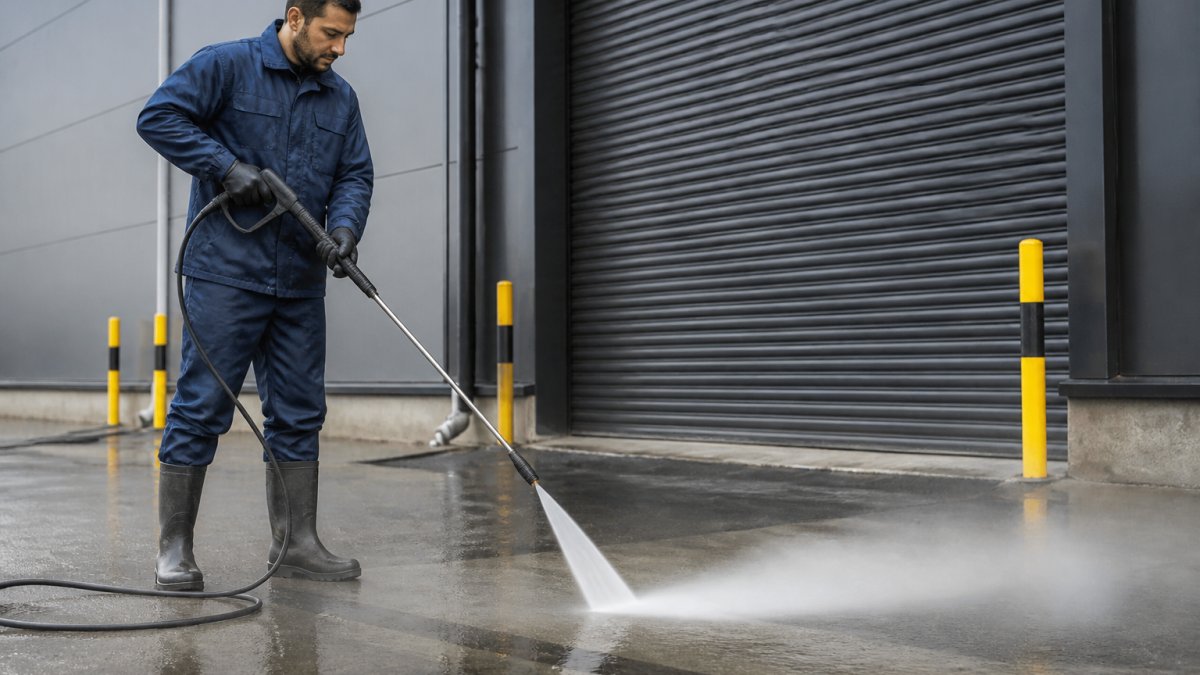
Commercial pressure washing is the use of high-pressure water spray, often combined with specialised detergents, to clean the exterior surfaces of business and industrial properties.
Most people picture a bigger version of a home job. The reality is a different discipline. Commercial pressure washing is a scheduled, compliance-aware service built around equipment, safety and surface type. It is also a service many businesses underestimate until a slip-and-fall claim or a failed inspection forces the issue.
How It Differs from Residential Cleaning
Residential cleaning is usually a one-off tidy-up. Commercial pressure washing is recurring, documented and often tied to lease conditions or hygiene standards.
The differences come down to four things:
- Scale and access, multi-storey facades, loading docks and car parks need commercial-grade equipment and traffic management
- Contaminants, grease, oil, chewing gum and graffiti need chemical detergents and hot water, not just cold spray
- Compliance, wastewater management and safety obligations apply, and they do not end at the property boundary
- Downtime, work is scheduled around trading hours so operational downtime stays minimal
For a homeowner, a missed clean is cosmetic. For a business, it can be a liability.
The Benefits of Professional Pressure Cleaning for Commercial Sites
Professional pressure cleaning protects both the asset and the people using it. The benefits go well beyond appearance.
Start with safety. Algae, mould and grease turn walkways and loading docks into slip hazards. Removing them is the core of slip and fall prevention, and it is cheaper than defending a claim.
Then there is the asset itself. Regular cleaning removes contaminants before they etch concrete, stain cladding or eat into sealant. That is preventative maintenance in the truest sense: it extends the life of surfaces you would otherwise replace.
Curb appeal matters commercially too. A clean building facade signals that a business is well run. Tenants notice it, customers notice it, and so do the people who decide whether to renew a lease.
Commercial Exterior Maintenance Plans: What They Cover
A commercial exterior maintenance plan is a scheduled program of cleaning and inspection across every external surface on a site. It replaces reactive one-off cleans with a predictable calendar, which is what most property managers actually need.
A well-built plan typically covers:
- Site survey, mapping every surface, its material and its condition before work begins
- Cleaning schedule, high-traffic areas monthly or quarterly, facades and car parks less often
- Surface-specific protocols, different pressure, nozzles and detergents for concrete, timber, render and metal
- Wastewater capture, containment and disposal where runoff cannot enter stormwater
- Reporting, before-and-after records, plus notes on damage or deterioration spotted during the clean
The reporting step is the one most providers skip. It is also the one that turns a cleaning contract into a genuine maintenance asset.
High-Pressure Cleaning Safety Standards You Need to Know
High-pressure cleaning safety standards exist because the equipment is genuinely dangerous when misused. A commercial unit can strip skin, shatter glass and turn loose debris into a projectile at close range.
Safe operation rests on a few non-negotiables:
- Correct pressure regulation for the surface, so cleaning power does not become surface damage
- Appropriate personal protective equipment, including eye and hand protection
- Nozzle selection matched to the task, since the wrong tip concentrates force
- Clear exclusion zones, especially near pedestrians and vehicles
- Trained operators who understand what each surface can take
For businesses, the obligation extends further. Under work health and safety law, a person conducting a business or undertaking must manage risks to workers and others. That means inductions, safe work method statements and insurance are not optional extras. They are part of the job.
Environmental Compliance and Wastewater Rules
Wastewater is where commercial pressure washing diverges most sharply from the residential version, and it is the single most under-covered topic in most guides. Runoff from a commercial clean carries dirt, oil, grease, detergents, tyre residue and sometimes heavy metals. If it reaches a stormwater drain, it travels untreated to creeks, rivers and harbours. That is a legal problem, not a cosmetic one.
The regulatory picture is layered, and it is worth understanding before you book anyone:
- Commonwealth layer, The Environment Protection and Biodiversity Conservation Act 1999 (EPBC Act) sets the national framework for protecting matters of national environmental significance. It is not the day-to-day rulebook for a car park clean, but it establishes the principle that pollution of waterways is a regulated concern.
- State and territory layer, Each jurisdiction has its own environment protection legislation and a dedicated regulator. Examples include the Environment Protection Authority in New South Wales, the Environment Protection Authority Victoria, the Department of Environment, Science and Innovation in Queensland, and the Environment Protection Authority in South Australia. These bodies issue the trade waste and stormwater rules that apply on the ground.
- Local government layer, Councils administer stormwater discharge under local government and planning instruments, and many require a trade waste agreement or a pre-treatment approval before certain discharges are permitted.
- Water authority layer, The local water corporation controls what may enter the sewer network. Discharging trade waste to sewer without an agreement is an offence in most jurisdictions.
The critical point for a business owner: liability does not stop with the contractor. If polluted runoff leaves your site and enters a stormwater system, the offence can attach to the person conducting the business or undertaking, that is you, as well as to the operator. Penalties vary by jurisdiction but commonly run into the tens of thousands of dollars for individuals and higher for corporations, with additional clean-up costs and potential enforcement notices.
In practice, responsible operators manage runoff through a small set of proven controls:
- Containment, Bunding, drain blocking or temporary berms keep water on site until it can be dealt with.
- Capture and disposal, Vacuum recovery units, sump pumps or discharge to an approved trade waste point. Never to a stormwater pit.
- Pre-cleaning, Removing oil, fuel and chemical residue with absorbents before water is applied means less contaminant enters the flow in the first place.
- Detergent choice, Biodegradable, low-toxicity products reduce the harm if a small amount escapes, but they do not make the runoff legal to discharge.
- Documentation, A written method statement and a disposal record. If a regulator asks, you want to be able to show what happened to the water.
guidance on trade waste and stormwater from the Environment Protection Authority
Ask any provider how they handle runoff before you book. A clear, documented answer is the mark of a professional operation. A shrug is the mark of a future enforcement notice.
Surface-Specific Cleaning Protocols for Commercial Properties
No single setting works across every surface. The protocol changes with the material, its age, its porosity and its condition, and getting it wrong causes the very damage you were trying to prevent. This is the section most guides skip, and it is where a professional job separates itself from a hire-and-blast approach.
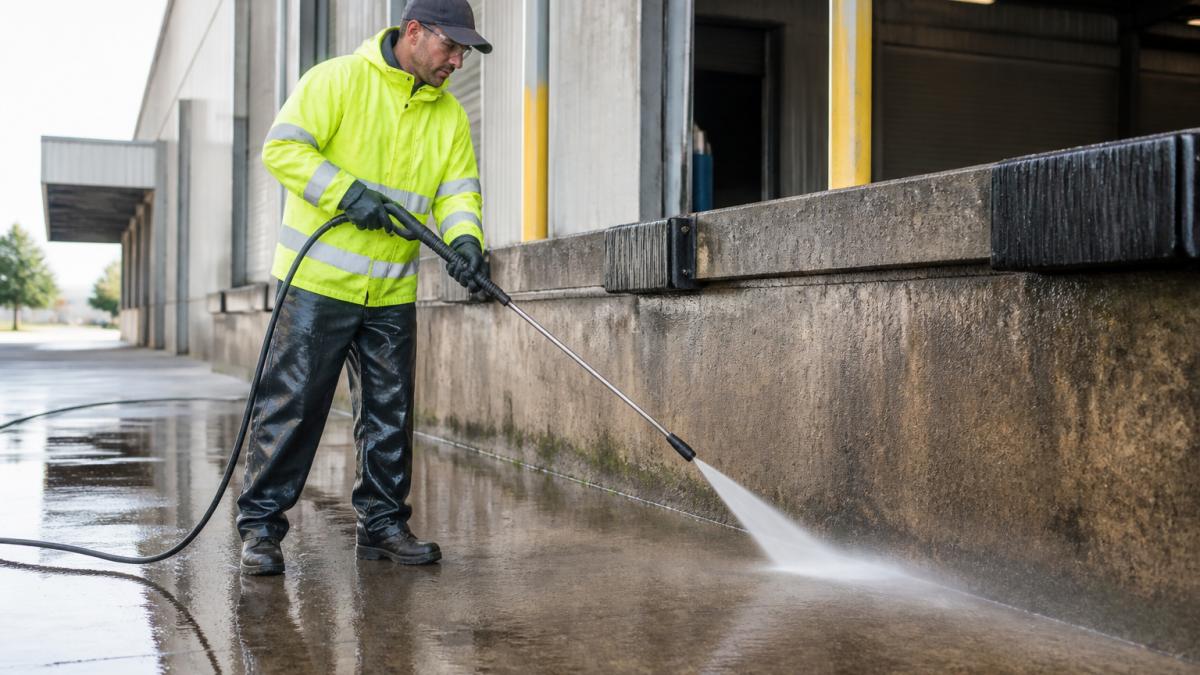
Here is how the main commercial surfaces differ, and why:
| Surface | Typical Approach | Pressure Range | Main Risk |
|---|---|---|---|
| Concrete and pavers | Hot water, degreasing detergent, rotary surface cleaner | 2,500-4,000 PSI | Joint sand and sealant erosion; etching if held too long |
| Building facade and render | Soft wash, low pressure plus detergent dwell time | Under 1,000 PSI | Water ingress behind render, cracking, efflorescence |
| Timber decks | Low pressure, wide fan nozzle, timber-safe cleaner | 500-1,200 PSI | Splintering, raised grain, furring |
| Metal and cladding | Moderate pressure, pH-neutral detergent | 1,000-2,000 PSI | Paint and coating damage, panel seal failure |
| Glass and glazing | Purified water, low pressure, squeegee finish | Under 500 PSI | Seal failure, scratching from grit |
| Graffiti-affected surfaces | Chemical removal, controlled rinse, repeat passes | Varies by substrate | Ghosting, substrate staining, chemical burn |
The rule of thumb: the softer and more porous the surface, the lower the pressure and the gentler the detergent. But the mechanism matters more than the number. High pressure on render drives water behind the surface, where it sits against the substrate and causes efflorescence, cracking and, over time, delamination.
Sequencing matters too. A professional protocol typically runs: pre-treat with detergent and allow dwell time, agitate where needed, rinse at the lowest effective pressure, then inspect and repeat only the areas that need it.
DIY vs Professional Outsourcing: What Makes Sense
DIY makes sense for a single, small, strong surface with light soiling. A concrete path, a bin area, a small paved courtyard. Hire the machine, work in sections, keep the pressure low and you will get a reasonable result.
It stops making sense the moment any of these apply:
- The surface is delicate, aged or already damaged
- The soiling is grease, oil, graffiti or biological growth
- Runoff cannot safely reach a drain
- The site operates during business hours
- The result needs to hold up to a lease condition or a sale
That last point matters. There is a real difference between a surface that looks clean and one that has been cleaned to a standard. On a commercial site, the second is usually what is being asked for.
A commercial site that looks tired, slick or stained is telling customers and tenants something you would rather it did not. Getting commercial pressure washing right means matching equipment, pressure and wastewater handling to each surface, on a schedule rather than in a panic. That is the work AquaBlast Elite does across the region, using cutting-edge high-pressure cleaning equipment, customised solutions for every project and skilled professionals with specialized expertise to clean concrete, facades, decks and graffiti without damaging what sits underneath. Book a call with AquaBlast Elite and get a site assessment that tells you exactly what your property needs.
Frequently Asked Questions
What is the difference between commercial and residential pressure washing?
Commercial pressure washing uses higher PSI and GPM ratings, hot water capability, and industrial-grade equipment designed for large surfaces and heavy contaminants. Residential units typically max out around 2000-3000 PSI and are built for occasional use on driveways and decks. Commercial work often involves degreasing, graffiti removal, and wastewater capture that residential equipment cannot handle.
What safety standards apply to commercial pressure cleaning?
In Australia, commercial pressure cleaning must comply with Work Health and Safety regulations, including Safe Work Australia codes of practice. Operators need proper PPE, hazard assessments, and safe handling of high-pressure equipment. Electrical safety near water, chemical storage, and public liability insurance are also mandatory. Always verify your provider holds current certifications and insurance before booking.
How often should a commercial building undergo professional pressure washing?
Most commercial properties benefit from pressure washing every 6 to 12 months, depending on foot traffic, weather exposure, and local pollution. High-traffic areas like entrances, dumpster pads, and car parks may need quarterly cleaning. Regular commercial exterior maintenance plans help prevent buildup of mould, algae, and grime that can damage surfaces and reduce curb appeal.
Why is regular exterior maintenance important for commercial properties?
Regular exterior maintenance protects structural integrity by removing contaminants that cause concrete spalling, timber rot, and metal corrosion. It also maintains curb appeal for tenants and customers, reduces slip and fall risks, and helps meet hygiene standards. For property managers, a documented maintenance schedule supports compliance and can extend the lifespan of expensive surfaces like facades and paving.