 how-to
Warehouse Floor Cleaning for Food Storage Done Right
Quick Summary
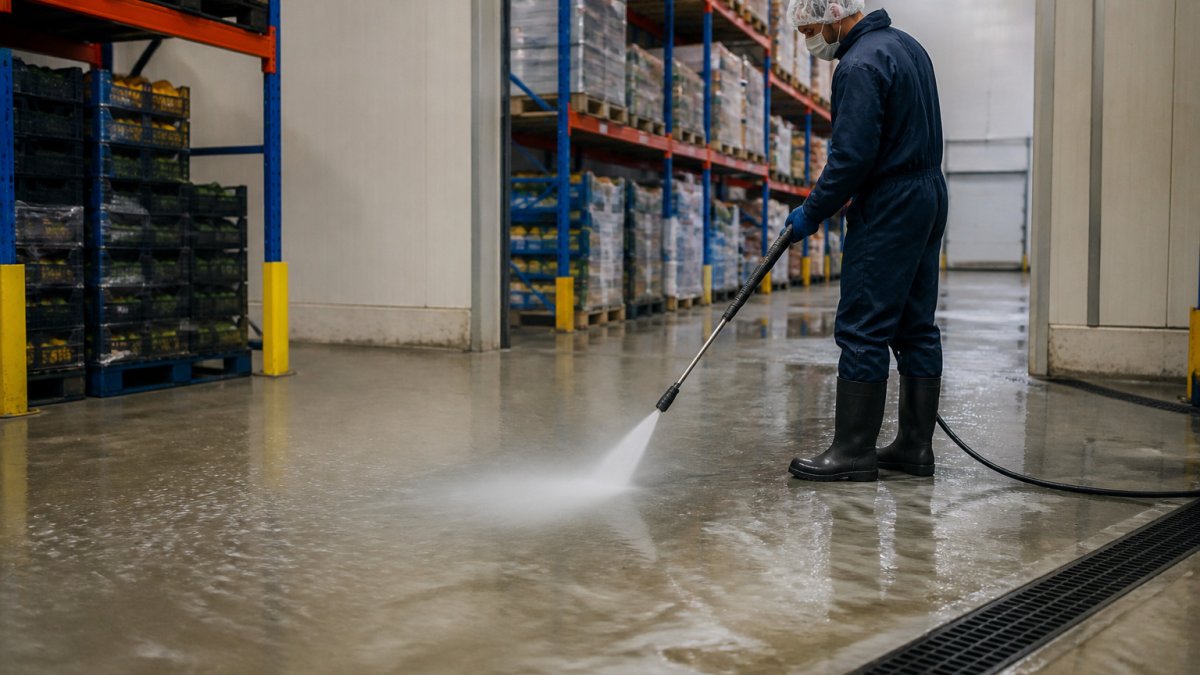
Warehouse floor cleaning for food storage means removing dust, debris, grease and liquid residue so the floor cannot contaminate stock above it. Use dry removal first, then wet cleaning with food-suitable products, thorough rinsing and drying. Check product labels, dilution and contact times, and keep written records of each clean.
- Treat food storage floors as a hygiene task first and a tidiness task second.
- Remove loose dry debris before wet cleaning so it does not turn into sludge.
- Rinse with clean water and change rinse water before it becomes visibly soiled.
- Never dry sweep an allergen spill; use wet removal as the safer default.
- Keep a labelled spill kit at accessible points and restock it after every use.
Table of Contents
- Why Food Storage Floors Need a Different Cleaning Standard
- Choosing Cleaning Equipment for Your Floor Area
- Selecting Food-Safe Cleaning Products and Managing Residue
- Step-by-Step Cleaning and Sanitising Procedure
- Building a Warehouse Cleaning Schedule Template
- How Often Warehouse Floor Cleaning Should Happen
- Responding to Spills of Food, Liquids and Allergens
- Booking a Floor Assessment with AquaBlast Elite
- Frequently Asked Questions
Warehouse Floor Cleaning for Food Storage Done Right
Last Updated: October 30, 2026
Why Food Storage Floors Need a Different Cleaning Standard
Warehouse floor cleaning is the regular removal of dust, debris, grease and liquid residue from floor surfaces.
Food storage areas also bring specific hazards. Paper residue, fluff from packaging, spilt liquids and organic debris attract pests and bacteria.
Standards for food premises in Australia are set out in the Food Standards Code, Standard 3.2.3 on food premises and equipment.
A common mistake is treating a food floor like any other industrial floor.
Choosing Cleaning Equipment for Your Floor Area
Equipment choice starts with floor size and layout. A small storage room with narrow aisles needs different machines from a large open distribution floor.
Consider these factors first:
- Total floor area: Larger areas favour ride-on scrubbers.
- Aisle width: Narrow aisles may need compact walk-behind machines.
- Floor surface: Sealed concrete, epoxy and bare concrete respond differently to scrubbing.
Equipment should also suit the cleaning sequence: dry removal comes before wet cleaning, so loose debris does not turn into sludge.
Sweepers, Scrubbers and Vacuums Compared
Each machine type does a different job. Using the right one saves time and reduces residue left on the floor.
| Equipment | Best For | Strength | Limitation |
|---|---|---|---|
| Sweeper | Large, open areas with loose debris | Fast coverage of dry debris | Leaves fine dust behind |
| Scrubber | Wet cleaning and grease removal | Lifts residue and dries the surface | Needs drying time before use |
| Vacuum | Fine dust and fluff | Captures dust without spreading it | Slower on large floors |
Watch out: Dry sweeping an area with exposed food stock can spread fine dust onto packaging. Remove stock from the zone or cover it before sweeping.
Selecting Food-Safe Cleaning Products and Managing Residue
Product selection is where food storage floors diverge most sharply from general warehouse floors. A cleaner that performs well on a loading dock can be wrong beside pallets of packaged food if it leaves a film that transfers onto cartons, shrink-wrap or delivery vehicle floors.
Start with the product label and supplier documentation. In Australia, cleaning chemicals for food premises should carry clear directions, dilution rates, contact times and rinse requirements. For guidance on choosing cleaners that suit commercial site standards, see commercial property cleaning tips.
Work through these checks before a product enters the cleaning cupboard:
- Label states suitability for food storage or food handling areas
- Dilution rate and contact time are clearly stated
- Rinse requirement is explicit (rinse-free vs must-rinse)
Matching the Product to the Soil
Different soils need different chemistry. Using one general-purpose cleaner for everything is a common cause of residue build-up.
- Grease and oils: alkaline degreasers work best, but they usually need rinsing because alkaline film can be slippery and can attack some sealers.
- Sugar, starch and beverage spills: warm water with a suitable detergent often lifts these, but sticky residues re-attract dust if not rinsed.
- Protein and organic matter: enzyme-based or chlorinated products may be specified by your food safety plan; contact time matters more than concentration.
Managing Residue and Rinse Water
Residue is the hidden risk on a food storage floor. Leftover cleaner can migrate onto pallets, be tracked into product zones, or dry into a powder that forklift traffic lifts back into the air.
A practical residue-control routine looks like this:
- Dose accurately. Use a measuring cup or wall-mounted dispenser rather than estimating.
- Respect contact time. Let the product work for the label time; scrubbing immediately and rinsing early defeats the chemistry.
- Rinse with clean water. Change rinse water before it becomes visibly soiled, dirty rinse water redistributes residue rather than removing it.
- Recover wash water. Scrubbers with recovery tanks keep soiled water off the floor; if using a mop and bucket, change water frequently and use a two-bucket system.
- Dry before reuse. Do not return stock or restart traffic until the floor is visibly dry, particularly around racking bases and corners where water pools.
- Verify. A white cloth wiped across a dried section is a simple field check for visible film; if film appears, revisit dilution and rinsing.
Zone Separation and Cross-Contamination
Cleaning equipment itself can move contamination around. Keep mops, brushes and scrubber decks used in toilet blocks, bin areas or loading docks separate from those used in food storage aisles.
If your site handles allergens, treat the cleaning equipment used in allergen zones as dedicated where practical, or clean and rinse it thoroughly before it moves to a non-allergen area.
Step-by-Step Cleaning and Sanitising Procedure
A consistent procedure makes results repeatable. The steps below suit most food storage floors, though your site plan may require changes.
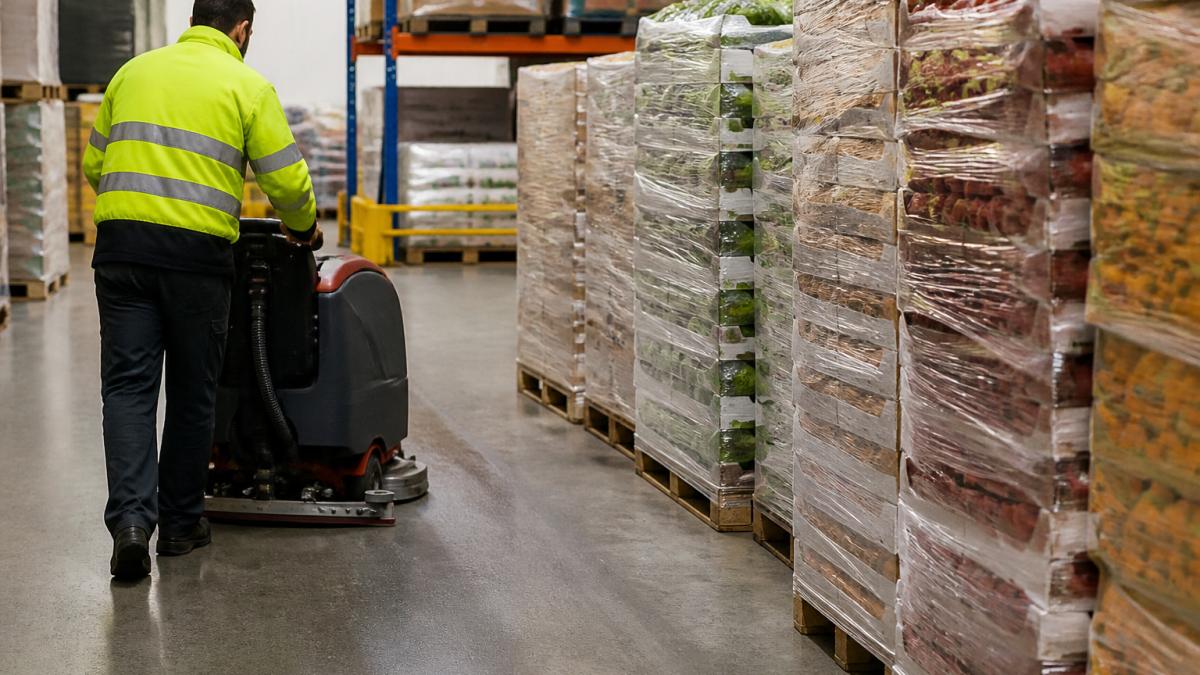
- Clear the zone. Move or cover stock, and close off the area to foot traffic.
- Remove dry debris. Sweep or vacuum from the far end toward the exit.
- Pre-treat grease and spills. Apply an approved degreaser and allow the stated time.
- Scrub the surface. Use a scrubber or stiff brush, section by section. For a more thorough method on cleaning industrial concrete floors effectively, follow the deeper guidance in our article.
- Rinse. Remove all cleaner and wash-water residue.
- Sanitise where required. Apply a food-safe sanitiser at the label's contact time.
- Dry the floor. Use a squeegee or air movement to remove standing water.
- Inspect and record. Check for missed spots, then note the date, area and staff member.
Watch out: Skipping the rinse step is a common error. Leftover cleaner can leave residue that is hard to spot and easy to transfer onto stock.
Building a Warehouse Cleaning Schedule Template
A written schedule keeps cleaning consistent across shifts. Base it on risk and on how busy each area is.
Use a simple template like this:
- Daily: Aisles, loading zones and spill-prone areas
- Weekly: Full floor scrub, rack bases and corners
- Monthly: Deep clean, drain and gutter checks, and equipment servicing
Record each task with the date, the person responsible and any issues found. Records also help when auditors or customers ask for evidence.
How Often Warehouse Floor Cleaning Should Happen
Cleaning frequency depends on traffic, product type and how often spills occur. A high-turnover dispatch area needs more attention than a low-traffic storage room.
As a practical starting point:
- High-traffic aisles and dispatch zones: daily
- General storage floors: at least weekly
- Areas with liquid or greasy products: after every shift
Review frequency every few months. If floors show dust build-up or residue soon after cleaning, the schedule may need to tighten.
Responding to Spills of Food, Liquids and Allergens
Spills in a food storage area are not just a slip hazard. A burst bottle of sauce, a torn bag of flour or a leaking pallet of allergen-containing product can contaminate packaging, spread onto adjacent stock and be tracked through the warehouse on forklift wheels and boots. Contamination risks extend beyond liquid or dry spills to include airborne debris and nesting waste, making effective warehouse bird control a critical component of maintaining a sanitary storage environment.
Prepare Before the Spill
Response is only as good as the preparation. Keep a spill kit at accessible points in the warehouse, stocked with:
- Absorbent material suitable for liquids (pads, granules or socks)
- A dedicated scoop and scraper
- Heavy-duty gloves and eye protection
Check kits monthly and restock after every use. A kit raided for a minor clean-up and not replaced is worse than no kit at all.
Step-by-Step Spill Response
- Stop and assess. Identify what has spilled, water, oil, raw food, packaged food or an allergen-containing product. The response differs for each.
- Cordon the area. Place cones or signs and redirect foot and forklift traffic. Wet floors around corners and aisle ends are where slip injuries concentrate.
- Protect nearby stock. Cover or move exposed pallets and packaging. If product has been contacted, segregate it for assessment under your food safety plan rather than returning it to storage.
- Contain the spill. Use absorbent socks or granules to stop liquid spreading toward drains, racking bases or other storage zones.
- Remove the bulk. Scoop or absorb the material into a waste bag. Do not hose a dry spill, sweeping or vacuuming dry powder can aerosolise it and spread contamination.
- Clean the surface. Apply an approved cleaner at the label dilution, allow the contact time, and agitate with a brush or scrubber.
- Rinse. Remove all cleaner and soiled water, on a food storage floor, rinsing is not optional.
- Sanitise where required. Apply a food-safe sanitiser at the label contact time, especially for raw food, protein or allergen spills.
- Dry and verify. Remove standing water with a squeegee or wet vacuum. Do not reopen the area or return stock until the floor is visibly dry and free of film.
- Record and review. Log the date, time, location, product involved, clean-up method, staff member and any stock discarded. Note whether the cause was packaging failure, handling error or an equipment leak.
Allergen Spills Need Extra Care
Allergen residues are a serious risk even when the spill looks small. A dusting of milk powder or a splash of peanut-based sauce can transfer onto packaging, pallets and forklift tyres, and from there to other product.
- Use wet cleaning methods, never dry sweep an allergen spill.
- Use dedicated or thoroughly cleaned equipment, and clean it again after use.
- Treat the affected zone as restricted until cleaning, rinsing and sanitising are complete.
Waste and Drainage
Spilled food and contaminated absorbent material should go into a labelled waste bin and be removed from the food storage area promptly. Do not wash spill residue into floor drains unless your trade waste arrangements permit it, fats, oils, starches and cleaning chemicals can cause blockages and odour, and some councils require pre-treatment. Check your trade waste agreement before hosing any spill toward a drain.
Documenting Corrective Action
A spill log is only useful if it drives change. For each significant spill, record the root cause and corrective action, for example, changing a pallet stacking pattern, replacing a damaged rack, retraining staff on decanting, or reviewing supplier packaging. Review logs monthly to spot repeat locations and products, and feed findings back into your cleaning schedule and training.
Booking a Floor Assessment with AquaBlast Elite
Every food storage floor is different. Layout, floor finish, traffic and product type all affect the right approach.
AquaBlast Elite provides high-pressure cleaning services across Sydney and surrounds, including concrete and industrial surfaces.
Pricing depends on floor area, surface condition and how often cleaning is needed. For current prices or a quote, visit the AquaBlast Elite website. Before you book, learn how to vet industrial cleaning contractors.
Frequently Asked Questions
How often should floors in a food storage warehouse be cleaned?
Floors in food storage areas should be swept daily where dust and packaging debris collect, with wet cleaning or scrubbing at least weekly and after any spill. High-traffic loading zones and areas near open product may need more frequent cleaning. The right frequency depends on how much product is handled, how many people and forklifts move through the space, and what your food safety plan requires. Record each clean so you can show it was completed when inspected.
What is the best way to clean a warehouse floor used for food storage?
Start by removing loose dust and debris with sweeping or vacuuming, then apply a suitable cleaning product and scrub, and finally rinse and allow the floor to dry fully before stock returns. Work from the cleanest area towards the dirtiest so contamination is not carried into clean zones. Degrease oil-affected areas separately. Use a food-safe sanitiser where product contact risk exists, and follow the manufacturer's dilution and contact time.
How can you prevent cross-contamination when cleaning warehouse floors?
Use colour-coded mops, brushes and buckets assigned to specific zones, and never move them between food and non-food areas. Keep cleaning chemicals stored separately from food and packaging. Clean spills and allergen residues before general cleaning so they are not spread. Make sure floors are dry before stock is placed back on them, since standing moisture can support bacterial growth and carry residues onto packaging.
What cleaning products are suitable for warehouse floors used for food storage?
Choose detergents and sanitisers that are approved for use in food handling areas and compatible with your floor surface, whether concrete or epoxy. Some strong degreasers or acid-based products can damage epoxy coatings or leave residues. Confirm product labels and safety data sheets, rinse thoroughly where required, and keep records of what is used. Your supplier can advise on compatibility with your specific floor finish.