 blog
blog
5 Ways to Improve Commercial Property Curb Appeal
Table of Contents
- Why Commercial Curb Appeal Drives Property Performance
- 1. Restore Building Exteriors and Facades
- 2. Revitalise Pavement, Parking and Concrete Surfaces
- 3. Upgrade Entryways, Signage and Exterior Lighting
- 4. Add Landscaping, Hardscaping and Outdoor Living Areas
- 5. Implement Commercial Exterior Maintenance Plans
- The Benefits of Professional Pressure Cleaning for Businesses
- Frequently Asked Questions
Last Updated: September 29, 2026
Why Commercial Curb Appeal Drives Property Performance
First impressions decide whether people stop, walk in, or drive past. For commercial sites, that first impression is your building's exterior. Our 5 ways to improve commercial property curb appeal is one of the fastest routes to lift tenant attraction, customer footfall, and long-term property value.
1. Restore Building Exteriors and Facades
The building exterior is the largest surface a visitor sees. Fixing it first delivers the biggest visible change for the least disruption.
- Cracked or spalling masonry
- Faded or peeling exterior paint
- Dirty cladding and window frames
- Damaged render or sealant joints
Masonry, Cladding and Exterior Paint
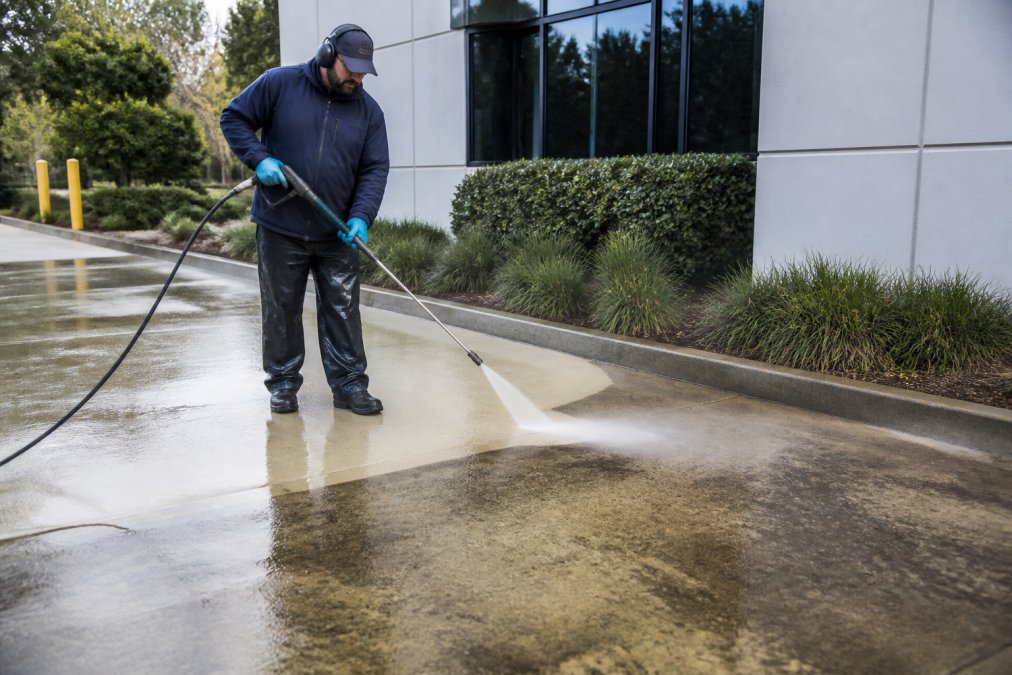
Schedule repairs in dry weather so sealants and coatings cure properly. Pressure cleaning removes years of built-up dirt, mould, and pollution staining from brick, concrete, and cladding. Once surfaces are clean and dry, minor masonry repair and a fresh coat of paint can add years of life to the facade.
2. Revitalise Pavement, Parking and Concrete Surfaces
Pavement is where customers and staff interact with your property most. Stained concrete, faded line marking, and cracked asphalt all read as neglect, even when the building itself looks fine.
Parking Lot Striping and Pothole Repair
Line marking fades within a season or two under traffic and sun. Fresh parking lot striping improves safety and makes the whole site look organised. Pothole repair and crack sealing stop small defects turning into expensive resurfacing jobs. Combine both with a deep clean and the car park looks new again.
3. Upgrade Entryways, Signage and Exterior Lighting
The entryway is the handshake of your property. A clean path, clear signage, and working lights tell visitors the site is cared for before they read a single sign. This is also where the biggest gap between generic advice and real commercial performance sits: most guides treat entryways as a cosmetic fix, but for retail, office, and industrial sites the priorities are different, and getting them wrong wastes money.
Entryways by Tenant Type
- Retail: The entry must convert foot traffic. Prioritise wide, unobstructed paths, clean glazing, visible opening hours, and weather protection so customers linger at the threshold rather than walking past. A cluttered or dim entry reads as closed.
- Office: The entry signals professional credibility to clients and recruits. Focus on clean lines, consistent branding, secure but welcoming access control, and a well-lit after-hours approach so staff leaving late feel safe.
- Industrial: The entry is functional first. Heavy-duty paving, clear truck and pedestrian separation, high-visibility line marking, and robust lighting for early starts and night shifts matter more than decorative finishes.
Signage and Wayfinding That Meets Standards
Signage is not just a design choice; it is a compliance and safety matter. Under the Disability Discrimination Act 1992 and the Premises Standards (Disability (Access to Premises, Buildings) Standards 2010), signage identifying a building, a floor, or a room needs to meet specific requirements for colour contrast, luminance contrast, mounting height, and tactile and Braille elements where required. Wayfinding should be placed at every decision point: site entry, car park exits, building entrances, lift lobbies, and corridor junctions.
Exterior Lighting: Safety, Security and Efficiency
Lighting does three jobs at once: it improves safety, deters vandalism, and extends the usable hours of your site. A common pattern is to over-light some areas and leave others in shadow, which wastes energy and creates dark pockets. A better approach is layered lighting:
- Entry and path lighting at pedestrian scale, with uniform coverage to reduce slip and trip risk
- Car park lighting positioned to eliminate dark corners and glare for drivers
- Signage and facade lighting to keep branding visible after dark
- Security lighting on timers or motion sensors in low-traffic zones
4. Add Landscaping, Hardscaping and Outdoor Living Areas
Green space softens hard surfaces and makes a commercial site feel welcoming rather than industrial. But landscaping is also where the smartest property managers separate themselves from the pack, because it is the one curb appeal category that can simultaneously cut operating costs, meet sustainability targets, and lift tenant retention. Most guides stop at "trim the hedges." This section goes further.
Landscaping That Survives the Climate
Traditional turf and exotic planting demand constant watering, mowing, and replacement, and they struggle through dry spells. A more resilient approach is to design for the local climate:
- Native and drought-tolerant planting establishes faster, needs less water once mature, and provides habitat. Species selection should match the site's rainfall zone and soil type.
- Mulching and soil improvement reduce evaporation and suppress weeds, cutting maintenance hours.
- Hydrozoning groups plants by water need so irrigation is targeted rather than blanket-applied.
- Smart irrigation controllers adjust watering based on weather and soil moisture, which typically reduces outdoor water use compared with fixed timers.
Hardscaping and Permeable Surfaces
Hardscaping defines how people move through a site. Paved paths, retaining walls, seating, and planter boxes all guide foot traffic and protect garden beds from being cut across. Where surfaces are being replaced or added, permeable options are worth considering:
- Permeable pavers and porous concrete allow water to infiltrate rather than run off, reducing load on stormwater systems and lowering localised flooding risk.
- Gravel or crushed-stone zones suit low-traffic areas and are cheaper to install and repair than poured concrete.
- Raised planter boxes protect root zones and make maintenance easier, especially where soil is poor or contaminated.
Outdoor Living as a Tenant Retention Tool
Shaded seating, break areas, and well-placed outdoor furniture give tenants a reason to stay on site longer. For office and retail precincts, this translates into higher dwell time and stronger tenant satisfaction. For industrial sites, a simple covered break area with seating and shade can improve staff morale and reduce the temptation to leave the site during breaks. The cost per square metre is usually far lower than facade or pavement work, which makes outdoor living one of the best-value upgrades available.
The Business Case
Landscaping and hardscaping are not just costs. Well-maintained grounds are consistently associated with faster leasing and stronger tenant retention, because they signal that the property is actively managed. A trimmed hedge and weed-free beds change how a whole site reads for a fraction of the cost of facade work, and water-wise planting reduces the ongoing maintenance and utility spend that erodes net operating income over time.
5. Implement Commercial Exterior Maintenance Plans
A one-off clean looks good for a month. A commercial exterior maintenance plan keeps it that way all year. These plans set a schedule for cleaning, repairs, and inspections so small issues never become big ones.
A good plan covers:
- Pressure cleaning of facades, paths, and car parks
- Graffiti removal and prevention
- Gutter, drain, and waste area cleaning
- Line marking and surface repairs
- Seasonal checks on lighting and signage
Seasonal Schedules and Waste Management
Match the schedule to the seasons. After wet months, mould and algae need treating. Before summer, clear gutters and check irrigation. Waste management matters too: overflowing bins and stained bin areas undo every other upgrade on this list. Set collection days, keep bin areas clean, and screen them from view where possible.
| Season | Key Task | Frequency |
|---|---|---|
| Spring | Facade and path pressure cleaning | Once |
| Summer | Line marking and lighting checks | Once |
| Autumn | Gutter and drain clearing | Once |
| Winter | Mould, algae and slip-hazard treatment | Once |
The Benefits of Professional Pressure Cleaning for Businesses
The benefits of professional pressure cleaning for businesses include:
- Restored, brighter concrete, brick, and cladding
- Safe removal of mould, algae, and oil stains
- Graffiti removal without damaging the surface
- Longer gaps between repainting and repairs
- A cleaner, safer site for staff and visitors
For most sites, the smart move is to book a professional clean, then set a maintenance plan so the results last. AquaBlast Elite uses cutting-edge high-pressure cleaning equipment and skilled professionals to restore concrete, decks, and graffiti-affected surfaces, with customized solutions matched to each surface.
Frequently Asked Questions
What are the most effective ways to improve commercial curb appeal?
The most effective ways include pressure cleaning building exteriors and concrete surfaces, maintaining landscaping with regular hedge trimming and weed removal, upgrading entryways and signage, repairing pavement and parking lot striping, and implementing a commercial exterior maintenance plan. These improvements create a positive first impression, attract tenants, and can increase property value by reducing long-term repair costs.
How does exterior maintenance impact commercial property value?
Regular exterior maintenance prevents small issues like cracks and stains from becoming costly repairs, preserving the building's condition and market value. A well-maintained property with clean facades, intact pavement, and tidy landscaping signals quality to prospective tenants and buyers, potentially supporting higher rental rates and sale prices. It also reduces depreciation and extends the lifespan of building materials.
How often should commercial properties undergo professional exterior cleaning?
Frequency depends on location, foot traffic, and environmental factors. High-traffic areas may need pressure cleaning every 3-6 months, while standard commercial properties benefit from cleaning every 6-12 months. Concrete surfaces should be cleaned at least annually to prevent stain set-in and surface degradation. A customised maintenance plan from a professional pressure cleaning service can set the right schedule for your property.
What are common exterior maintenance mistakes for commercial buildings?
Common mistakes include neglecting regular cleaning until surfaces are heavily soiled, using inappropriate cleaning methods that damage materials, ignoring small pavement cracks that worsen over time, and failing to maintain landscaping. Another error is not having a documented maintenance plan, leading to reactive rather than proactive care. These oversights can reduce curb appeal and increase long-term repair costs.
Most commercial properties lose value slowly, through dirty facades, faded line marking, and neglected grounds that nobody schedules time to fix. AquaBlast Elite restores building exteriors, concrete, and hard surfaces with high-pressure cleaning equipment, customised solutions for every site, and skilled operators who know which surfaces need which approach. Get started with AquaBlast Elite and protect your property's first impression all year round.