 how-to
How to Vet Industrial Cleaning Contractors
Table of Contents
- Why Vetting Industrial Cleaning Contractors Matters
- Step 1: Assess Experience and Industrial-Site Expertise
- Step 2: Verify Safety Compliance and Regulatory Requirements
- Step 3: Ask the Right Industrial Cleaning Contractor Questions
- Step 4: Check Insurance, Certifications, and Worker Training
- Step 5: Review References and Request a Trial Clean
- Step 6: Compare Quotes and Define Scope of Work
- Industrial Cleaning Contractor Checklist for Final Selection
- Frequently Asked Questions
Last Updated: October 13, 2026
Why Vetting Industrial Cleaning Contractors Matters
Choosing the wrong industrial cleaning contractor costs far more than a bad quote. Poor work damages equipment, creates safety risks, and leaves your facility worse off.
Your facility needs a contractor who understands hazardous materials, regulatory compliance, and heavy-duty equipment. A residential cleaner won't cut it, industrial cleaning demands specialised knowledge, certifications, and proven experience with your site conditions.
This guide covers six critical steps to vet industrial cleaning contractors systematically.
Step 1: Assess Experience and Industrial-Site Expertise
Start by asking about the contractor's industrial background: how many years in industrial cleaning, what site types they've serviced, and whether they've cleaned facilities similar to yours.
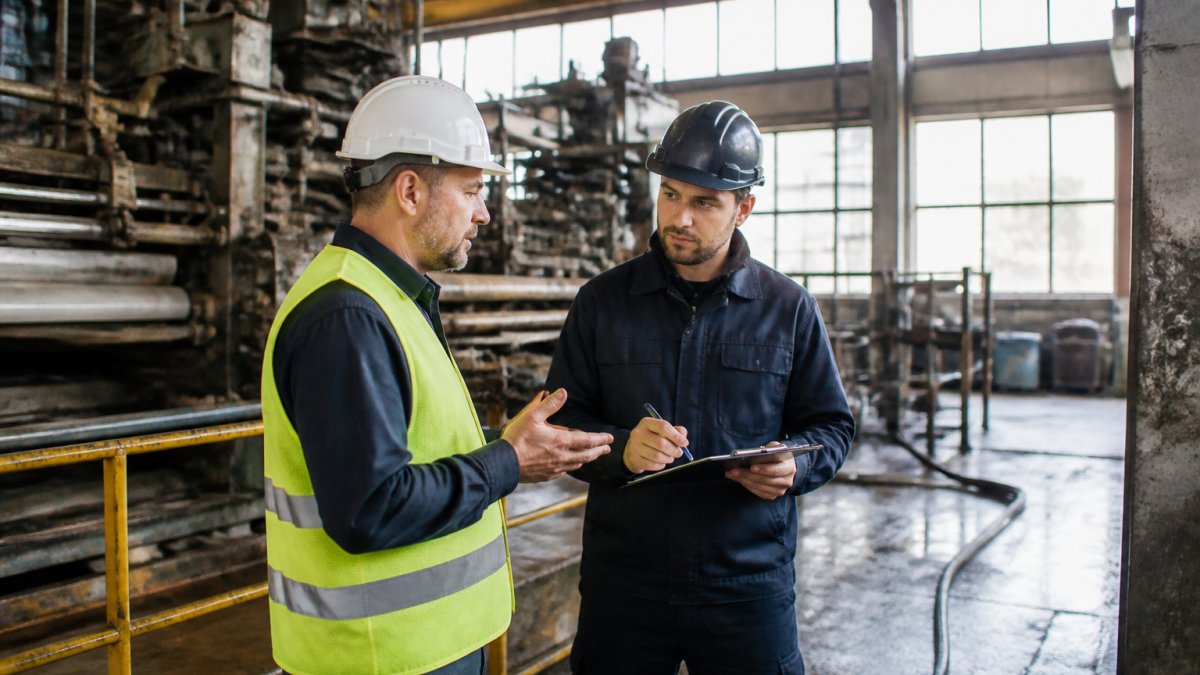
Industrial environments vary widely, a contractor experienced with food processing plants may lack expertise in manufacturing floors or chemical storage.
Look for contractors who understand your operational needs: working around active production, scheduling during downtime, and managing site access and security protocols.
Request references from similar industrial facilities and call them directly. Ask whether the contractor showed up on time, completed work to specification, and caused no damage.
Step 2: Verify Safety Compliance and Regulatory Requirements
Industrial cleaning involves hazardous materials and high-risk work. Your contractor must comply with safety standards and regulations, verify that compliance rather than accept verbal assurance.
The primary framework is the Work Health and Safety Act 2011 and model Work Health and Safety Regulations, mirrored in most states and territories. Safe Work Australia publishes model codes of practice covering hazardous chemicals, confined spaces, and falls.
Verify the safety system, not just the policy
Request these documents and check they are current and site-specific:
- Risk assessments and safe work method statements (SWMS) for high-risk work such as confined-space entry, working at heights, and chemical handling. Confirm they reference your site, not a generic template.
- Site induction records showing every worker who will attend your facility has completed your induction, plus the contractor's own induction.
- Permit-to-work examples, hot work, confined space, and isolation permits, and a description of how permits are issued, monitored, and closed out.
- Lockout/tagout (isolation) procedures for any work near energised plant, conveyors, pumps, or pressure systems. Ask how they coordinate isolation with your maintenance team.
- Confined-space capability, entry permits, atmospheric testing equipment (for oxygen, flammable gas, and toxic gas), standby-person arrangements, and rescue plans. A rescue plan that relies on calling emergency services is not a confined-space rescue plan.
- Incident and near-miss records for the past three to five years, plus the corrective actions taken. Ask how incidents are reported to the regulator and whether any enforceable undertakings or improvement notices are outstanding.
Check the insurance that actually applies
Public liability cover is the starting point, but industrial work often needs more. Ask for a certificate of currency and confirm:
- The public liability limit is adequate for your site's risk profile, many industrial facilities require at least $10 million, and some principals require $20 million.
- Workers' compensation insurance covers every worker who will attend, including labour-hire or subcontracted staff.
- Any professional indemnity or contract works cover is appropriate for the scope.
- The policy is current, and the insurer has been notified of the type of work being performed.
Model WHS laws and codes of practice
Step 3: Ask the Right Industrial Cleaning Contractor Questions
The questions you ask reveal whether a contractor has genuine expertise or just general cleaning experience.
Ask about their team qualifications. Are workers trained in industrial cleaning? Do they hold relevant certifications?
Explore scheduling flexibility: can they work around your production schedule, do they offer emergency cleaning, and how quickly can they respond to urgent requests?
Ask about quality assurance. How do they measure cleaning effectiveness? Do they use inspection checklists? What happens if work doesn't meet standards?
Step 4: Check Insurance, Certifications, and Worker Training
Insurance and certifications protect both you and the contractor. Never hire without proper documentation.
Inquire about worker training: how they train staff, whether they provide induction training for new sites, and whether workers understand your facility's specific hazards.
Ask about ongoing professional development: do they keep staff updated on new cleaning methods and safety regulations, and participate in industry associations or training programs?
Request documentation of compliance audits or third-party safety certifications, regular independent audits demonstrate commitment beyond minimum legal requirements.
Step 5: Review References and Request a Trial Clean
References reveal how contractors perform in real-world conditions. Don't skip this step.
Ask for at least three references from similar industrial facilities and contact them directly rather than relying on written testimonials. Ask:
- Did the contractor complete work on schedule?
- Was the quality of work satisfactory?
- Did they cause any damage or create safety issues?
- Would you hire them again?
- What were their strengths and weaknesses?
Request a supervised trial clean before committing to a long-term contract. It reveals whether the contractor understands your requirements and delivers quality work. Observe how they:
- Assess the site and identify cleaning needs
- Set up equipment safely
- Communicate with your team
- Handle unexpected issues
- Clean up after themselves
- Document completed work
Use the trial to test responsiveness and problem-solving: if something goes wrong, do they take responsibility and fix it promptly?
Step 6: Compare Quotes and Define Scope of Work
Quotes vary widely because industrial cleaning scope differs by facility. Compare properly by normalising each bid to the same scope, units, and total cost, not the headline figure.
Build a bid normalisation sheet
Before opening any quote, define the scope in one document: areas, surfaces, frequencies, methods, chemicals, waste handling, access requirements, and downtime windows. Ask every contractor to price against that scope; note deviations as exclusions or variations, not lower prices.
For each bid, break the price into these cost lines so you can compare like with like:
- Labour, ordinary hours, overtime, shift loadings, and supervision.
- Consumables, chemicals, pads, filters, and PPE.
- Equipment, high-pressure units, vacuum trucks, scissor lifts, and any hire charges.
- Waste handling, classification, transport, disposal fees, and landfill levies.
- Mobilisation and demobilisation, travel, setup, and pack-down.
- Downtime and production impact, the cost of stopping a line, rescheduling staff, or lost output.
- Contingency, how unexpected work is priced and approved.
Compare total cost, not hourly rate
A low hourly rate can be the most expensive option if the contractor is slow, under-equipped, or returns to rework. Calculate total cost of ownership for the contract term:
- Base contract value across the term.
- Expected variations based on the variation rates quoted.
- Estimated downtime cost per clean.
- Rework or rectification cost if quality targets are missed.
- Administration cost of managing the contractor.
A contractor who finishes in half the time at a higher hourly rate may deliver a lower total cost. Rank on total cost, not rate.
Lock down the contract terms
Your contract should specify:
- Scope of work, areas, surfaces, frequencies, methods, and standards, with a schedule attached.
- Service-level agreement (SLA), response times for routine and emergency work, and the consequences of missing them.
- Exclusions, what is explicitly not included, so there are no surprises.
- Change-order process, who can approve variations, in what form, and at what rates.
- Subcontracting, whether subcontractors may be used, and if so, that they meet the same insurance, induction, and safety requirements.
- Remedies, credits, rework, or termination rights for missed work or repeated quality failures.
- KPIs, inspection scores, task completion rates, response times, safety incidents, and corrective-action closure.
| Vetting Step | Key Focus | What to Verify |
|---|---|---|
| Experience | Industrial-site expertise | Years in industrial cleaning, similar project examples, industry-specific knowledge |
| Safety | Regulatory compliance | WHS procedures, risk assessments, permits, isolation, confined-space capability, incident history |
| Questions | Technical capability | Equipment, methods, chemicals, worker training, quality assurance |
| Certifications | Qualifications and insurance | Public liability, workers' compensation, relevant certifications, training records |
| References | Real-world performance | Contact previous clients, request trial clean, observe contractor in action |
| Quotes | Scope and value | Normalised bids, total cost of ownership, SLA, exclusions, change orders, KPIs |
Industrial Cleaning Contractor Checklist for Final Selection
Use this checklist before signing a contract with any industrial cleaning contractor.
Experience & Expertise
- Contractor has minimum 5+ years industrial cleaning experience
- They've completed projects in your industry or similar facilities
- They understand your facility's specific operational requirements
- References confirm quality work and reliability
Safety & Compliance
- They're familiar with Work Health and Safety Act 2011 requirements
- They conduct site hazard assessments before work begins
- Current public liability insurance certificate provided
- Current workers' compensation insurance documented
- Safety incident history is clean or well-documented
Qualifications & Training
- Workers hold relevant certifications (confined space, working at heights, etc.)
- Team has received induction training for your facility
- Ongoing professional development is documented
- Third-party safety audits or certifications available
Equipment & Methods
- Equipment is appropriate for your facility's cleaning needs
- They can explain their cleaning methodology in detail
- Safety Data Sheets provided for all chemicals used
- Methods are compatible with your facility's materials and equipment
Quality Assurance
- Trial clean completed successfully to your satisfaction
- Quality standards and inspection procedures are documented
- Before-and-after documentation available
- Clear process for addressing quality concerns
Contract & Communication
- Detailed scope of work specified in writing
- Pricing is transparent with no hidden charges
- Performance metrics and KPIs are defined
- Communication and escalation procedures are clear
- Payment terms and conditions are acceptable
Vetting industrial cleaning contractors properly takes time, but it protects your facility and budget. When you're ready to work with a contractor who understands industrial-site requirements and delivers reliable results, AquaBlast Elite brings years of experience managing complex cleaning projects across Sydney and surrounding areas. Our team uses modern equipment to restore your facility to the highest standards.
Frequently Asked Questions
What should you check before hiring an industrial cleaning contractor?
Before hiring, verify the contractor's experience with industrial facilities similar to yours, check their insurance and certifications, request references from comparable sites, and ask about their safety protocols and compliance record. Request documentation of worker training, Safety Data Sheets for chemicals they use, and their approach to hazard identification and risk assessment. Always conduct a site assessment together and request a trial clean on a small area to evaluate their methods and quality standards.
What questions should you ask an industrial cleaning company?
Ask about their experience with your facility type, equipment and methods they use, how they handle chemical disposal, their response time and scheduling flexibility, what happens if cleaning affects production, their quality assurance process, and how they verify worker safety on-site. Request details on their service agreement terms, performance standards, inspection procedures, and whether they offer corrective actions if results don't meet expectations. Clarify their approach to waste disposal and environmental compliance.
How do you compare industrial cleaning quotes fairly?
Ensure all quotes cover the same scope of work, cleaning schedule, and performance standards. Compare the contractor's experience, equipment capability, and worker certifications alongside price. Ask whether quotes include site-specific hazard management, waste disposal, and chemical handling. Check if performance metrics and inspection frequencies are defined. Request itemised quotes so you can see what each component costs. Avoid selecting solely on price; a cheaper quote may reflect lower safety standards, less experienced workers, or inferior equipment, which can lead to poor results and operational disruptions.
What safety documents should an industrial cleaning contractor provide?
Request copies of their public liability and professional indemnity insurance, worker's compensation insurance, and proof of current certifications for their team. Ask for Safety Data Sheets for all chemicals they use, documentation of worker training records, and their risk assessment and hazard identification process for your site. Verify they comply with relevant workplace safety regulations and ask about their incident reporting procedures. Request evidence of site-specific induction processes and personal protective equipment protocols.