 how-to
Tennis Court Stain Removal Techniques That Actually Work
Last Updated: November 2, 2026
Quick Summary
Effective tennis court stain removal starts with identifying the stain type and surface before choosing a cleaner, since the wrong product can set a stain permanently or strip the coating. Match the treatment to the cause: diluted bleach for mould, oxalic acid for rust, and mild detergent for ball fibres and tannins. Always spot-test on a hidden area and mix cleaners to the label rate.
- Green-black fuzzy patches mean organic growth; brown-orange marks are usually rust.
- Apply oxalic acid to rust spots, let it dwell five to ten minutes, then rinse.
- Tannin stains often fade over one to two weeks of sunlight, so avoid over-scrubbing.
- Spot-test every cleaner on a hidden area, wait ten minutes, rinse and let it dry.
- Pressure washing at close range strips acrylic colour and leaves permanent streaks.
Table of Contents
- Diagnosing the Stain Before You Touch the Court
- How to Clean an Acrylic Tennis Court Without Damaging the Coating
- Tennis Court Mould Removal: Killing Growth at the Root
- Tennis Court Pressure Washing: Where the Limits Sit
- Choosing Cleaners, Dilution Rates and Tools That Protect the Surface
- Tennis Court Cleaning Frequency and a Seasonal Prevention Schedule
- Book a Professional Court Clean Before the Season Starts
- Frequently Asked Questions
Diagnosing the Stain Before You Touch the Court
Most court owners attack a stain with the strongest cleaner they can find. That is usually the mistake that makes it worse. Effective tennis court stain removal starts with knowing what the mark is and which surface it sits on, because the wrong product can set a stain permanently or strip the coating around it.
Misdiagnosing a stain is one of the most common ways a court coating gets damaged. Diagnosis takes only a few minutes; fixing a ruined coating takes a professional clean and sometimes a recoat.
Start with three checks:
- Colour and texture. Green-black and fuzzy means organic growth. Brown-orange is usually rust. Grey smears are ball fibres and rubber.
- Depth. Does it sit on top of the surface, or has it soaked into the coating?
- Location. Stains under leaf litter, near fence posts, or along low edges tell you a lot about the cause.
Common Stain Types and What Caused Them
Here is how the usual suspects break down, and what each one responds to.
| Stain | Likely cause | Best approach |
|---|---|---|
| Green or black patches | Mould, mildew, algae | Diluted bleach solution, soft brush |
| Brown-orange marks | Rust from fencing or furniture | Oxalic acid cleaner, spot treat |
| Grey smears | Tennis ball fibres, rubber | Soft-bristle broom, mild detergent |
| Dark leaf stains | Tannins from wet leaves | Gentle detergent, sunlight, time |
| White cloudy patches | Hard water or over-scrubbing | Rinse and recoat, not more scrubbing |
Stain-by-Stain Removal Procedures
A table is not enough once you are on your knees with a brush.
Algae and mould (green-black fuzz). Treat as a moisture problem, not just a dirt problem.
Food and drink spills (coloured patches). Sugary drinks and food dye can stain acrylic quickly.
Oil and grease (dark, greasy patches). These usually come from machinery, mowers or dropped containers.
Shoe marks and rubber scuffs (grey-black smears). These are surface deposits, not stains.
Spot-Testing and Dilution Rules
Every cleaner, no matter how mild, should be spot-tested on a hidden area first: a corner under the fence, a patch behind the baseline, or a section covered by a bench.
Dilution matters more than product choice. Mix to the label rate, add cleaner to water (not water to cleaner), and never double the dose to speed up the job. A stronger mix does not clean faster; it attacks the coating.
Get this step right and everything after it gets easier.
How to Clean an Acrylic Tennis Court Without Damaging the Coating
An acrylic surface is a thin coloured layer over asphalt or concrete. It is tough, but not indestructible: the coating gives the court its colour and grip, and harsh treatment wears it away in patches. The same logic applies, with different products and pressures, to synthetic grass, clay and shell courts, so the first decision is always surface compatibility.
Surface-by-Surface Compatibility Guide
| Surface | Safe cleaners | Avoid | Pressure washing |
|---|---|---|---|
| Acrylic | Mild detergent, diluted bleach (mould only), oxalic acid (rust, spot) | Solvent degreasers, undiluted bleach, wire brushes | Low pressure only, wide nozzle, never close to lines |
| Synthetic grass | Mild detergent, diluted white vinegar, enzyme cleaners for pet waste | Bleach at strength, solvent degreasers, stiff brushes | Low pressure, keep nozzle moving, avoid seams |
| Clay | Water, mild detergent, dedicated clay-court conditioners | Bleach, acid cleaners, pressure washing | Not recommended; re-level and re-line instead |
| Shell (shell-grit) | Water, mild detergent, soft raking | Acid cleaners, pressure washing | Not recommended; raking and top-dressing |
If you are unsure which surface you have, check the line markings and texture: acrylic is smooth and painted, synthetic grass has visible fibres and infill, clay is loose and red or green underfoot, and shell is gritty and pale. The wrong cleaner on the wrong surface can strip colour, melt fibres or wash away the clay profile.
Step-by-Step Acrylic Cleaning
Follow these steps for safe acrylic court cleaning:
- Blow off loose debris first. Leaves, dust and fine dirt lift easily with a leaf blower. Never scrub dry dirt across the surface; it acts like sandpaper.
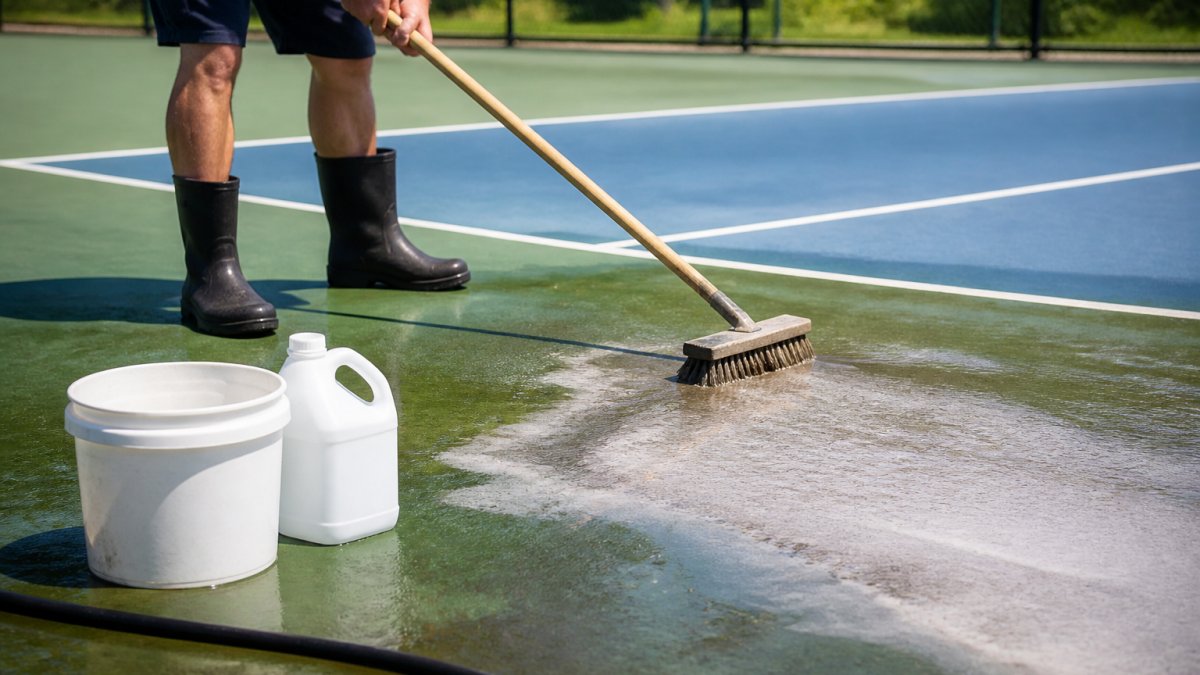
- Sweep with a soft-bristle broom. Work in sections and push debris off the edge, not into the corners.
- Pre-treat stains only. Apply your chosen cleaner to the mark, not the whole court. Let it sit for the time on the label.
- Scrub gently with a soft brush. Firm pressure on one spot dulls the coating. Light passes beat heavy scrubbing.
- Rinse thoroughly. Leftover cleaner attracts dirt and can bleach the colour.
- Let it dry fully before play resumes.
For a broader walkthrough of methods and local conditions, see our guide to cleaning tennis courts in Sydney. The key point most guides miss: even cleaning across the whole court matters more than spot intensity. Patchy cleaning leaves visible colour variation that looks worse than the original stain.
Protecting Coatings and Line Markings
Line markings are painted on top of the acrylic colour layer and wear faster than the surrounding surface. Keep brushes and cleaner off the lines where possible, and rinse lines last so runoff from the court does not sit on them.
Watch out: pressure washing an acrylic court at close range will strip the colour layer and leave permanent streaks that cannot be blended out.
When to Stop and Call a Professional
Some acrylic problems are beyond DIY. Widespread mould that returns after two treatments, coating that is lifting or flaking, and stains soaked through to the asphalt all point to a professional clean and possibly a recoat. A recoat costs far more than a clean, so the moment you are unsure, stop and get an assessment.
Tennis Court Mould Removal: Killing Growth at the Root
Mould and mildew come back because the cause was never fixed. A green patch along a shaded edge is not a cleaning problem, it is a moisture and airflow problem. Kill the growth, then change the conditions.
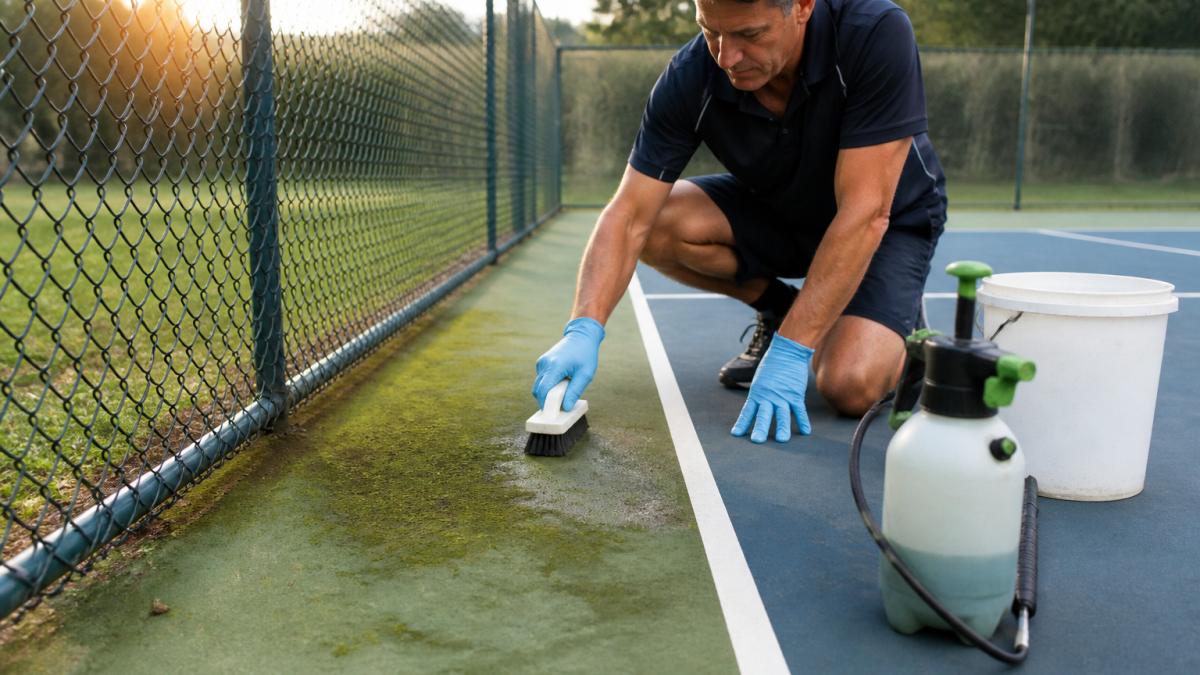
The process:
- Protect yourself. Gloves and eye protection, always.
- Mix a diluted household bleach solution following the label rates. Stronger is not better; it damages the coating.
- Apply to the affected area and let it dwell for the recommended time.
- Scrub with a soft brush, then rinse and repeat if growth remains.
- Clear the cause. Trim overhanging branches, clear leaf litter, and improve drainage so water stops pooling.
Watch out: bleach left to dry on the surface can bleach the court colour itself. Rinse it off properly.
Once the growth is gone, our guide to preventing mould regrowth on exterior walls covers the longer-term habits that stop it returning.
Tennis Court Pressure Washing: Where the Limits Sit
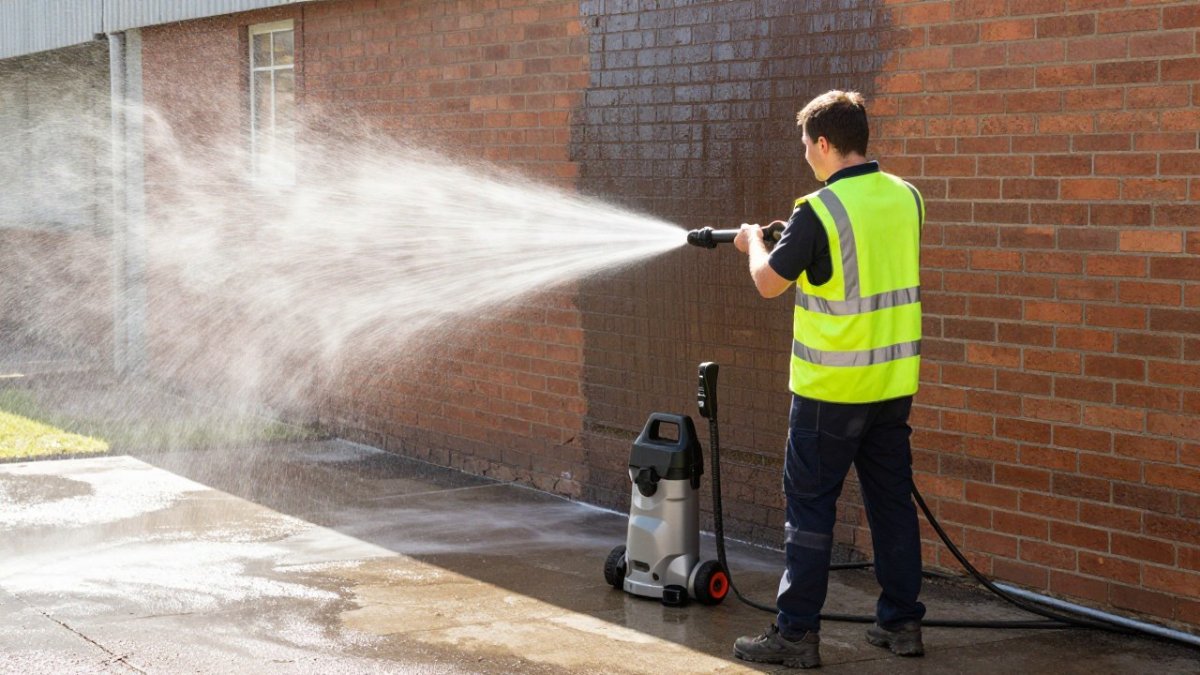
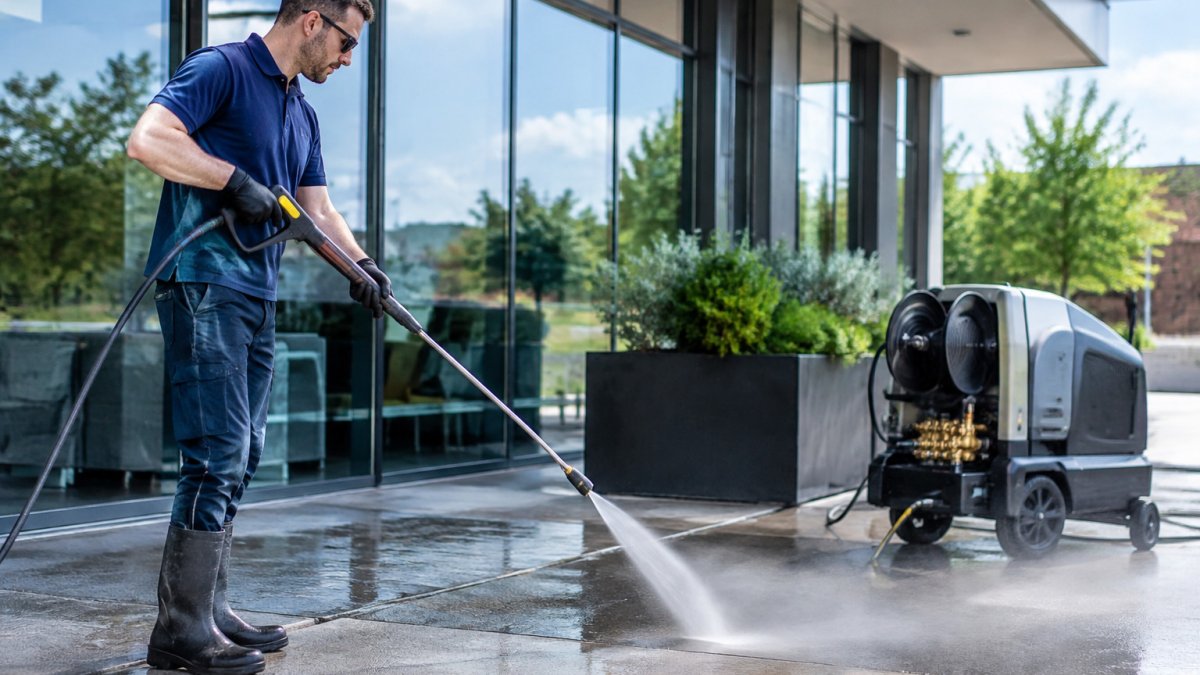
Pressure washing can clean a court fast, but it can also destroy one. The line sits at the coating. Controlled pressure on hard surfaces is fine. A high-pressure jet held close to acrylic will strip the colour layer and leave permanent streaks.
Here is a practical rule to follow:
- Fine for: concrete surrounds, fencing, retaining walls, hard court bases with no coating.
- Risky for: acrylic colour layers, line markings, synthetic grass seams.
- Never for: loose or lifting coating, old courts with worn patches.
If you are unsure whether your painted or coated surface can take it, read our breakdown of whether pressure cleaning is safe for painted surfaces before you start. And if you are weighing up methods, our comparison of pressure washing versus soft washing explains which suits a coated court.
For anything with a colour coating, low pressure plus the right cleaner beats brute force every time.
Choosing Cleaners, Dilution Rates and Tools That Protect the Surface
The best cleaner is the mildest one that works. That single rule saves more courts than any product on the shelf.
Safe choices:
- Mild detergent and water for general dirt and ball fibres
- Diluted household bleach for mould and mildew, mixed to label rates
- Oxalic acid products for rust, spot-applied only
Avoid: undiluted bleach, solvent-based degreasers, and any product without a dilution guide.
Dilution matters more than product. Always mix to the label, add cleaner to water (not water to cleaner), and test on a small hidden patch first.
Tools that protect the surface:
- Leaf blower for loose debris
- Soft-bristle broom or court brush
- Soft scrubbing brush, never wire or stiff bristles
- Low-pressure sprayer for rinse and pre-treat
Always check runoff. Rinse water should go to garden or lawn where possible, not straight into storm drains.
Tennis Court Cleaning Frequency and a Seasonal Prevention Schedule
Little and often beats big and rare. A court cleaned regularly needs fewer harsh products, and stains never get the chance to set.
- Weekly: blow off leaves and debris; sweep the lines.
- Monthly: spot-treat stains early; check for mould starting in shaded areas.
- Seasonally: deep clean the full surface, clear gutters and overgrowth, inspect the coating for wear.
- Before and after heavy leaf fall: extra passes with the blower, since wet leaves stain fastest.
Even cleaning across the whole court keeps the colour consistent. If you only ever clean the problem spots, the court ends up patchy. Build the schedule around your local weather and tree cover, and stick to it.
Book a Professional Court Clean Before the Season Starts
Some jobs are worth doing yourself. Coating damage, widespread mould, or a court that has not been cleaned in years are not among them. Getting it wrong can mean a recoat, and that costs far more than a clean.
Learn how the process works and book exterior pressure cleaning through our site.
Frequently Asked Questions
How do you remove leaf and tannin stains from a tennis court?
Tannin stains from fallen leaves sink into porous acrylic coatings and won't lift with a dry broom. Clear the debris first, then pretreat the patch with a diluted oxygen-based cleaner, let it sit for 10 to 15 minutes, and agitate with a soft-bristle broom before rinsing. Avoid chlorine bleach on coloured acrylic, because it can strip the pigment along with the stain. Repeat the pretreat-and-rinse cycle rather than scrubbing harder, and treat the area before the next leaf drop to stop the stain setting in again.
Can you use a pressure washer on a tennis court?
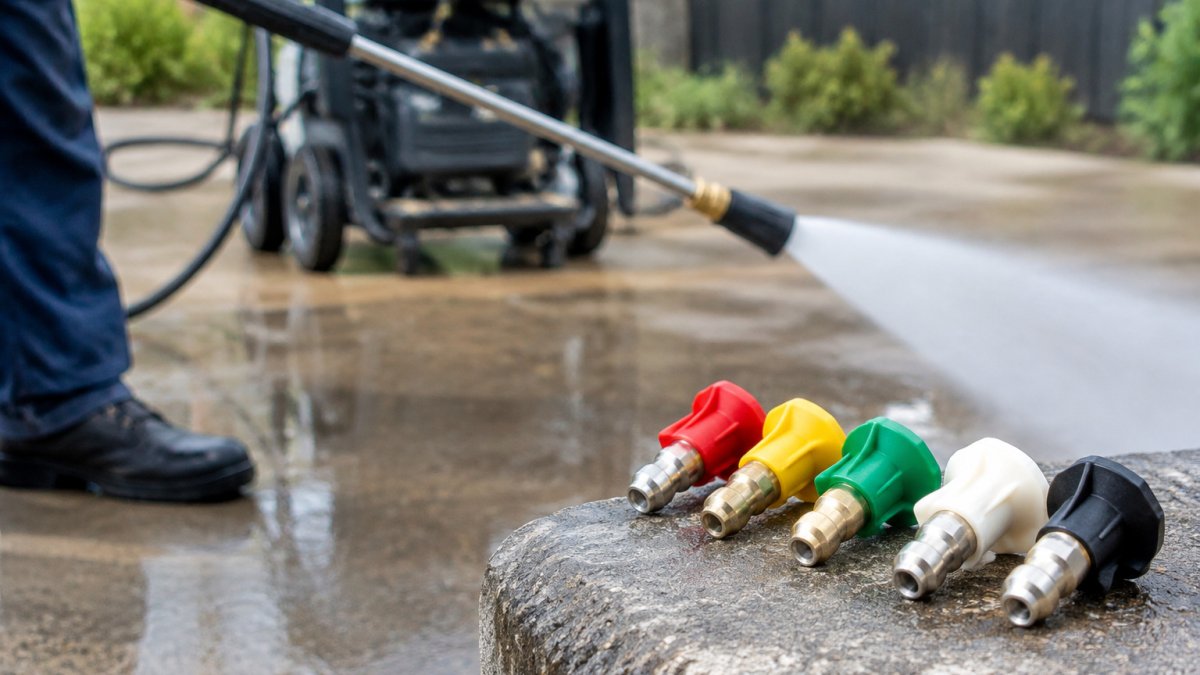
Yes, but only at controlled pressure with the right nozzle and distance. Holding the wand too close or using excessive pressure can blast acrylic coating off the aggregate and open the surface to water damage. Keep the tip moving, work in overlapping passes, and never direct the jet at line markings or seams. On synthetic grass, lower the pressure further and use a fan tip. If a stain needs more than gentle pressure, treat it chemically first rather than turning up the machine.
How often should a tennis court be cleaned?
Most courts need a light clean every two to four weeks during the playing season, plus a deeper clean twice a year. Tennis court cleaning frequency depends on tree cover, rainfall and how heavily the court is used. A court under gums or near garden beds collects leaves and organic debris fast, so it may need fortnightly sweeping. In humid stretches, inspect shaded edges monthly for mould. Scheduling cleans before winter and before summer reduces both stain build-up and slippage risk.
How do you remove mould from a tennis court safely?
Tennis court mould removal works best when you kill the growth before scrubbing it. Apply a diluted household bleach solution following the label instructions, or a purpose-made surface cleaner, to the affected area and let it dwell for the time stated on the label. Scrub with a soft-bristle broom, then rinse thoroughly and direct runoff away from garden beds and storm drains. Wear gloves and eye protection, never mix bleach with other cleaners, and fix the shade or drainage problem that let the mould grow back.
If your court has stubborn stains, worn patches or mould that keeps returning, get it assessed before the damage spreads. AquaBlast Elite brings professional-grade equipment, surface-specific methods and careful runoff control to every job. Get started with AquaBlast Elite and book a call to restore your court before the season begins.