 how-to
Soft Washing Commercial Building Exteriors: A 2026 Guide
Last Updated: October 22, 2026
Quick Summary
Soft washing commercial building exteriors is a low-pressure cleaning method that applies specialised cleaning solutions to kill organic growth at the source, then rinses everything away gently. The solution dwells on the surface so it kills algae, mould, mildew and moss, and the growth is then rinsed off at low pressure.
- Soft washing suits render, painted facades, vinyl cladding, coated surfaces and timber, which scar under high pressure.
- Dilution matters more than strength: too strong risks bleaching render, too weak lets growth survive.
- Control runoff by pre-wetting gardens and lawns and keeping solution out of storm drains.
- Most commercial properties sit well on a six to twelve month exterior cleaning cycle.
- The single most important step is the test patch, which protects the surface and confirms your dilution.
Table of Contents
- What Soft Washing Commercial Building Exteriors Actually Involves
- Soft Washing vs Pressure Washing: What Commercial Property Managers Need to Know
- Soft Wash Cleaning Solutions: Selection, Dilution, and Runoff Management
- A Step-by-Step Soft Washing Workflow for Commercial Buildings
- Commercial Building Exterior Cleaning Frequency: Setting a Maintenance Schedule
- Your Commercial Facade Cleaning Checklist
- Conclusion: Protecting Your Building's Appearance and Value
- Frequently Asked Questions
What Soft Washing Commercial Building Exteriors Actually Involves
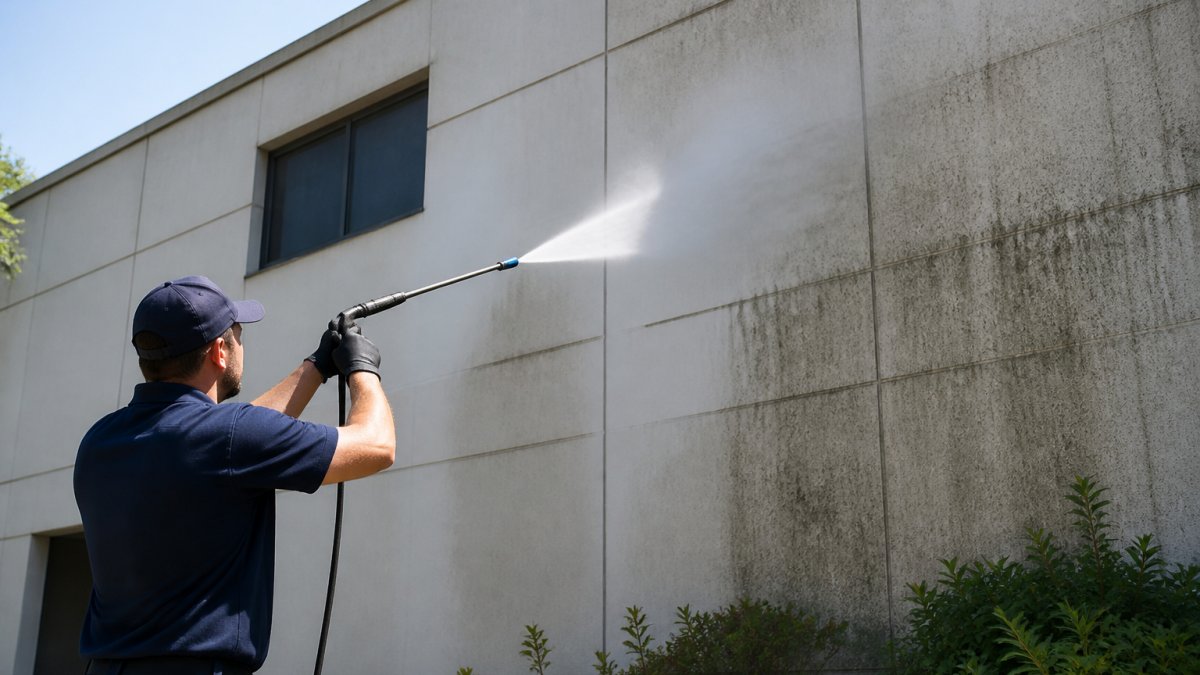
Soft washing commercial building exteriors is a low-pressure cleaning method that applies specialised cleaning solutions to kill organic growth at the source, then rinses everything away gently.
The method works in three stages:
- Apply a diluted cleaning solution at low pressure
- Let it dwell so it kills algae, mould, mildew and moss
- Rinse at low pressure to flush away dead growth and dirt
That dwell time is the part most people miss. Pressure blasts growth off the top. Soft washing kills the root system, so it takes longer to come back.
Low Pressure, Cleaning Solutions, and the Chemistry That Kills Growth
Water pressure does the lifting. Chemistry does the killing. Soft washing relies on low-pressure water, typically well below what a pressure washer delivers, paired with a cleaning solution matched to the surface.
The solutions break down the cell structure of algae, mould and mildew. Once dead, the growth releases from the surface and rinses away cleanly.
Which Exterior Surfaces Suit Soft Washing
Render, painted facades, vinyl cladding, coated surfaces and timber all suit soft washing. These materials scar under high pressure. A jet at close range can strip paint, gouge render and force water behind cladding.
Soft washing cleans these delicate surfaces safely. It also handles concrete, brick and masonry well, where the goal is killing organic growth rather than removing a coating. If a surface is fragile, coated or painted, soft washing is the safer call.
Soft Washing vs Pressure Washing: What Commercial Property Managers Need to Know
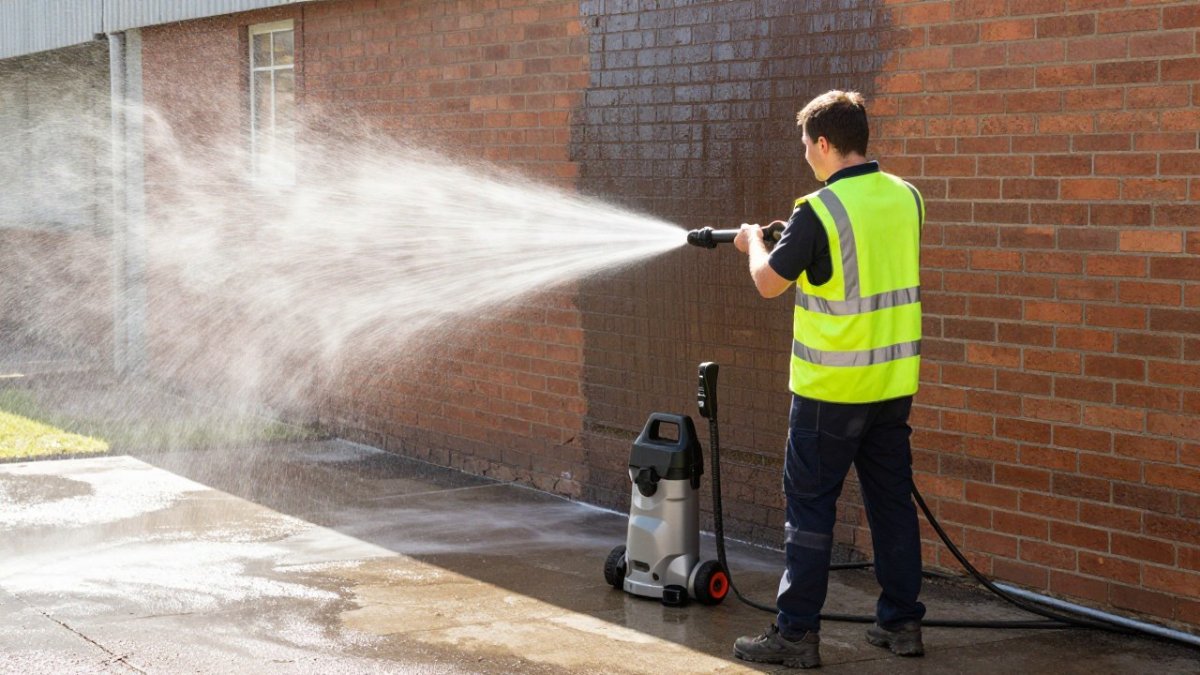
The difference comes down to pressure and purpose. Pressure washing uses high-pressure water to force dirt off a hard surface. Soft washing uses low pressure plus cleaning solutions to kill growth and lift grime gently.
| Factor | Soft Washing | Pressure Washing |
|---|---|---|
| Water pressure | Low | High |
| Main action | Chemical kill plus gentle rinse | Mechanical force |
| Best for | Render, painted facades, cladding, coated surfaces | Concrete, hard paving, heavy grime |
| Risk to delicate surfaces | Low | High |
| Regrowth speed | Slower, growth killed at source | Faster, roots often survive |
For a commercial building with a painted or rendered facade, pressure washing is the wrong tool. It can damage the finish and leave you repainting. Soft washing protects the surface while removing the growth.
Soft Wash Cleaning Solutions: Selection, Dilution, and Runoff Management
Solution choice depends on the surface and the growth. A common approach is a sodium hypochlorite mix for organic growth, diluted to suit the material, with a surfactant added so the solution clings rather than running straight off.
Dilution matters more than strength. Too strong and you risk bleaching render or damaging coatings. Too weak and the growth survives.
Runoff is the other half of the job. We manage it by:
- Pre-wetting gardens and lawns before and after cleaning
- Controlling flow so solution does not pool or reach storm drains
- Using low-pressure application to limit overspray
- Following local environmental guidance on what can enter drains
A Step-by-Step Soft Washing Workflow for Commercial Buildings
A repeatable workflow keeps results consistent, protects the facade and keeps the site safe for tenants and the public. The sequence below is written for commercial properties, where access, drainage, pedestrian traffic and multiple surface types all have to be managed at once. Here is how a commercial soft wash runs from start to finish.
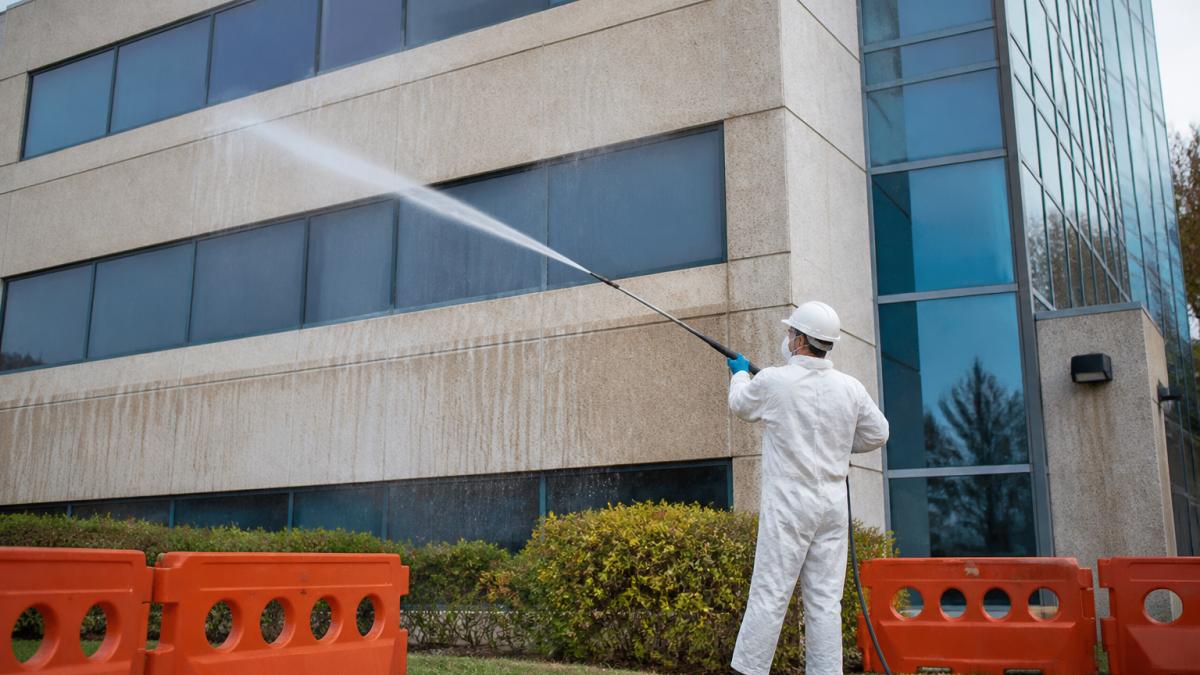
- Site walk-through and surface audit. Walk the full perimeter and record every surface type, render, painted masonry, metal cladding, glass, timber, concrete, plus access points, drainage pits, landscaping, loading docks and any tenancy-specific constraints. Photograph each elevation so you have a baseline.
- Worksite planning and permits. Confirm access method for height, set pedestrian and traffic control, notify tenants and building management, and check whether any council or building-owner approvals are needed before work starts.
- Protect the surrounds. Cover or pre-wet gardens and lawns, move vehicles, tape off walkways, seal or divert stormwater inlets, and isolate any sensitive equipment or outdoor seating.
- Test patch each material. Clean a small, out-of-sight area on every distinct surface, let it dwell for the full intended time, rinse and inspect. Adjust dilution or dwell time before committing to the facade.
- Set up and section the work. Divide the facade into manageable sections, typically one elevation or one storey at a time, so application, dwell and rinse stay controlled and runoff is contained within the section.
- Apply solution at low pressure. Work bottom to top within each section so solution doesn't run over already-treated areas, and keep the nozzle at a consistent distance to avoid overspray onto glass, vehicles or neighbouring property.
- Manage dwell time. Let the solution kill the growth without letting it dry out. On hot, windy days that may mean re-wetting the section or working in smaller areas; on cool, shaded elevations dwell can run longer. Dwell time is surface- and product-specific, follow the label.
- Rinse top to bottom. Flush dead growth and residue away at low pressure, working from the top of the section down so dirty water doesn't streak cleaned surfaces. Pay attention to window frames, weep holes and cladding joints where residue can collect.
- Final check and documentation. Inspect for missed patches, streaks or residue, confirm runoff is contained and drains are clear, and photograph each elevation for the maintenance log.
Why the Sequence Matters on a Commercial Site
The order is not arbitrary. Test patches come before full application because a wrong dilution on a coated facade can mean repainting an entire elevation. Sectioning comes before application because uncontrolled runoff is the most common cause of complaints on occupied commercial sites, solution reaching cars, landscaping or neighbouring property. And rinsing top to bottom matters because residue left in joints or behind cladding can cause streaking or corrosion long after the crew has left.
A common pattern on multi-storey work is to treat the workflow as a loop rather than a line: inspect, test, apply, dwell, rinse, inspect again, and only then move to the next section. That loop is what separates a consistent commercial clean from a one-off blast.
Commercial Building Exterior Cleaning Frequency: Setting a Maintenance Schedule
Commercial building exterior cleaning frequency depends on exposure. A shaded north-facing wall with trees nearby grows algae faster than a sunlit, open facade. Most commercial properties sit well on a six to twelve month cycle.
Set the schedule around:
- Local climate and rainfall
- Shade and nearby vegetation
- Surface type and coating
- How visible the facade is to customers
- Any graffiti or tenancy issues
A regular maintenance plan beats reactive cleaning. Growth caught early rinses off easily. Growth left for years takes more solution and more time.
Your Commercial Facade Cleaning Checklist
Use this checklist to plan and check any commercial facade clean.
- Walk the site and record every surface type
- Identify access needs for height and awkward areas
- Check drainage and protect gardens and storm drains
- Set up barriers and signage for pedestrians
- Run a test patch on each material
- Confirm solution dilution for each surface
- Apply at low pressure and allow dwell time
- Rinse top to bottom and flush all growth away
- Inspect for missed patches before packing up
- Photograph results and log them for next time
Conclusion: Protecting Your Building's Appearance and Value
A clean facade signals a well-run building. Soft washing protects delicate surfaces while killing the growth that makes a property look tired. Done on a schedule, it keeps appearance and value intact year after year.
If you manage a commercial property and want a clean that protects your surfaces, AquaBlast Elite can help. Our team brings specialised expertise, customised solutions for every project and professional equipment to get the job done right. Get started with AquaBlast Elite and book a call today.
Frequently Asked Questions
What is soft washing for commercial building exteriors?
Soft washing is an exterior cleaning method that uses low-pressure water combined with specialised cleaning solutions to remove algae, mould, mildew, moss, and grime from building surfaces. Unlike high-pressure washing, it relies on the chemical treatment to break down organic growth at the source rather than force. This makes soft washing suitable for delicate surfaces such as painted facades, render, vinyl cladding, and coated panels that would be damaged by high pressure.
How does soft washing differ from pressure washing?
Soft washing vs pressure washing comes down to water pressure and approach. Pressure washing uses high-pressure water to blast dirt from hard surfaces like concrete, which works well on robust materials but can strip paint, crack render, and force water into joints. Soft washing uses low-pressure water with cleaning solutions that kill algae and mould at the source. For commercial building exteriors with mixed materials, soft washing can be a suitable choice for facades and cladding.
How often should a commercial building exterior be soft washed?
Commercial building exterior cleaning frequency depends on the local climate, surrounding vegetation, and building material. In humid or coastal areas with high organic growth, a soft wash every 12 months is common. Buildings near trees or in shaded positions may need cleaning every 6 to 9 months. A regular maintenance plan prevents algae and mould from becoming embedded, which keeps cleaning costs lower and protects the facade over time.
Can soft washing damage paint, cladding, or landscaping?
When done correctly, soft washing is safe for painted facades, vinyl cladding, render, and coated surfaces. The key is using the right cleaning solution at the correct dilution and rinsing thoroughly. A commercial facade cleaning checklist should include test patches on a small area first, covering plants and stormwater drains, and controlling runoff. A professional provider will assess the surface, choose a suitable solution, and take steps to protect landscaping before starting.