 how-to
How to Clean Commercial Building Exterior Step by Step
Table of Contents
- Step 1: Scope the Job and Build a Commercial Exterior Cleaning Checklist
- Step 2: Prepare Surfaces and Remove Loose Debris
- Step 3: Set Up Safe Access and Environmental Controls
- Step 4: Commercial Building Pressure Washing by Surface
- Step 5: How to Clean Commercial Pavers, Concrete and Hardstand
- Step 6: Commercial Window Cleaning and High Glass
- Step 7: Inspect, Sign Off and Set a Maintenance Schedule
- Frequently Asked Questions
Last Updated: October 7, 2026
Step 1: Scope the Job and Build a Commercial Exterior Cleaning Checklist
A commercial building exterior is the outside shell of a business premises: walls, cladding, glass, concrete, pavers, signage and hardstand. Keeping it clean protects the asset and the brand.
That is why we treat every job as a planned sequence, not a quick hose-down. This guide walks through how to clean commercial building exterior step by step, from scoping to sign-off.
Start with a walk-through and write down what you see. A commercial exterior cleaning checklist should cover:
- Every surface type: concrete, pavers, glass, metal, painted render
- Problem areas: mould, algae, oil, graffiti, rust, gum
- Access needs: ladders, elevated platforms, water-fed poles
- Hazards: power lines, uneven ground, public walkways
- Drain locations and where runoff will flow
Photograph each zone before work starts. Those photos become your before-and-after record and your defence if a tenant or owner queries the result.
Step 2: Prepare Surfaces and Remove Loose Debris
Surface preparation comes before any water touches the building. Skip it and you push grit, leaves and cobwebs into corners where they set like cement.
Work top to bottom and dry to wet:
- Clear gutters, ledges and window sills of leaves and nesting material.
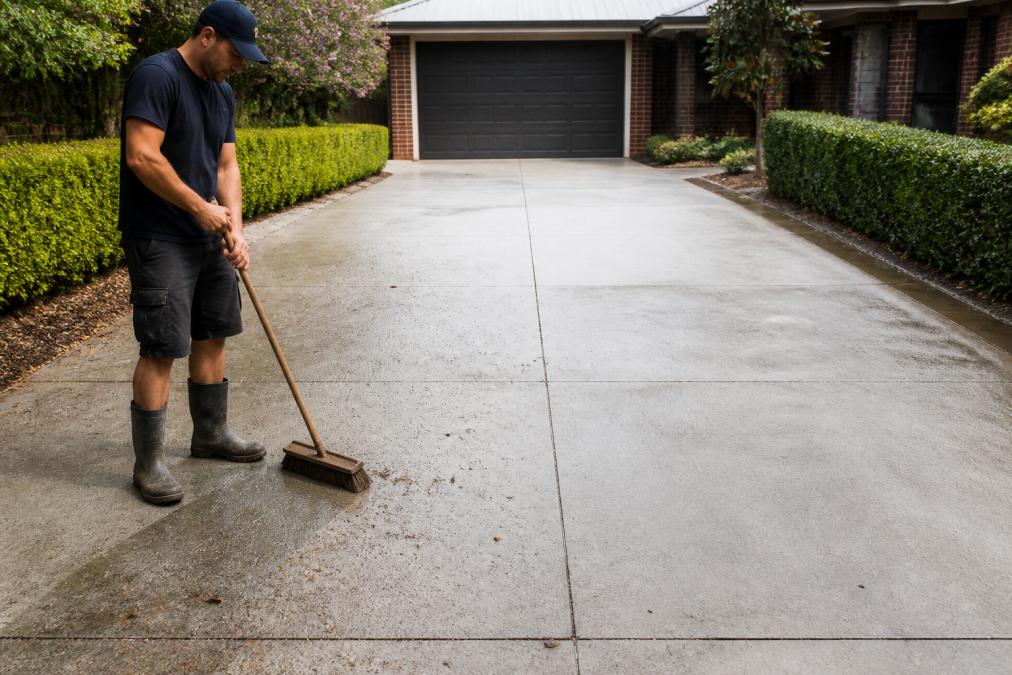
- Sweep hardstand and pathways so debris does not wash into drains.
- Remove cobwebs with a soft brush on an extension pole.
- Scrape loose paint, flaking render and heavy build-up by hand.
- Pull weeds from expansion joints and paver gaps.
For older buildings, check for lead paint before you scrape or sand. Dry scraping and dry sanding of lead paint release inhalable particles, so those surfaces need wet methods or specialist controls. Guidance on this sits with Safe Work Australia's hazardous chemicals guidance.
Step 3: Set Up Safe Access and Environmental Controls
Safety and environmental planning happen before the first hose is connected. Both are cheap to set up and expensive to get wrong.
For access:
- Use water-fed poles or elevated platforms for high windows and upper walls
- Set up exclusion zones with cones and signage around work areas
- Check for overhead power lines before raising any pole or platform
- Brief the team on working-at-height rules for the site
For environmental control:
- Divert runoff away from stormwater drains where possible
- Block drains with mats or berms before washing greasy or chemical-treated areas
- Use bunded areas for mixing cleaning solutions
- Never let wastewater flow into garden beds or waterways
In most areas, trade waste and stormwater rules sit with the local council, so confirm requirements before the job starts. The Australian Government's environment and water portal outlines national guidance on protecting waterways from runoff.
Step 4: Commercial Building Pressure Washing by Surface
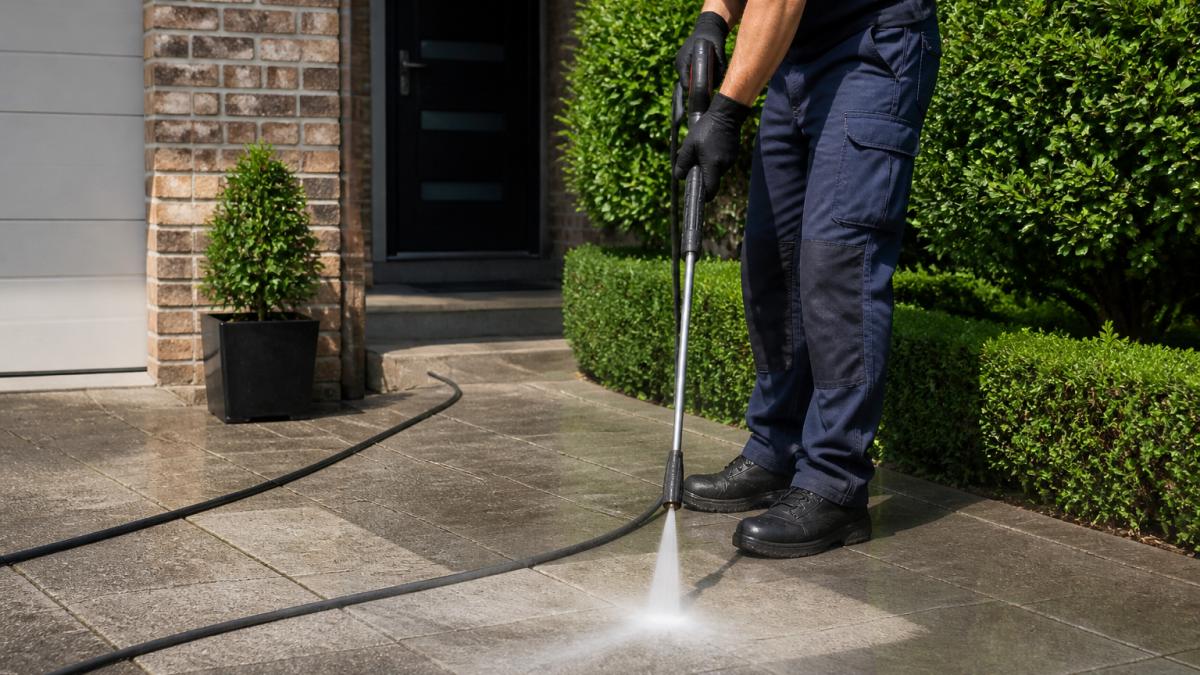
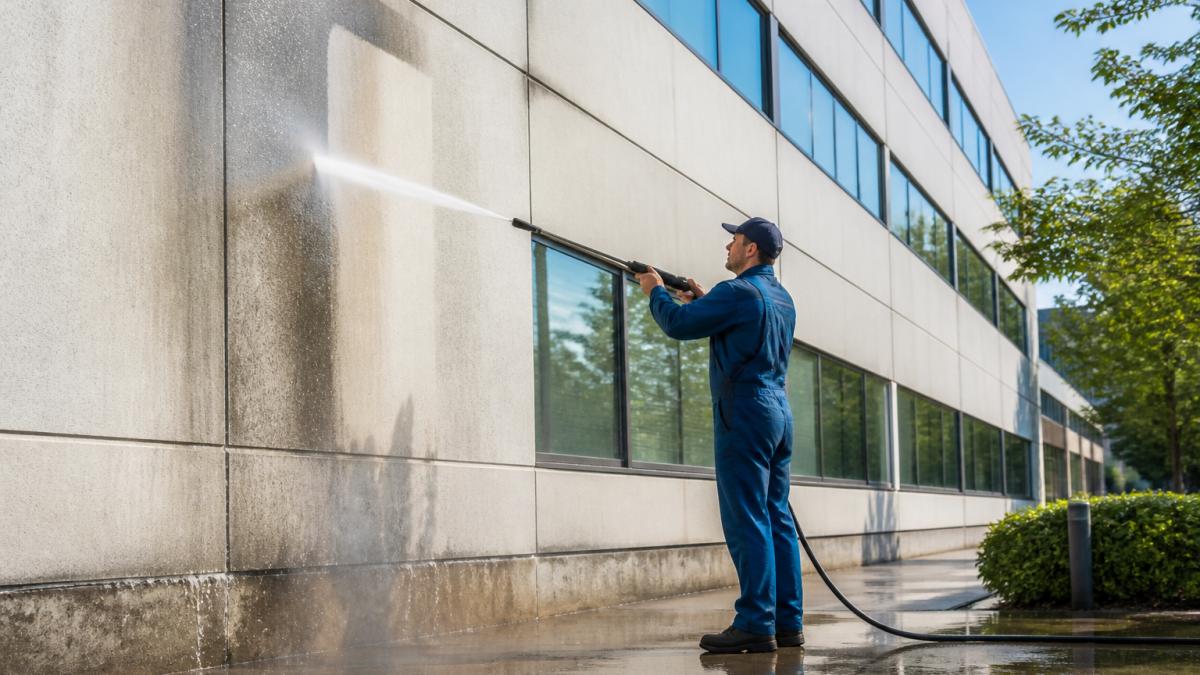
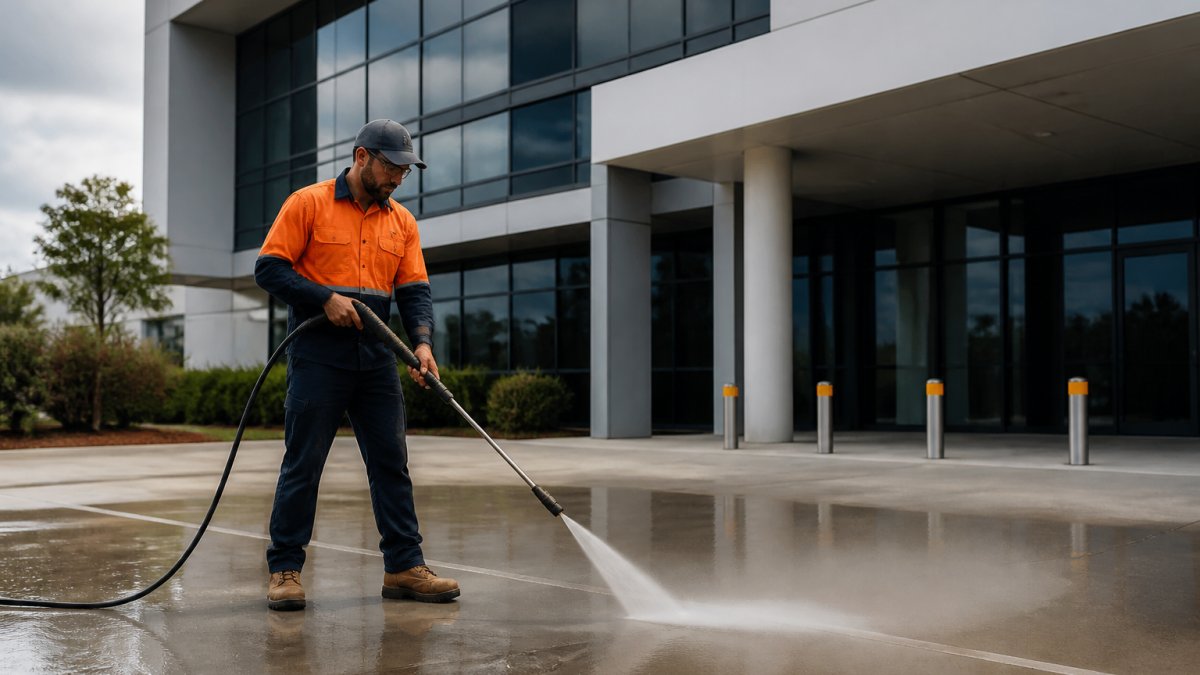
Commercial building pressure washing is not one setting for the whole building. Each surface has a pressure limit, and exceeding it causes damage that costs more to fix than the clean itself.
Use this as a starting framework, then adjust for age, porosity and existing damage:
| Surface | Pressure at nozzle | Nozzle / tool | Key risk |
|---|---|---|---|
| Concrete (sound, unpainted) | 100-200 bar | Rotary surface cleaner or 25° fan | Etching and joint erosion at high pressure |
| Pavers | 80-120 bar | 25° fan, keep tip 300 mm off the surface | Joint sand washout, surface pitting |
| Painted render | 30-60 bar | 40° fan, wide angle | Paint lifting, water ingress behind the film |
| Timber cladding | 30-50 bar | 40° fan, with the grain | Grain raising, splintering, finish stripping |
| Metal cladding and panels | 30-60 bar | 40° fan, never at seals | Seal failure, water behind panels, coating damage |
| Glass and curtain wall | No direct pressure | Water-fed pole with purified water | Seal damage, glass etching, frame distortion |
| Masonry and brick | 60-100 bar | 25° fan, keep moving | Mortar erosion, spalling, water penetration |
A few mechanisms worth understanding before you pick up the lance:
- Standoff distance matters as much as pressure. Doubling the distance from the nozzle roughly quarters the impact force on the surface. A 100 bar machine held 500 mm away can be gentler than a 50 bar machine held 100 mm away.
- Dwell time beats brute force on organic growth. Apply a diluted sodium hypochlorite solution (commonly 1-2% available chlorine for general exterior work, stronger for heavy mould), let it dwell 5-10 minutes, then rinse at low pressure. This kills the organism rather than blasting the surface.
- Pre-soak surrounding surfaces. Wet down adjacent paint, glass and garden beds before you start, and keep them wet during the wash. Overspray drift carries detergent and hard water onto surfaces you are not cleaning.
- Work top to bottom, and rinse as you go. Dirty water running down a cleaned wall below leaves streaks that set as the water evaporates.
Start with the lowest pressure that shifts the dirt, then increase only if needed. Test a small hidden patch first, a 300 mm square behind a downpipe or in a service alcove is ideal. This is where most DIY jobs go wrong: too much pressure, too close, and the surface is scarred before anyone notices.
Step 5: How to Clean Commercial Pavers, Concrete and Hardstand
Learning how to clean commercial pavers means understanding that joints, not surfaces, are the real problem. Weeds, moss and grime live in the gaps, and they return fast if the joints are ignored.
The sequence:
- Pre-treat oil and grease with a degreaser and let it dwell.
- Apply a diluted bleach solution to moss and algae, then rinse.
- Pressure clean with a surface cleaner in overlapping passes.
- Re-sand joints once the surface is dry.
- Treat stubborn stains individually.
For stain diagnosis, match the treatment to the cause:
| Stain | Treatment | Watch Out For |
|---|---|---|
| Oil and grease | Degreaser, then rinse | Runoff into drains |
| Rust | Oxalic acid spot treatment | Etching on polished concrete |
| Moss and algae | Diluted bleach solution | Plant and garden damage |
| Chewing gum | Steam or specialist removal | Surface scorching |
| Graffiti | Specialist removal agent | Ghosting on porous surfaces |
A mild dish soap and warm water mix handles light grime on most hardstand. Save the stronger products for the stains that need them.
Step 6: Commercial Window Cleaning and High Glass
Commercial window cleaning splits into two jobs: ground-level glass and high glass. They need different tools and different safety planning.
For ground-level windows, a squeegee, bucket and lint-free towels still deliver the cleanest finish. Work in a figure-eight pattern and finish each pane with a dry blade.
High windows and curtain-wall glass call for water-fed poles. These reach upper floors from the ground, which removes the need for ladders or platforms on most buildings. The pole feeds purified water, so the glass dries spot-free without a squeegee pass.
A few rules that save rework:
- Clean glass on an overcast day, not in direct sun
- Never pressure wash glass directly
- Check seals and frames for damage before you start
- Work top to bottom so drips do not streak clean panes
Step 7: Inspect, Sign Off and Set a Maintenance Schedule
Inspection closes the job and sets up the next one. A walk-through with the client, checklist in hand, catches misses before they become complaints.
Pre-clean inspection and spot test
Before work starts, inspect each zone for existing damage: cracked render, failed sealant, rust bleeds, efflorescence, previous pressure damage, and loose fixings. Photograph and note these.
Post-clean inspection criteria
Check each zone against the original scope, using these pass/fail criteria rather than a vague 'looks clean' judgement:
- No visible organic growth (mould, algae, lichen) remaining on any surface
- No detergent residue, surfaces should not feel slick or leave a white film when dry
- No new damage to paint, seals, joints, mortar or fixings compared with the pre-clean photos
- Joints re-sanded and level on paved areas
- Drains clear, runoff contained, no staining on adjacent surfaces
- Before-and-after photos taken for each zone
- Client sign-off recorded against the scope
If a surface fails any criterion, document it and agree a remedy before leaving site.
Setting the maintenance schedule
Frequency depends on soiling rate, exposure and how visible the surface is. Use the table below as a starting point, then adjust based on what you actually observe on site:
| Building Type | Suggested Frequency | Main Driver |
|---|---|---|
| Retail and hospitality | Quarterly | Customer-facing appearance, food and grease soiling |
| Office buildings | Twice yearly | Glass, entry areas, atmospheric grime |
| Industrial sites | Monthly to quarterly | Dust, oil, exhaust, process fallout |
| Heritage or painted facades | Annually | Gentle methods only, coating preservation |
| Coastal or high-exposure sites | Every 2-3 months | Salt spray, wind-driven grime, faster biological growth |
High-traffic entries and glass may need monthly attention even when the wider building is on a longer cycle.
Cost planning factors
Exterior cleaning costs vary widely with access, surface mix and soiling level. The main cost drivers to scope for are:
- Access method, ground-level work with water-fed poles is the cheapest per square metre; elevated platforms, boom lifts and rope access add significant cost and lead time.
- Surface mix, glass and metal are quick; porous masonry, timber and heavily stained concrete take longer and use more chemistry.
- Soiling severity, a first clean on a neglected facade can take two to three times longer than a routine maintenance clean.
- Water and waste management, bunding, drain blocking and wastewater capture add setup time and equipment.
- Site constraints, public access, parking, trading hours and noise restrictions can force out-of-hours work at premium rates.
Get a written scope that lists surfaces, methods, access, frequency and exclusions. That document is what protects both the contractor and the building owner when expectations differ.
Frequently Asked Questions
What equipment is needed to clean a commercial building exterior?
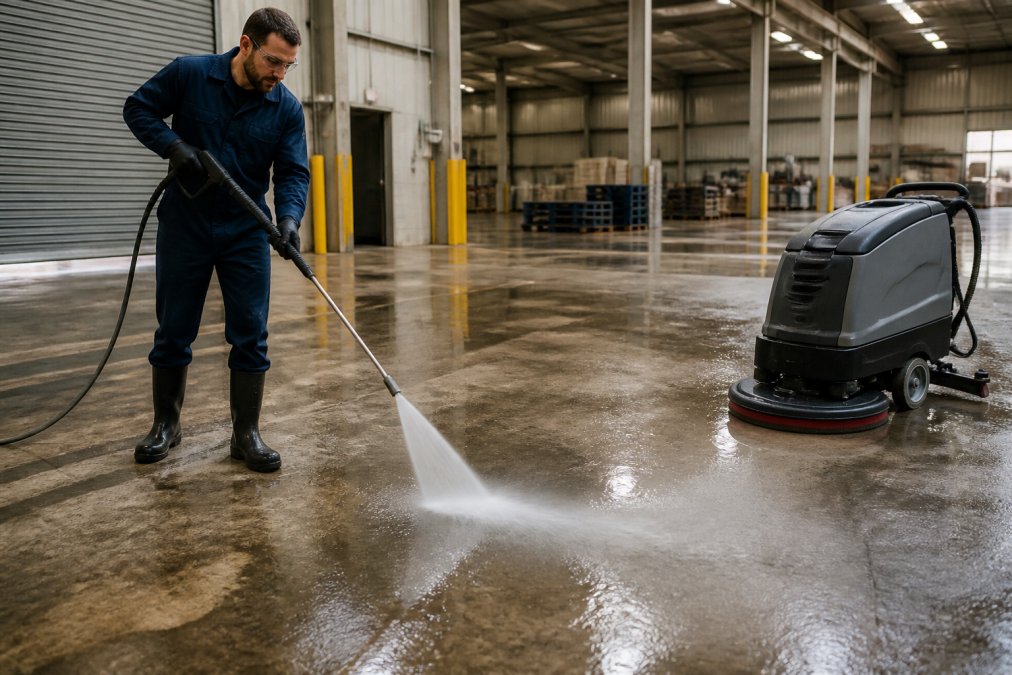
A typical kit includes a pressure washer with adjustable nozzles, a water-fed pole for high windows, squeegees, buckets, soft brushes, a degreaser, and a diluted bleach solution for mould. You will also need barricades, cones, and bunding for wastewater. For large hardstand areas, an auto floor scrubber saves time. Always match the tool to the surface: soft brushes for painted render, stiffer bristles for concrete, and low pressure for timber or older masonry.
Can you pressure wash every type of commercial exterior surface?
No. Pressure washing suits concrete, pavers, and most masonry, but it can damage soft timber, loose render, deteriorated mortar, and some cladding. Lead paint on older buildings is a particular risk: dry scraping or dry sanding releases inhalable particles, so wet methods and containment are safer. Always test a small area first and drop the pressure for delicate surfaces. If in doubt, use a soft-wash approach with a degreaser and brush instead.
How often should commercial building exteriors be cleaned?
Most commercial properties benefit from a full exterior clean every six to twelve months, with high-traffic entries and glass cleaned more often. Buildings near main roads, industrial areas, or coastal salt spray need quarterly attention. Set a maintenance schedule that covers windows monthly, pressure washing twice a year, and gutter and paver checks each season. A written schedule keeps the facade presentable and makes budgeting predictable.
How do you remove dirt and stains from commercial concrete and pavers?
Start by identifying the stain. Oil and grease respond to a degreaser, mould and algae to a diluted bleach solution, and rust to a dedicated acid-free remover. Apply the product, let it dwell, scrub with a stiff brush, then rinse. For commercial pavers, use a fan-tip nozzle at a 30 to 45 degree angle and keep the wand moving to avoid stripes. Re-sand joints after cleaning if they have washed out.