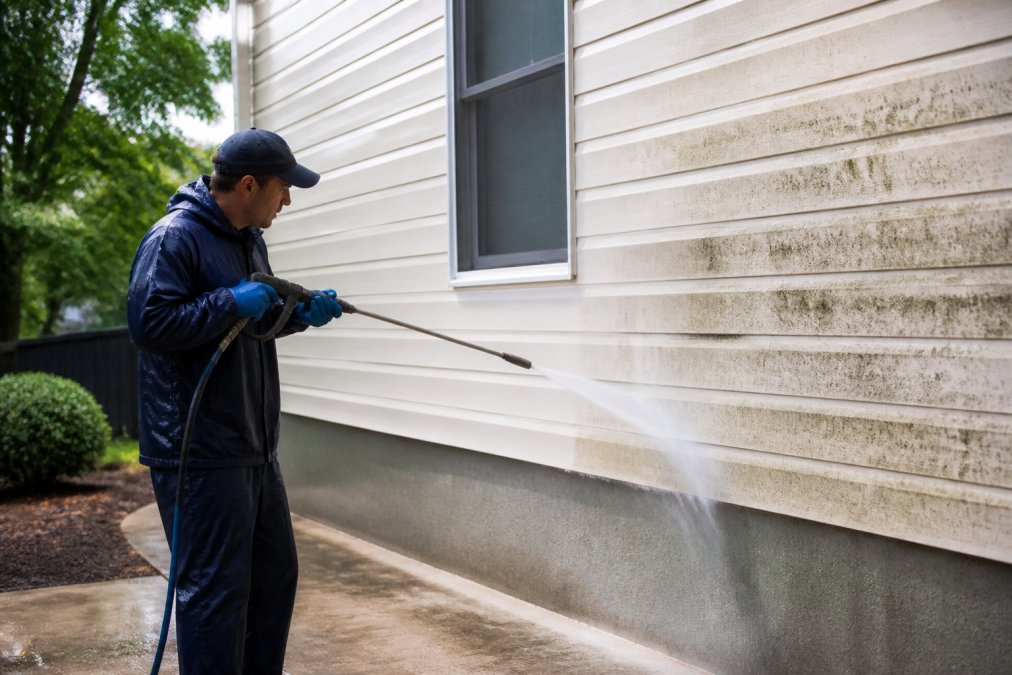
 listicle
Why Regular Building Exterior Cleaning Prevents Damage
Table of Contents
- How Contaminants Cause Premature Degradation
- Exterior Cleaning Prevents Damage to Structural Integrity
- How Often to Clean Building Exterior for Maximum Protection
- Benefits of Pressure Washing Commercial Buildings
- Commercial Exterior Maintenance Plans: A Cost-Effective Strategy
- Material-Specific Exterior Cleaning Protocols
- Conclusion
- Frequently Asked Questions
Last Updated: September 20, 2026
How Contaminants Cause Premature Degradation
Regular building exterior cleaning prevents damage because contaminants break down surfaces slowly, and by the time harm is visible, the repair bill is locked in. A facade that looks "a bit dirty" is usually already losing its surface. Understanding why regular building exterior cleaning prevents damage starts with knowing what is eating your building.
Every exterior surface collects a film of contaminants within weeks. That film is not cosmetic: it holds moisture, feeds organic growth, and attacks the material underneath.
Organic Growth and Moisture Traps
Mould, algae, lichen and moss are the most patient destroyers of a building envelope. They establish in shaded, damp areas, then spread root-like structures into porous surfaces such as render, concrete and timber.
Once established, organic growth traps moisture against the surface, driving corrosion on fixings, softening mortar, and rotting timber from the outside in. Removing growth early is far cheaper than repairing what it has eaten into.
Pollutants and Surface Oxidation
Airborne pollutants settle on every vertical surface. Traffic film, dirt, pollen and debris build up in a layer that holds water and mildly acidic compounds against the facade.
That contact accelerates surface oxidation: metals dull and pit, painted finishes chalk and fail, and sealants break down years early. Washing removes pollutants before they bond permanently.
Exterior Cleaning Prevents Damage to Structural Integrity
Exterior cleaning prevents damage to structural integrity by removing the moisture-holding layer that drives corrosion, rot and mortar failure. A building's structure rarely fails from one event. It fails from years of small, invisible water exposure.
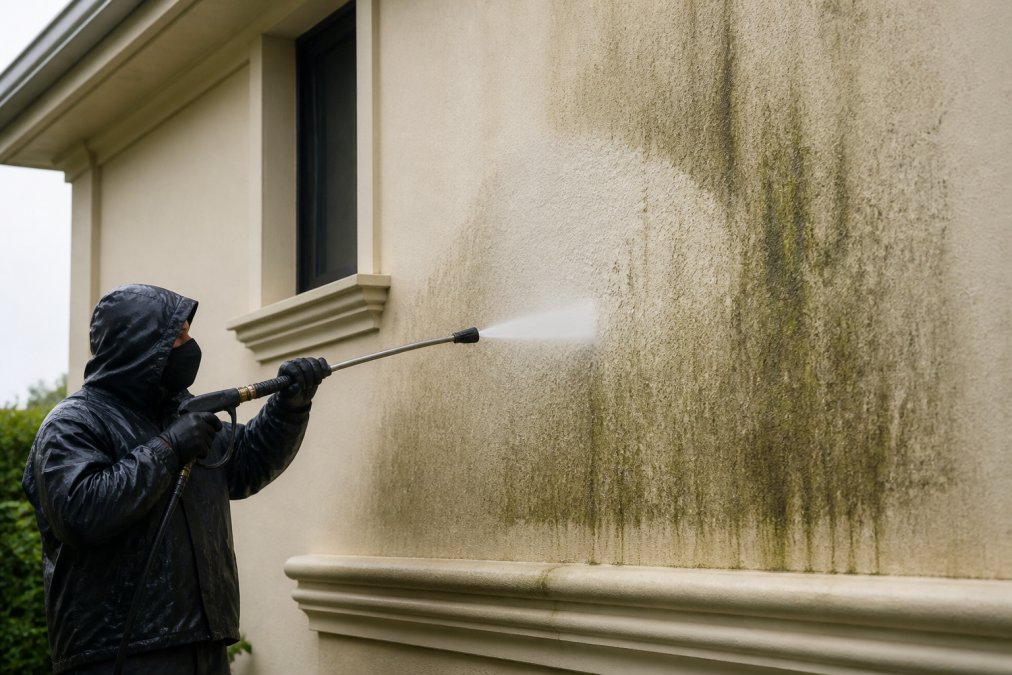
Water is the enemy here, and dirt is water's best friend. Contaminants act like a sponge, holding moisture against surfaces long after rain stops, and that extended contact drives premature degradation of building materials.
Cleaning also restores the building's ability to shed water: clean render and coatings dry faster and resist moisture penetration far better.
Early Warning Signs You Should Not Ignore
- Dark streaks or green film on north- and south-facing walls
- Chalky residue on painted or rendered surfaces
- Rust staining around fixings, brackets and window frames
- Soft, spongy or discoloured timber on decks and pergolas
- Blistering or flaking paint on external walls
- Persistent damp smells inside near external walls
Any of these signals means moisture is already doing damage. Acting at the first sign keeps a cleaning job from becoming a restoration project.
How Often to Clean Building Exterior for Maximum Protection
Most buildings need exterior cleaning every 6 to 12 months, with high-exposure or high-traffic properties cleaned more often. There is no single correct number, because exposure, material and environment all change the answer.
As a working guide:
- Residential homes in suburban settings: once a year
- Homes near main roads, trees or water: every 6 to 9 months
- Commercial and retail premises: every 3 to 6 months
- Industrial sites with heavy fallout: quarterly or as needed
The honest answer is that "how often to clean building exterior" depends on what is landing on the building. A property under trees needs more frequent attention than an exposed, open site.
Seasonal Maintenance Schedules That Work
A seasonal schedule spreads work sensibly across the year instead of reacting to problems.
| Season | Focus Area | Why It Matters |
|---|---|---|
| Spring | Full exterior wash, gutters, decks | Clears winter grime and pollen before growth takes hold |
| Summer | High-traffic areas, signage, entrances | Manages dust and keeps presentation sharp |
| Autumn | Roofs, gutters, shaded walls | Removes fallen organic material before it traps moisture |
| Winter | Mould-prone walls, sheltered areas | Targets damp zones where growth thrives |
Building this into a calendar turns cleaning from an emergency into routine preventative maintenance.
Benefits of Pressure Washing Commercial Buildings
The benefits of pressure washing commercial buildings go well beyond appearance. For property managers, the financial and compliance case usually decides it, and that case is strongest when the method is matched to the surface rather than applied as a one-setting-fits-all wash.
Pressure washing removes embedded grime in a fraction of the time hand scrubbing takes and reaches surfaces manual methods cannot clean properly. For car parks, loading docks and long facades, it is the only practical option. The real value shows up in four areas that matter to asset owners.
Compliance and duty of care. Under work health and safety legislation harmonised across states and territories, a person conducting a business or undertaking must manage risks to health and safety so far as is reasonably practicable.
Matching Pressure to Surface
- Concrete and pavers: tolerate higher pressure and are suited to rotary surface cleaners for even coverage on driveways, loading docks and car parks.
- Render and masonry: porous and easily damaged by too much pressure or a bad angle; soft washing with low pressure and appropriate detergent is usually safer.
- Timber: needs low pressure, a fan nozzle and often a soft wash approach to avoid raising the grain or forcing water into boards.
- Metal and painted steel: requires reduced pressure and attention to fixings, because water driven into joints accelerates corrosion.
- Glass and aluminium: best handled with purified water and a soft wash to avoid scratching and seal degradation.
For commercial property management, a clean building also reduces complaints, protects tenant relationships, and avoids the slow reputational cost of a neglected facade. Specify the method per surface in the cleaning scope, not just the frequency.
Commercial Exterior Maintenance Plans: A Cost-Effective Strategy
Commercial exterior maintenance plans are scheduled cleaning programs that keep a property consistently clean instead of relying on one-off washes. They are the most cost-effective way to protect a building's value, converting unpredictable repair costs into a predictable operating expense.
A good plan typically includes:
- A fixed cleaning frequency matched to the property's exposure
- Surface-specific methods for each material on site
- Graffiti response built in, not billed as a surprise
- Documentation of each visit for asset records
- Adjustments after severe weather or one-off events
A Practical ROI Framework for Preventative Cleaning
Most property managers are shown a cleaning quote and a repair quote separately, which makes the comparison feel abstract. A simple framework fixes that. You do not need precise figures, and you should treat the output only as a way to compare options on the same basis.
- Re-rendering or patching a section of facade
- Repainting a full elevation
- Replacing rotted timber on decks, pergolas or window reveals
- Treating and repainting corroded steel fixings and brackets
- Resealing expansion joints and window perimeters
- Replacing failed sealant or waterproofing membranes
What to Put in the Scope
To make the ROI framework meaningful, the plan needs to specify more than frequency. A useful scope names the surfaces, the method for each, access requirements, runoff controls, and the reporting format. It should also state how the schedule flexes after storms, bushfire smoke or nearby construction, because those change the contaminant load and can justify an extra visit.
Material-Specific Exterior Cleaning Protocols
Different materials fail in different ways, so they need different cleaning protocols. Blasting everything at maximum pressure destroys surfaces.
Environmental Impact of Cleaning Agents
What runs off a building matters. Cleaning agents, dissolved grime and organic matter flow into stormwater systems, so responsible cleaning uses the least aggressive method that does the job.
A few principles guide this:
- Use biodegradable, low-toxicity detergents where detergents are needed
- Avoid chlorine-heavy mixes near gardens and waterways
- Contain and manage runoff where possible
- Choose soft washing over high pressure when it achieves the same result
- Protect plants and drains before starting work
Conclusion
Left alone, dirt, moisture and organic growth quietly cost far more than any cleaning bill. Damage builds slowly, then shows up at once as rot, corrosion and failed coatings.
Frequently Asked Questions
What is the 20 minute rule of cleaning?
The 20 minute rule suggests that after applying a cleaning solution to a surface, you should allow it to dwell for about 20 minutes before rinsing. This gives the product time to break down grime, mould, and algae without drying out. For exterior cleaning, this rule helps ensure effective removal without damaging the surface. Always follow the manufacturer's instructions, as dwell times vary by product and material.
How often should you clean outside of a house?
Most homes benefit from a full exterior clean every 12 to 18 months. However, properties in coastal or heavily treed areas may need cleaning every 6 to 9 months due to salt spray, pollen, and organic debris. Regular exterior cleaning prevents the buildup of contaminants that can lead to premature degradation. A professional can assess your specific situation and recommend a schedule.
How does regular exterior cleaning extend the lifespan of building materials?
Regular exterior cleaning removes abrasive contaminants like sand, dirt, and pollutants that can scratch and erode surfaces over time. It also eliminates organic growth such as mould and algae, which hold moisture against materials and cause rot or corrosion. By keeping surfaces clean, you allow them to dry properly and maintain their protective coatings, significantly extending their usable life.
What are the long-term financial benefits of a preventative maintenance schedule?
A preventative maintenance schedule reduces the need for costly repairs and premature replacement of building materials. It also protects property value by maintaining curb appeal and avoiding visible damage. For commercial properties, regular cleaning supports a professional image and can lower long-term asset protection costs. While pricing depends on the scope and frequency, the investment typically pays for itself by avoiding major restoration work.