 listicle
9 Signs Your House Needs Professional Pressure Washing
Last Updated: November 4, 2026
Quick Summary
Your house likely needs professional pressure washing if you see mould or mildew patches, green, black or grey streaks on siding, slippery paths, or chalky or peeling paint. Most exterior surfaces benefit from a professional clean about once a year, with shaded or coastal homes often needing it more often. The right method depends on the surface, since soft washing suits painted render and timber while pressure washing suits hard paving.
- Walk the perimeter in the morning, when dew makes mould growth easier to spot.
- Green streaks are usually algae or moss, while black streaks mix algae, mould and pollution.
- Choose soft washing for painted render, weatherboard, roof tiles and older timber.
- Clear gutters and downpipes before cleaning, so runoff does not re-stain clean walls.
- Most exterior surfaces benefit from a professional clean once a year.
Table of Contents
- Visible Mould and Mildew Growth on Your Exterior
- Green, Black or Grey Streaks Running Down Your Siding
- Slippery Driveways, Paths and Patios You Can't Trust in Wet Weather
- Faded, Chalky or Peeling Paint and Clogged Gutters
- Pressure Washing vs Soft Washing: Which Does Your Surface Need?
- How Often to Pressure Wash a House and What It Costs to Plan For
- Preparing Your House for Professional Pressure Washing
- Booking Your Professional Exterior Clean with AquaBlast Elite
- Frequently Asked Questions
The exterior of a home often looks tired long before anything structural goes wrong. Professional pressure washing restores surfaces, removes grime, and protects paint and timber, but only when you know what to look for. Below are nine signs that your house is due for a proper exterior clean, along with the steps you can take today and when to call in a professional.
Visible Mould and Mildew Growth on Your Exterior
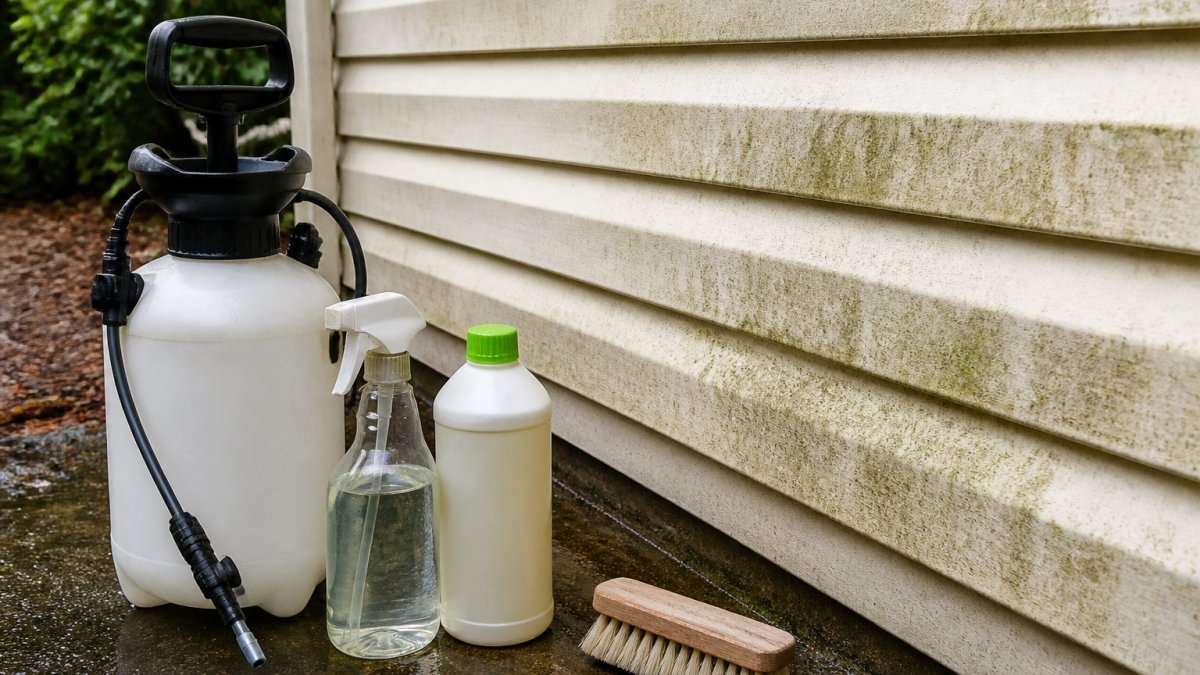
Mould and mildew appear as dark green, black, or grey patches, usually on shaded walls, near the base of the house, or under eaves where moisture sits longest. Left alone, they feed on dirt and organic matter and can spread across render, brick, and timber.
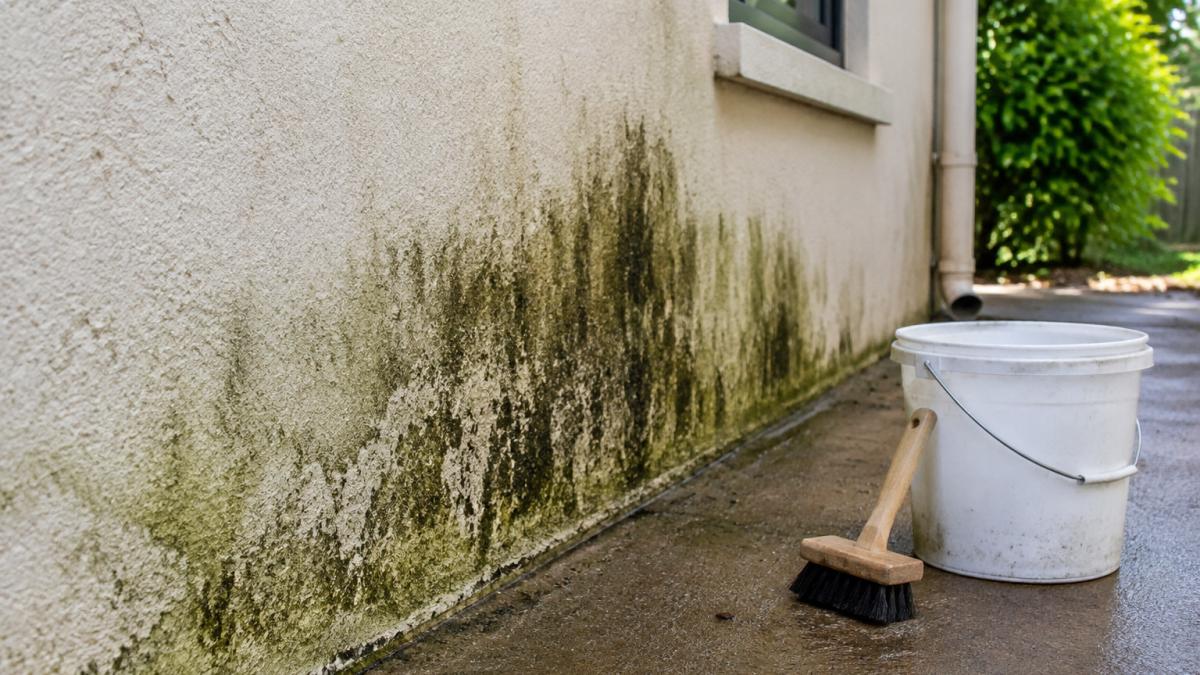
!Close-up of a rendered Sydney house wall with dark green mould and mildew patches near the base, a bucket and brush resting on the ground
How to check: Walk the perimeter of your home in the morning, when dew makes growth easier to spot. Look at north- and south-facing walls and any area that rarely gets direct sun.
Scrubbing mould with household bleach alone often removes only surface staining, and growth can return. Our guide to preventing mould regrowth on exterior walls explains how to keep it from coming back after cleaning. Cleaning with the correct detergent and pressure setting for the surface is the more reliable approach.
Green, Black or Grey Streaks Running Down Your Siding
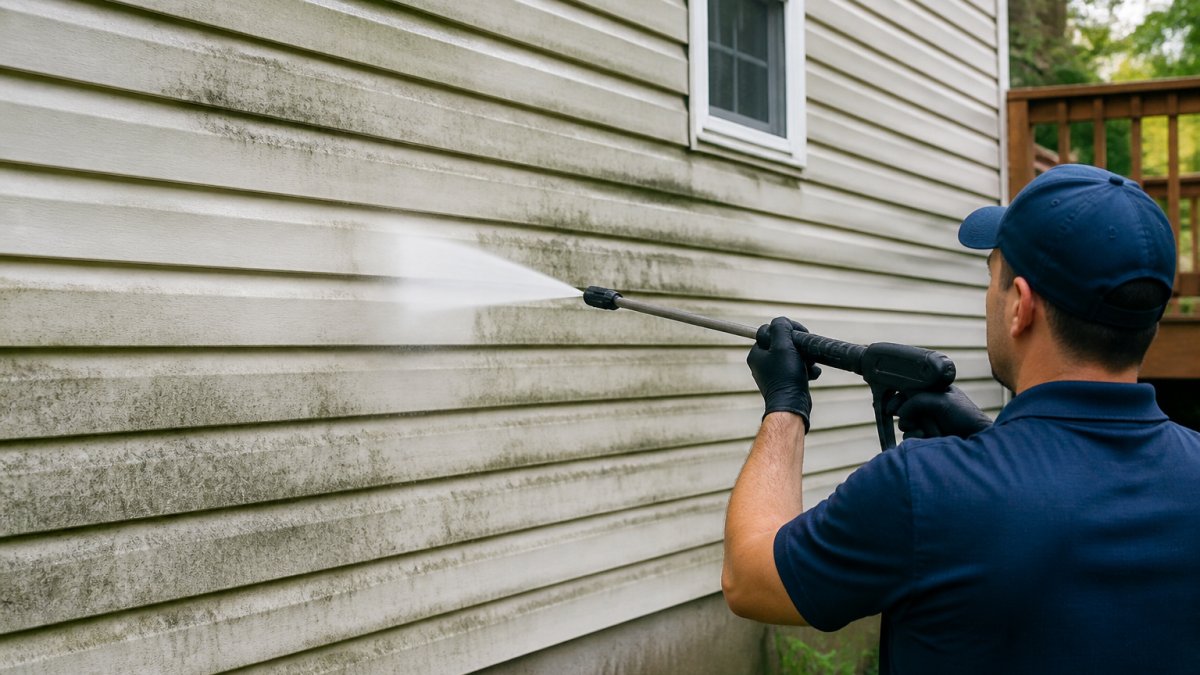
Streaks usually follow the path of rainwater. Algae, dust, and airborne pollutants collect on the surface, and each rainfall carries them further down the wall, leaving distinct lines. The colour of the streak tells you what you are dealing with: green streaks are almost always algae or moss feeding on moisture and organic matter; black streaks are typically a mix of algae, mould, and carbon-based pollution bonded to the surface; grey or brown streaks often indicate dirt and oxidised paint residue being washed down from higher up.
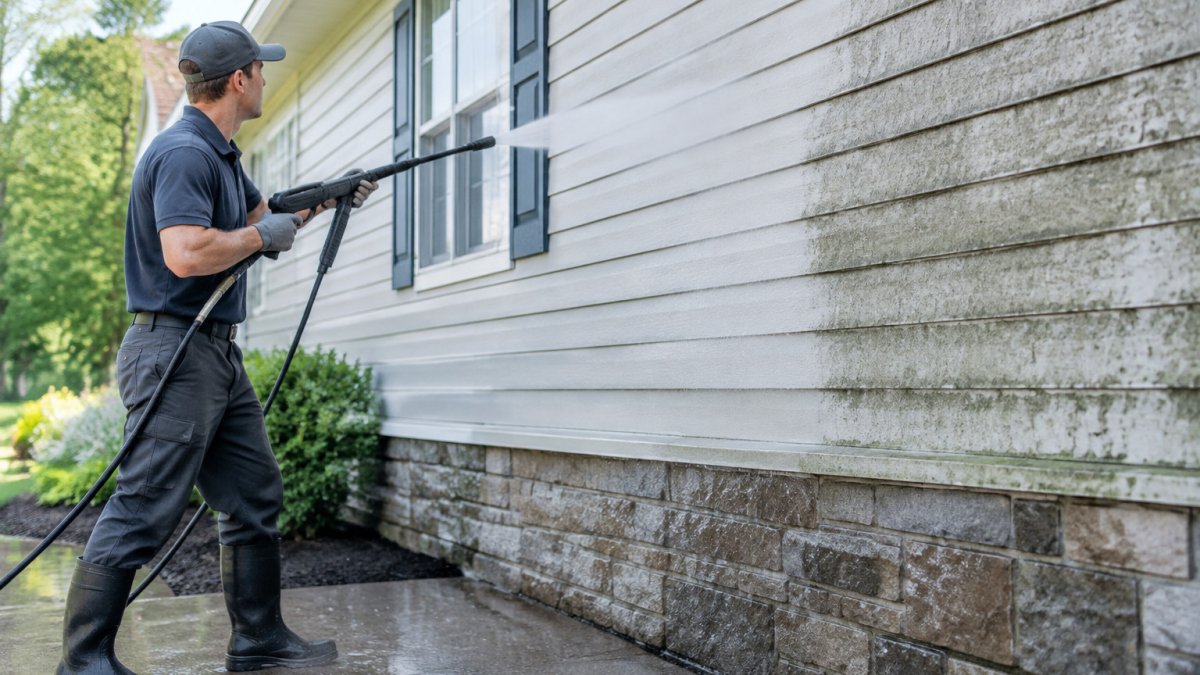
Streaks are harder to remove over time because the residue bonds with the surface. Early cleaning is cheaper and gentler than waiting until the staining has set. On painted render and weatherboard, the bonding process is accelerated by chalky oxidised paint, which acts like a primer for algae. On brick and concrete, the porosity gives algae a foothold that a simple hose-down cannot dislodge.
A common DIY mistake is to attack streaks with a high-pressure jet held close to the wall, which can strip paint, etch render, and force water behind cladding. The correct approach depends on the surface: soft washing with a suitable detergent is generally used for painted walls, render, and timber, while a controlled pressure wash suits hard brick and concrete. Treating the wall from the bottom up, then rinsing from the top down, helps prevent dirty runoff from re-staining clean sections.
Watch out: if streaks reappear in the same pattern after cleaning, the source is often above the visible staining, check gutters, downpipes, and roof valleys before booking a second clean.
Slippery Driveways, Paths and Patios You Can't Trust in Wet Weather
Algae and moss turn concrete, pavers, and paths slippery, particularly in shaded areas and along downpipes. If a surface feels slick underfoot after rain, it is a safety issue as much as an appearance one.
Watch out: do not use a high-pressure nozzle close to pavers or loose jointing sand, as it can dislodge the joints and damage the surface. Surface-specific pressure settings matter here, which is why this job is worth handing to people who work with them daily.
Faded, Chalky or Peeling Paint and Clogged Gutters
Chalky residue on painted surfaces is often oxidation that a rub of your hand will reveal. Peeling paint can trap moisture, which then feeds mould beneath the surface. Clogged gutters and downpipes send water down the wall, so the streaking and staining above are often a gutter problem, not a siding one.
Clear leaves and debris from gutters before cleaning the walls, so that runoff does not carry grime back onto freshly cleaned surfaces.
Pressure Washing vs Soft Washing: Which Does Your Surface Need?
High pressure is not right for every surface. Pressure washing uses a focused jet of water and suits concrete, driveways, and hard, durable surfaces. Soft washing uses low pressure with a dedicated cleaning solution and is generally suited to painted render, weatherboard, roof tiles, and older timber.
Choosing the wrong method can strip paint, raise timber grain, or force water behind cladding. A combination of soft washing for walls and roofs and pressure washing for hard paving is often used.
How Often to Pressure Wash a House and What It Costs to Plan For
Many exterior surfaces benefit from a professional clean once a year, with homes in shaded or coastal areas often needing it more frequently. The right frequency depends less on the calendar than on the surface and its exposure:
Homes near the coast can accumulate salt spray and wind-driven sand more quickly, which can increase how often cleaning is needed. Compare with our guide to how often to pressure clean a driveway in Sydney if you are planning cleaning frequency across your property.
Pricing depends on factors such as property size, surface type, access, and the level of soiling. For a current quote, contact AquaBlast Elite directly. You can also review the local Sydney pricing guide for professional pressure washing to plan your budget.
If you are planning a clean before painting, rendering, or sealing, allow the surface to dry fully first, as moisture can affect the finish.
The right cleaning frequency depends on the surface and its exposure, as summarised below.
| Surface or situation | Suggested frequency | Note |
|---|---|---|
| Exterior surfaces in general | Once a year | Shaded or coastal homes often need it more often |
| Homes near the coast | More frequent cleaning | Salt spray and wind-driven sand build up faster |
| Before painting, rendering or sealing | Clean first | Allow the surface to dry fully before finishing |
| Pricing | Varies | Depends on size, surface type, access and soiling |
Preparing Your House for Professional Pressure Washing
Preparation can help the clean go smoothly:
- Move vehicles, outdoor furniture, and pot plants away from the walls.
- Close windows and doors, and cover power points and outdoor electrical fittings.
- Remove loose items from gutters and check for cracked or loose render.
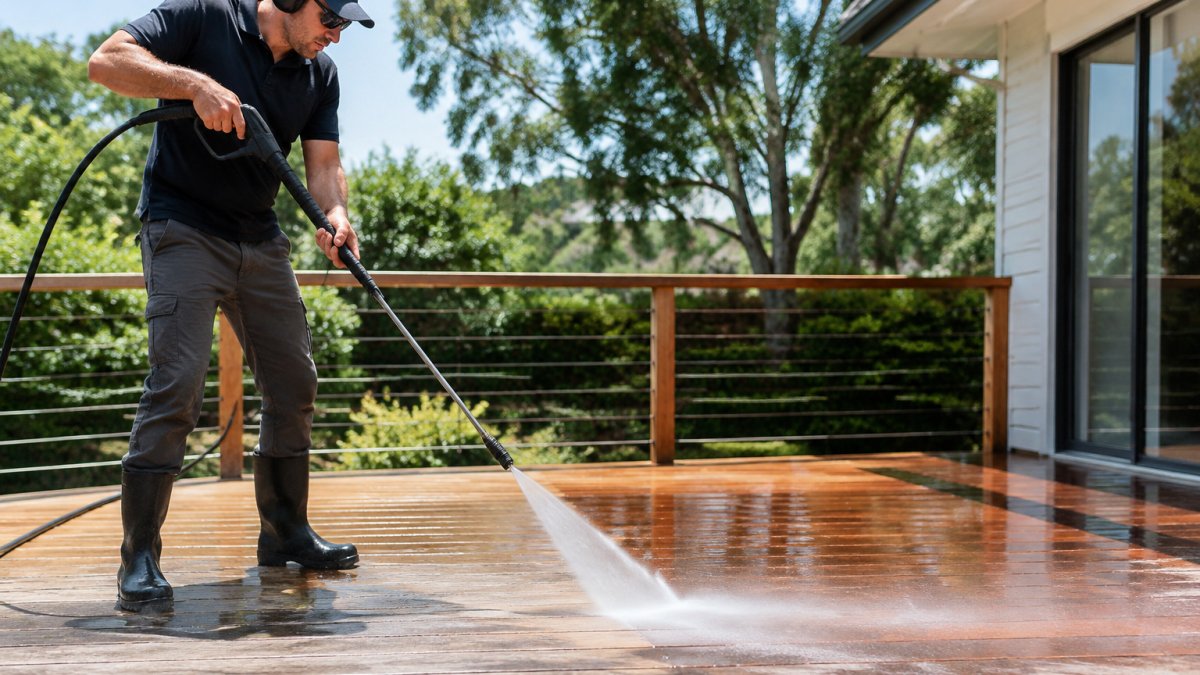
- Tell your cleaner about any delicate surfaces, such as an older timber deck.
If you have a timber deck you are worried about, our guide to safe pressure washing for old decks explains the right pressure and nozzle choices. For cladding, see our guide to safe pressure washing for residential siding before the job begins.
Booking Your Professional Exterior Clean with AquaBlast Elite
If you have spotted two or more of the signs above, your home is likely due for a professional clean. AquaBlast Elite provides high-pressure cleaning across Sydney and its surrounds. To discuss your property and get a quote, reach out to our team today, and the team can discuss the right approach for your property.
Frequently Asked Questions
How do I know if my house needs pressure washing?
Walk around your home and look for the common signs: visible mould or mildew, green or black streaks on siding, slippery paths, faded or chalky paint, and dirt buildup along the lower walls. If you see several of these at once, or the problems are spreading each season, a professional clean is likely worthwhile. Check the surface after rain too, since algae and grime often show up most clearly when the wall is wet. If you are unsure, contact AquaBlast Elite to discuss your property.
Can pressure washing damage house siding?
It can, if the wrong pressure, nozzle or distance is used. Timber, weatherboard, older paint and some rendered finishes are easily gouged or stripped by high-pressure water held too close. This is why surface-specific settings matter, and why soft washing is often the safer choice for delicate or painted surfaces. Avoid pressure washing loose or flaking paint, electrical fittings and windows.
How often should a house be professionally pressure washed?
Most Sydney homes benefit from a professional exterior clean every one to two years, though shaded or coastal properties with heavy salt and humidity may need attention more often. Driveways and paths in high-traffic areas can need cleaning more frequently. A regular schedule keeps mould and grime from building up into harder-to-remove stains, and it protects paint and sealers. Contact AquaBlast Elite to discuss your property.
Is it better to pressure wash a house yourself or hire a professional?
DIY washing suits light dirt on robust surfaces such as concrete paths. For painted walls, timber, roofs and multi-storey areas, professional equipment and experience usually deliver better results with less risk of damage. Pricing depends on property size, access, surface type and the level of soiling, so request a quote from AquaBlast Elite for an accurate figure.