 listicle
9 Benefits of Professional Timber Deck Pressure Cleaning
Last Updated: November 5, 2026
Quick Summary
Professional timber deck pressure cleaning removes mould, mildew, algae and grey film from the grain while protecting the boards, provided the pressure, nozzle and technique suit the timber's condition. It also reduces slipperiness, evens out the colour, and prepares the deck for oiling or sealing. It cannot repair rot, loose boards or structural damage.
- Correct pressure and nozzle choice reduces the risk of lifting fibres and splintering timber.
- Cleaning removes mould, mildew and algae from the grain, not just the surface.
- Hold the wand at a steady distance and follow the grain, never working across it.
- Let the deck dry fully, often several days, before applying oil or sealer.
- Cleaning does not repair rot, loose boards or structural damage, so fix those first.
Table of Contents
- Is Pressure Cleaning Safe for a Timber Deck?
- Why Professional Timber Deck Pressure Cleaning Outperforms DIY
- How to Clean a Timber Deck Without Damaging the Fibres
- Pressure Washing Deck Risks and How a Professional Avoids Them
- Deck Cleaning vs Sanding: Which Restores Your Timber Better
- Deck Oiling After Cleaning: When and How to Protect the Surface
- Booking Your Professional Deck Clean With AquaBlast Elite
- Frequently Asked Questions
Timber decks take a beating from Australian weather: UV, humidity, salt air in coastal suburbs, and the constant tread of shoes and pets. Over time, grime, mould and algae build up in the grain and make the boards look tired and slippery. The way a deck is cleaned matters as much as whether it is cleaned at all. This guide from AquaBlast Elite explains the real benefits of professional timber deck pressure cleaning, and where the risks lie. For the full process, see the step-by-step guide to cleaning timber decks safely.
Is Pressure Cleaning Safe for a Timber Deck?
Pressure cleaning can be safe for timber, but only when the pressure, nozzle and technique suit the boards. Too much pressure lifts fibres, raises splinters and can leave grooves that hold water and dirt. Many decks are cleaned without damage because the operator checks the timber first and adjusts before cleaning the whole surface.
Why Professional Timber Deck Pressure Cleaning Outperforms DIY
A DIY clean usually fails in one of three ways: the pressure is too high, the nozzle is too narrow, or the cleaner is left to dry on the surface. A professional clean avoids these mistakes because the equipment, settings and cleaning products are matched to the job.
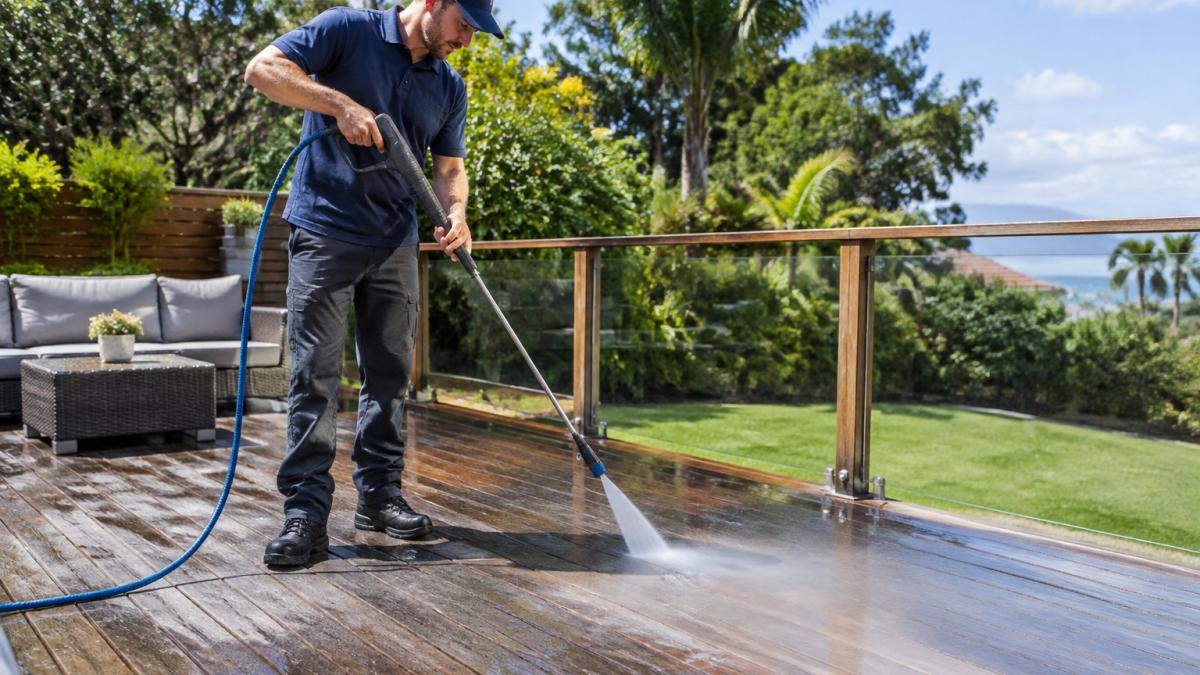
The main benefits of a professional clean generally include:
- Safer timber handling through correct pressure and nozzle choice
- Removal of mould, mildew and algae from the grain, not just the surface
- Even results across the whole deck, with no streaking or stripes
- Better preparation for oiling, staining or sealing
- Slip reduction by removing the organic film that makes boards dangerous when wet
- Improved appearance that brings back the natural colour of weathered timber
- Longer deck life because dirt and moisture are removed before they damage the fibres
- Less time and effort for the homeowner, with no hired equipment to return
- Clear advice on maintenance intervals suited to your deck's exposure
How to Clean a Timber Deck Without Damaging the Fibres
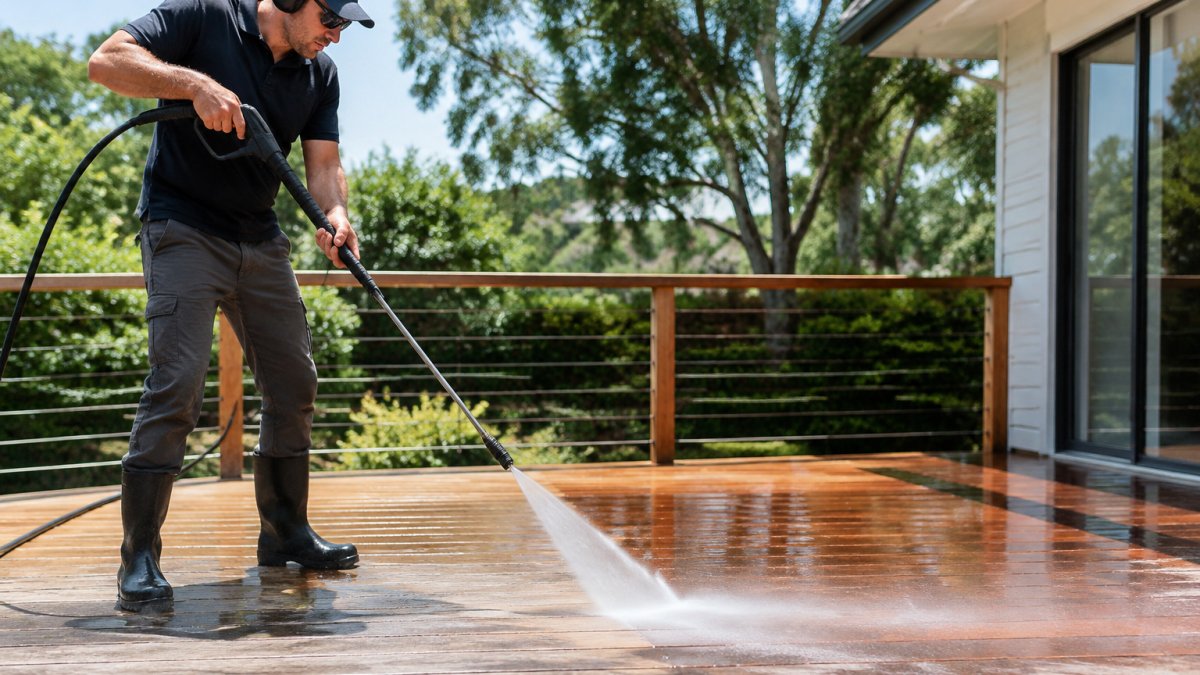
Start by sweeping the deck and removing loose debris, leaves and furniture. Pre-wet the boards with clean water so the cleaner does not soak in unevenly. Apply a timber-safe cleaner, let it dwell for the recommended time, then rinse with controlled pressure from the top of the board downward, following the grain.
Common mistakes include holding the wand too close, working across the grain and letting cleaner dry on the timber. A common mistake is rushing the dwell time, which leaves mould and algae only partly removed.
Pressure, Nozzle and Distance Guidance by Timber Condition
Timber condition decides the settings. A newer, well-sealed deck can handle more pressure than an older, grey and fibrous one. As a general guide, keep the nozzle wide, hold the wand at a steady distance, and reduce pressure whenever the surface starts to fuzz or lift. For detailed settings, see the safe pressure washing guide for old decks.
For weathered decks, a wider fan and greater distance are usually the safer choice.
Timber-Specific Methods by Species and Condition
Different timbers respond differently. Hardwoods such as merbau and spotted gum are dense and handle cleaning well, while softer pine or treated softwood is more prone to fibre damage. Older, sun-bleached boards need gentler methods and often benefit from a cleaner formulated for weathered timber.
The article's cleaning method comes down to a few key steps and common errors to avoid.
| Step or mistake | What to do or avoid | Timing |
|---|---|---|
| Sweep the deck | Remove loose debris, leaves and furniture | Before cleaning |
| Pre-wet the boards | Use clean water so cleaner soaks in evenly | Before cleaner |
| Apply timber-safe cleaner | Let it dwell for the recommended time | Recommended dwell time |
| Rinse with control | Work top of board downward, following the grain | During rinse |
| Rushing dwell time | Leaves mould and algae only partly removed | Avoid |
| Wand too close or across grain | Causes damage; hold steady distance and follow grain | Avoid |
Pressure Washing Deck Risks and How a Professional Avoids Them
The main risks are surface damage, splintering, water getting into joins and fixings, and runoff carrying cleaner into gardens and stormwater drains. Excessive pressure is the most common cause of permanent harm.
Realistic outcomes matter too: a clean removes grime and organic growth well, but it does not replace repairs to rotten or loose boards.
Deck Cleaning vs Sanding: Which Restores Your Timber Better
Cleaning removes dirt, mould and grey surface film. To compare costs, sanding and oiling options, see the Sydney deck restoration guide. Sanding removes a thin layer of timber to expose fresh wood, which is more aggressive and is usually reserved for decks that are heavily weathered or have an old finish flaking off.
For most decks in reasonable condition, cleaning is the right first step. If the boards still look grey or rough after a thorough clean, sanding may be worth considering, but it removes material and should be done carefully.
Deck Oiling After Cleaning: When and How to Protect the Surface
Oil or sealer should go on only once the timber is fully dry, which often means waiting several days after cleaning, depending on the weather. Applying oil to damp timber traps moisture and can cause discolouration.
Once dry, apply a thin, even coat with the grain, wipe off any excess, and allow the recommended drying time. Our guide to preparing a deck for staining and sealing walks through each stage. Re-oiling every one to two years is a common guide for exposed decks, though the right interval depends on sun, rain and foot traffic.
Booking Your Professional Deck Clean With AquaBlast Elite
A professional deck clean is a defined service, not just a pressure rinse. Understanding what is included, what affects the price and what cleaning cannot fix helps you decide whether to book, delay or repair first.
What affects the price. Pricing depends on the size, condition and access of your deck and on whether any additional steps are required. For current prices or a quote, please contact AquaBlast Elite through the website.
What cleaning cannot do. Cleaning removes grime, mould, mildew, algae and surface greyness, but it does not repair rot, loose boards, structural damage, deep stains or failed coatings. If boards are soft, cracked or moving underfoot, repairs or replacement should come before or instead of cleaning. Cleaning is also not a substitute for sanding when the surface fibres are too degraded.
How to prepare and what to ask. Clear the deck of furniture and fragile items, note any loose boards or areas of concern, and ask the provider how they assess timber, what cleaner they use, how they manage runoff and plants, and how long to wait before oiling or sealing. These questions reveal whether the service is timber-specific or a generic pressure wash.
When you book with AquaBlast Elite, we are happy to discuss your deck and arrange a suitable service. Contact AquaBlast Elite through our website to arrange a quote and discuss your deck.
Frequently Asked Questions
Can you pressure clean a timber deck?
Yes, a timber deck can be pressure cleaned safely when the right pressure, nozzle and technique are used. Timber is more vulnerable than composite or concrete, so high pressure applied too close can raise fibres, splinter boards or leave visible marks. Assessing the species, age and condition of the boards before setting the pressure is good practice, which is why a trained operator is usually the safer choice for older or softer timber. Ask for a test area first if you are unsure.
Can pressure washing damage timber decking?
It can, mainly through excessive pressure, a narrow nozzle held close to the surface or cleaning across the grain. Common damage includes furrowing between boards, woody fibre lift and accelerated greying. Experienced operators keep the nozzle moving, maintain a safe distance and adjust settings for each board. Damage is largely preventable, which is the main reason many homeowners hire a specialist instead of doing it themselves.
How often should a timber deck be professionally cleaned?
Most timber decks benefit from a professional clean every one to two years, depending on exposure. Decks under large trees, near the coast or in shaded, damp areas grow mould and algae faster and may need cleaning more often. Regular cleaning keeps grime from bonding into the timber and makes any later sealing or oiling more effective.
Should you oil a timber deck after pressure cleaning?
Usually yes, but only once the timber is fully dry and the surface is clean and stable. Oil or sealer applied to damp or contaminated timber can trap moisture and fail early. Allow adequate drying time after cleaning, which depends on weather and timber type, then apply a suitable deck oil. AquaBlast Elite can advise on timing for your specific deck; visit the website or book a call for a quote.