 listicle
Are Eco-Friendly Mould Cleaners Worth It for Siding?
Last Updated: October 28, 2026
Quick Summary
Eco-friendly mould cleaners are worth it for siding because they kill mould without harsh chlorine bleach or aggressive solvents, breaking down safely in soil and stormwater. Most rely on oxygen-based compounds, plant-derived surfactants, or diluted acids rather than sodium hypochlorite, making them a safer choice for gardens, pets, and runoff.
- Wet timber boards first, apply cleaner at low pressure, and scrub along the grain with a soft brush.
- Vinegar suits small patches on sealed, hard surfaces and touch-ups between deeper cleans.
- Oxygen bleach beats vinegar on fibre cement, painted render, sealed timber, and large wall areas.
- Clear gutters, fix leaks, and trim shrubs so sun and air reach the siding and prevent regrowth.
- Call a professional when mould covers a large area, keeps returning after two or more DIY attempts, or runoff could reach a storm drain.
Table of Contents
- What Makes an Eco-Friendly Mould Cleaner Worth Using on Siding?
- Cleaning Mould Off Timber Siding Without Damaging the Boards
- Vinegar for Mould on Exterior Walls: Does It Actually Work?
- Oxygen Bleach for Exterior Siding: Where It Beats Vinegar
- Preventing Mould Regrowth on Exterior Walls After the Clean
- When to Call a Professional Instead of Cleaning It Yourself
- Booking a Professional Exterior Clean for Your Property
- Frequently Asked Questions
What Makes an Eco-Friendly Mould Cleaner Worth Using on Siding?
Eco-friendly mould cleaners are often assessed by what they do to mould, the surface, and the surrounding environment.
An eco-friendly mould cleaner is a cleaning product formulated to kill mould without harsh chlorine bleach or aggressive solvents, breaking down safely in soil and stormwater. Most rely on oxygen-based compounds, plant-derived surfactants, or diluted acids rather than sodium hypochlorite.
Siding materials include vinyl, timber weatherboards, fibre cement, and painted render. Consider the cladding material when choosing a cleaner.
When considering eco-friendly mould cleaners, consider residue and where runoff may go. Readers weighing eco-friendly cleaners can learn which safe chemicals actually work.
Cleaning Mould Off Timber Siding Without Damaging the Boards
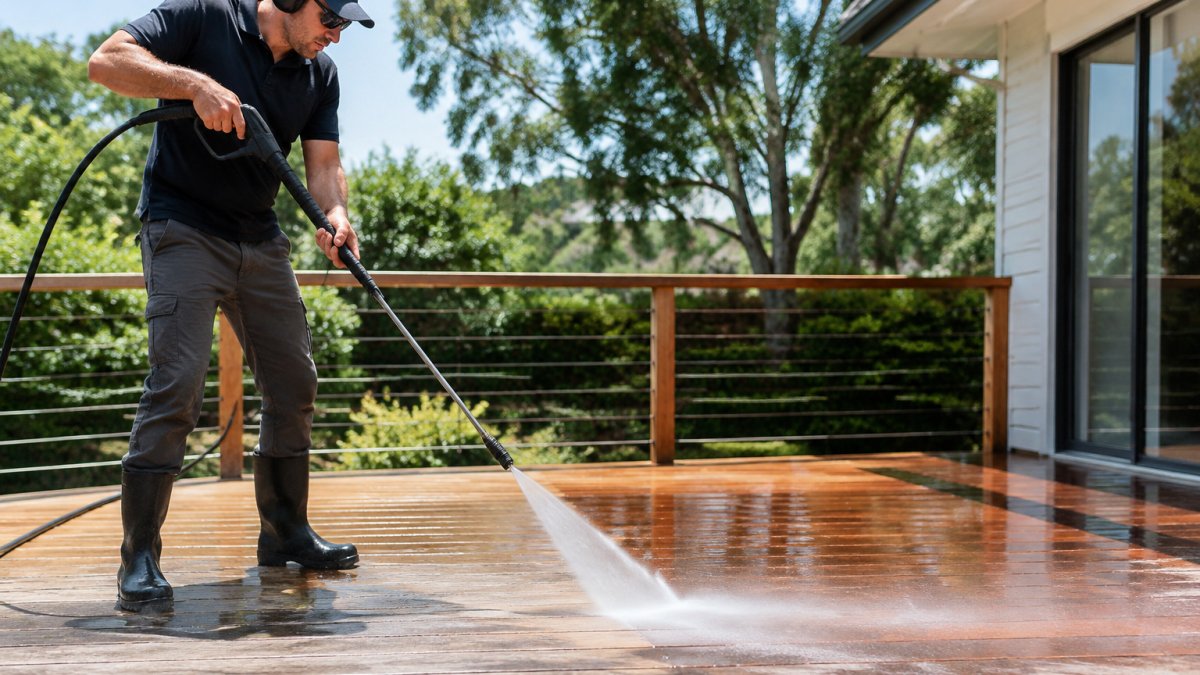
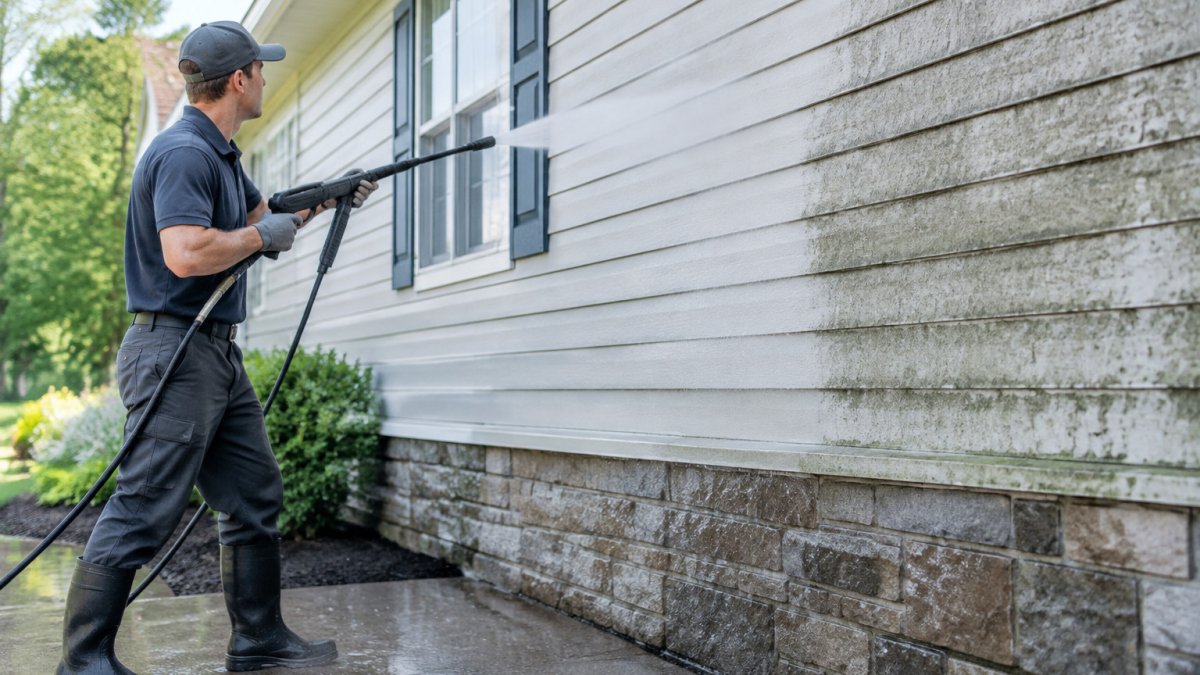
Timber weatherboards require care during cleaning. High pressure can drive water into the grain, raise fibres, and strip paint. For safe pressure washing for residential siding, including PSI settings and soft washing versus pressure washing, see the guide.
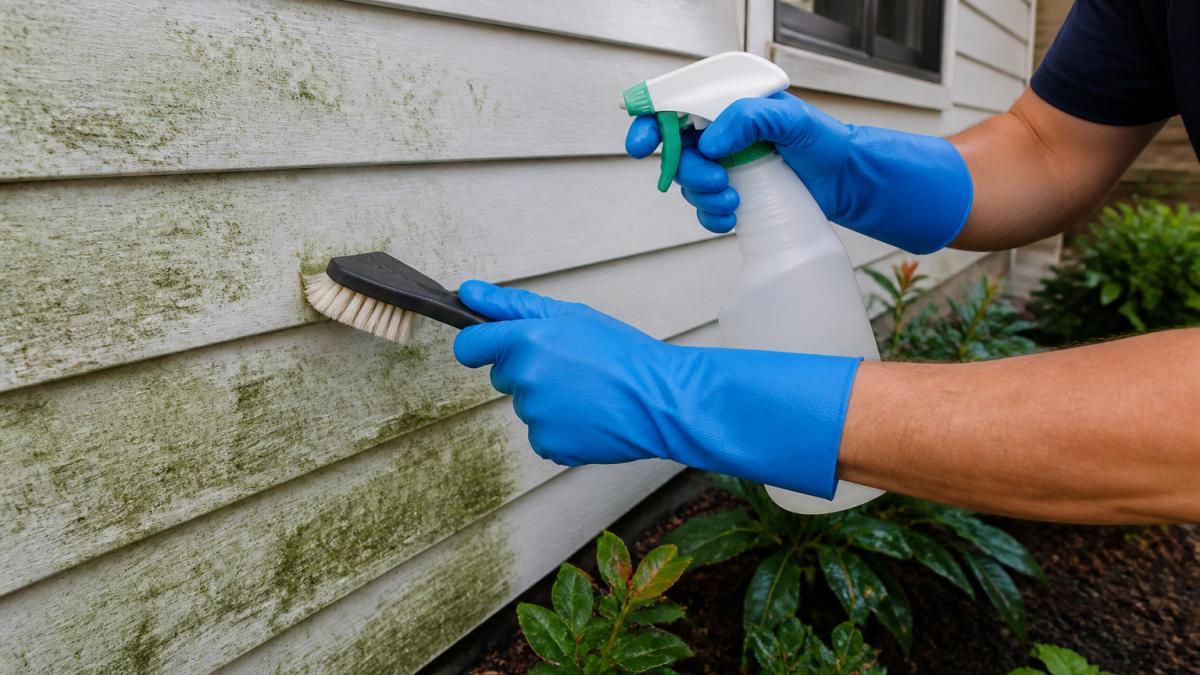
The safe sequence for timber:
- Wet the board down first so cleaner doesn't soak unevenly
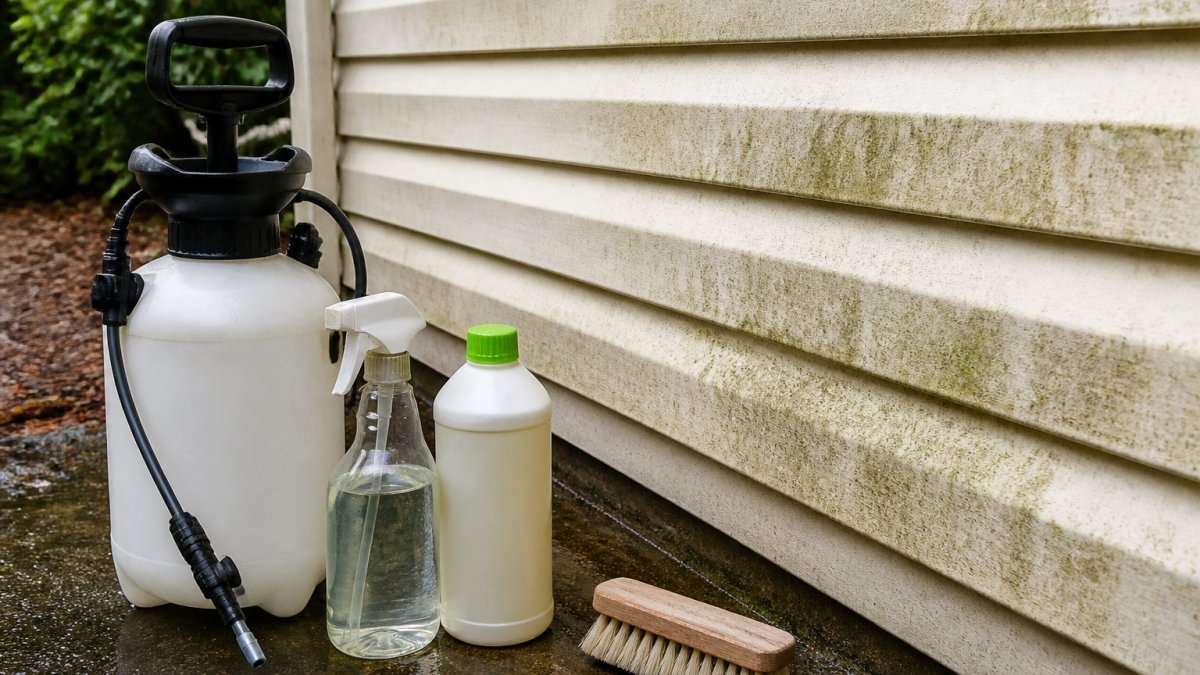
- Apply the cleaner at low pressure, or with a pump sprayer
- Let it dwell for the time on the label, no longer
- Scrub along the grain with a soft brush
- Rinse at low pressure and let it dry fully
Vinegar for Mould on Exterior Walls: Does It Actually Work?
Where vinegar makes sense:
- Small patches on sealed, hard surfaces
- Touch-ups between deeper cleans
- Households that want the mildest possible option
Oxygen Bleach for Exterior Siding: Where It Beats Vinegar
It's the better choice for:
- Fibre cement and painted render
- Timber that's already been sealed
- Large wall areas where you need even coverage
- Households with gardens and pets nearby
Oxygen bleach is the better choice in these situations.
| Surface or situation | Why oxygen bleach suits it |
|---|---|
| Fibre cement and painted render | Better choice than vinegar |
| Timber already sealed | Better choice than vinegar |
| Large wall areas | Need even coverage |
| Households with gardens and pets nearby | Better choice than vinegar |
Preventing Mould Regrowth on Exterior Walls After the Clean
What actually keeps it away:
- Clear gutters and fix leaks so water isn't running down the wall
- Trim shrubs back to let sun and air reach the siding
- Wash off pollen and leaf litter every few months
- Recoat painted or sealed surfaces when the finish starts to chalk
- Treat shaded, damp walls on a schedule rather than waiting for visible growth
When to Call a Professional Instead of Cleaning It Yourself
Call a professional when:
- The mould covers a large area or wraps around multiple storeys
- You're on timber, render, or a surface a wrong mix could damage
- The growth keeps returning after two or more DIY attempts
- You can't safely reach the wall, or you're near power lines or skylights
- Runoff could reach a storm drain, waterway, or neighbouring property
Booking a Professional Exterior Clean for Your Property
AquaBlast Elite offers high-pressure cleaning services for residential, commercial, and industrial clients. Book a call to discuss your project.
Frequently Asked Questions
What is the best eco-friendly cleaner for mould on exterior siding?
Siding materials include timber, rendered brick, and fibre cement. Consider the material when choosing a cleaner.
Can vinegar remove mould from exterior walls?
Vinegar kills mould on contact on many surfaces, but it works slowly on porous siding and needs a scrub to remove the staining. Use undiluted white vinegar in a spray bottle, leave it for 10 to 15 minutes, then scrub with a soft brush and rinse. On timber, avoid soaking the boards. Vinegar is best for light surface mould rather than deep-set black stains.
Is oxygen bleach safe for cleaning exterior siding?
Oxygen bleach is gentler than chlorine bleach on most siding and breaks down into oxygen and water, so runoff is less damaging to gardens. Mix it according to the pack instructions, apply, leave for 10 to 15 minutes, then scrub and rinse. It suits rendered brick, fibre cement and painted surfaces. Test a hidden patch first on coloured or coated siding.
Should you use a pressure washer to clean mould from siding?
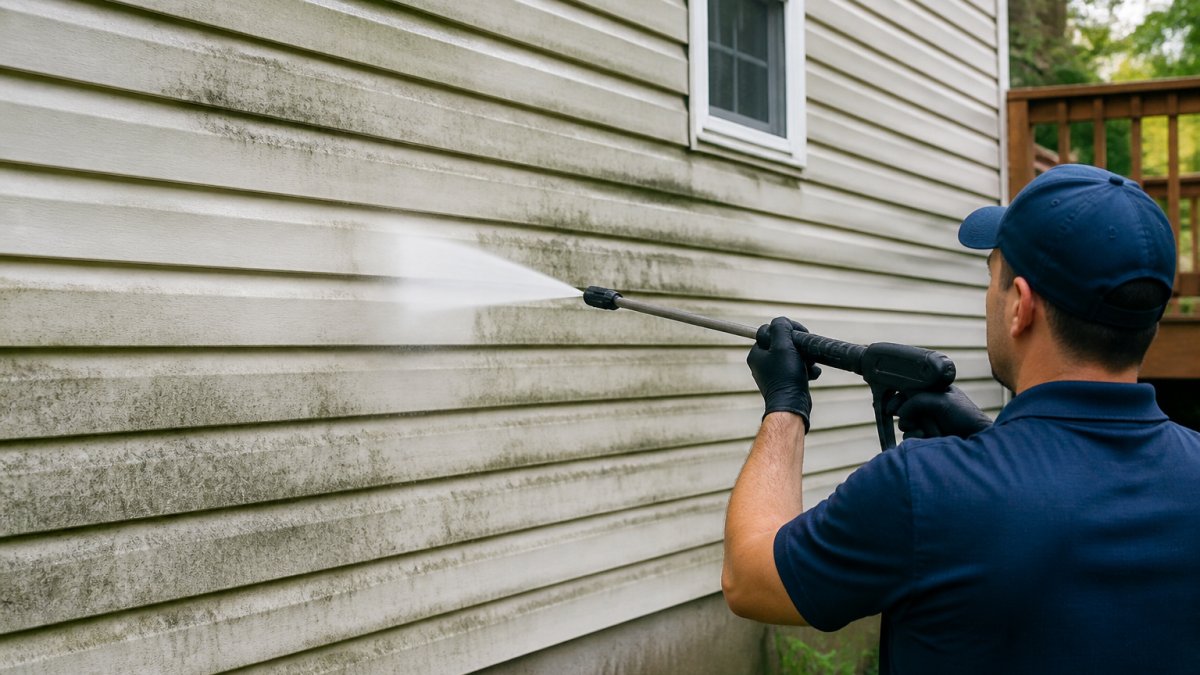
A pressure washer can strip paint, force water behind weatherboards and damage timber grain if the pressure is too high. Keep the nozzle well back from the surface and use a wide fan tip on low pressure, or skip it on timber entirely. For large or heavily stained exteriors, a professional clean with controlled pressure and the right cleaner is usually safer than a DIY attempt.
The gap between a clean wall and a wall that stays clean is method, not luck. If you're tired of watching the same patches return, get started with AquaBlast Elite and let our team match the right approach to your siding, with equipment and solutions chosen for the surface rather than a one-size-fits-all blast. Book a call to arrange your exterior clean.