 how-to
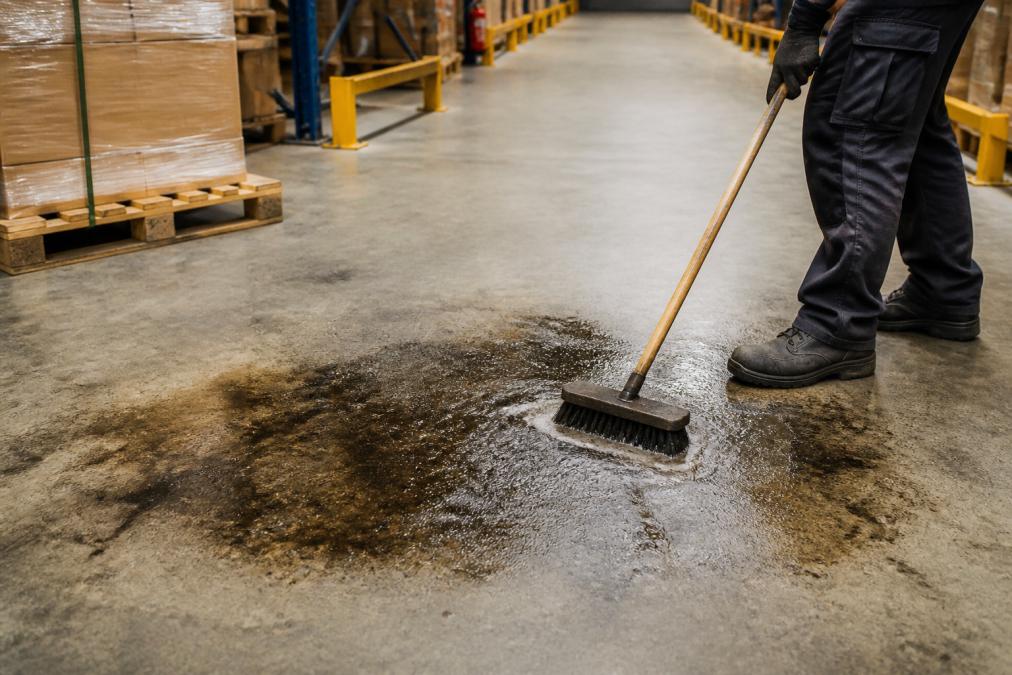
How to Remove Oil Stains from Warehouse Floors
Table of Contents
- Step 1: Identify the Oil Stain and Concrete Surface
- Step 2: Gather Supplies and Industrial Concrete Floor Degreaser
- Step 3: Contain the Spill and Apply Absorbents
- Step 4: Apply Degreaser and Allow Dwell Time
- Step 5: Agitate, Extract, and Manage Wastewater
- Step 6: Rinse with High-Pressure Cleaning for Commercial Floors
- How to Prevent Oil Stains on Concrete
- Conclusion
- Frequently Asked Questions
Last Updated: September 17, 2026
Step 1: Identify the Oil Stain and Concrete Surface
Learning how to remove oil stains from warehouse floors starts with diagnosis, not chemicals. Oil behaves differently depending on its source and the concrete beneath it, and treating a hydraulic fluid spill like a cooking oil spill wastes time and product. This guide walks through the full industrial process, from containment to final rinse.
Concrete porosity determines how deep the oil has travelled. Unsealed concrete is highly absorbent, with microscopic pores that wick hydrocarbon molecules inward within minutes of contact. Cement Concrete & Aggregates Australia technical guidance notes that surface porosity varies significantly with mix design and finishing method, which is why two warehouse slabs can respond very differently to the same spill.
Types of Oil and Their Behaviour on Concrete
Oil type changes your removal strategy. Light machine oils spread fast and sit near the surface. Heavy gear oils and hydraulic fluids are thicker, penetrate slowly, and carry additives that resist simple detergents. Cooking oils oxidise over time, forming a sticky film that traps dust.
- Hydraulic fluid: thin, fast-spreading, often dyed red or amber
- Engine and gear oil: viscous, dark, deeply penetrating
- Cutting fluid: water-miscible, can emulsify with rinse water
- Cooking oil: oxidises, leaves a tacky residue
Assessing Concrete Porosity and Existing Coatings
Test before you treat. Pour water on the stain: if it beads, a coating or sealer is present and the oil sits on the surface; if it soaks in within seconds, you have bare, porous concrete and a deeper stain.
Step 2: Gather Supplies and Industrial Concrete Floor Degreaser
An industrial concrete floor degreaser breaks the bond between oil and concrete, but only when paired with the correct absorbents, agitation tools, and safety gear.
What you'll need:
- Alkaline degreaser or heavy-duty surfactant-based cleaner
- Absorbent material (kitty litter, sawdust, or commercial oil absorbent)
- Stiff-bristled scrub brush or rotary floor scrubber
- Pump sprayer or low-pressure applicator
- Wet vacuum or squeegee and containment boom
- PPE: nitrile gloves, safety glasses, non-slip boots
- Safety Data Sheets for every chemical on site
Dwell time matters as much as the product. Most degreasers need 10 to 20 minutes of contact to emulsify oil properly, and rushing this step is the most common reason DIY attempts fail.
Step 3: Contain the Spill and Apply Absorbents
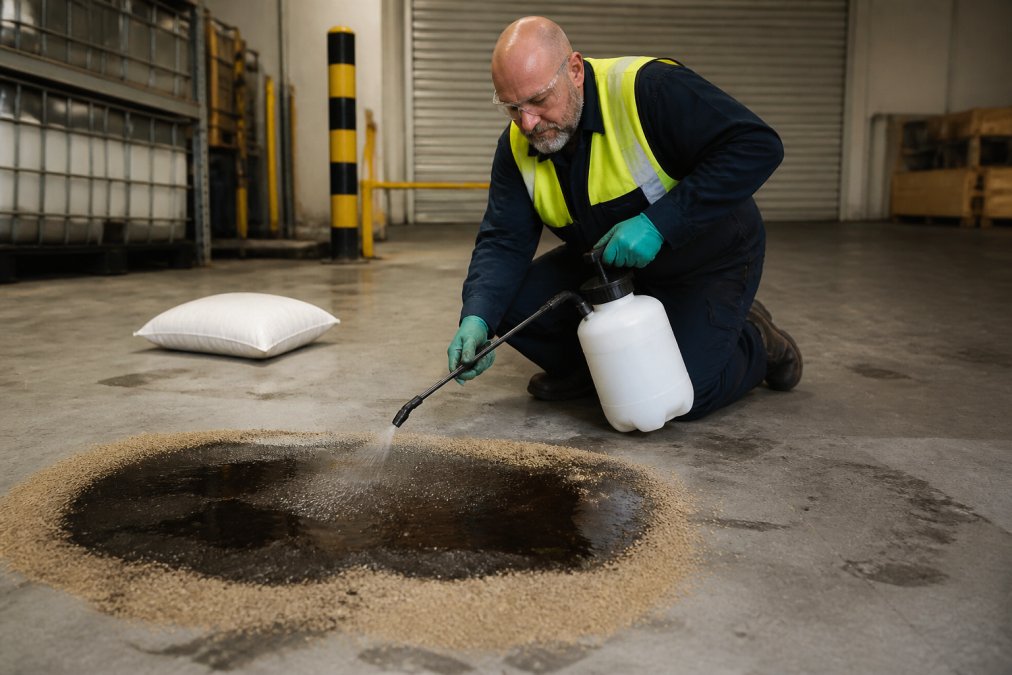
Stop the oil from spreading before you lift it. Spill containment is the step most guides skip, and it saves a 2-metre stain from becoming a 6-metre one.
Push absorbent around the perimeter first to form a dam, then cover the stain with a generous layer.
Step 4: Apply Degreaser and Allow Dwell Time
Apply your chosen degreaser at the manufacturer's dilution, not stronger. Over-concentrated product leaves residue that attracts dirt and can damage coatings.
Step 5: Agitate, Extract, and Manage Wastewater
Mechanical agitation does what chemistry alone cannot. A stiff scrub brush for small areas, or a rotary scrubber for large floors, lifts oil from deep pores so the degreaser can carry it away. Work in overlapping passes and keep the brush or pad wet, dry agitation grinds oil further into the slab.
Wastewater Is the Part Most Guides Get Wrong
Rinse water from an oil-stain clean-up is trade waste, classified in most Australian jurisdictions as liquid industrial waste because it contains hydrocarbons, surfactants, suspended solids, and often heavy metals. That classification changes how you handle it.
What you cannot do:
- Pour it down a stormwater drain. Stormwater reaches creeks, rivers, and harbours untreated. Discharging oil-contaminated water to stormwater is an offence under state environment protection legislation, with penalties per incident, not per litre.
- Pour it down a sewer without a trade waste agreement. Most water authorities require a permit before industrial liquid waste enters the sewer, and oil-and-grease limits are among the strictest parameters.
- Hose it into a garden bed or gravel verge on the assumption it will 'break down'. It won't, and it will migrate.
What you should do instead:
- Contain before you rinse. Lay a containment boom or absorbent sock so rinse water pools rather than runs.
- Extract with a wet vacuum rated for hydrocarbon-laden water. Dedicate and label one vacuum to oily waste, cross-contamination is a common audit finding.
- Decant into labelled drums (typically 200 L) marked with waste class and date, and keep a waste tracking log.
- Book a licensed waste contractor. Oil-contaminated water must move under a waste transport certificate, and the receiving facility must be licensed to accept it.
- Keep the paperwork. Waste tracking records are the first thing a regulator asks for, and your evidence if a neighbour or downstream landholder complains.
Practical Volumes to Plan For
Rinse water volume is far larger than the stain itself. A 2 m² stain on sealed concrete might generate 40-80 L once you account for pre-rinse, degreaser rinse, and final flush; a 50 m² machinery bay can run into several hundred litres. Plan drum capacity before you start.
Agitation and Extraction Checklist
- Containment boom or absorbent sock placed before rinsing
- Rotary scrubber or stiff brush used in overlapping passes
- Wet vacuum dedicated to oily water and clearly labelled
- Rinse water decanted into labelled, dated drums
- Waste tracking log completed for every drum
- Licensed contractor booked for collection
- Trade waste agreement reviewed if volumes are recurring
Step 6: Rinse with High-Pressure Cleaning for Commercial Floors
High-pressure cleaning for commercial floors delivers the final lift: a pressure washer at the right pressure and angle flushes residual degreaser and loosened oil from the surface.
Match the Method to the Floor Finish
Warehouse slabs are rarely bare concrete. Most modern facilities have a coating or surface treatment, and the wrong cleaner-and-pressure combination destroys it, turning a stain problem into a resurfacing problem.
Equipment Scale for Warehouse Floors
For warehouses where downtime is costly, professional equipment pays for itself. AquaBlast Elite uses high-pressure cleaning equipment and trained operators to strip oil from large concrete surfaces without damaging the slab, covering areas a maintenance team would take days to handle manually. Where a floor coating is present, the approach protects the coating rather than stripping it.
How to Prevent Oil Stains on Concrete
Prevention is cheaper than remediation. A few habits keep oil off the slab.
Floor maintenance habits that work:
- Place drip trays under every parked forklift and machine
- Fix hydraulic leaks immediately, not at the next service
- Keep absorbent material at each loading bay and refuelling point
- Train staff on spill response, not just spill reporting
- Schedule regular degreasing before stains set
Conclusion
Oil stains on warehouse concrete are a maintenance reality, but they don't have to be permanent. The process is straightforward: identify the oil and surface, contain the spill, apply the right degreaser, agitate, extract, and rinse with controlled pressure. Skip the diagnosis or dwell time and you'll be back at step one within a month.
Frequently Asked Questions
What is the best degreaser for concrete warehouse floors?
The best degreaser for warehouse concrete is an industrial concrete floor degreaser that matches the oil type. Alkaline cleaners work well on most hydrocarbon oils, while butyl-based or solvent degreasers handle heavy grease. For deep-set stains, a poultice made from trisodium phosphate (TSP) and an absorbent powder draws oil from concrete porosity. Always check the Safety Data Sheet (SDS) and test a small area first.
How do you get deep-set oil stains out of industrial concrete?
Deep-set stains need a poultice. Mix an industrial degreaser with an absorbent like diatomaceous earth or sawdust to form a paste. Apply a 6-10 mm layer over the stain, cover with plastic, and let it dwell for 24-48 hours. The poultice pulls oil out through osmosis. Remove the dried paste, then scrub with a stiff brush and rinse. For stubborn stains, repeat or use a methyl ethyl ketone (MEK) solvent with proper PPE.
Can high-pressure cleaning remove oil from warehouse floors?
High-pressure cleaning for commercial floors removes surface oil and degreaser residue, but it cannot extract oil that has soaked deep into concrete porosity. Use it after applying a degreaser and allowing dwell time. A pressure washer at 3000-4000 psi with a rotary surface cleaner works well on large areas. Avoid directing the spray at floor joints or coatings, as it can cause concrete etching or strip sealant.
Is it necessary to seal warehouse floors after removing oil stains?
Sealing is highly recommended after stain removal. A penetrating sealer fills concrete porosity and prevents oil from soaking in again, making future spills easier to clean. For warehouses, a chemical-resistant epoxy or polyurethane coating also improves durability and slip resistance. Apply sealer only after the concrete is completely dry and free of residue. Reapply every 2-3 years depending on traffic and chemical exposure.