 how-to
How to Clean Timber Decks Without Damage
Table of Contents
- Preparation and Clearing the Deck
- Best Timber Deck Cleaning Products
- Tools and Equipment Required
- Step-by-Step Cleaning Process for Timber Decks
- Pressure Washing Timber Decks Safely
- How to Remove Mould from Timber Decking
- Maintenance Tips for Long-Term Deck Longevity
- Conclusion
- Frequently Asked Questions
Last Updated: September 4, 2026
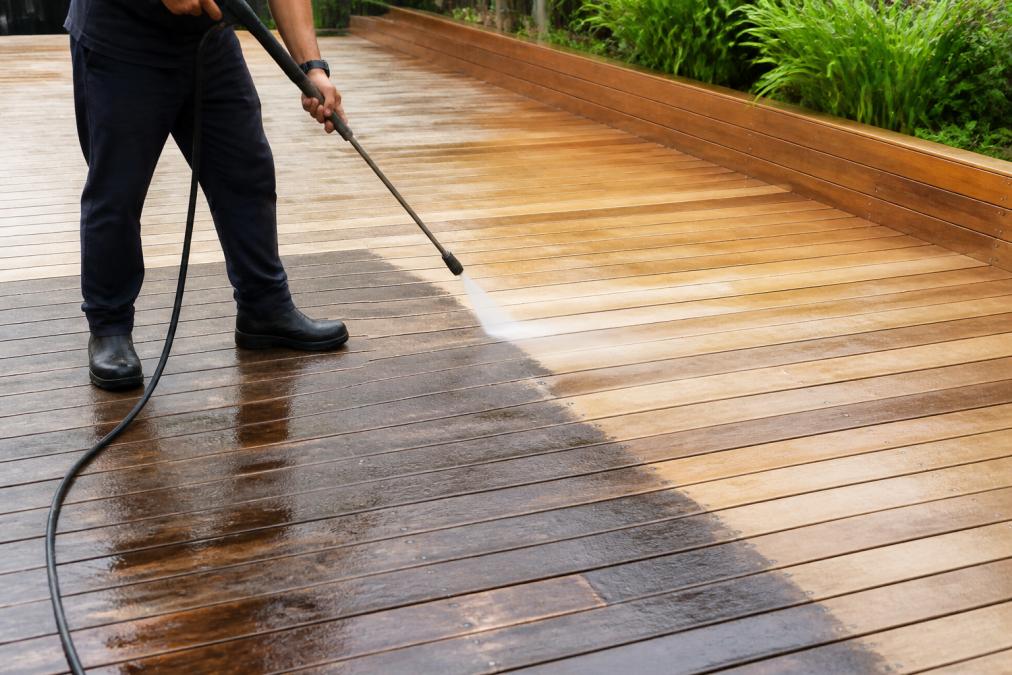
Cleaning a timber deck is a delicate balance: too gentle and the grime stays; too aggressive and you strip the wood fibres and ruin the finish. The good news is that you can clean timber decks without damage using the right sequence, the right chemicals, and a disciplined approach to pressure. This guide breaks down exactly how to clean timber decks safely, covering the best timber deck cleaning products, the tools that matter, and how professional crews avoid the mistakes that send homeowners to the timber yard for replacement boards.
The key principle: timber is soft and porous. Cleaning must lift dirt and biological growth without cutting into the wood. Below is the exact process we use, recommended pressures, and maintenance habits that keep decks looking new.
Preparation and Clearing the Deck
Clear the deck of furniture, plants, rugs, and grease traps, they block access and leave stains. Sweep thoroughly to remove leaf litter and debris, which trap moisture and encourage mildew.
Inspect boards for protruding nails, splinters, and loose fasteners. Clear gaps between boards and unblock drainage points. Water and cover nearby plants with a drop sheet, as cleaning agents can harm garden beds.
Best Timber Deck Cleaning Products
The right cleaning solution depends on timber species and stain type. Wrong products can lighten timber unevenly, etch the grain, or leave residue that interferes with future sealing.
For Softwoods (Pine, Radiata, Cypress)
For softwoods, use oxygenated bleach (sodium percarbonate-based), which breaks down organic stains and mould without the corrosive effect of chlorine bleach. Dilute 1 part product to 10 parts water and test first. Avoid caustic soda, undiluted chlorine bleach, and strong acids, which burn fibres and cause permanent damage.
For Hardwoods (Merbau, Jarrah, Spotted Gum, Cumaru)
For hardwoods, use oxygenated bleach for general dirt and mould, or mild oxalic acid for stubborn tannin stains. Oxalic acid dissolves tannins without etching the grain (peer-reviewed research). Apply at recommended dilution, allow 15-20 minutes dwell time, scrub gently, and rinse. Avoid caustic soda and chlorine bleach.
Stain-Specific Approaches
Tannin stains: Use oxalic acid on hardwoods or oxygenated bleach on softwoods. Oxalic acid works faster; oxygenated bleach is gentler but may need longer dwell time or a second application.
Iron stains: Oxalic acid is most effective. Apply, dwell 15 minutes, scrub gently, and rinse. Repeat if needed rather than increasing concentration.
Mould and mildew: Use a dedicated cleaner with oxygenated bleach. Allow 15-20 minutes dwell time, scrub gently, and rinse. Repeat if needed. Persistent staining may indicate moisture problems (poor ventilation, blocked drainage, leaking irrigation) that must be addressed.
Food and organic spills: Address promptly with mild detergent and soft brush. The longer they sit, the harder they are to remove.
General Rules for All Timber Types
Always test solutions on an inconspicuous area first. Follow dilution instructions precisely; over-concentration risks etching and damage. Never mix different chemicals, as this can release hazardous fumes.
Tools and Equipment Required
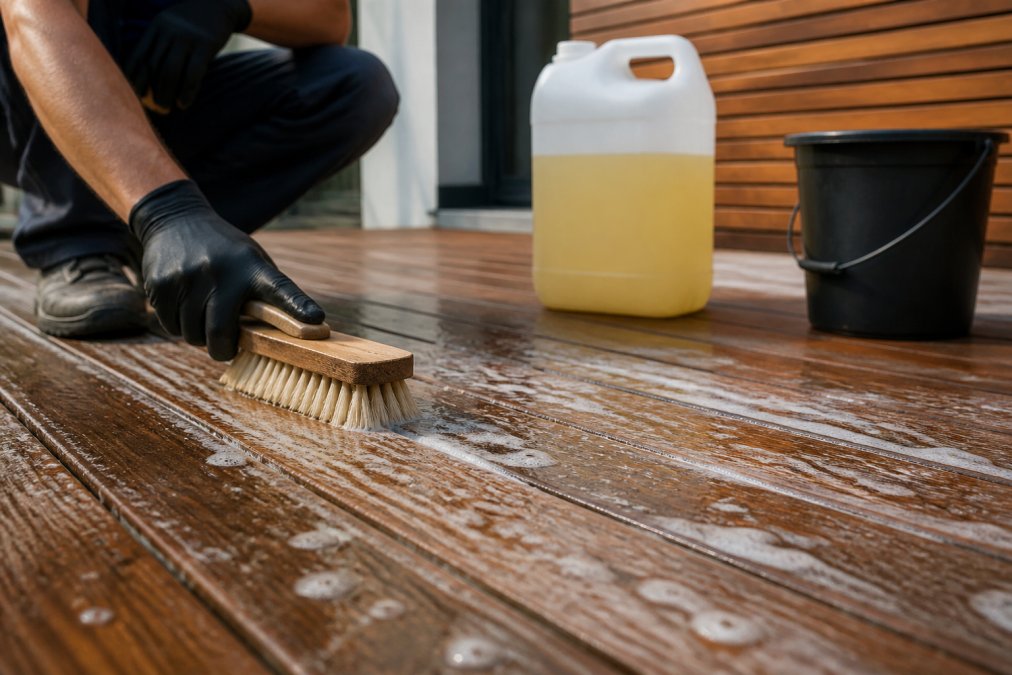
Use a medium-stiffness synthetic-bristled brush to work solution into the grain, avoid wire brushes, which scratch the surface. An extendable deck scrubber reduces strain and improves control.
For rinsing, use a garden hose with spray nozzle. If pressure washing, use a wide fan nozzle only, never a zero-degree rotary nozzle. Also gather a bucket, pump sprayer, and soft broom. Always wear rubber gloves and safety glasses.
Step-by-Step Cleaning Process for Timber Decks
- Apply the cleaning solution. Using a pump sprayer, apply your chosen oxygenated bleach or timber cleaner evenly across the deck, working in sections of roughly 10 square metres so the solution does not dry before you scrub it.
- Let the solution dwell. Allow it to sit for 10 to 15 minutes. This dwell time lets the chemistry break down mould, tannin stains, and embedded dirt without you needing to scrub aggressively.
- Scrub with the grain. Using your medium-stiffness bristle brush, scrub the timber in the direction of the wood grain, never across it. Scrubbing across the grain scratches the surface and opens the wood fibres to moisture.
- Rinse thoroughly. Rinse each section with clean water from a hose or a pressure washer set to low pressure, keeping the nozzle moving and at least 300 mm from the surface.
- Remove excess water. Use a soft broom or a squeegee to push standing water off the deck. Timber that dries unevenly can develop patchy discolouration.
- Allow full drying. Let the deck dry completely for 24 to 48 hours before you consider sanding, sealing, or staining.
Pressure Washing Timber Decks Safely
Pressure washing is possible but requires a different approach than most DIY guides suggest. Above 1500 PSI, pressure washers strip softwood fibres, widen the grain, and create a fuzzy surface that soaks up moisture and accelerates rot.
Keep pressure below 1200 PSI and use a fan nozzle with at least 40-degree spread. Hold the lance 300-400 mm from the surface and move in smooth passes along the grain. Never hold over one spot or spray into gaps between boards. Pressure washing is for rinsing only; the solution and brush do the work.
How to Remove Mould from Timber Decking
Maintenance Tips for Long-Term Deck Longevity
Regular maintenance is cheaper than restoration and keeps timber sound. Understand your timber's condition and coating state before applying new products.
Cleaning Schedule and Debris Management
Clean twice yearly (spring and autumn) and sweep weekly. After cleaning and drying, inspect the coating: if water beads, the seal is intact; if it soaks in, reapply oil, stain, or sealant. Address stains promptly, they become harder to remove over time.
Post-Cleaning Moisture Testing: The Critical Step Most Guides Omit
Before sanding, sealing, or staining, confirm the timber is dry enough for a new coating. Damp timber traps moisture, causing cupping, warping, and coating failure. Humidity, shade, and wood thickness affect drying time; 24-48 hours may not be sufficient.
Use a timber moisture meter to measure moisture content. Most coatings require below 15% moisture; premium products may need 12% or lower. Test multiple boards, especially shaded areas. In humid or cool conditions, drying can take 5-7 days.
Without a moisture meter, use the water droplet test: if drops bead on the surface, the wood is dry enough; if they soak in, moisture is still too high.
Sanding and Surface Preparation
Light sanding with 120-150 grit can smooth raised grain, but keep it minimal and along the grain only. Heavy sanding exposes fresh wood that weathers differently, creating patchy discolouration. Sand only if grain is raised or before new stain or sealant. Always use a dust mask.
Resealing and Re-oiling After Cleaning
Once timber reaches the correct moisture level, apply a protective coating. Choose between oil, stain, and sealant based on timber type and preference:
- Timber oils (such as teak oil or hardwood deck oil) penetrate the wood and enhance the natural grain. They require reapplication every 12 to 18 months but are easy to refresh without sanding the entire deck.
- Stains (semi-transparent or solid) add colour while allowing the wood grain to show through (semi-transparent) or covering it entirely (solid). They typically last 2 to 3 years and provide good UV protection.
- Sealants (polyurethane, acrylic, or water-based) form a protective film on the surface. They last longer (3 to 5 years) but can become slippery when wet and may require sanding between coats.
Apply the coating in thin, even layers according to the manufacturer's instructions, and allow full curing time (typically 48 to 72 hours) before foot traffic.
Common Issues and Appropriate Responses
| Common Issue | Likely Cause | Recommended Fix |
|---|---|---|
| Green or black growth | Mould and mildew from shade and moisture | Oxygenated bleach cleaner, improve airflow and sunlight exposure |
| Raised fuzzy grain | High-pressure washing damage or weathering | Light sanding along grain with 120-150 grit, reseal |
| Water soaking into boards | Failed protective coating | Clean, dry fully (test with moisture meter), reapply sealant or oil |
| Dark leaf or rust stains | Tannins and metal oxidation | Spot treat with oxalic acid cleaner (hardwoods) or oxygenated bleach (softwoods) |
| Grey, weathered appearance | UV and moisture exposure | Clean, sand lightly if desired, apply UV-protective oil or stain |
| Cupping or warping | Moisture trapped under coating or uneven drying | Address underlying moisture source (drainage, ventilation), sand and reseal once dry |
Monitor the deck's substructure annually for rot, rust, or movement. Ensure drainage is clear, trim overhanging branches, and improve sunlight exposure. These habits prevent expensive repairs.
Conclusion
Cleaning timber decks without damage comes down to respecting the material: use a gentle oxygenated cleaner, scrub along the grain with a soft brush, and reserve the pressure washer for low-pressure rinsing only. The decks that fail are almost never the ones that were cleaned too gently; they are the ones blasted with high pressure and harsh chemicals. If your deck needs professional attention, or you want to avoid the risk of DIY damage altogether, AquaBlast Elite offers unparalleled high-pressure cleaning services across Sydney and its surrounding areas, leveraging cutting-edge equipment and years of industry expertise to deliver customized solutions for residential, commercial, and industrial clients. Our skilled professionals meticulously restore and rejuvenate a wide array of surfaces, from concrete to decks and graffiti, ensuring superior results that elevate the cleanliness and appearance of your property. We are dedicated to providing efficient, effective, and precise cleaning that consistently exceeds expectations, making us your trusted partner for maintaining a pristine and professional environment.
Frequently Asked Questions
What is the best cleaner for timber decking?
Oxygenated bleach solutions mixed with mild detergent are effective for most timber decks. Avoid chlorine-based cleaners as they damage wood fibres and cause discolouration. For mould removal, an oxygenated bleach solution works well without harming the wood structure. Always test any cleaning solution on an inconspicuous area first, and rinse thoroughly after application to prevent tannin leaching.
Can you use washing up liquid to clean wooden decking?
Yes, diluted washing up liquid with water can work for light cleaning, but it is not ideal for heavy soiling or mould. Mix one part liquid with 10 parts water to avoid leaving a slippery residue. For better results on stained timber decks, combine mild detergent with oxygenated bleach. Always rinse the deck thoroughly with clean water after washing to remove all soap residue and prevent wood damage.
How often should you clean a timber deck to prevent rot?
Clean timber decks at least twice yearly, spring and autumn, to prevent mould growth and wood rot. High-traffic areas or decks in damp climates may need quarterly cleaning. Regular maintenance prevents tannin buildup, reduces mould spores, and extends deck longevity. After cleaning, inspect for soft spots or surface damage. Applying a protective coating annually also helps prevent moisture penetration and wood deterioration.
What should you not use to clean decking?
Avoid chlorine bleach, which degrades wood fibres and causes permanent discolouration. Never use abrasive scrubbing pads or wire brushes that damage the wood surface. High-pressure washers above 1500 PSI can splinter timber and expose the wood to moisture damage. Chemical toxicity from harsh solvents harms both the wood structure and the environment. Stick to soft-bristled brushes, mild detergents, and oxygenated bleach for safe, effective cleaning.
A tired, weathered deck can be restored rather than replaced, but only with the right technique and equipment. AquaBlast Elite provides professional exterior cleaning that respects the timber and protects your investment, with years of industry experience and customized solutions for every project. Book a call today and let our skilled professionals bring your deck back to life.
This article was written using GrandRanker
Frequently Asked Questions
Q: What is the best cleaner for timber decking?
A: Oxygenated bleach solutions mixed with mild detergent are effective for most timber decks. Avoid chlorine-based cleaners as they damage wood fibres and cause discolouration. For mould removal, an oxygenated bleach solution works well without harming the wood structure. Always test any cleaning solution on an inconspicuous area first, and rinse thoroughly after application to prevent tannin leaching.
Q: Can you use washing up liquid to clean wooden decking?
A: Yes, diluted washing up liquid with water can work for light cleaning, but it is not ideal for heavy soiling or mould. Mix one part liquid with 10 parts water to avoid leaving a slippery residue. For better results on stained timber decks, combine mild detergent with oxygenated bleach. Always rinse the deck thoroughly with clean water after washing to remove all soap residue and prevent wood damage.
Q: How often should you clean a timber deck to prevent rot?
A: Clean timber decks at least twice yearly—spring and autumn—to prevent mould growth and wood rot. High-traffic areas or decks in damp climates may need quarterly cleaning. Regular maintenance prevents tannin buildup, reduces mould spores, and extends deck longevity. After cleaning, inspect for soft spots or surface damage. Applying a protective coating annually also helps prevent moisture penetration and wood deterioration.
Q: What should you not use to clean decking?
A: Avoid chlorine bleach, which degrades wood fibres and causes permanent discolouration. Never use abrasive scrubbing pads or wire brushes that damage the wood surface. High-pressure washers above 1500 PSI can splinter timber and expose the wood to moisture damage. Chemical toxicity from harsh solvents harms both the wood structure and the environment. Stick to soft-bristled brushes, mild detergents, and oxygenated bleach for safe, effective cleaning.