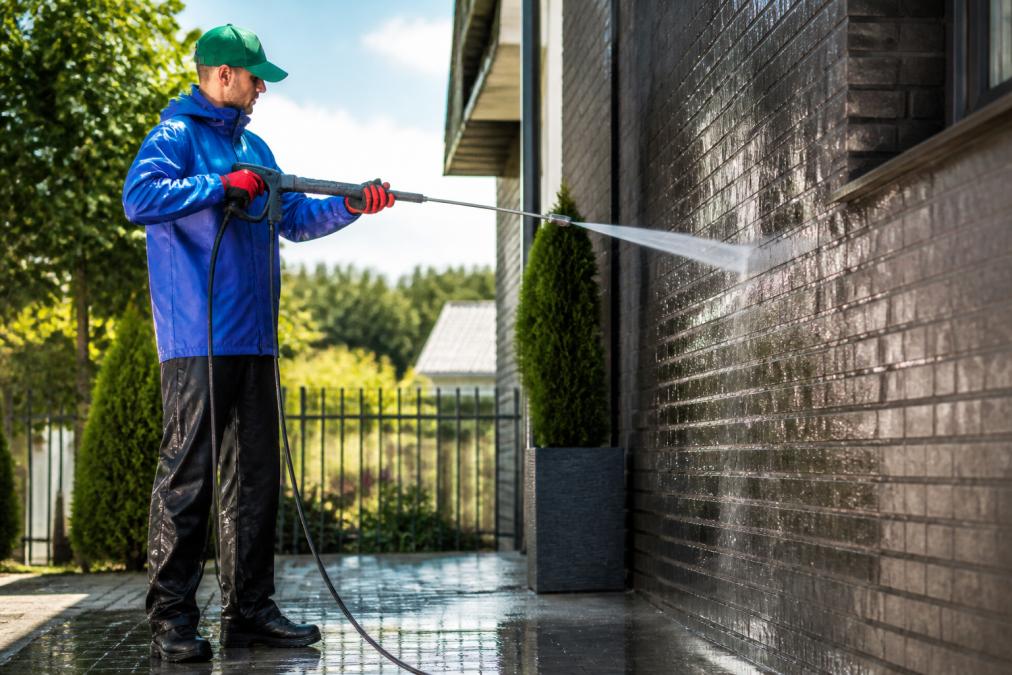
 ultimate-guide
How to Maintain Clean Exterior Surfaces: 2026 Guide
Table of Contents
- Safe Pressure Washing for Residential Siding
- Soft Washing vs Pressure Washing: Choosing the Right Method
- Your Exterior House Maintenance Schedule
- How to Prevent Mould on Exterior Surfaces
- Step-by-Step: How to Maintain Clean Exterior Surfaces
- Environmental Impact of Runoff and Chemical Compatibility
- Troubleshooting Common Mistakes and When to Call a Professional
- Frequently Asked Questions
Last Updated: September 16, 2026
Safe Pressure Washing for Residential Siding
Learning how to maintain clean exterior surfaces starts with understanding that water pressure is a tool, not a weapon. Learning how to maintain clean exterior surfaces starts with understanding that water pressure is a tool, not a weapon. The fix begins with one number: keep residential siding below 1,500 psi.
Soft Washing vs Pressure Washing: Choosing the Right Method
The choice between soft washing vs pressure washing comes down to what is growing on the surface. Soft washing uses low pressure, typically under 500 psi, combined with a detergent to kill mould, algae, and mildew at the root. Pressure washing uses mechanical force alone to lift dirt from hard, durable surfaces.
- Soft washing: render, painted timber, vinyl siding, roofs, and anything aged or fragile
- Pressure washing: concrete driveways, masonry, brick paving, and exposed aggregate
- Both methods: require a pre-rinse, a cleaning stage, and a thorough final rinse
Your Exterior House Maintenance Schedule
An exterior house maintenance schedule prevents the slow buildup that turns a simple wash into a restoration job. Generic advice says "twice a year", but the correct cadence depends on your climate zone, your substrate, and how much organic load your block carries. Use the baseline below, then adjust for the conditions where you actually live.
Baseline cadence by surface
| Surface | Minimum frequency | Driver |
|---|---|---|
| Vinyl and painted timber siding | Twice yearly | Pollen, sap, mould spores |
| Rendered and bagged masonry | Twice yearly | Salt, dust, algae biofilm |
| Concrete driveways and paths | Every 12-18 months | Tyre film, oil, iron staining |
| Timber decks | Every 6 months plus annual reseal | UV greying, moisture cycling |
| Roofs (tiled or metal) | Every 18-24 months | Lichen, moss, gutter overflow |
| Windows and frames | Quarterly | Dust, salt spray, insect residue |
Adjust for your climate zone
The schedule above assumes a temperate climate with four distinct seasons. Two adjustments matter more than any other:
- Tropical and subtropical zones (high humidity, wet summers): mould and algae can re-establish within 8-12 weeks. Move siding and render to a quarterly wash, and treat roofs every 12 months rather than 18-24. The mechanism is simple, biofilm needs only a few days of surface moisture to re-colonise, and in these zones that threshold is met almost continuously through the wet season.
- Arid and semi-arid zones (low rainfall, high dust): biological growth is slower, but dust and mineral deposits bond harder because they bake onto the surface. Extend the wash interval to annually for siding, but add a dry-brush or low-pressure rinse every 3 months to stop dust cementing in place.
- Coastal zones (within roughly 1 km of saltwater): salt spray accelerates corrosion on metal fixings and leaves a hygroscopic film that keeps surfaces damp. Wash windows and metal frames quarterly, and rinse downpipes and gutters after every significant onshore wind event.
The seasonal task list
| Season | Task | Frequency |
|---|---|---|
| Spring | Full soft wash of siding, render and windows; inspect seals | Once |
| Summer | Rinse decks and hardstand areas; check for pollen, sap and insect residue | Monthly |
| Autumn | Clear gutters and leaf litter; remove debris trapped against walls | Once, plus after leaf fall |
| Winter | Inspect shaded faces for mould after sustained rain; check drainage | As needed |
Why debris removal is preventative, not cosmetic
Debris removal matters more than most owners realise. Leaves and mulch trapped against a wall hold a moisture reservoir against the substrate for weeks after rain, and that constant damp film is exactly the condition mould and algae need to establish. Clearing it is preventative maintenance, not tidying. The same logic applies to gutters: an overflowing gutter wets the fascia and the wall below it on every rain event, which is why gutter clearing belongs on the schedule even if the walls still look clean.
How to Prevent Mould on Exterior Surfaces
To prevent mould on exterior surfaces, remove the conditions it needs: moisture, shade, and organic residue. Mould and algae thrive on the north and south faces of a building where sun rarely reaches and damp lingers after rain.
Step-by-Step: How to Maintain Clean Exterior Surfaces
Here is the process our crews follow, and it works just as well for a careful DIY job.
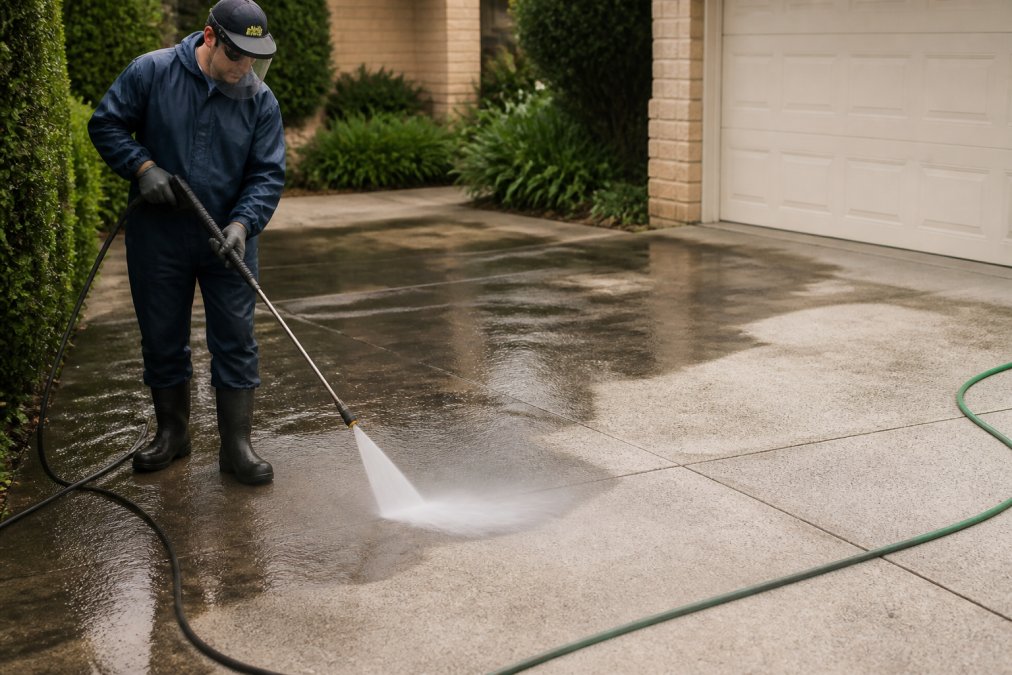
- Prepare the area. Move furniture, cover plants, and close windows. Put on protective gear: eye protection, gloves, and non-slip footwear.
- Remove debris. Sweep walkways and clear gutters, leaf litter, and cobwebs before any water touches the surface.
- Pre-rinse. Use a garden hose or low-pressure setting to loosen surface dirt and saturate surrounding plants so detergent runoff is diluted.
- Apply detergent. Work bottom to top in small sections so cleaning solution does not dry mid-job.
- Agitate stubborn spots. Use a nylon scrub pad or bristle brush on tree sap, pollen stains, and bird droppings. Never use abrasive steel wool on painted surfaces.
- Rinse top to bottom. This is the step most people rush. Rinsing downward carries residue away instead of back over clean areas.
- Inspect and spot-treat. Check for missed patches once the surface dries, then touch up.
Environmental Impact of Runoff and Chemical Compatibility
Chemical runoff is the part of exterior cleaning that rarely gets discussed, yet it decides which products are safe to use and where the wash water should go. In most residential areas, stormwater drains flow untreated to creeks, rivers and coastal waters, they are not connected to the sewer. That means whatever detergent, mould residue or paint flake leaves your driveway ends up in the receiving waterway.
Controlling runoff
- Divert where you can. Bag or pump wash water onto lawn or garden beds where the detergent load is low and the soil can buffer it. Never divert into the stormwater drain if you are using a chemical treatment.
- Pre-saturate garden beds before you start so any overspray is diluted rather than drawn up by dry roots.
- Cover or move pet water bowls, fish ponds and vegetable gardens before any chemical application.
- Dispose of concentrated product, leftover detergent, rinse water from mixing containers, through the sewer (sink or toilet), not the stormwater system. Small volumes of diluted product can go to garden, but concentrates should not.
Material-specific chemical compatibility
This is where most DIY jobs fail. A detergent that is perfect for one substrate will etch, stain or strip another. Match the chemistry to the surface before you start, and always test a small hidden area and let it dry completely before committing.
| Substrate | Safe chemistry | Avoid | Why |
|---|---|---|---|
| Concrete and cement render | Alkaline degreasers, oxygen bleach | Acidic cleaners | Acid reacts with the free lime in cement, etching the surface and opening pores |
| Limestone, sandstone and travertine | pH-neutral stone cleaners | Any acid, including vinegar and citrus | Calcium carbonate dissolves on contact, leaving a permanently etched, dull finish |
| Clay and concrete brick | pH-neutral or mild alkaline | Strong acid, high-pressure jets | Acid attacks mortar joints before it attacks the brick |
| Painted timber and weatherboard | Mild alkaline, oxygen bleach | Chlorine bleach, solvent degreasers | Bleach fades pigment and breaks down timber fibres; solvents lift the paint film |
| Vinyl siding | Mild detergent, oxygen bleach | Solvent cleaners, abrasive pads | Solvents soften the PVC surface; abrasives leave permanent scuffing |
| Aluminium frames and cladding | pH-neutral, non-alkaline | Caustic and alkaline degreasers | Alkali attacks the protective oxide layer and causes pitting |
| Galvanised steel | pH-neutral | Acid and strong alkali | Both strip the zinc coating, exposing the steel to rust |
| Natural timber decking | Oxygen bleach, oxalic acid for tannin | Chlorine bleach | Chlorine raises the grain and leaves a fuzzy surface that will not take a finish evenly |
Reading a label before you buy
Three label cues tell you most of what you need to know:
- "Biodegradable" refers to the surfactant breaking down, not to aquatic toxicity. A biodegradable product can still harm fish if it enters a waterway in volume, so runoff control still matters.
- "pH neutral" means the product sits between roughly pH 6 and 8 and is safe on most substrates, including stone and metal.
- "Oxygen bleach" (sodium percarbonate) is the safer alternative to chlorine bleach for organic staining on coloured or painted surfaces. It releases oxygen rather than chlorine, so it does not fade pigment or damage fibres.
Troubleshooting Common Mistakes and When to Call a Professional
Most failed cleaning jobs trace back to a handful of errors. Streaking usually means the detergent dried before rinsing. Tiger-striping on concrete comes from inconsistent wand distance. Returning mildew points to a drainage or shade problem, not a cleaning one.
Frequently Asked Questions
How often should you clean the exterior of your house?
Most homes need a full exterior clean every 12 to 18 months. In areas with heavy pollen, tree sap, or coastal salt spray, aim for every 6 to 9 months. Check gutters, windows, and walls each season. A regular exterior house maintenance schedule prevents dirt from bonding to surfaces and reduces the need for aggressive cleaning later.
What is the difference between pressure washing and soft washing?
Pressure washing uses high-pressure water to blast away grime from hard surfaces like concrete and masonry. Soft washing uses low pressure with biodegradable detergents to clean delicate surfaces such as vinyl siding, timber, and painted render. Choosing soft washing vs pressure washing depends on the substrate. Using high pressure on siding can force water behind panels and damage exterior paintwork.
How do you remove mould and mildew from exterior walls safely?
Apply a biodegradable detergent and let it dwell for 10 to 15 minutes. Then rinse with a low-pressure setting or garden hose. For stubborn mildew, use a soft bristle brush or nylon scrub pad with light agitation. Avoid harsh bleach on painted surfaces. Always wear protective gear and direct runoff away from garden beds and storm drains.
Are there eco-friendly ways to clean exterior surfaces?
Yes. Use biodegradable detergents and low-pressure rinsing to minimise chemical runoff. Soft washing uses less water than pressure washing and relies on detergent dwell time rather than force. Direct runoff toward grass or gravel, not storm drains. Choose plant-safe cleaning solutions and avoid cleaning before rain to prevent chemicals washing into waterways.
How can I prevent dirt and grime buildup on my siding?
Rinse siding every few months with a garden hose on a low-pressure setting. Trim trees and shrubs back from walls to reduce pollen, sap, and mildew spores. Apply a protective sealant to concrete and masonry annually. Clean gutters twice a year to stop overflow staining. These habits are part of a preventative maintenance routine that keeps surfaces cleaner for longer.
Maintaining clean exterior surfaces is a discipline, not a one-off task. Weathering, pollen, and mould return every season, and the wrong method costs more in repairs than it saves in effort. AquaBlast Elite restores and rejuvenates concrete, decks, and building facades with customised solutions and skilled professionals who match the method to the material. Get started with AquaBlast Elite and keep your property looking its best year-round.