 how-to
Professional Render Cleaning Sydney: 2026 Cost Guide
Table of Contents
- What Drives the Cost of Professional Render Cleaning in Sydney
- Soft Washing Rendered Walls: A Safer, Cost-Effective Method
- How to Get an Accurate Render Cleaning Quote
- How Long Does Render Cleaning Take?
- Preventing Mould Regrowth on Exterior Walls
- Access, Site Conditions and Other Cost Factors
- Why Professional Render Cleaning Sydney Is Worth the Investment
- Frequently Asked Questions
Last Updated: October 19, 2026
What Drives the Cost of Professional Render Cleaning in Sydney
The cost of professional render cleaning in Sydney is not a flat rate, and any provider who quotes one over the phone is guessing. It is priced on a few measurable inputs, understanding them lets you sanity-check a quote.
How render cleaning is actually priced
Most providers use one of three pricing models, or a blend of them:
- Per square metre of rendered surface. This is the most common model for larger facades. The rate reflects the render type, the level of staining, and the access required.
- Minimum call-out fee. Small jobs, a single rendered wall, a garage face, a front portico, are usually subject to a minimum charge that covers travel, setup, and equipment mobilisation.
- Fixed price per elevation or per property. Common for residential work where the scope is clear after a site inspection.
Ask which model the provider uses. A per-square-metre quote on a small job can look cheap until the minimum call-out applies, and a fixed price can hide access surcharges.
The inputs that move the number
Surface area. The biggest lever. Cleaners measure the rendered area, not the floor plan, so a three-bedroom home rendered on all four elevations can cost more than a four-bedroom home with brick on three sides.
Height and access. Anything above ground level needs ladders, scaffolding, or an elevated work platform, all of which must be mobilised and set up.
Render type. Acrylic render, cement render, and textured finishes each need a different pressure, nozzle, and detergent. Getting it wrong causes damage that costs far more to fix than the clean itself, so providers price in the time to treat the surface correctly.
Condition and staining. Light surface dust comes off quickly. Black mould, algae staining, and salt bloom worked into the substrate take longer, need chemical treatment, and sometimes more than one visit. Heavy organic growth is the most common reason a quote exceeds expectations.
Site conditions. Cars, outdoor furniture, and dense planting must be moved or protected. Properties without an accessible tap may need a tank setup, and runoff management adds setup time.
What a quote should itemise
A transparent quote separates the base clean from the variables. Look for line items covering pre-treatment, chemical application, dwell time, rinse, access equipment, and any follow-up visit for heavy mould. If those are bundled into a single figure, ask for the breakdown, providers who itemise have usually scoped the job properly.
Why two houses on the same street can differ
Two rendered homes of similar size can attract very different quotes because condition and access are rarely identical. One may have north-facing walls with established algae, a rear elevation above a retaining wall, and no side access; the other may be open on all sides with light dust only. The measured area might match, but the labour, equipment, and chemical time do not, which is why a site inspection, not a phone call, is the only way to get an accurate figure.
Soft Washing Rendered Walls: A Safer, Cost-Effective Method
Soft washing rendered walls is the practice of cleaning at low pressure using specialised detergents to kill mould and lift dirt, rather than blasting it off with force. It is the method we recommend for almost every rendered surface.
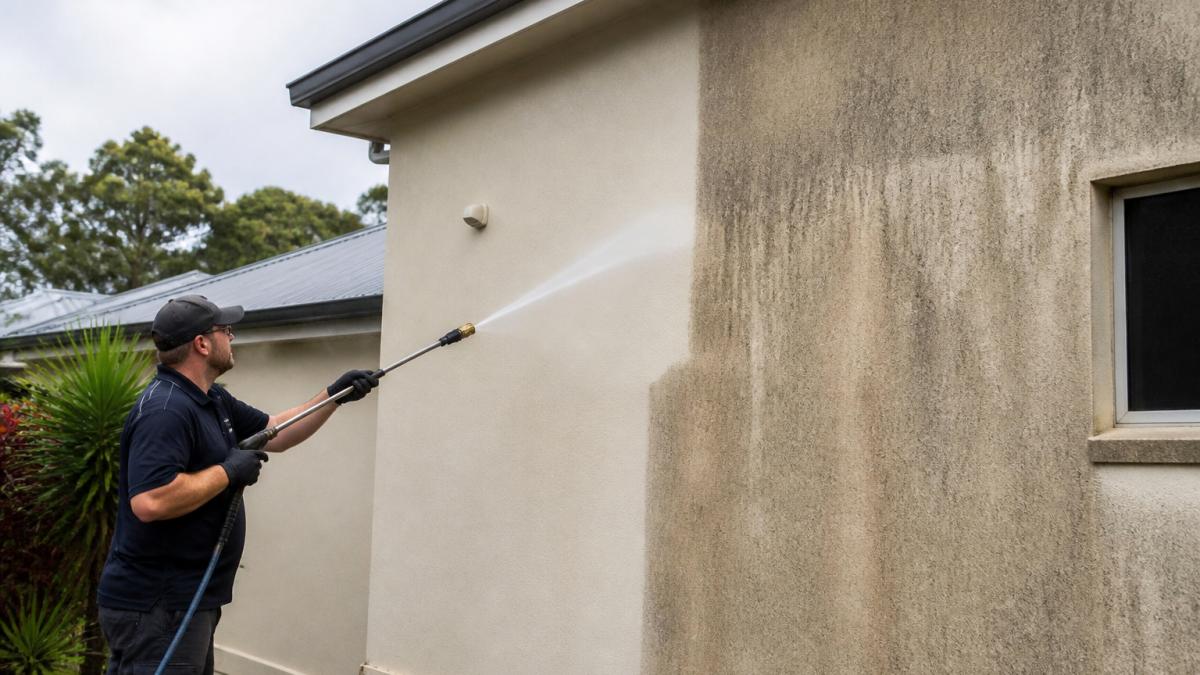
The logic is simple. Mould and algae are organisms: pressure removes what is visible but leaves the roots behind, and regrowth starts within months. A soft wash kills the growth at the source, so the clean lasts longer.
It is also cheaper in the long run. Soft washing uses less water and labour than high-pressure work on large facades, avoids repair costs from damaged render, and protects the coating on painted render.
How to Get an Accurate Render Cleaning Quote
An accurate render cleaning quote comes from a site inspection, not a phone call. Any provider who prices a rendered facade sight-unseen is guessing, and you will usually wear the difference. The goal is a fixed scope, a clear price, and no surprises.
The quote process, step by step
- Describe the property, storeys, how many walls are rendered, approximate size, and access constraints.
- Send photos, wide shots of each elevation plus close-ups of the worst staining.
- Flag the render type if you know it, or ask the provider to identify it on site.
- Ask what is included, pre-treatment, chemical application, rinse, and any follow-up visit.
- Confirm insurance, ask for a certificate of currency before work starts.
- Get the quote in writing with a fixed scope and any exclusions listed.
Worked examples: how the numbers come together
These illustrative examples show how the inputs combine. They are not quotes, and actual prices vary with condition, access, and provider.
Example 1, single-storey cottage, two rendered walls, light dust. Measured area is modest, access is clear at ground level, and staining is surface-only. Setup and travel time dominate, so expect the quote to be driven by the minimum call-out rather than the measured area.
Example 2, double-storey home, render on all four elevations, moderate algae. The measured area is several times larger, and the upper level requires ladders or an elevated platform. Chemical dwell time is needed for the algae. This sits mid-range: area and access equipment push the price up, but the condition is manageable in one visit.
Example 3, double-storey home, heavy black mould on north-facing walls, steep rear block. The area may match Example 2, but condition and access change the job entirely. Heavy mould needs a stronger treatment and often a return visit, and the steep block may rule out some equipment. This is the top of the residential range, a provider quoting it at Example 2 rates has not scoped it properly.
Comparing quotes line by line
When you have two or three quotes, compare them on scope, not just the bottom line. A cheaper quote that excludes the follow-up treatment for heavy mould is a quote for a smaller job. Check that each covers:
- The measured area and which elevations are included
- The cleaning method (soft wash, pressure, or a combination)
- Chemical treatment and dwell time
- Access equipment and who supplies it
- Protection of windows, plants, and fixtures
- Runoff management
- Any follow-up visit and whether it is included or charged separately
- Insurance and qualifications
Questions that separate a scoped quote from a guess
Ask whether the price covers a second treatment for heavy mould, some providers quote a single wash and charge extra when regrowth appears. Ask what happens if weather delays the job and whether the price is held, and whether the provider carries public liability insurance with a certificate of currency. Clear answers mean experience; deflection does not.
Red flags in a render cleaning quote
A quote dramatically below the others usually means something has been left out, often access equipment, chemical treatment, or insurance. A quote with no written scope is an estimate you cannot hold anyone to, and a provider who will not identify the render type before quoting may use the wrong method. The cheapest quote often becomes the most expensive decision, because repairing damaged render sits outside the cleaning budget entirely.
How Long Does Render Cleaning Take?
Most single-storey rendered homes take half a day to a full day. Double-storey properties with extensive render typically run one to two days, depending on condition and access.
The job breaks into stages: setup and masking of windows, plants, and fixtures; chemical dwell time that cannot be rushed; then rinse and final inspection.
Heavy mould or salt contamination can add a return visit a week or two later, once the treatment has fully acted. Ask upfront so it does not appear as a surprise charge.
Weather affects timing too. Wind and rain push jobs back, and a good provider will reschedule rather than work in conditions that compromise the finish.
Preventing Mould Regrowth on Exterior Walls
Preventing mould regrowth on exterior walls comes down to three habits: keeping the surface dry, reducing shade and organic debris, and treating growth early rather than late.
Mould thrives where moisture sits. Fix leaking gutters and downpipes first; no amount of cleaning will outrun a wall that gets soaked every time it rains. Clear vegetation back from the facade so air can move across it.
Trim overhanging trees where you can: shade plus damp is ideal for algae, and a wall that never dries needs cleaning far more often.
Wash the render lightly once or twice a year rather than waiting for heavy staining. A light maintenance clean costs a fraction of a full restoration, and it keeps the surface looking sharp for longer.
Access, Site Conditions and Other Cost Factors
Access is the cost factor most homeowners overlook. A rendered wall behind a locked gate, above a steep drop, or hemmed in by established gardens takes longer and needs more care than an open facade.
Site conditions that push the price up include:
- Height, scaffolding or elevated platforms for double-storey and above
- Obstructions, cars, outdoor furniture, and dense planting that must be moved or protected
- Fragile surfaces, older render, cracked sections, or loose paint needing a gentler method
- Water access, properties without an accessible tap may need a tank setup
- Runoff management, protecting stormwater drains and gardens adds setup time
Commercial and industrial sites bring their own considerations, including after-hours access and larger surface areas that need staged scheduling.
Why Professional Render Cleaning Sydney Is Worth the Investment
Professional render cleaning Sydney property owners invest in pays back through kerb appeal, surface longevity, and avoided repairs. Render is a protective skin over the structure beneath it.
For anyone preparing a property for sale, a clean facade changes first impressions before a buyer steps inside. For commercial premises, it is part of maintaining a professional front.
DIY pressure washing is where many homeowners come unstuck.
This is the practical case for hiring specialists. AquaBlast Elite uses cutting-edge high-pressure cleaning equipment matched to each surface, with customized solutions tailored to the render type rather than a one-setting-fits-all approach.
Render cleaning is one of those jobs where the cheapest quote often turns out to be the most expensive decision. Get the method wrong and you are paying for repairs, not maintenance.
AquaBlast Elite brings cutting-edge high-pressure cleaning equipment, customized solutions, and years of industry expertise to every rendered facade we treat.
Book a call with AquaBlast Elite to arrange a site assessment and get a written quote for your property.
Frequently Asked Questions
How much does professional render cleaning cost in Sydney?
Pricing for render cleaning Sydney depends on property size, render type, access, and condition. Most providers quote per square metre or per job after an on-site assessment. Request a detailed render cleaning quote for an accurate figure tailored to your property.
What factors affect the cost of render cleaning?
Key factors include the total surface area, the type of render (acrylic, cement, textured), level of dirt or mould, accessibility (height, obstructions), and whether soft washing or pressure washing is required. Additional services like gutter cleaning or window cleaning can affect the overall price. A professional assessment will identify these variables and provide a transparent quote.
Is soft washing safe for rendered walls?
Yes, soft washing rendered walls is generally safe and often preferred over high-pressure washing, which can damage the render surface and force water behind the cladding. Soft washing uses low pressure and specialised cleaning solutions to kill mould and algae without harming the substrate. Always confirm the method with your provider and ensure they are insured.
How long does professional render cleaning take?
For an average three-bedroom home, render cleaning typically takes a few hours, depending on the size, level of soiling, and access. Larger properties or those with severe mould may require a full day. Ask your provider for a time estimate when requesting a quote.