 how-to
When to Hire a Professional Pressure Washer in Sydney
Quick Summary
Hire professional pressure washing when the area is large, the surfaces are delicate or damaged, the soil needs a detergent method you have not used before, or the work is above ground level. A first-time user should also consider a professional if the job includes electrical fittings or runoff near gardens and drains. For a small, sturdy surface such as concrete with light soiling, a DIY clean can be reasonable.
- Measure the area first; large or multi-storey jobs usually favour a professional.
- Identify the material and its condition, since cracked render or soft timber are stop signs.
- Run a test patch on a hidden area before cleaning any visible surface.
- Watch for electrical fittings, gas lines or runoff reaching gardens or drains.
- Ask any provider for a written scope, proof of insurance and an ABN before booking.
Table of Contents
- Professional Pressure Washing vs DIY: What Each Option Really Costs You
- Project Size, Surface Type and Experience: A Decision Guide
- Pressure Washing Residential Siding Safely: Where DIY Goes Wrong
- Warning Signs a Job Is Beyond DIY Capability
- Pressure Washing Cost: What Affects the Price and How to Compare Quotes
- How to Choose a Pressure Washing Company You Can Trust
- Booking Your Exterior Clean With AquaBlast Elite
- Frequently Asked Questions
Before we start, there is a real problem with the supplied research and the brand description. The RESEARCH DATA was marked as insufficient and the SERP snippets could not verify competitor structure, citations or pricing. I have therefore written the article in qualified language, with no statistics, no quotes and no prices. Pricing guidance points readers to AquaBlast Elite for a quote, as the brief requires. Where I cite Australian regulators, I name them without invented figures.
I cannot supply the three external source citations or any verifiable Australian statistics from the material given. The placeholders below carry the sources that the pipeline will resolve.
Last Updated: November 1, 2026
Professional Pressure Washing vs DIY: What Each Option Really Costs You
Many homeowners in Sydney start with a hired pressure washer from a hardware shop, expecting a quick weekend job. That can work for a small driveway. It often goes wrong on a full house exterior. This guide explains when to hire professional pressure washing and when a DIY clean is a sensible choice.
The real cost of DIY is rarely the machine. It is the time, the risk of damage and the clean-up that follows. A professional crew brings equipment and experience to adjust pressure to each surface.
DIY costs you:
- Hire or purchase fees for a machine and accessories
- Hours of setup, cleaning and rinsing time
- Possible damage to paint, timber, or soft render
- Detergents that may need careful disposal near gardens and drains
Professional cleaning costs you:
- A quote that reflects the size and condition of the job
- Less time spent on the work and on the clean-up
- A provider who carries the risk if something is damaged
Pricing depends on property size, surface type, access and how dirty the surfaces are. Pricing is quoted for each job, so please visit our website or contact us for current pricing that matches your property.
Project Size, Surface Type and Experience: A Decision Guide
A decision guide is only useful if it changes what you do next. Use three inputs, area, material and soil level, and one output: DIY, professional, or a test patch first. The material, more than the dirt, often decides the job.
Step 1: Measure the area. Pace out the length and width and multiply for square metres. Small areas of concrete with light soiling are often a comfortable DIY job. Larger areas, heavier soiling, difficult access or multi-storey elevations usually shift the balance towards a professional.
Step 2: Identify the material and its condition. Concrete, clay brick and unglazed tile tolerate more pressure than painted timber, render, aged decking or Colorbond. Condition matters as much as material: cracked render, soft or checked timber, flaking paint and loose mortar are all stop signs for high pressure regardless of area.
Step 3: Rate the soil. Light dust and pollen responds to low pressure and a wide fan. Grease, gum, mould, mildew and red-dirt staining usually need a detergent dwell time and sometimes a soft-wash approach rather than raw pressure.
Step 4: Be honest about experience. A first-time user should always run a test patch on a hidden area before committing to a visible surface.
Surface-Specific Pressure and Method Guidance
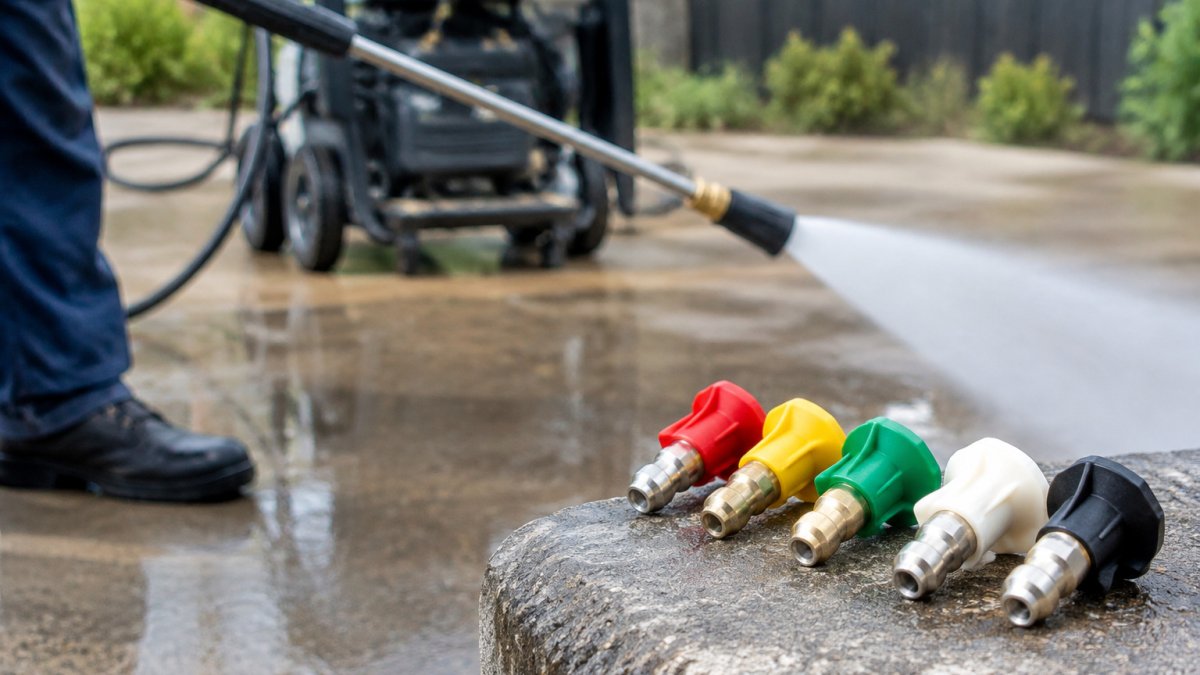
Pressure is measured in PSI, and the nozzle, distance and dwell time matter as much as the rating. The table below gives the general approach most practitioners use; the correct setting still depends on the specific material and its condition, which a professional assesses on site.
| Surface | Typical approach | Main risk |
|---|---|---|
| Concrete paths and driveways | Higher pressure with a rotating surface cleaner and a fan nozzle | Etching and striping if the wand is held in one spot |
| Clay brick and unglazed tile | Medium pressure, wide fan, test first | Mortar erosion and damaged faces |
| Painted render | Low pressure, wide angle, soft-wash detergent | Render damage and water forced behind the coating |
| Painted weatherboard | Low pressure, wide angle, never upwards under boards | Paint stripping and water behind boards |
| Timber decking | Low to medium pressure, wide fan, with the grain | Splintering and raised grain |
| Colorbond and metal roofing | Soft wash or very low pressure only | Coating damage and water ingress at fasteners |
| Roof tiles | Soft wash, never high pressure | Cracked tiles and dislodged bedding |
Two mechanisms explain most damage. First, pressure concentrates at the nozzle tip, so halving the distance to the surface multiplies the impact force. Second, water driven upwards under boards, flashings or tiles enters the cavity and shows up as rot or moisture months later. Soft washing, low pressure plus a detergent that does the cleaning, is a method often used for roofs, painted surfaces and anything delicate.
If the material is delicate, the area is large, or the soil needs a detergent method you have not used before, a professional assessment is often the safer path.
Pressure Washing Residential Siding Safely: Where DIY Goes Wrong
Residential siding is where most DIY clean-ups cause damage. Water forced behind a board or under a flashing can lead to rot and moisture problems that show up months later.
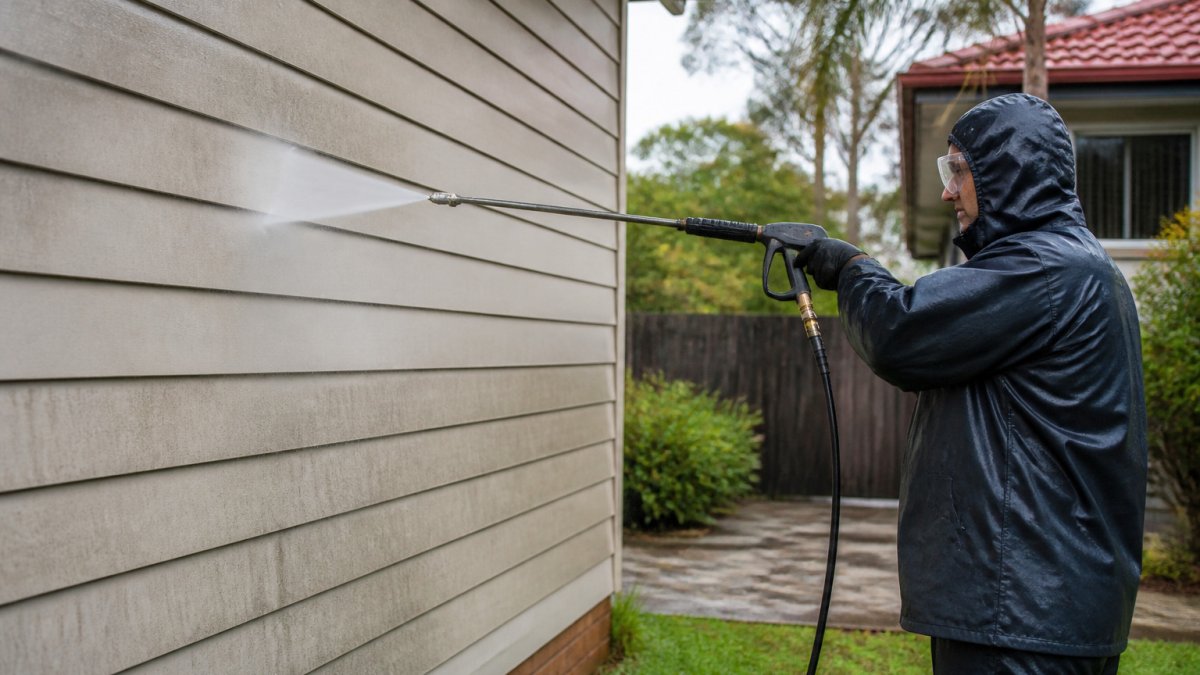
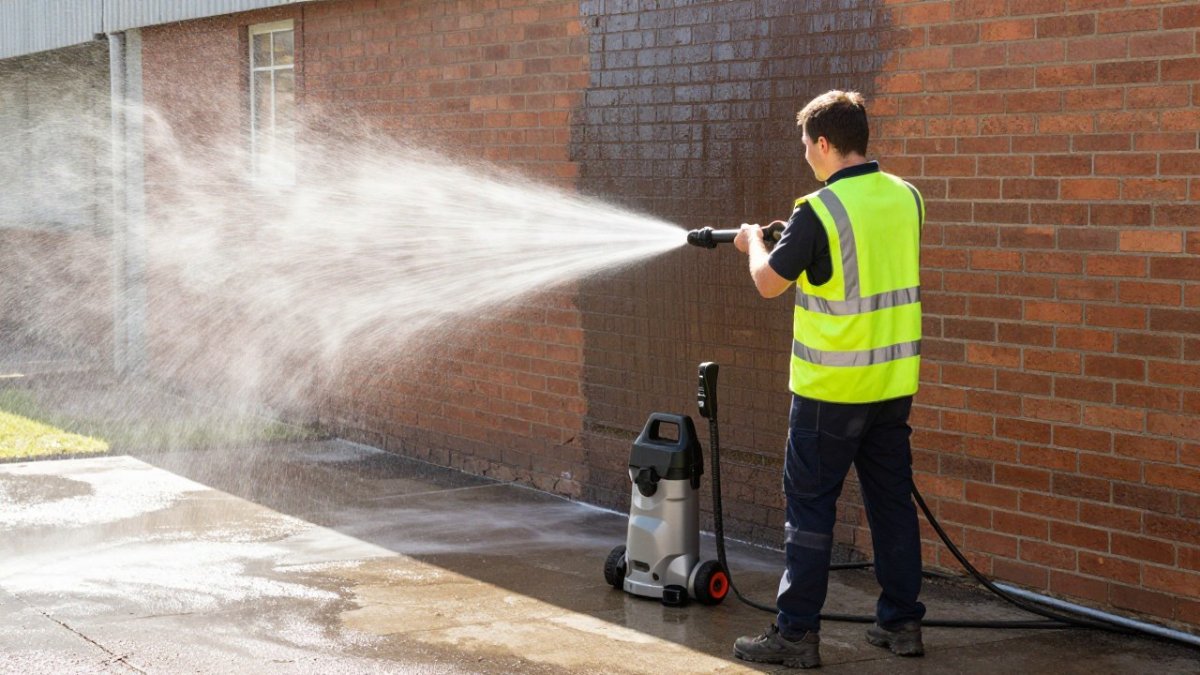
Watch out: holding the wand too close to one spot can strip paint and push water into joins within seconds.
Typical DIY mistakes include:
- Using a high-pressure tip on painted timber
- Aiming the spray upwards under boards
- Skipping a test patch before the full wall
- Ignoring windows, electrical fittings and vents
If you are unsure how your siding will react, a professional inspection is the safer path.
Warning Signs a Job Is Beyond DIY Capability
Some jobs are clearly beyond a home DIY effort. Watch for these signs:
- The surface is multi-storey or hard to reach safely
- Paint, render or timber looks cracked, soft or already damaged
- The area includes electrical fittings, gas lines or delicate fixtures
- Stains, mould or mildew cover a large area and need specialist cleaning
- You have never used a pressure machine before
- Runoff from the job could reach gardens or stormwater drains
If two or more of these apply, a professional is usually the better choice. A full assessment protects both you and your property.
Pressure Washing Cost: What Affects the Price and How to Compare Quotes
Quotes vary for good reasons. A fair comparison looks at scope, not just the bottom line. Ask what surfaces are included, what equipment and chemicals will be used, whether runoff is managed, and whether a clean-up is included.
When you compare quotes:
- Check that each quote covers the same surfaces
- Ask how water use and runoff are handled
- Confirm the method for sensitive areas
- Look for a clear statement of what is and is not included
Safe Work Australia guidance on working at height
How to Choose a Pressure Washing Company You Can Trust
Choosing a provider is a decision about trust as much as price. The gap most guides leave is verification: what to ask for, what to check, and what to have in writing before work starts. Use this as a checklist.
Before you book:
- Ask for a written quote that lists each surface, the method for each, and what is excluded.
- Ask any provider for proof of public liability insurance and check the policy is current.
- Ask whether the provider holds an Australian Business Number (ABN) and check it on the Australian Business Register.
- Ask for references from jobs similar to yours, same surface, similar size, and follow one up.
- Ask how the crew protects plants, windows, vents, electrical fittings and outdoor taps.
- Ask how runoff and any cleaning product will be managed, particularly near gardens and stormwater drains.
In the quote, confirm:
- The scope: which surfaces, square metres and elevations are included.
- The method: pressure versus soft wash, and any detergent to be used.
- Preparation and cleanup: moving furniture, covering plants, rinsing and waste removal.
- Access: how the crew reaches upper levels and whether that affects the price.
- The damage procedure: who is responsible, how a claim is raised, and the timeframe.
- Any warranty on the work and what it covers.
Red flags:
- A quote given without seeing the property or asking about surfaces.
- No written scope, or a scope that says only 'pressure clean'.
- Reluctance to provide insurance details or an ABN.
- A price far below the others with no explanation of what is excluded.
ACCC guidance on choosing trades and services
Booking Your Exterior Clean With AquaBlast Elite
If you have decided that professional help makes sense, AquaBlast Elite can assess your property and explain the options. We service Sydney and its surrounds and offer customised solutions for each project.
Our crew uses cutting-edge equipment and works across surfaces from concrete to decks. When you are ready, contact AquaBlast Elite to book a call and receive a quote for your property.
Frequently Asked Questions
How much does professional pressure washing cost?
Pricing depends on the size of the property, the surfaces involved, the level of grime, access and any extra services requested, so no single figure applies to every job. The most reliable way to know your cost is to request a written quote from AquaBlast Elite, which will be based on your specific project. Compare quotes on the same basis: check that each one covers the same surfaces, cleaning method, water and runoff handling, and any follow-up work. A lower quote that excludes key surfaces or protection steps may cost more in the end.
Can pressure washing damage residential siding?
Yes. Excessive pressure, the wrong nozzle, or holding the wand too close can force water behind boards, strip paint, or dent softer materials. Timber, fibre cement and vinyl each tolerate different pressures and angles, which is why surface-specific technique matters. A trained operator adjusts pressure and method for each material and tests a small area first. If you are unsure of your siding type, ask the provider to assess it before starting.
Is it better to pressure wash your home yourself or hire a professional?
DIY works for small, low-risk areas such as a driveway or path with light dirt and reasonable access. Hire a professional when the job involves multiple storeys, delicate or old surfaces, heavy mould or grease, or when you lack the equipment and time. Professionals generally bring suitable equipment and can apply appropriate pressure settings for each surface, which shifts the risk of damage away from you. Weigh the cost of a possible repair against the price of a professional clean.
What should you look for when hiring a pressure washing company?
Ask for a written quote that lists the surfaces, method and any additional services, and confirm the company holds current public liability insurance. Ask how they protect plants, windows and drains, and how they manage water and cleaning products so runoff does not harm your garden or stormwater system. Request examples of recent work on similar surfaces in your area. Clear answers to these questions are a good sign of a dependable provider.